UNICORN Naval Radar: Full Form and India-Japan Stealth Mast Agreement
UNICORN means Unified Complex Radio Antenna. See how the naval mast improves stealth, its features and India-Japan co-development with BEL.
Sep, 2026
•7 min read
Overview
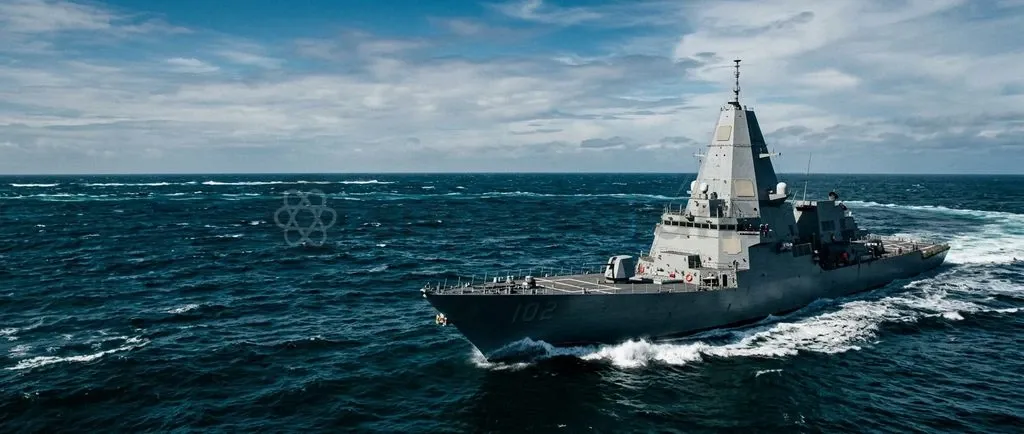
India and Japan concluded a bilateral defence agreement to co-develop and manufacture the UNIfied COmplex Radio aNtenna stealth mast system for frontline Indian Navy surface combatants. This marks a decisive shift from military drills toward deep naval industrial co-production. Designated in Japan as the NORA-50 integration mast, the system encloses disparate communication, navigation, and electronic warfare antennas inside a single composite structure.
According to official releases from the Embassy of India in Tokyo, Bharat Electronics Limited is the primary domestic production partner to integrate indigenous sensors. This bilateral initiative enhances operational survivability by shrinking radar cross-sections across critical Indo-Pacific sea lanes.
Why in the News?
The Government of India and the Government of Japan signed a formal bilateral agreement during the 16th India-Japan Annual Summit in New Delhi in July 2026. This pact operationalised the co-development and licensed manufacturing of the UNICORN stealth naval mast system.
As of July 2026, this landmark project represents the first military co-development project ever executed between New Delhi and Tokyo, cementing strategic convergence across the Indo-Pacific. The initiative follows an initial Memorandum of Implementation signed between both governments in November 2024.
What is UNICORN? Full Form and Core Concept
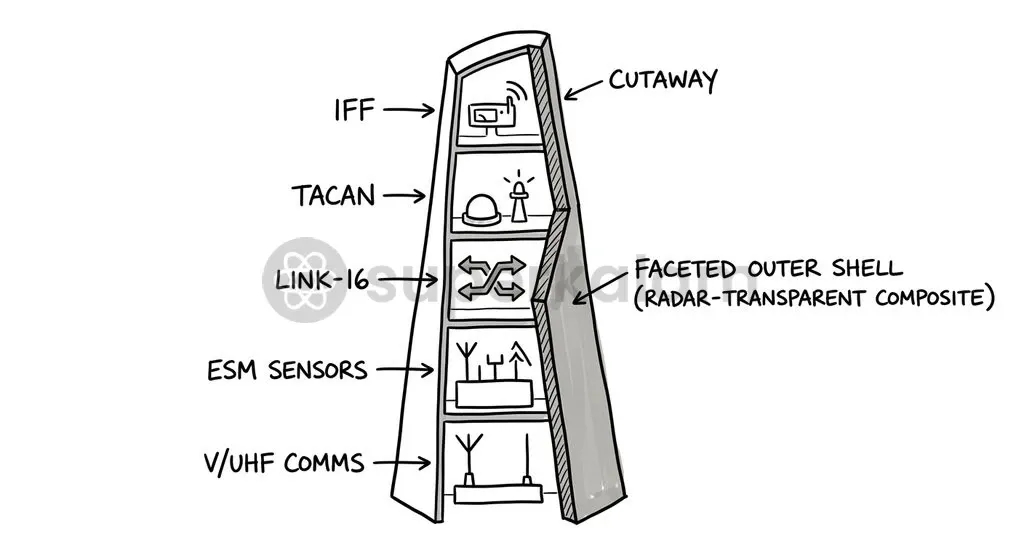
UNICORN stands for UNIfied COmplex Radio aNtenna. It is an integrated naval stealth mast system originally engineered for the Japan Maritime Self-Defense Force. Japanese defence contractors led by NEC Corporation, alongside Sampa Kogyo K.K. and The Yokohama Rubber Co., Ltd., developed the platform under Japan's Acquisition, Technology & Logistics Agency.
The system consolidates disparate radio-frequency emitters into an integrated composite mast structure, as demonstrated by the Japan Maritime Self-Defense Force:
- Integrated Antenna Housing: UNICORN merges multiple communication, navigation, and tactical antennas inside a single enclosed vertical column.
- Subsystem Integration: The mast integrates Electronic Support Measures, Link 16 tactical data links, Tactical Air Navigation, Identification Friend or Foe, and ultra-high-frequency transceivers.
- Operational Precedent: The system is deployed operationally on Japan's Mogami-class stealth frigates, establishing a proven sea-tested baseline.
Discuss with Superkalam
Which Japanese warship class established the operational, sea-tested baseline for the UNICORN stealth mast?
Ask NowHow Stealth Mast Technology Works: Enhancing Warship Survivability
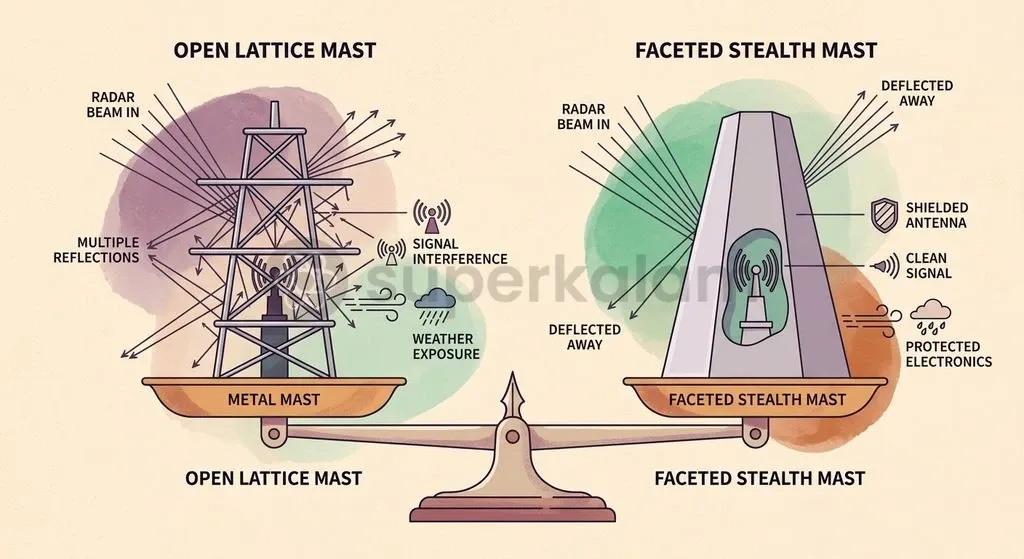
Stealth mast technology replaces exposed lattice masts with a faceted composite radome, enclosing multiple radiating elements to control electromagnetic emissions and minimise physical reflectivity. Traditional warship masts feature an array of exposed steel yardarms, rotating radar dishes, and whip antennas. These metallic structures reflect incoming radar pulses back to enemy search receivers, creating a massive electronic signature.
The UNICORN design mitigates these vulnerabilities through three distinct physical mechanisms:
- Radar Cross-Section Reduction: A contoured composite radome deflects incoming radar energy away from hostile receivers, significantly lowering the vessel's Radar Cross-Section.
- Mitigation of Electromagnetic Interference: Housing antennas within an integrated architecture eliminates severe Electromagnetic Interference and radio-frequency cross-talk among co-located naval transmitters.
- Environmental and Structural Protection: The composite housing shields delicate high-frequency components from saltwater corrosion, high winds, and heavy seas, lowering life-cycle maintenance costs and enhancing operational availability.
Traditional Warship Masts vs Integrated Stealth Masts: A Comparison
Modern naval design prioritises signature management to ensure surface combatants survive against long-range anti-ship cruise missiles in contested waters.
| Feature Dimension | Traditional Open-Lattice Mast | UNICORN Integrated Stealth Mast |
|---|---|---|
| Physical Architecture | Exposed steel framework with protruding yardarms, rotating dishes, and whip aerials | Enclosed, dome-shaped composite radome enclosing internal antennas |
| Radar Signature | Large Radar Cross-Section due to complex metallic angles and reflective surfaces | Significantly reduced Radar Cross-Section via faceted, low-observable geometry |
| Electromagnetic Interference | Severe cross-talk and mutual interference between co-located transmitters | Optimised spatial separation, mitigating severe Electromagnetic Interference |
| Environmental Degradation | Direct exposure of electronics to saltwater, high winds, and solar radiation | Sealed composite barrier providing environmental protection against corrosion |
| Maintenance Burden | Frequent topside inspections, rust removal, and individual cabling repairs | Lower lifecycle maintenance with protected internal electronic modules |
Discuss with Superkalam
Explain how enclosing disparate naval communication and radar antennas inside a single composite radome mitigates electromagnetic interference.
Ask NowTimeline of India-Japan Defence Technology Agreements
India and Japan have systematically built a comprehensive legal and institutional framework over several years to enable high-technology military co-development.
- September 2020: India and Japan signed the Acquisition and Cross-Servicing Agreement, establishing reciprocal access to military bases, port services, and maintenance facilities.
- October 2022: The Indian Navy Directorate of Electrical Engineering showcased its Indigenous Integrated Mast concept with Bharat Electronics Limited at DefExpo 2022.
- November 2024: Both nations signed the historic Memorandum of Implementation for UNICORN mast co-development at the Embassy of India in Tokyo.
- April 2026: Tokyo eased historical post-war defence export constraints through progressive revisions to its Three Principles on Transfer of Defence Equipment and Technology.
- July 2026: Prime Minister Narendra Modi and his Japanese counterpart formally concluded the bilateral UNICORN co-development agreement during the 16th India-Japan Annual Summit.
Strategic Significance: Maritime Domain Awareness and Quad Synergy
The UNICORN agreement carries profound implications for the Indo-Pacific naval balance, transforming bilateral defence ties from exercises into co-production.
- Historic Industrial Precedent: According to the Ministry of External Affairs, this represents the first-ever military technology co-development initiative between New Delhi and Tokyo. India is only the second international recipient of Japanese military hardware under Tokyo's post-war export regime, following air-surveillance radar exports to the Philippines.
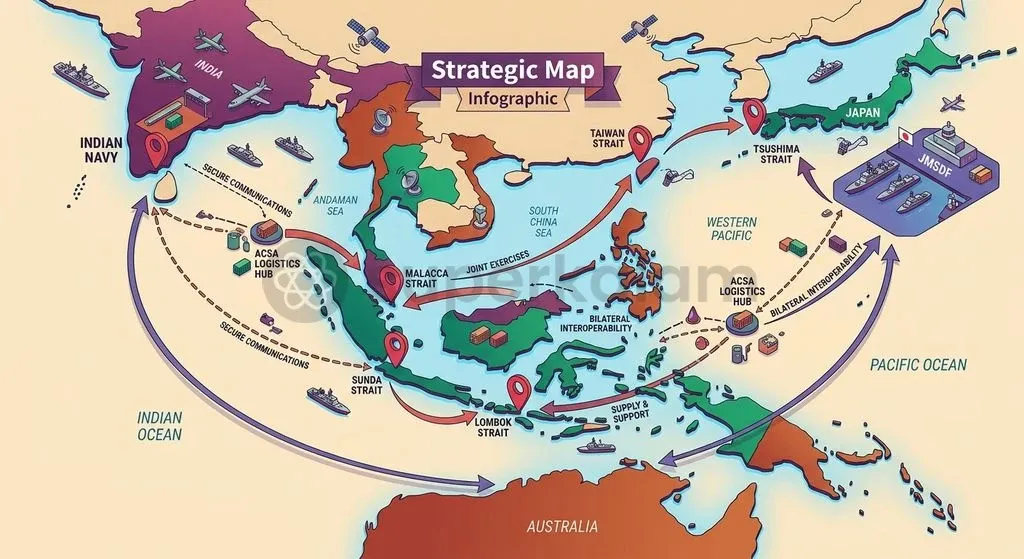
- Strengthening Choke-Point Security: Strategic cooperation on naval stealth mast technology strengthens Maritime Domain Awareness across critical Sea Lines of Communication, including the Malacca Strait and the Western Pacific.
- Tactical Interoperability: Deploying compatible sensor mast architectures enhances tactical interoperability and secure data exchange between the Indian Navy and the Japan Maritime Self-Defense Force during exercises like JIMEX and Malabar.
- Indigenous Fleet Integration: As reported by defence analysts in August 2026, the Indian Navy plans to evaluate UNICORN mast integration for future surface platforms, such as the Project 17B frigates, Next Generation Corvettes, and Project 18 destroyers. Bharat Electronics Limited will manufacture and localise the system domestically, augmenting India's naval indigenisation drive.
Discuss with Superkalam
Compare the operational advantages and maintenance demands of an integrated composite stealth mast versus a traditional steel lattice mast during long-duration naval deployments.
Ask NowKey Challenges in Technology Transfer and Co-Production
Absorbing advanced foreign stealth mast technology requires navigating complex technical integration, structural engineering, and legal export hurdles.
The primary challenges confronting bilateral co-production include:
- Sensor Integration and Electromagnetic Algorithms: Integrating proprietary Indian communication, radar, and electronic warfare sensors into Japanese mast casings requires adapting complex electromagnetic design algorithms.
- Industrial Absorption Capacity: Domestic shipyards and production partner Bharat Electronics Limited must establish specialised manufacturing lines for high-tolerance marine composite radomes.
- Regulatory and Export Controls: Sustaining long-term co-development depends on continuous alignment under Japan's evolving defence transfer regulations.
Discuss with Superkalam
Assess whether bilateral defence-industrial co-development projects like UNICORN provide a more sustainable framework for Indo-Pacific maritime security than bilateral naval exercises alone.
Ask NowWay Forward: Deepening India-Japan Maritime Security Cooperation
Sustaining the momentum of the UNICORN partnership requires establishing institutional joint working groups and expanding industrial co-development into complementary maritime domains.
To maximise the strategic dividends of this partnership, policy planners should pursue four key measures:
- Harmonise Indigenous Sensor Payloads: The Defence Research and Development Organisation, Bharat Electronics Limited, and Japanese designers must establish joint interface protocols to streamline sensor fitment.
- Institutionalise Industrial Co-Production: Expand joint ventures between Indian defence public sector units and Japanese contractors beyond sensor masts into undersea sensors and unmanned systems.
- Leverage the Logistical Backbone: Fully utilise the bilateral Acquisition and Cross-Servicing Agreement to streamline joint maintenance, refits, and logistics across Indian Ocean and Western Pacific ports.
- Standardise Quad Operational Data Links: Use common mast and transceiver architectures to facilitate seamless, encrypted tactical communications during multilateral security operations.
Key Takeaways
- UNICORN (UNIfied COmplex Radio aNtenna) is an integrated stealth mast system, designated as NORA-50 in Japan and deployed on Mogami-class frigates.
- The project marks the first-ever military technology co-development initiative between India and Japan, formally concluded at the July 2026 Annual Summit.
- The system houses multiple communication, navigation, and tactical antennas inside a single composite radome, dramatically cutting Radar Cross-Section and eliminating electromagnetic interference.
- Bharat Electronics Limited serves as the primary Indian industrial partner responsible for manufacturing, localisation, and integrating indigenous naval sensors.
- Bilateral maritime cooperation strengthens Maritime Domain Awareness and naval interoperability across key Indo-Pacific choke points.
Mains Question
"The bilateral agreement between India and Japan to co-develop the UNICORN stealth mast marks a decisive transition from joint military exercises to substantive defence-industrial co-production." Discuss the strategic and technological significance of this initiative for Indian maritime security. (15 Marks)
Evaluate NowMains Question
While the UNICORN stealth mast co-development pact expands India-Japan defence collaboration, its operationalisation faces key technological and institutional hurdles. Critically examine. (10 Marks)
Evaluate NowPractice MCQs
QUESTION 1
Consider the following statements regarding the UNICORN naval mast system:
- UNICORN stands for UNIfied COmplex Radio aNtenna and is designated in Japan as the NORA-50 integration mast.
- The system was first deployed operationally on Japan's Mogami-class stealth frigates.
- Bharat Electronics Limited serves as the primary domestic production partner in India to integrate indigenous sensors. Which of the statements given above are correct?
QUESTION 2
Consider the following statements regarding India-Japan defence cooperation and technology transfers:
- The UNICORN project represents the first-ever military technology co-development initiative executed between India and Japan.
- India is the first international recipient of Japanese military hardware under Tokyo's post-war export framework.
- India and Japan signed the Acquisition and Cross-Servicing Agreement in September 2020 to provide reciprocal logistics and port access. Which of the statements given above is/are correct?
QUESTION 3
With reference to the physical mechanisms of integrated stealth masts compared to traditional open-lattice masts, consider the following statements:
- A faceted composite radome deflects incoming radar pulses away from enemy receivers to lower the vessel's Radar Cross-Section.
- Housing co-located transmitters within an integrated architecture mitigates electromagnetic interference and radio-frequency cross-talk.
- A sealed composite housing protects sensitive high-frequency electronic modules from saltwater corrosion. Which of the statements given above is/are correct?
QUESTION 4
Consider the following surface combatant platforms of the Indian Navy:
- Project 17B frigates
- Next Generation Corvettes
- Project 18 destroyers According to official plans highlighted in the article, for which of the above platforms is the integration of the UNICORN stealth mast being evaluated?
QUESTION 5
The 'Three Principles on Transfer of Defence Equipment and Technology', which were progressively revised to facilitate international defence co-development, pertain to the regulatory export framework of which country?