Stem Cell Therapy for Autism in India: Advisory, Legal Ban and Bioethics
Commercial stem cell therapy for autism faces statutory bans in India as ICMR restricts unproven cell therapies to approved clinical trials, citing bioethics and patient safety.
Sep, 2026
•8 min read
Overview
The Union Ministry of Health and Family Welfare, alongside apex judicial rulings, has restricted stem cell therapy for Autism Spectrum Disorder strictly to approved clinical trials. Commercial administration remains prohibited due to unvalidated efficacy claims and serious bioethical risks.
Regulators emphasize that commercial cell therapies for neurodevelopmental conditions lack Phase III trial validation. Consequently, stem cells remain legally approved in routine medical practice only for defined haematological conditions. Unproven regenerative treatments undermine patient safety and demand rigorous statutory enforcement.
Why in the News: The Advisory on Stem Cell Therapy for Autism
The Union Ministry of Health and Family Welfare issued a nationwide regulatory advisory on September 16, 2026, curbing unapproved stem cell practices. According to the Ministry's directive, stem cell therapy can be offered as standard routine clinical care only for Ministry-approved indications.
Key directives from the national advisory include:
- Mandatory Trial Settings: The advisory explicitly restricts the therapeutic administration of stem cells for Autism Spectrum Disorder (ASD) to approved clinical trial settings.
- Curbing Private Clinics: This regulatory intervention directly addresses the proliferation of private clinics offering unproven regenerative treatments to families managing neurodevelopmental conditions.
- Statutory Penalties: As of September 2026, medical establishments marketing unapproved stem cell procedures face strict statutory scrutiny, disciplinary proceedings, and cancellation of operating licences across Indian states and Union Territories.
Understanding Autism Spectrum Disorder and How Stem Cells Work
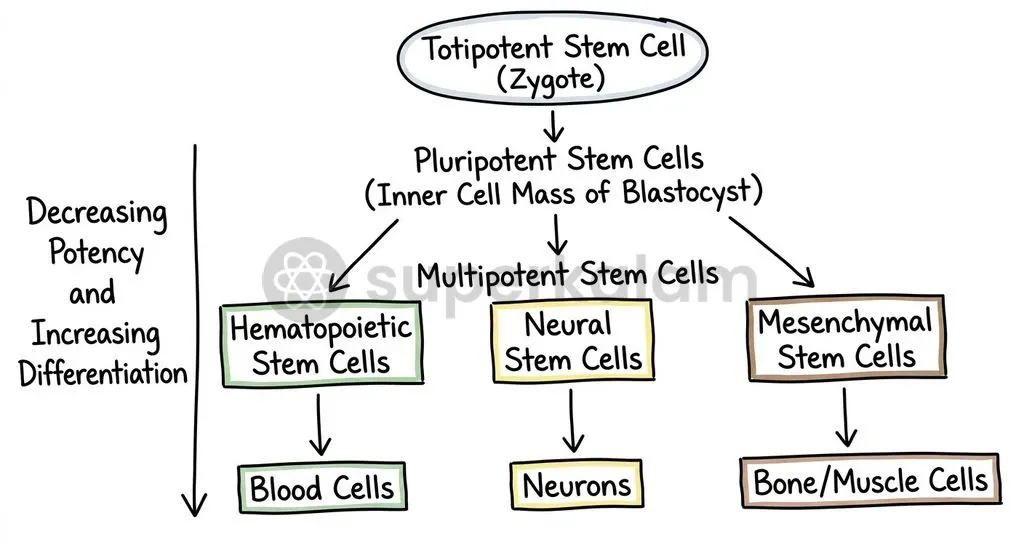
Autism Spectrum Disorder encompasses diverse neurodevelopmental conditions characterised by challenges in social communication, repetitive behaviours, and sensory processing differences. Stem cells are unspecialised biological cells defined by their capacity for self-renewal and differentiation into specialised cell lineages.
The biological potency of stem cells determines their developmental potential across human tissue lineages.
| Stem Cell Category | Biological Differentiation Potential | Clinical Examples | Regulatory Status in India |
|---|---|---|---|
| Totipotent | Can form all embryonic tissues and the placenta | Early zygote and morula cells | Prohibited for clinical application |
| Pluripotent | Can differentiate into all three somatic germ layers | Embryonic stem cells (ESCs), induced pluripotent stem cells (iPSCs) | Restricted to basic in-vitro research |
| Multipotent / Adult | Restricted to specific tissue lineages | Mesenchymal stem cells (MSCs), haematopoietic stem cells (HSCs) | HSCT approved for blood disorders; others experimental |
Private clinics frequently market autologous bone marrow mononuclear cells (BMMNCs) and umbilical cord-derived mesenchymal stem cells (UC-MSCs) to autistic individuals. Promoters claim these cells cross the blood-brain barrier to reduce neuroinflammation, stimulate angiogenesis, and correct immune dysregulation.
The Regulatory Landscape: Rules Governing Stem Cell Treatments in India
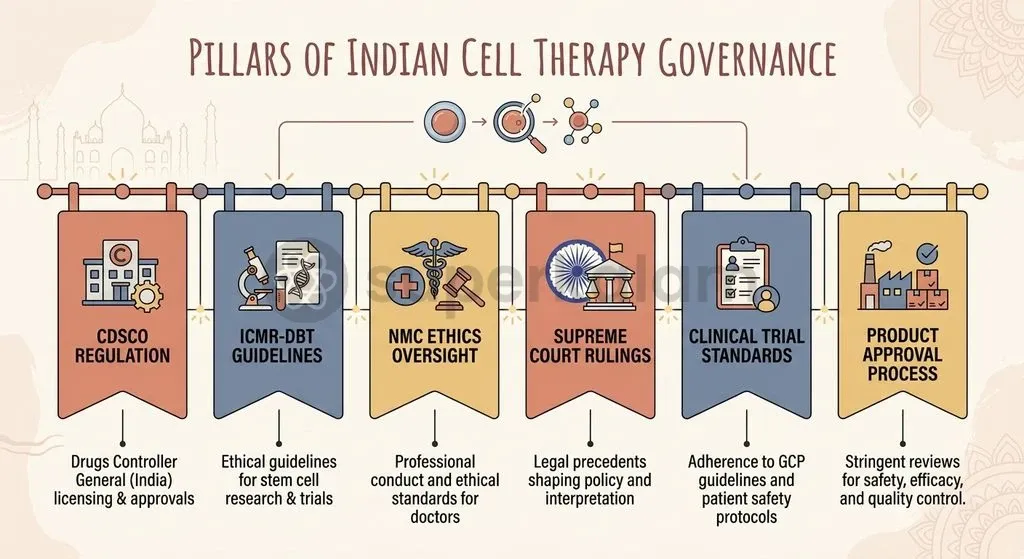
The Central Drugs Standard Control Organisation (CDSCO) regulates stem cells and cell-derived products as 'New Drugs' across India. Under the New Drugs and Clinical Trials Rules, 2019, framed under the Drugs and Cosmetics Act, 1940, any cell therapy requires mandatory CDSCO approval prior to clinical manufacturing or therapeutic deployment.
The National Guidelines for Stem Cell Research (NGSCR, 2017), jointly framed by the Indian Council of Medical Research (ICMR) and the Department of Biotechnology (DBT), establish clear boundaries for cell use. These guidelines approve Haematopoietic Stem Cell Transplantation (HSCT) exclusively for defined haematological disorders, categorising all other clinical uses as experimental.
State authorities derive enforcement powers from general public health and clinical legislation:
- Clinical Establishments Act, 2010: Sections 32 and 40 empower state authorities to cancel registrations and levy statutory monetary penalties against non-compliant medical establishments.
- Medical Council Ethics Regulations, 2002: Regulation 7.22 classifies the promotion and administration of unverified medical procedures as professional misconduct.
- New Drugs Rules, 2019: Mandates prior statutory approval from the Central Licencing Authority (CDSCO) before administering any stem cell-based product outside basic research.
Discuss with Superkalam
Which statutory rules classify stem cells as 'New Drugs' requiring mandatory CDSCO approval in India?
Ask NowWhat Scientific Evidence Says About Stem Cells for Autism
The Indian Council of Medical Research does not recognise stem cell therapy as an established medical treatment for Autism Spectrum Disorder. The Ethics and Medical Registration Board (EMRB) of the National Medical Commission confirmed that no validated Phase III trial exists to substantiate therapeutic claims regarding autism.
Theoretical hypotheses suggested by private providers remain unproven in controlled medical science. Proponents argue that mesenchymal stem cells secrete anti-inflammatory cytokines. However, rigorous scientific reviews show no consistent neurological improvement in cognitive, behavioural, or linguistic domains.
The administration of experimental biological agents introduces significant health hazards without clinical benefits:
- Procedural Trauma: Interventions involve invasive bone marrow aspiration and spinal taps without therapeutic justification.
- Adverse Reactions: Patients risk aseptic meningitis and acute pathogen contamination during unregulated preparation.
- Oncological Risks: Unmonitored cellular replication creates unknown long-term tumorigenic hazards in recipient tissues.
Key Court Rulings and the National Medical Commission Stand
Judicial and regulatory bodies across India have established clear prohibitions against commercial stem cell treatments for neurodevelopmental conditions:
- Supreme Court Precedent: In Yash Charitable Trust & Ors. v. Union of India & Ors. (2026 INSC 96), the Supreme Court ruled on January 30, 2026, that all human stem cell administrations for unproven conditions must occur strictly within regulated clinical trial frameworks.
- Evolution of Case Law: In Dalip Kaur & Anr. v. Union of India (2023), the Delhi High Court permitted the interim continuation of therapy for two autistic children solely at petitioner-borne risk before apex judicial rulings consolidated the nationwide prohibition.
- Medical Misconduct Classification: The Ethics and Medical Registration Board (EMRB) of the National Medical Commission determined that administering, promoting, or advertising stem cell therapy for ASD constitutes serious professional misconduct by registered medical practitioners.
Discuss with Superkalam
Why does the absence of Phase III clinical trials prevent stem cell therapies from being adopted as standard routine care for ASD?
Ask NowEthical Concerns: Commercial Exploitation and Patient Vulnerability
The commercial administration of unproven stem cell therapies directly breaches the fundamental bioethical principle of non-maleficence. Medical practitioners violate this duty when exposing paediatric patients to invasive procedures that offer no verified clinical benefit.
Predatory commercial practices exploit the emotional vulnerability of caregivers seeking supportive interventions. Clinics deploy aggressive direct-to-consumer marketing, unverified patient testimonials, and exaggerated claims of functional recovery.
These marketing dynamics distort the process of informed consent in clinical practice:
- Compromised Autonomy: Caregivers receive distorted risk-benefit information, which undermines genuine voluntary consent.
- Financial Toxicity: Families incur severe out-of-pocket medical expenditures for unproven experimental procedures.
- Therapeutic Delay: Reliance on experimental biological treatments often delays access to proven neurodevelopmental interventions like speech therapy and behavioural support.
Global Best Practices: How Other Nations Regulate Stem Cell Interventions
Regulatory agencies worldwide enforce stringent oversight mechanisms to prevent the proliferation of unproven cellular interventions. Jurisdictions classify cell therapies as biological drugs whenever processing exceeds minimal manipulation or addresses non-homologous conditions.
| Jurisdiction | Primary Regulatory Framework | Legal Classification of Stem Cells | Regulatory Approach to Autism |
|---|---|---|---|
| United States | 21 CFR Part 1271 & Public Health Service Act (Sec 351) | Regulated as Biological Drugs if more than minimally manipulated | FDA issues warning letters against clinics selling unapproved treatments |
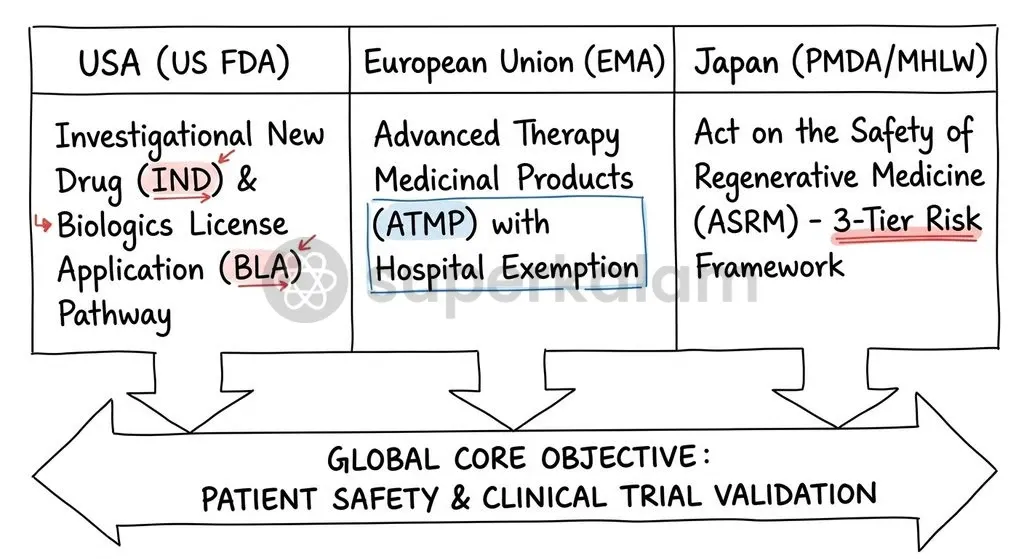
| European Union | Regulation (EC) No 1394/2007 on ATMPs | Advanced Therapy Medicinal Products (ATMPs) | Article 28 Hospital Exemption strictly restricts non-routine use; commercialisation barred |
| Japan | Act on the Safety of Regenerative Medicine (ASRM) & PMD Act | Tiered Class I (high risk), Class II, and Class III medical technologies | Requires scientific review by Certified Committees and ministry notification before use |
International regulatory frameworks consistently prohibit direct-to-consumer commercialisation of unvalidated regenerative products. The European Union and the United States require pre-market clinical evaluations through formal IND and BLA applications to protect public health.
Discuss with Superkalam
How do predatory marketing practices and misleading claims compromise the bioethical principle of informed consent for vulnerable caregivers?
Ask NowWay Forward: Strengthening Clinical Trials and Protecting Patients
The Union Health Ministry outlined a comprehensive roadmap in September 2026 to curb illicit stem cell procedures across states. This strategy prioritises state-level regulatory task forces established under the Clinical Establishments Act to inspect clinics and enforce statutory compliance.
Public health communication forms a central pillar of long-term regulatory success. State departments must run dedicated awareness programmes to educate families about evidence-based interventions for neurodivergence while warning against commercial stem cell exploitation.
A balanced medical ecosystem requires supporting legitimate scientific innovation alongside strong patient safeguards:
- Channelling Clinical Research: Willing participants should be redirected into ICMR-monitored clinical trials that adhere to the New Drugs and Clinical Trials Rules, 2019.
- Enforcing Professional Accountability: State Medical Councils must penalise medical practitioners engaging in misleading advertisements or unapproved treatments under NMC regulations.
- Strengthening Support Systems: Public health spending must expand access to certified occupational therapy, special education, and early developmental screening.
Discuss with Superkalam
What institutional and regulatory enforcement mechanisms should State Medical Councils adopt to penalise clinics offering unapproved cellular therapies?
Ask NowKey Takeaways
The regulatory and ethical consensus in India firmly prohibits commercial stem cell therapy for Autism Spectrum Disorder.
- Statutory Status: Under the New Drugs and Clinical Trials Rules, 2019, stem cells are classified as 'New Drugs', requiring mandatory CDSCO approval prior to clinical use.
- Permissible Indications: The ICMR-DBT National Guidelines for Stem Cell Research (2017) approve stem cell therapy as standard clinical care exclusively for defined haematological disorders via HSCT.
- Judicial Precedent: The Supreme Court in Yash Charitable Trust (2026) mandated that stem cell administration for unproven indications must occur strictly within regulated clinical trials.
- Professional Misconduct: The NMC's Ethics and Medical Registration Board determined that advertising or administering stem cells for ASD constitutes actionable professional misconduct.
- Bioethical Dimension: Commercial administration violates non-maleficence and exploits caregiver vulnerability, requiring coordinated enforcement across State Medical Councils and health authorities.
Mains Question
"The commercial administration of unproven regenerative therapies for neurodevelopmental disorders breaches core bioethical principles while exploiting vulnerable caregivers." In light of the National Medical Commission's directives and recent judicial pronouncements, examine the ethical and regulatory challenges in curbing unapproved stem cell treatments. (10 Marks)
Evaluate NowMains Question
The National Guidelines for Stem Cell Research (NGSCR) restrict routine clinical application of stem cells strictly to defined haematological conditions. Discuss the scientific, legal, and institutional mechanisms required to prevent the commercial proliferation of unvalidated cellular therapies in India. (15 Marks)
Evaluate NowPractice MCQs
QUESTION 1
With reference to the regulation of stem cell therapies in India, consider the following statements:
- Stem cells and cell-derived products are regulated as 'New Drugs' by the Central Drugs Standard Control Organisation (CDSCO).
- Haematopoietic Stem Cell Transplantation (HSCT) is approved in routine clinical practice for defined haematological disorders under national guidelines.
- The Ethics and Medical Registration Board of the National Medical Commission permits the commercial use of stem cell therapy for Autism Spectrum Disorder (ASD) provided informed consent is obtained.
Which of the statements given above are correct?
QUESTION 2
Consider the following biological categories of stem cells:
- Totipotent stem cells: Capable of forming all embryonic tissues and the placenta.
- Pluripotent stem cells: Restricted only to specific adult tissue lineages in clinical applications.
- Multipotent stem cells: Differentiate into all three somatic germ layers.
How many of the pairs given above are correctly matched with their biological potential?
QUESTION 3
Regarding the legal and judicial framework governing stem cell therapy in India, consider the following statements:
- In Yash Charitable Trust v. Union of India (2026), the Supreme Court ruled that therapeutic human stem cell administrations for unproven conditions must strictly occur within approved clinical trial frameworks.
- State authorities are empowered to cancel medical establishment registrations and levy monetary penalties under Sections 32 and 40 of the Clinical Establishments Act, 2010.
- Regulation 7.22 of the Medical Council Ethics Regulations, 2002 classifies the administration of unverified medical procedures as professional misconduct.
Which of the statements given above are correct?
QUESTION 4
Which of the following international regulatory classifications for cell-based therapies is correctly stated?
QUESTION 5
With reference to the scientific and medical concerns regarding stem cell administration for Autism Spectrum Disorder (ASD), consider the following statements:
- The Ethics and Medical Registration Board (EMRB) confirmed the absence of validated Phase III clinical trials establishing therapeutic efficacy for ASD.
- Experimental cellular administrations carry risks including aseptic meningitis, pathogen contamination, and tumorigenic hazards.
- The Indian Council of Medical Research (ICMR) has formally approved autologous bone marrow mononuclear cells as standard routine clinical care for ASD.
Which of the statements given above is/are correct?