Resolving Inter-State River Water Disputes: The Sone Accord Model
As tribunal litigation stalls for decades, the Bihar-Jharkhand Sone Accord offers UPSC aspirants a pragmatic blueprint for cooperative water federalism.
Sep, 2026
•9 min read
Overview
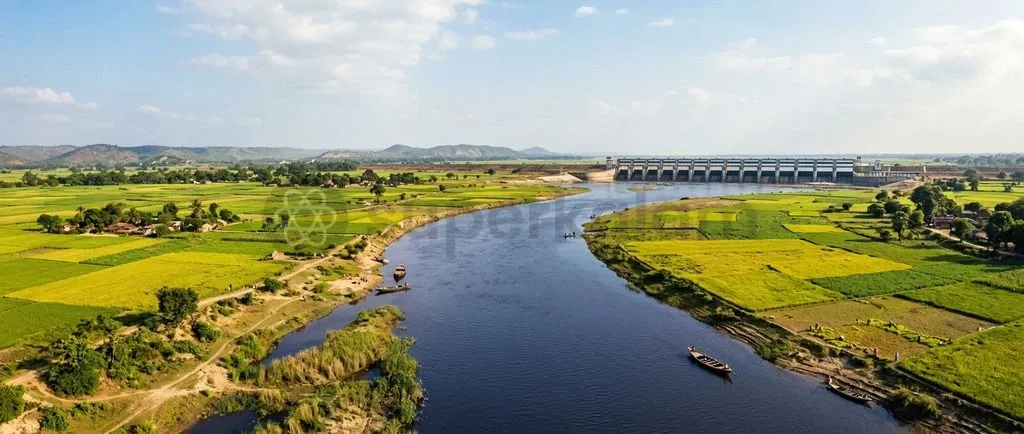
The resolution of the long-standing Sone River water dispute between Bihar and Jharkhand demonstrates how structured bilateral negotiations facilitated by Union institutional mechanisms can successfully bypass protracted tribunal litigation to deliver binding, cooperative water-sharing frameworks. Direct political and administrative consensus resolved complex riparian tensions where adversarial legal pathways struggled. By unlocking critical irrigation and drinking water allocations, the agreement reinforces the role of institutional dialogue under Indian federalism.
Why in the News: The Bihar-Jharkhand Sone River Agreement
The Union Government facilitated a landmark Memorandum of Understanding between Bihar and Jharkhand to resolve a twenty-six-year water dispute over the Sone River. On 31 August 2026, the Chief Ministers of both States signed the agreement in New Delhi in the presence of Union Home Minister Amit Shah and Union Jal Shakti Minister C.R. Patil, as reported by the Press Information Bureau (PIB). As of August 2026, this accord represents the fourth major inter-state river water settlement finalised through executive mediation within the year.
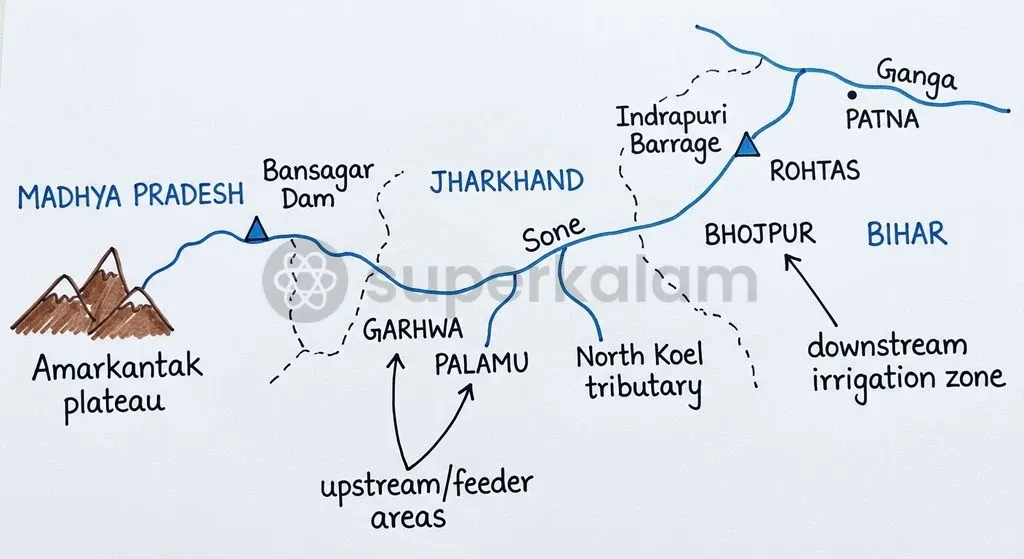
The dispute originated after the bifurcation of undivided Bihar in November 2000 under the Bihar Reorganisation Act, 2000. This reorganisation left the division of undivided Bihar's 7.75 Million Acre Feet (MAF) Sone water allocation unresolved between the two successor states.
According to the Ministry of Home Affairs, the August 2026 pact establishes long-term water security by securing allocations for both states:
- Southwestern Bihar: Guarantees vital drinking and irrigation supplies across Bhojpur, Buxar, Rohtas, Kaimur, Aurangabad, Arwal, Gaya, and Patna.
- Jharkhand: Safeguards guaranteed allocations for the drought-prone Palamu and Garhwa regions.
How India Usually Resolves River Disputes: The Tribunal Model and Its Delays
Inter-state water disputes in India are primarily referred to ad-hoc tribunals established under the Inter-State River Water Disputes (ISRWD) Act, 1956. Under the ISRWD Act, 1956, the Central Government constitutes an ad-hoc tribunal only after determining that a river dispute cannot be resolved through direct state-to-state negotiations.
However, the tribunal pathway faces severe institutional and procedural delays. According to the Central Water Commission, proceedings for the Godavari, Narmada, and Cauvery tribunals extended between 11 to 28 years before their final awards could be gazetted.
- Godavari Water Disputes Tribunal: ~11 years
- Narmada Water Disputes Tribunal: ~10 years
- Cauvery Water Disputes Tribunal: ~17 years
- Ravi & Beas / Krishna II Tribunals: Multiple decades without complete finality
These prolonged adjudications turn shared river basins into zones of chronic political contestation. States often adopt maximalist postures during hearings. This stance hardens legal positions rather than encouraging pragmatic sharing options during hydrological distress.
Discuss with Superkalam
Recall the two central international water-sharing frameworks that replaced the Harmon Doctrine in transboundary water management.
Ask NowCase Study: How Bihar and Jharkhand Negotiated the Sone Waters
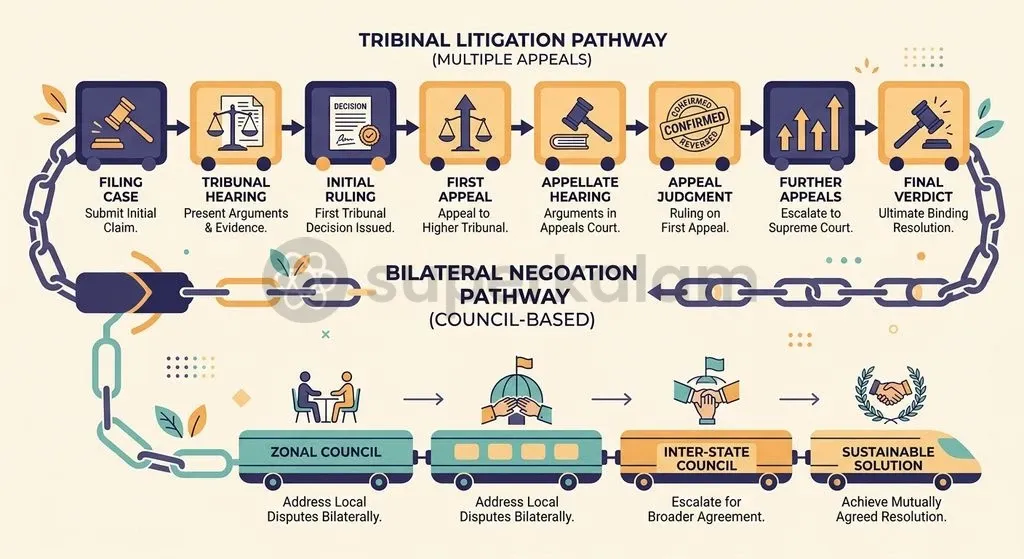
The Sone River dispute was resolved through structured dialogue facilitated by the Inter-State Council and Zonal Council secretariats. Rather than petitioning the Union for an ad-hoc tribunal under the ISRWD Act, both State Governments pursued administrative negotiation under the aegis of the Union Ministry of Home Affairs and the Ministry of Jal Shakti.
The negotiations addressed three historical and geographic bottlenecks:
- Apportionment of Undivided Quotas: Dividing the original 7.75 MAF allocation without disrupting the legacy canal networks operating in the downstream plains of Bihar.
- Upstream Storage Rights: Accommodating Jharkhand's infrastructure needs for seasonal storage and lift-irrigation in Palamu and Garhwa.
- Operational Coordination: Establishing shared monitoring protocols at barrage points to verify daily discharges and distress-sharing during deficit monsoon seasons.
According to a Central Water Commission Policy Review, negotiated accords encourage superior long-term compliance and federal trust compared to tribunal orders. Direct dialogue enables flexible, real-time adjustments during lean seasons without triggering contempt petitions or inter-state litigation.
Discuss with Superkalam
Explain why states frequently approach the Supreme Court under Article 136 despite the statutory bar under Section 11 of the ISRWD Act.
Ask NowTribunal Adjudication vs Bilateral Negotiation: Key Differences
Bilateral negotiation and tribunal adjudication operate under fundamentally distinct legal, administrative, and political dynamics. The structural differences determine how quickly states find common ground and how faithfully they implement the outcome.
| Dimension | Tribunal Adjudication (ISRWD Act, 1956) | Bilateral Negotiation (e.g., Sone Accord) |
|---|---|---|
| Primary Forum | Ad-hoc judicial tribunal headed by sitting or retired judges | Executive dialogue via Inter-State and Zonal Councils |
| Average Timeline | Prolonged proceedings lasting 11 to 28 years | Rapid resolution once joint technical consensus is established |
| Institutional Posture | Zero-sum legal confrontation with rigid evidentiary claims | Mutual compromise and interest-based bargaining |
| Distress Sharing | Rigid formulaic awards requiring judicial clarification | Dynamic and collaborative seasonal adjustments |
| Appellate Risk | Frequent challenges before the Supreme Court under Article 136 | Minimal litigation risk due to prior political assent |
| Federal Trust | Deepens inter-state acrimony through adversarial litigation | Strengthens cooperative federalism and regional synergy |
Constitutional and Legal Architecture: Article 262 and the ISRWD Act
The Constitution of India balances exclusive state domain over water resources with parliamentary authority over inter-state river basins. Entry 17 of the State List (List II) vests jurisdiction over water supplies, irrigation, canals, drainage, embankments, and water storage in State Governments, expressly subject to Entry 56 of the Union List.
Entry 56 of the Union List empowers Parliament to regulate and develop inter-state rivers and river valleys to the extent declared by Parliament by law to be expedient in the public interest. To manage disputes arising from shared rivers, Article 262 of the Constitution provides a dedicated constitutional mechanism:
- Article 262(1): Empowers Parliament by law to provide for the adjudication of any dispute or complaint regarding the use, distribution, or control of waters in any inter-state river or river valley.
- Article 262(2): Allows Parliament to exclude the jurisdiction of the Supreme Court or any other court over such river water disputes.
Exercising this power, Parliament enacted two statutes in 1956:
- The Inter-State River Water Disputes Act, 1956: Establishes the framework for referring inter-state water disputes to ad-hoc tribunals whose awards carry binding force.
- The River Boards Act, 1956: Designed under Entry 56 to establish river boards for basin-wide regulation. However, as noted by the Central Water Commission, the Central Government has never established a single board under this Act due to state resistance against ceding executive control.
Discuss with Superkalam
Analyse the structural differences between ad-hoc tribunal adjudication and executive mediation via Zonal Councils in achieving long-term compliance.
Ask NowWhy Tribunals Often Struggle: Institutional and Political Bottlenecks
Water disputes tribunals face institutional hurdles that systematically delay final awards and weaken enforcement. A major challenge is the routine circumventing of the jurisdictional bar established under Section 11 of the ISRWD Act and Article 262(2).
Although the Constitution aimed to exclude judicial appeals, states frequently challenge tribunal orders before the Supreme Court of India. According to reviews by the Law Commission of India and the Central Water Commission, states file petitions under Article 136 (Special Leave Petitions) and Article 32 (Right to Life), effectively turning ad-hoc tribunals into intermediate courts of first instance.
The institutional bottlenecks include:
- Absence of Standard Data: Riparian states often submit conflicting hydrological, rainfall, and cropping data, forcing tribunals to spend years verifying basic flow statistics.
- Lack of Permanent Machinery: Tribunals dissolve after delivering final awards, leaving no standing technical body to supervise day-to-day reservoir releases or manage deficit-year crises.
- Politicisation of Interim Orders: Regional political parties frequently leverage interim water orders to build electoral capital, creating rigid public expectations that prevent subsequent compromise.
Discuss with Superkalam
Evaluate whether institutionalising mandatory pre-tribunal mediation can permanently reduce inter-state river water conflicts across India.
Ask NowEthical and Federal Dimensions: Upstream Rights vs Downstream Needs
Shared water management involves competing ethical doctrines regarding natural resource sovereignty and inter-generational equity. Historically, upper riparian entities invoked the Harmon Doctrine, claiming absolute territorial sovereignty to divert all waters within their borders regardless of downstream consequences.
Indian constitutional jurisprudence and international conventions have categorically rejected the Harmon Doctrine. Transboundary water management follows two foundational tenets under the Helsinki Rules (1966) and the Berlin Rules (2004):
- Equitable and Reasonable Utilisation: Every riparian state holds an inherent right to a fair share of the watercourse's beneficial uses.
- Obligation Not to Cause Significant Harm: Upper riparian states must regulate their diversions, storage infrastructure, and pollution loads to prevent ecological and economic damage downstream.
| Doctrine / Rule | Legal Stance | Core Principle |
|---|---|---|
| Harmon Doctrine | Rejected by modern courts | Absolute territorial sovereignty over upstream water |
| Helsinki & Berlin Rules | Adopted in modern jurisprudence | Equitable utilisation and obligation to prevent transboundary harm |
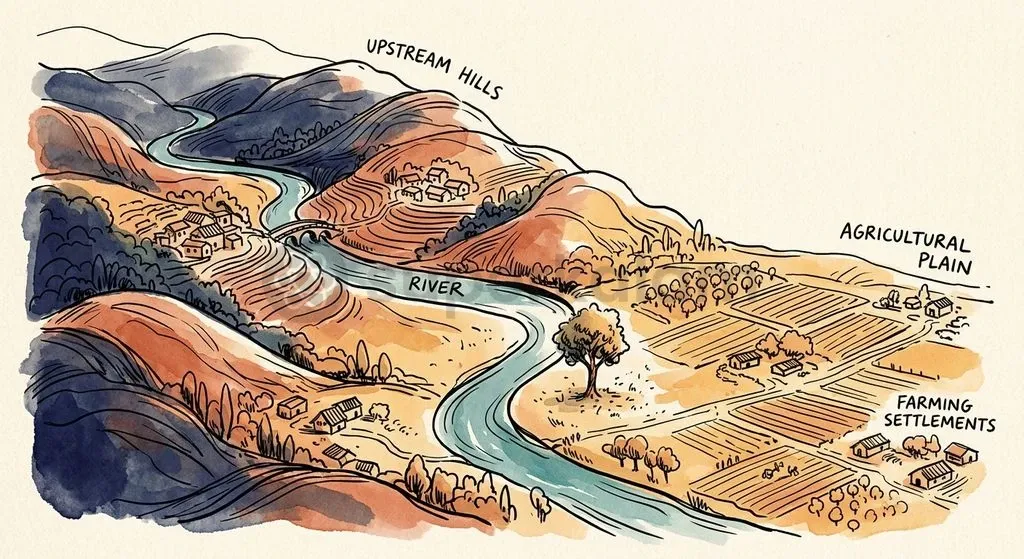
From an ethical and federal standpoint, the Sone Accord illustrates the reconciliation of historic use rights in downstream Bihar with the legitimate development aspirations of upstream Jharkhand. It preserves basic ecological flows while protecting vulnerable farming communities across both jurisdictions.
Way Forward: Building Institutional Frameworks for Cooperative Water Federalism
Reforming India's water governance architecture requires shifting from reactive adjudication to continuous, institutionalised mediation. The structural solutions outlined by various commissions provide a clear blueprint for reform.
Key institutional recommendations include:
- Mandating Pre-Tribunal Mediation: The Inter-State River Water Disputes (Amendment) Bill introduces a statutory Disputes Resolution Committee (DRC). The DRC is mandated to seek a negotiated settlement within one year (extendable by six months) before any dispute is referred to a single permanent tribunal with multiple benches.
- Implementing Sarkaria Commission Recommendations: The Sarkaria Commission (1988) recommended that the Union Government be empowered to constitute water tribunals suo motu when direct talks stall, and that gazetted tribunal awards carry the full legal force of a Supreme Court decree.
- Revitalising Constitutional Councils: The Punchhi Commission (2010) recommended transforming the Inter-State Council under Article 263 and Zonal Councils into permanent consultative forums to resolve resource conflicts before litigation begins.
- Creating Unified River Basin Authorities: India should move away from fragmented state-level management by enacting modern legislation under Entry 56 to establish multidisciplinary river basin authorities equipped with real-time digital telemetry.
Key Takeaways
- The Sone Accord: Signed on 31 August 2026, the bilateral agreement between Bihar and Jharkhand resolves a 26-year-old dispute over undivided Bihar's 7.75 MAF Sone River water allocation.
- Constitutional Architecture: Water management is governed by Entry 17 of the State List, Entry 56 of the Union List, and Article 262, which empowers Parliament to create specialised adjudication laws.
- Tribunal Deficits: Tribunals constituted under the Inter-State River Water Disputes Act, 1956 have historically experienced procedural delays ranging between 11 and 28 years.
- Judicial Overreach Paradox: Despite the jurisdictional bar under Article 262(2) and Section 11 of the ISRWD Act, regular appeals under Article 136 and Article 32 convert tribunals into intermediate forums.
- Legal and Ethical Standards: Modern water federalism rejects the absolute sovereignty of the Harmon Doctrine in favour of equitable utilisation and harm-prevention under the Helsinki and Berlin Rules.
- Institutional Roadmap: Streamlining dispute resolution requires implementing the ISRWD (Amendment) Bill, operationalising Disputes Resolution Committees, and strengthening the Inter-State Council under Article 263.
Mains Question
"Ad-hoc tribunal adjudication under the Inter-State River Water Disputes Act, 1956 has often transformed shared river basins into arenas of protracted legal and political contestation." In light of this statement, critically examine the institutional bottlenecks of the tribunal model and evaluate the efficacy of executive-led bilateral negotiations in resolving inter-state water disputes. (15 Marks)
Evaluate NowMains Question
The resolution of the Sone River dispute between Bihar and Jharkhand reflects a transition from the contentious Harmon Doctrine to the principles of equitable utilisation. Elucidate. (10 Marks)
Evaluate NowPractice MCQs
QUESTION 1
With reference to the constitutional and statutory provisions governing inter-state river water disputes in India, consider the following statements:
- Article 262(2) empowers Parliament to exclude the jurisdiction of the Supreme Court or any other court in respect of inter-state river water disputes.
- The Inter-State River Water Disputes Act, 1956 mandates that the Central Government constitute an ad-hoc tribunal immediately upon receiving a complaint from any riparian State.
- Under Entry 17 of the State List, State jurisdiction over water supplies and irrigation is subject to the provisions of Entry 56 of the Union List. Which of the statements given above are correct?
QUESTION 2
Consider the following statements regarding transboundary water-sharing doctrines and principles:
- The Harmon Doctrine asserts the principle of absolute territorial sovereignty of upper riparian entities over transboundary waters within their borders.
- Modern Indian constitutional jurisprudence and international conventions have rejected the Harmon Doctrine in favour of equitable and reasonable utilisation.
- The Berlin Rules (2004) place an obligation on upper riparian states not to cause significant transboundary harm. Which of the statements given above is/are correct?
QUESTION 3
Regarding the River Boards Act, 1956, consider the following statements:
- It was enacted by Parliament under Entry 56 of the Union List for basin-wide regulation and development of inter-state rivers.
- The Central Government has operationalised river boards for all major inter-state river basins to supervise day-to-day reservoir operations. Which of the statements given above is/are correct?
QUESTION 4
With reference to the resolution of the Sone River water dispute between Bihar and Jharkhand, consider the following statements:
- The dispute arose following the bifurcation of undivided Bihar under the Bihar Reorganisation Act, 2000, leaving a 7.75 MAF water allocation undivided.
- The dispute was settled through an award delivered by an ad-hoc tribunal set up under the Inter-State River Water Disputes Act, 1956.
- The agreement secures drinking and irrigation supplies for southwestern Bihar while catering to the drought-prone Palamu and Garhwa regions of Jharkhand. Which of the statements given above is/are correct?
QUESTION 5
Which of the following factors is cited as a major institutional bottleneck leading to prolonged adjudication in India's water disputes tribunals?