Pumped Hydro vs Batteries: India's 105 GW Energy Storage Bet
As India scales to 500 GW of renewables, pitting civil-built pumped hydro against critical mineral-dependent batteries reveals the physics of grid stability.
Oct, 2026
•11 min read
Overview
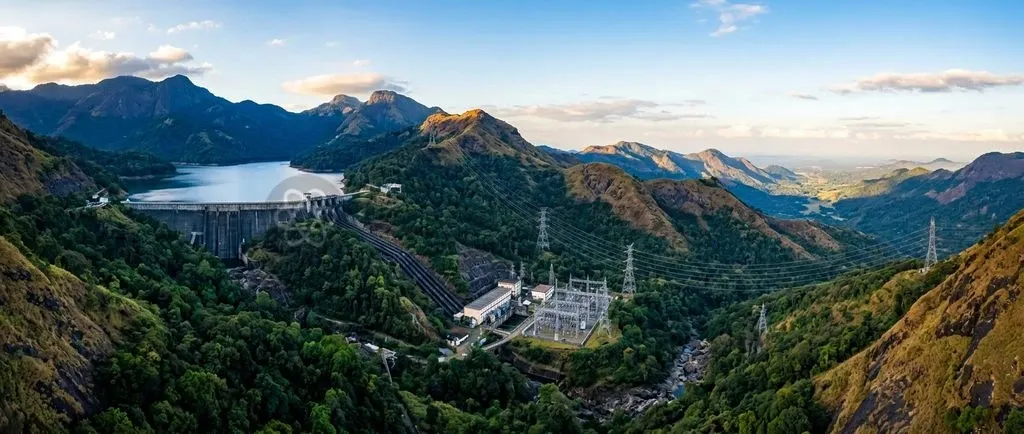
India targets 105.56 gigawatts of pumped storage hydropower by 2035–36. This massive rollout anchors national grid stability through mechanical long-duration storage. As India integrates 500 gigawatts of non-fossil generation capacity, balancing intermittent solar and wind requires both rapid-response and multi-hour storage systems.
Battery energy storage excels at short-duration frequency containment. In contrast, pumped hydro provides an asset lifespan of up to a century alongside physical rotational inertia. This pragmatic division of labour relies on pumped hydro for bulk energy shifting, protecting the national energy transition from overseas mineral vulnerabilities.
Why India Needs Massive Energy Storage Right Now
The Central Electricity Authority estimates that India requires massive utility-scale storage to integrate its targeted 500 gigawatts of non-fossil power capacity by 2030. Variable renewable sources cannot generate round the clock. Without large storage assets, peak midday solar faces curtailment while evening peaks stay dependent on thermal generation.
Under the National Electricity Plan (2022–32) notified in May 2023, the Central Electricity Authority mapped out expanding capacity targets:
- Storage requirement by 2029–30: A total of 60.63 GW storage capacity (comprising 18.98 GW of pumped storage and 41.65 GW of battery storage) with 336.4 GWh of energy capacity.
- Storage requirement by 2031–32: An expanded 73.93 GW storage capacity (26.69 GW pumped storage and 47.24 GW battery storage) with 411.4 GWh.
Longer-range projections highlight an accelerating need for multi-hour storage systems. The Central Electricity Authority released its 'Roadmap to 100 GW of Hydro Pumped Storage Projects by 2035–36' in January 2026. It projects that national energy storage requirements will reach 62 GW by 2029–30 and surge to a 161 GW storage requirement by 2034–35, placing heightened emphasis on long-duration pumped storage.
To enforce demand, the Ministry of Power established a statutory Energy Storage Obligation trajectory for electricity distribution companies. This mandate starts at 1.0% in FY 2023–24 and climbs steadily to a 4.0% mandatory obligation by FY 2029–30, forcing utilities to procure dedicated storage capacity.
Discuss with Superkalam
What are the specific storage capacity and energy figures targeted by the Central Electricity Authority for 2029–30?
Ask NowHow Pumped Storage Hydropower Works Alongside Giant Batteries
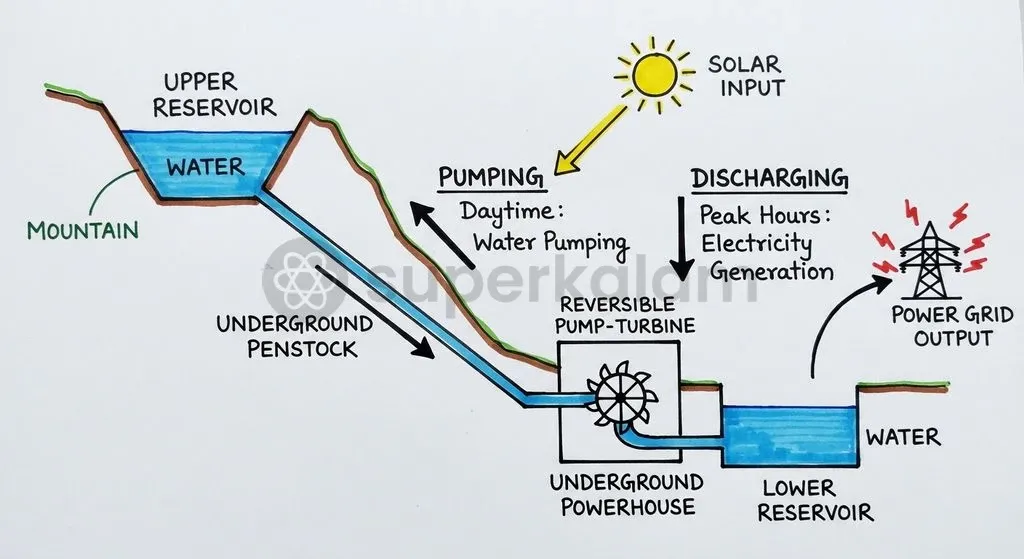
Pumped storage hydropower is essentially a colossal water battery. It pairs mechanical potential energy with electrochemical battery systems to balance the national transmission grid. Surplus solar or off-peak power pumps water from a lower reservoir to an upper reservoir. Downstream release through reversible turbines then generates dispatchable electricity during peak evening hours.
India possesses vast untapped geographical potential for this technology. According to official assessments by the Central Electricity Authority, the country has identified an aggregate potential of 345.38 GW across 320 projects. This resource base consists of:
- Off-stream closed-loop projects: 258 identified sites representing 288.71 GW potential capacity, located away from perennial river systems.
- On-stream conventional projects: 62 identified sites representing 56.67 GW potential capacity, constructed along natural river courses.
Regional distribution concentrates this resource primarily in peninsular India. The Western Region leads the country with 129.72 GW potential, driven by Maharashtra with 67.36 GW and Gujarat with 33.36 GW, while the Southern Region holds 97.76 GW potential.
As of late 2026, India's operational pumped storage capacity stands at 7.43 GW operational capacity across 10 projects. Active construction accounts for another 15.87 GW under construction across 11 projects. An additional 10.40 GW concurred or appraised across 8 projects awaits development by the Central Electricity Authority.
International data compiled by the International Renewable Energy Agency and cited by the Ministry of Power ranks India fourth globally in capacity as of end-2025. It trails only China (66 GW), Japan (22 GW), and the United States (~19 GW) out of a global operational base of 159.8 GW.
Head-to-Head: Comparing Costs, Lifespan, and Storage Duration
Economic comparisons between pumped storage and electrochemical batteries show sharp trade-offs across capital expenditure, operating lifespan, round-trip efficiency, and the levelised cost of long-duration discharge. Neither technology holds an absolute advantage across every operational metric, making techno-economic matching essential for power system planners.
| Performance Parameter | Pumped Storage Hydropower (PSP) | Battery Energy Storage Systems (BESS) | Strategic Grid Implication |
|---|---|---|---|
| Typical Asset Lifespan | 40 to 50+ years for electromechanical gear; up to 80–100 years for civil dams | 10 to 15 years calendar life before mandatory cell augmentation or replacement | Pumped hydro amortises high civil capital costs across generations; batteries require periodic replacement cycles. |
| Round-Trip Efficiency (RTE) | 70% to 80% efficiency due to hydraulic friction and electromechanical conversion | 85% to 90% efficiency with direct electrochemical conversion | Batteries waste less input energy during daily cycling, making them superior for short, frequent charges. |
| Optimal Storage Duration | 6 to 10+ hours of continuous bulk discharge | 1 to 4 hours economically optimal; steep cost escalation beyond 4 hours | Pumped hydro addresses multi-hour evening peak deficits; batteries handle intra-day peaks and sudden solar drops. |
| Construction Gestation | 4 to 7 years involving civil excavation and environmental studies | 1 to 2 years with factory-assembled modular containerised units | Battery installations deploy rapidly to meet immediate local network shortfalls. |
| Levelised Cost of Storage (LCOS) | ₹4.00 to ₹4.81 per kWh for 6 to 8 hours discharge (reported as competitive benchmark) | ₹8.00 to ₹11.64 per kWh historically; targeting ₹5.50 to ₹6.60 per kWh with state viability support | Pumped storage delivers cheaper multi-hour energy shifting over long lifespans, whereas batteries carry higher storage costs. |
Pumped hydro achieves lower levelised costs for multi-hour energy shifting because expanding duration simply requires building a larger reservoir basin, leaving turbine capacity unchanged. In contrast, scaling battery duration requires adding more expensive chemical cells. Electrochemical batteries remain more cost-effective for sub-two-hour applications where rapid response matters more than bulk energy volume.
Discuss with Superkalam
Why does scaling the duration of a pumped hydro project result in a lower marginal cost compared to scaling a battery storage system?
Ask NowSupply Chain Realities: Lithium Import Risks vs Land and Water Hurdles
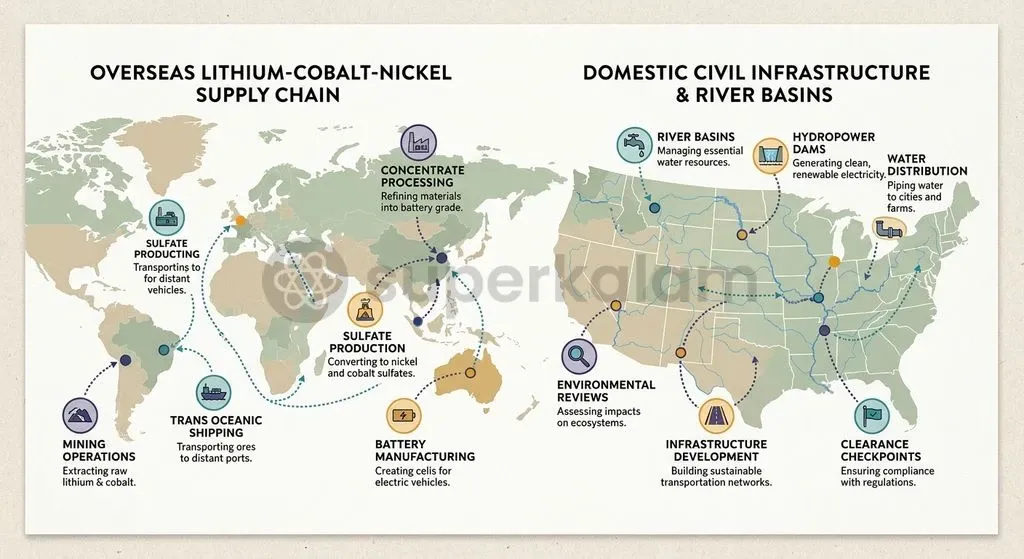
Critical mineral import dependencies define electrochemical battery storage. Conversely, pumped hydro encounters severe friction around land acquisition, environmental clearances, and interstate riparian rights. Energy security considerations must weigh geopolitical exposure against domestic execution bottlenecks.
Utility-scale battery deployment exposes India's energy transition to severe external vulnerabilities. A diagnostic study by the Ministry of Mines confirmed that India relies on 100% foreign critical minerals for lithium, cobalt, and nickel. Furthermore, Chinese industrial processors control over 70% chemical refining globally, creating acute geopolitical and supply disruption risks for national grid infrastructure.
Conversely, pumped storage projects rely on domestic civil engineering, steel, and concrete, but face formidable local execution barriers. Project developers frequently struggle with:
- Complex forest clearances and statutory environmental impact reviews.
- Interstate water disputes and conflicting river-basin allocation claims.
- Difficult geological formations that cause tunnel collapses and prolonged cost overruns.
- Local rehabilitation friction during land acquisition for reservoir inundation.
To overcome these site-specific barriers, policy has pivoted toward off-stream closed-loop systems. Locating upper and lower reservoirs outside perennial river courses avoids altering natural river ecology and requires only an initial water fill alongside minimal seasonal top-ups to replace evaporation losses.
Environmental authorities have adjusted regulatory frameworks to accelerate closed-loop deployment. In May 2023, the Ministry of Environment, Forest & Climate Change enabled appraisal of off-stream schemes under Category B2 streamlined clearance. It shortened environmental baseline surveys to one non-monsoon season in August 2023, and permitted exploratory drilling at par with mining prospecting in August 2024.
Discuss with Superkalam
Imagine a state grid facing sudden midday solar surges and severe evening peak deficits. How should a grid operator dispatch BESS and PSP to handle these conditions?
Ask NowGrid Stability: Why Spinning Turbines Offer What Batteries Cannot
Synchronous generator-turbines in pumped hydro stations provide physical mechanical inertia to the national grid, delivering an essential dampening mechanism that inverter-based battery systems can only emulate synthetically. As non-synchronous solar and wind replace thermal coal plants, the power grid loses heavy rotating masses that naturally resist sudden frequency deviations.
Grid operators balance system stability through distinct technical capabilities across both assets:
- Physical rotating kinetic inertia: Rotating shafts and heavy turbines contribute physical rotating kinetic inertia, immediately dampening power imbalances before protection relays trip transmission corridors.
- Black-start restoration: Hydro turbines provide reliable black-start network capability, allowing system operators to restart transmission lines and restore collapsed grids during total blackouts.
- Fast Frequency Response: Inverter-based battery installations deliver millisecond-scale Fast Frequency Response delivery through power electronics, arresting rapid frequency changes faster than mechanical hydro valves.
- Grid-forming inverter controls: Under draft Central Electricity Authority (Technical Standards for Connectivity to the Grid) Regulations, 2026, standalone batteries of 50 MW and above must support black start and deploy grid-forming inverter controls to mimic synchronous voltage sources.
Discuss with Superkalam
How do the supply chain vulnerabilities of lithium-ion batteries compare with the land and environmental hurdles faced by pumped storage hydropower?
Ask NowPolicy Support: Comparing Incentives for Hydropower and Battery Storage
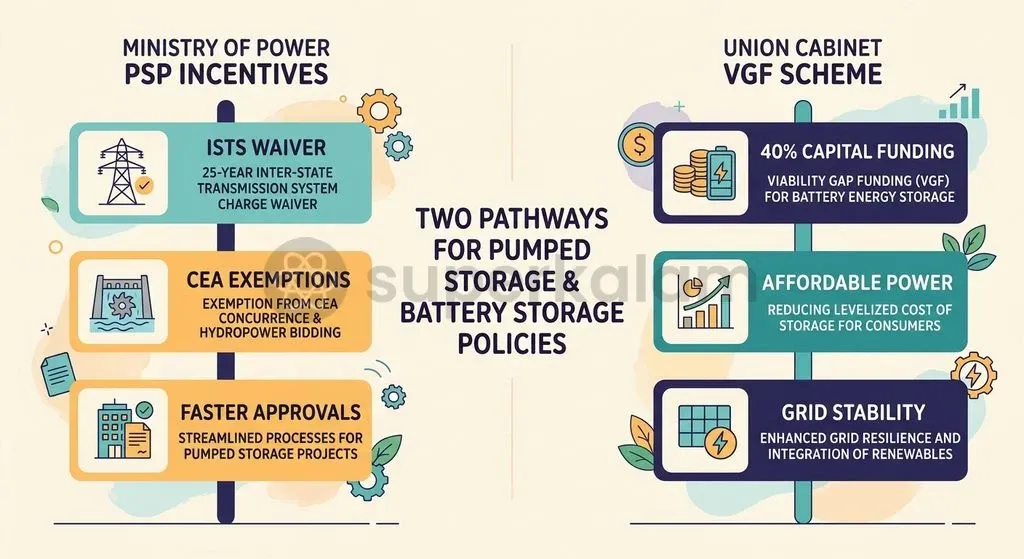
The Ministry of Power has deployed targeted fiscal waivers, environmental fast-tracking, and viability gap support to balance capital-intensive pumped hydro development against modular battery deployments. These dual policy tracks address the distinct investment horizons and commercial risks of each technology.
The central government supports these parallel storage tracks through distinct fiscal and regulatory instruments:
- Site allotment and infrastructure aid: Guidelines notified on April 10, 2023, provide budgetary support for road and bridge infrastructure, exempt upfront site allotment premiums, and facilitate green bond financing mechanisms.
- Inter-state transmission waivers: The central government introduced a 100% ISTS transmission waiver spanning 25 years from the commercial operation date for all pumped storage projects awarded on or before June 30, 2028.
- Concurrence exemptions for off-stream assets: On August 1, 2025, the Ministry of Power raised the Central Electricity Authority mandatory review limit to a ₹3,000 crore concurrence threshold for conventional hydro, while granting a complete concurrence exemption for off-stream closed-loop projects.
- Viability Gap Funding for batteries: Approved on September 6, 2023, the Union Cabinet committed ₹3,760 crore budgetary support covering up to 40% of capital costs for 4,000 MWh of BESS by 2030–31, requiring developers to reserve 85% capacity for DISCOMs.
Way Forward: Building a Hybrid Storage Model for India's 2030 Goals
Achieving India's 500-gigawatt non-fossil capacity target requires a complementary hybrid storage strategy rather than a binary contest between pumped hydro and chemical battery technologies. System planners must recognise that grid stability relies on a symbiotic relationship between fast-acting electrochemical response and long-duration mechanical storage.
An effective operational division of labour should govern public procurement:
- Assign short-duration frequency containment to batteries: Deploy modular battery systems at renewable pooling substations to provide sub-second frequency regulation, smooth local solar ramping, and cover initial 1 to 2-hour evening peaks.
- Anchor multi-hour baseload shifting in pumped hydro: Build off-stream pumped storage assets across the Western and Southern Ghats to absorb surplus midday solar and deliver 6 to 10 hours of sustained evening power.
- De-risk domestic supply chains: Rely on pumped storage's civil-heavy asset base to reduce exposure to concentrated overseas critical mineral processing, while domestic battery manufacturing matures.
- Enforce regulatory storage obligations: State electricity regulatory commissions must penalise distribution utilities that fail to meet the statutory Energy Storage Obligation trajectory, ensuring firm off-take contracts.
- Mandate grid-forming standards: Implement Central Electricity Authority guidelines requiring advanced grid-forming inverters on large battery installations to reinforce physical grid inertia.
By expanding pumped storage capacity toward the Central Electricity Authority's envisaged 105.56 GW by 2035–36 while utilising targeted viability gap funding for strategic battery deployments, India can build an energy storage architecture that protects grid physics and national sovereignty.
Discuss with Superkalam
Given that battery storage has shorter gestation but high import dependence, should India prioritize battery viability funding or regulatory easing for hydro storage up to 2030?
Ask NowKey Takeaways
- Strategic Capacity Targets: The Central Electricity Authority envisages adding 100.81 GW of pumped storage by 2035–36 to establish a cumulative national fleet of 105.56 GW operational PSP capacity, helping absorb 500 GW of non-fossil generation.
- Techno-Economic Differentiation: Pumped storage delivers an asset lifespan of 40 to 50+ years and lower levelised storage costs for 6 to 10-hour durations, whereas batteries provide 85% to 90% efficiency and sub-second response suited for 1 to 4-hour discharge.
- Supply Chain Vulnerability: Battery storage relies on 100% foreign critical minerals (lithium, cobalt, nickel) with processing concentrated in China, making domestic civil-based pumped hydro critical for energy security.
- Grid Physics and Inertia: Synchronous hydro turbines supply essential physical rotating kinetic inertia and black-start restoration, while batteries provide rapid frequency response and synthetic inertia via advanced inverters.
- Targeted Policy Catalysts: Pumped hydro benefits from 100% transmission charge waivers through June 2028 and concurrence exemptions for off-stream sites, while batteries receive ₹3,760 crore in viability gap funding.
Mains Question
"While Battery Energy Storage Systems (BESS) offer rapid deployment and high round-trip efficiency, long-duration Pumped Storage Projects (PSPs) remain indispensable for shielding India's renewable transition from external vulnerabilities." Critically analyse. (15 Marks)
Evaluate NowMains Question
The Central Electricity Authority’s 'Roadmap to 100 GW of Hydro Pumped Storage Projects by 2035–36' signals a strategic pivot toward off-stream closed-loop systems. Elucidate the rationale behind this shift. (10 Marks)
Evaluate NowPractice MCQs
QUESTION 1
With reference to the National Electricity Plan (2022–32) notified by the Central Electricity Authority, consider the following statements:
- The national storage capacity requirement mapped out for 2029–30 relies on a higher proportion of battery storage capacity than pumped storage capacity.
- Under the Energy Storage Obligation trajectory, distribution companies must meet a mandatory obligation of 10.0% by FY 2029–30.
- The long-term storage requirement projected for 2034–35 expands to over 160 GW. Which of the statements given above is/are correct?
QUESTION 2
Consider the following statements regarding the geographical distribution and categorization of Pumped Storage Hydropower (PSP) potential in India:
- Off-stream closed-loop projects represent a significantly larger share of identified potential capacity compared to on-stream conventional projects.
- The Southern Region holds the largest identified potential among all regions in India.
- According to data from the International Renewable Energy Agency cited by the Ministry of Power, India ranks fourth globally in operational pumped storage capacity as of end-2025. Which of the statements given above is/are correct?
QUESTION 3
In the techno-economic comparison between Pumped Storage Hydropower (PSP) and Battery Energy Storage Systems (BESS), consider the following statements:
- Battery systems demonstrate a higher round-trip efficiency (RTE) than pumped hydro storage.
- Pumped storage installations typically achieve a lower Levelised Cost of Storage (LCOS) than batteries for continuous multi-hour discharge.
- The calendar lifespan of battery cells before replacement is comparable to that of electromechanical gear in pumped storage installations. Which of the statements given above is/are correct?
QUESTION 4
With reference to regulatory reforms for Pumped Storage Hydropower projects in India, which of the following measures was adopted by the Ministry of Environment, Forest & Climate Change? (a) Absolute exemption of all on-stream river projects from environmental impact reviews (b) Permitting appraisal of off-stream closed-loop schemes under Category B2 streamlined clearance (c) Mandating a minimum of three monsoon seasons for baseline ecological surveys (d) Prohibiting exploratory drilling prior to receiving final civil construction permits
QUESTION 5
Consider the following statements regarding grid integration and mineral supply risks for energy storage in India:
- India relies completely on foreign imports for lithium, cobalt, and nickel critical to electrochemical battery manufacturing.
- More than 70% of global chemical refining of critical battery minerals is controlled by Chinese processors. Which of the statements given above is/are correct?