Pharma Cold Chain Cyber Threats: Security Gaps and India's Regulatory Shield
As hostile actors target medical cooling networks, India must bridge critical regulatory gaps to protect public health and its global pharmaceutical standing.
Nov, 2026
•9 min read
Overview
Securing pharmaceutical cold chains against cyber threats is an urgent public health and economic priority. Malicious actors increasingly target operational technology and telemetry networks to manipulate temperature thresholds.
Modern medical distribution relies on physical cooling units and digital platforms to protect vaccines, insulin, and biologics. Hostile disruption exposes patients to degraded medicine while threatening industrial continuity. Securing these temperature-controlled supply lines requires treating operational technology with the regulatory urgency accorded to traditional national infrastructure.
Why in the News? Rising Cyber Threats to Health Supply Networks
Operational technology powering medical cold chains faces growing vulnerability. International threat groups actively exploit unpatched industrial cooling controllers.
Recent intelligence warnings and cyber incidents highlight expanding risks to temperature-sensitive logistics:
- Global CISA-FBI Warning: As of November 2026, a joint advisory issued by the United States Cybersecurity and Infrastructure Security Agency (CISA) and the Federal Bureau of Investigation (FBI) warned that cyber adversaries are aggressively targeting industrial refrigeration equipment worldwide.
- European Blood Bank Breaches: Widespread disruptions hit Europe during October and November 2026. A coordinated campaign, attributed by French authorities to the Shahid Kaveh group linked to Iran's Islamic Revolutionary Guard Corps (IRGC), breached hundreds of refrigeration controllers. The attack forced France's national blood service to initiate emergency product transfers.
- Indian Regulatory Directives: In May 2026, the Indian Computer Emergency Response Team (CERT-In) published a dedicated cybersecurity blueprint. The document identified Operational Technology (OT) and cyber-physical systems as high-risk priority sectors, demanding strict network separation and third-party vendor access controls.
Discuss with Superkalam
What are the three distinct technical layers comprising a modern pharmaceutical cold chain?
Ask NowWhat Is a Pharma Cold Chain and How Does Its Tech Work?
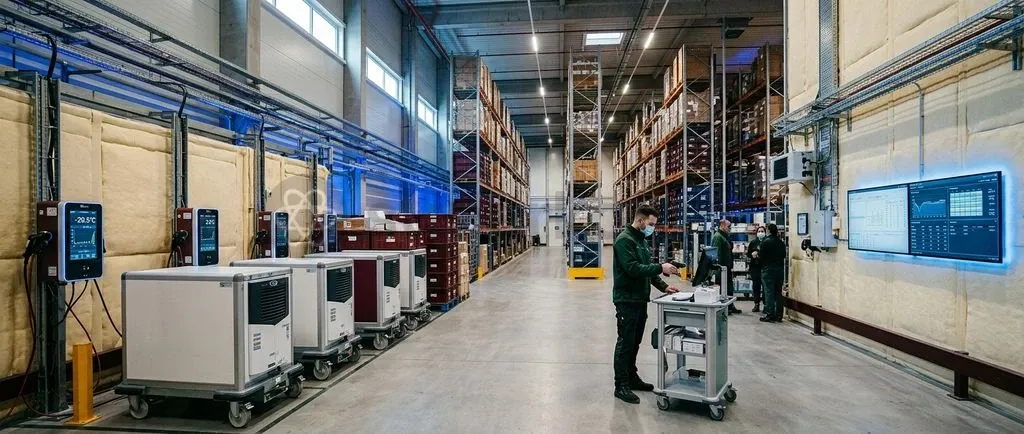
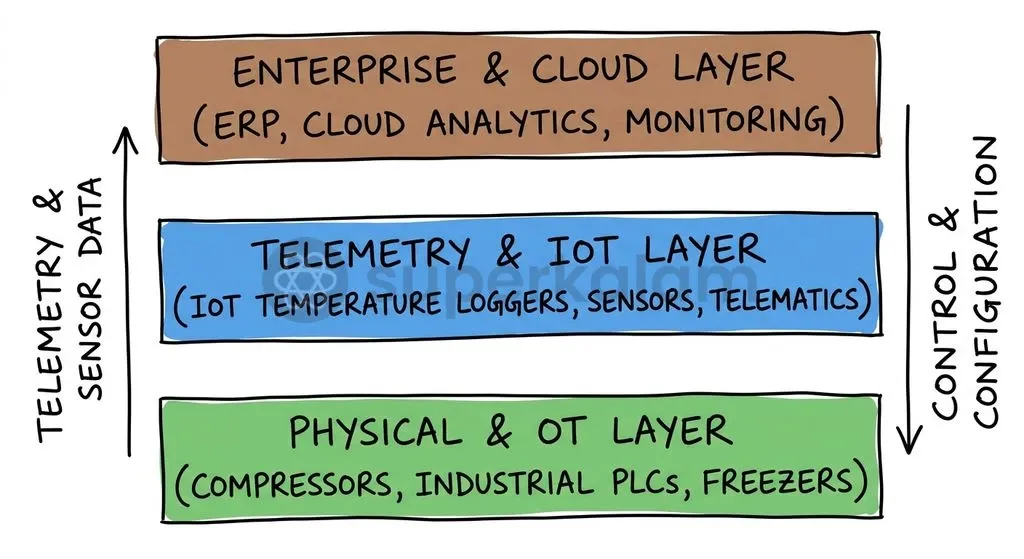
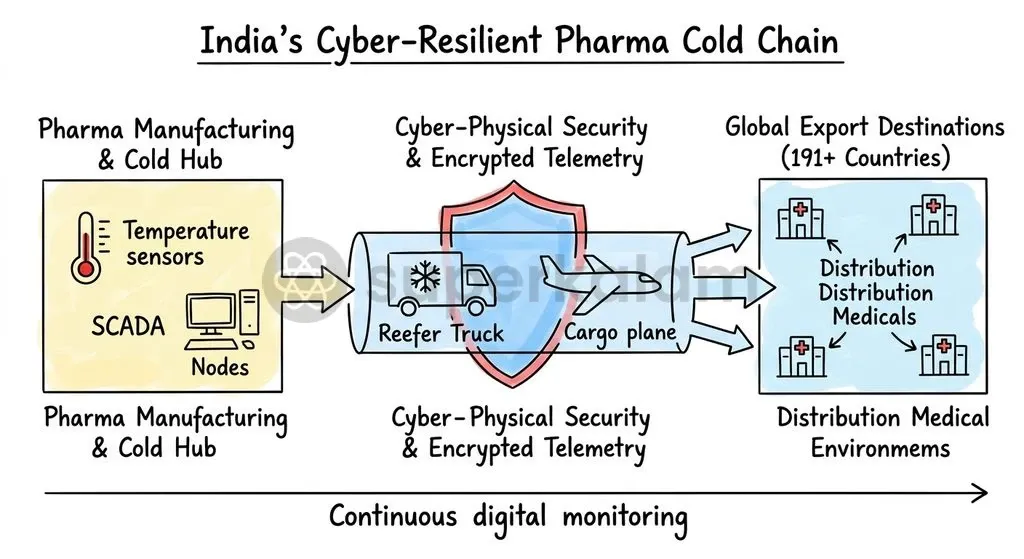
A pharmaceutical cold chain is an unbroken, temperature-regulated distribution system. It preserves the safety, integrity, and clinical efficacy of sensitive medical cargo. Modern logistics infrastructure integrates three technical layers: digital monitoring sensors, in-transit telematics, and heavy refrigeration machinery.
Programmable Logic Controllers (PLCs) sit at the foundation of this physical network. These specialised controllers regulate compressor cycles, condenser fans, and automated defrost cycles across warehouses and refrigerated trucks (reefers).
The physical layer links directly to an information layer. There, Internet of Things (IoT) sensors continuously measure ambient temperatures and transmit data via cellular and satellite telematics to centralised cloud platforms.
| Layer | Primary Components | Operational Function | Inherent Vulnerability |
|---|---|---|---|
| Operational Technology (OT) | Programmable Logic Controllers (PLCs), SCADA systems, compressor drives | Regulates physical cooling cycles, fan speeds, and automated defrosting elements | Legacy equipment lacking native authentication or encryption |
| Telemetry & Transit | Internet of Things (IoT) data loggers, GPS units, reefer telematics | Transmits live temperature, power status, and location metrics | Unencrypted cellular or satellite links vulnerable to interception |
| Enterprise Management | Cloud dashboards, Automated Storage and Retrieval Systems (ASRS) | Directs warehouse inventory allocation, quality verification, and dispatch | Susceptible to credential theft, API breaches, and ransomware |
Public health distribution relies heavily on this technological setup. The Ministry of Health and Family Welfare manages the Electronic Vaccine Intelligence Network (eVIN). This platform digitises real-time stock levels and storage temperatures across more than 29,000 cold chain points spanning all 36 States and Union Territories.
Where Cold Chains Break: IoT Loggers, Cloud Systems, and Old OT
Cold chain vulnerabilities emerge primarily from the unsafe convergence of legacy industrial machinery with modern cloud-facing networks. Facilities frequently link older supervisory control and data acquisition (SCADA) setups directly to commercial software without strong boundary firewalls. This practice exposes unprotected control interfaces to the public internet.
Three primary attack vectors threaten these logistics pipelines:
- Programmable Logic Controller Manipulation: Adversaries alter setpoints or trigger unwarranted heating element activations during defrost cycles. This induces thermal shock while reporting normal ambient readings.
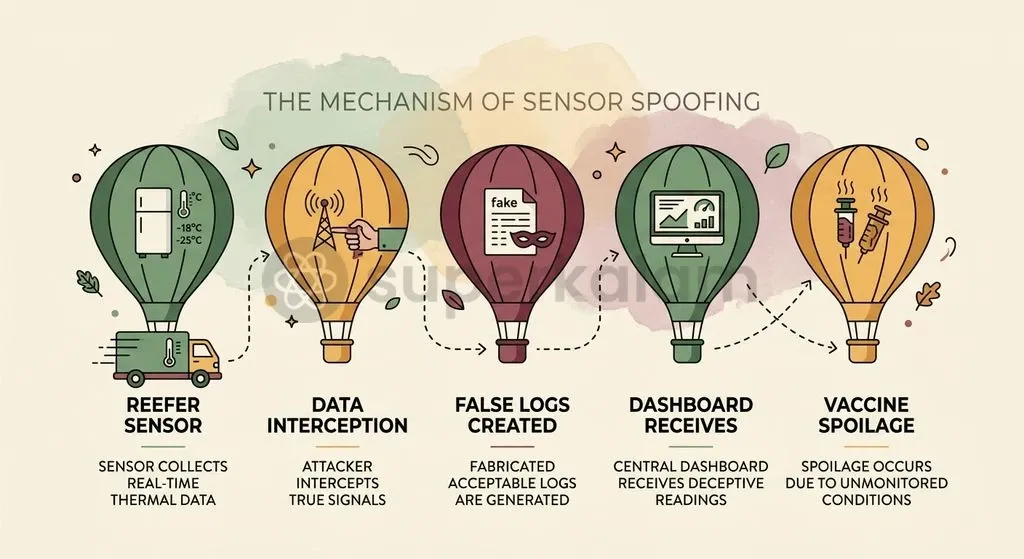
- Telemetry Log Interception: Threat actors conduct Man-in-the-Middle (MitM) attacks across unencrypted cellular and satellite telematics pipelines linking reefer fleets to logistics portals, falsifying transit data.
- Automated Warehouse Immobilisation: Cyber groups deploy ransomware directly against Automated Storage and Retrieval Systems (ASRS) and warehouse management software. This action physically traps perishable medical consignments inside frozen facilities.
Domestic engineering guidelines have accelerated hardware digitisation while overlooking cybersecurity safeguards. The National Centre for Cold-chain Development (NCCD) released its Engineering Guidelines & Minimum System Standards (2025). This framework mandates IoT monitoring and unified control mechanisms for central scheme-assisted projects, yet it omits binding operational technology cybersecurity baselines.
Discuss with Superkalam
How does the convergence of legacy operational technology (OT) with modern cloud platforms create entry points for cyber attacks?
Ask NowThe Real-World Fallout: Spoofed Temperatures, Spoiled Batches, and Extortion
Sensor spoofing presents a unique hazard in pharmaceutical cold chains because it decouples digital data streams from physical realities. Adversaries exploit digital interfaces to trigger distinct operational and clinical failures:
- Telemetry Masking: Sophisticated threat actors inject false telemetry data into centralised dashboards. This hides lethal thermal spikes while biological cargo suffers severe heat damage in transit.
- Silent Thermal Denaturation: Invisible spoilage is the most dangerous consequence of sensor spoofing. Biologics such as insulin, monoclonal antibodies, and mRNA vaccines undergo thermal denaturation when exposed to temperature variations. They completely lose their therapeutic potency without showing physical discolouration or cloudiness. Compromised batches pass visual inspection by pharmacists and enter patient administration pipelines unchecked.
- Extortion and Supply Gridlocks: Ransomware attacks exacerbate operational disruption by locking inventory systems. When adversaries seize control of distribution routing software, operators face an agonising choice. They must pay extortion demands within hours or watch thousands of temperature-sensitive medical consignments spoil on loading docks.
India's Regulatory Shield: NCIIPC, CERT-In Rules, and Critical Infrastructure Gaps
India's statutory framework enforces rigorous general cybersecurity obligations but leaves critical gaps around commercial pharmaceutical infrastructure. Section 70(1) of the Information Technology Act, 2000 defines Critical Information Infrastructure (CII) as any computer resource whose incapacitation or destruction would carry a debilitating impact on national security, economy, public health, or safety.
Under Section 70A of the Information Technology Act, 2000, the National Critical Information Infrastructure Protection Centre (NCIIPC) is the national nodal agency for protecting critical infrastructure.
The NCIIPC oversees priority sectors including Power, Transport, Telecom, Banking, Government, and Strategic Public Enterprises. However, commercial pharmaceutical cold storage facilities and private distribution networks currently lack formal designation as Critical Information Infrastructure.
Specific operational obligations apply universally across Indian enterprise networks under directives issued by CERT-In pursuant to Section 70B(6) of the Information Technology Act, 2000:
- Mandatory Six-Hour Incident Reporting: Body corporates, service providers, and intermediaries must report identified cybersecurity incidents to CERT-In within 6 hours of discovery.
- 180-Day Rolling Log Retention: Covered entities must securely store comprehensive Information and Communication Technology (ICT) system logs for a rolling duration of 180 days within Indian jurisdiction.
- System Clock Synchronisation: Enterprise network clocks must synchronise strictly with the Network Time Protocol (NTP) servers of the National Informatics Centre (NIC) or the National Physical Laboratory (NPL).
Non-compliance with these CERT-In directives carries enforceable legal liabilities. Section 70B(7) of the Information Technology Act, 2000 prescribes penalties including imprisonment for up to one year, a fine up to one lakh rupees, or both.
In addition, the Digital Personal Data Protection Act (DPDPA), 2023 classifies commercial logistics firms managing shipment records that include patient identifiers as data fiduciaries, requiring them to enforce reasonable security safeguards.
Discuss with Superkalam
Compare the public health consequences of silent thermal denaturation of biologics versus direct physical contamination in supply chains.
Ask NowStrategic Risk: Protecting India's Standing as the Pharmacy of the World
The Indian pharmaceutical sector is a foundation of global public health and national economic strength. The sector faces major systemic exposure across key operational dimensions:
- Global Supply Dominance: According to the Economic Survey 2025-26, India's pharmaceutical industry ranks third globally by volume. It supplies approximately 20 percent of global generic medicine demand across 191 countries.
- High Revenue Stakes: The domestic pharmaceutical market achieved an annual turnover of ₹4.72 lakh crore in FY25, with projections anticipating growth to $130 billion by 2030.
- Vulnerability in Complex Biologics: Financial expansion relies heavily on complex biosimilars, recombinant therapies, and monoclonal antibodies that require continuous cold-chain compliance. A successful cyber offensive against industrial cold hubs risks critical export timelines. It could trigger import bans from international drug regulators and inflict lasting reputational damage on India's export profile.
Ethical and Public Health Stakes: When Data Tampering Risks Human Lives
Administering spoiled biopharmaceuticals risks catastrophic primary treatment failure. Digital tampering creates acute ethical dilemmas alongside direct clinical perils:
- Loss of Immunological Protection: When denatured vaccines fail to generate protective immune responses, recipients remain vulnerable to target pathogens. This precipitates unexpected disease outbreaks. Structurally altered therapeutic proteins can also provoke life-threatening adverse immunogenic reactions in chronic-care patients.
- Commercial Penalty Pressures: Cold-chain logistics operators face punishing contractual penalties from pharmaceutical manufacturers for cargo ruined by temperature excursions.
- Concealment and Moral Hazard: When operators discover compromised digital logs, management faces a toxic financial incentive. Firms may deliberately conceal sensor alterations rather than discard spoiled batches, sacrificing patient welfare to avoid immediate commercial liability.
Discuss with Superkalam
Should NCIIPC notify private pharmaceutical distribution and cold chain networks as Critical Information Infrastructure under Section 70? Weigh the compliance costs against public health security.
Ask NowWay Forward: Hardening the Digital Backbone of Temperature-Sensitive Logistics
Securing pharmaceutical supply chains requires establishing strict technical architecture standards alongside enhanced regulatory oversight. Logistics providers and drug manufacturers must implement international standards under the IEC 62443 series, which sets security frameworks for industrial automation systems by dividing operational networks into isolated zones and secure conduits.
Key operational and policy priorities include:
- Formal CII Notification: The Ministry of Electronics and Information Technology (MeitY) and NCIIPC should officially designate large-scale pharmaceutical logistics networks and automated central drug warehouses as Critical Information Infrastructure under Section 70 of the IT Act, 2000.
- Mandatory OT Security Standards: The Central Drugs Standard Control Organisation (CDSCO), in coordination with NCCD, must update Good Distribution Practices to mandate hardware-level cryptographic authentication for all IoT loggers and prohibit direct internet exposure of industrial refrigeration PLCs.
- Independent Cryptographic Telemetry: Logistics operators should implement immutable, cryptographically signed telemetry records that verify temperature integrity using out-of-band monitoring channels, preventing single-point sensor spoofing.
- Rigorous Third-Party Auditing: Regulatory authorities must require routine red-team penetration assessments and strict third-party vendor access controls, matching the operational technology baseline published by CERT-In in May 2026.
Key Takeaways
- Section 70(1) of the Information Technology Act, 2000 empowers authorities to designate systems impacting public health or safety as Critical Information Infrastructure, yet commercial pharmaceutical cold chains lack blanket CII designation under NCIIPC guidelines.
- Industrial cold storage facilities rely on Programmable Logic Controllers (PLCs) and IoT sensors, which are vulnerable to remote manipulation, telemetry spoofing, and ransomware attacks.
- Under Section 70B(6) directives, all logistics operators must report cybersecurity breaches to CERT-In within 6 hours and maintain comprehensive system logs for 180 days within India.
- Invisible spoilage of biologics from sensor spoofing creates severe clinical risks, including vaccine failure and adverse patient immunogenic responses, without detectable changes in physical packaging.
- Protecting the digital cold chain safeguards India's strategic standing as supplier of 20 percent of global generic medicines and secures an export market projected to reach $130 billion by 2030.
Mains Question
"The convergence of legacy operational technology with modern IoT and cloud infrastructure has transformed temperature-sensitive medical logistics into an expanded cyber-physical attack surface." Critically analyse the vulnerabilities inherent in pharmaceutical cold chains and the adequacy of India's current regulatory safeguards. (15 Marks)
Evaluate NowMains Question
Despite Section 70 of the Information Technology Act, 2000 defining Critical Information Infrastructure (CII) in terms of impact on public health and safety, commercial pharmaceutical logistics remains outside its formal ambit. In this context, evaluate the risks posed to India's standing as the 'Pharmacy of the World'. (10 Marks)
Evaluate NowPractice MCQs
QUESTION 1
Regarding cybersecurity regulatory frameworks in India, consider the following statements:
- Under the Information Technology Act, 2000, the National Critical Information Infrastructure Protection Centre (NCIIPC) is designated as the national nodal agency for protecting Critical Information Infrastructure.
- Commercial pharmaceutical cold storage facilities and private distribution networks are currently designated as Critical Information Infrastructure by NCIIPC.
- CERT-In directives mandate body corporates and intermediaries to report identified cybersecurity incidents within six hours of discovery.
Which of the statements given above are correct?
QUESTION 2
Consider the following statements regarding the technical architecture and vulnerabilities of pharmaceutical cold chains:
- Programmable Logic Controllers (PLCs) operate at the Operational Technology (OT) layer to regulate physical cooling cycles and defrost elements.
- Sensor spoofing can trigger thermal denaturation of biologics without altering their visual appearance.
- The Engineering Guidelines & Minimum System Standards (2025) issued by the National Centre for Cold-chain Development (NCCD) establish mandatory, legally binding operational technology cybersecurity baselines.
Which of the statements given above is/are correct?
QUESTION 3
With reference to the Electronic Vaccine Intelligence Network (eVIN), consider the following statements:
- It is managed by the Ministry of Electronics and Information Technology (MeitY).
- It digitises real-time stock levels and storage temperatures across more than 29,000 cold chain points.
- Its operational footprint extends across all 36 States and Union Territories in India.
Which of the statements given above is/are correct?
QUESTION 4
Under the directives issued by CERT-In pursuant to Section 70B(6) of the Information Technology Act, 2000, covered entities are required to retain Information and Communication Technology (ICT) system logs for what minimum rolling duration within Indian jurisdiction?
QUESTION 5
Consider the following statements regarding international and domestic cyber incidents affecting cold chains:
- The Shahid Kaveh group was attributed by French authorities to disruptions targeting refrigeration controllers in Europe's blood service networks.
- In May 2026, CERT-In published a cybersecurity blueprint identifying Operational Technology (OT) and cyber-physical systems as high-risk priority sectors.
Which of the statements given above is/are correct?