PFAS Forever Chemicals: Health Risks and Water Treatment
PFAS are persistent chemicals. PFOA is carcinogenic to humans; effective water treatment removes PFAS but leaves residues needing safe management.
Oct, 2026
•10 min read
Overview
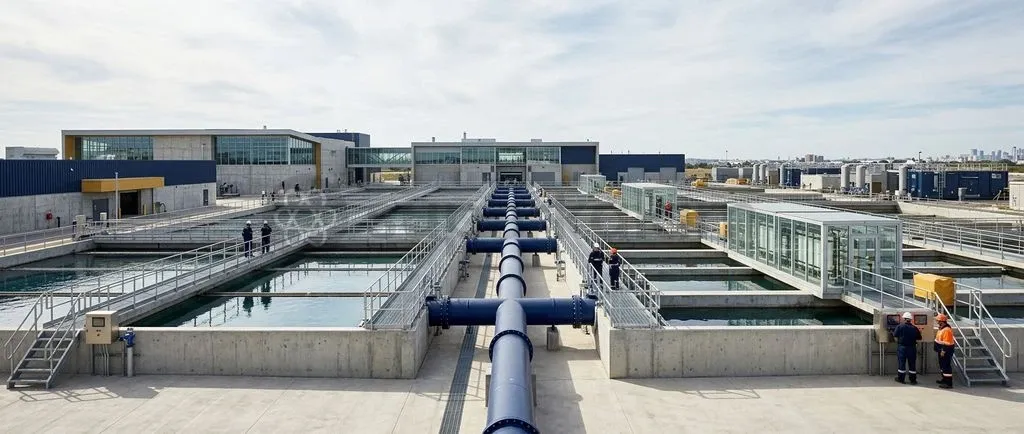
Conventional water treatment may be insufficient for PFAS, but specialised granular activated carbon, anion exchange, reverse osmosis and nanofiltration can remove PFAS effectively. Removal separates PFAS from water rather than destroying their carbon-fluorine bonds. This mechanical separation concentrates toxic chemicals into spent media, reject brine, and landfill sludge, creating residues that need safe handling and disposal to prevent further releases. Addressing this challenge requires establishing enforceable drinking-water thresholds, notifying industrial discharge standards, and deploying thermal or electrochemical mineralisation infrastructure.
Why in the News?
As of May 2024, international environmental regulators and the National Green Tribunal have intensified scrutiny on per- and polyfluoroalkyl substances due to persistent global contamination. In April 2024, the United States Environmental Protection Agency finalised legally enforceable Maximum Contaminant Levels of 4.0 parts per trillion (ng/L) for both perfluorooctanoic acid (PFOA) and perfluorooctanesulfonic acid (PFOS) in public drinking water networks. This regulatory milestone exposes a critical policy vacuum in developing economies, particularly India, where statutory monitoring for synthetic fluorinated compounds remains absent.
The National Green Tribunal has simultaneously exercised its jurisdiction under Section 20 of the National Green Tribunal Act, 2010. Invoking the Precautionary Principle and Polluter-Pays Principle, the tribunal directed statutory bodies to track emerging non-biodegradable pollutants entering urban water supplies. These dual developments highlight the urgent need to address legacy industrial chemicals that resist conventional wastewater treatment.
The Chemistry Trap: Why the Carbon-Fluorine Bond Refuses to Degrade
The carbon-fluorine bond in per- and polyfluoroalkyl substances represents the strongest single link in organic chemistry, making natural environmental breakdown virtually impossible. This synthetic resilience stems from the extreme electronegativity of fluorine combined with the short covalent bond length between carbon and fluorine atoms. According to the U.S. Environmental Protection Agency, the carbon-fluorine bond exhibits an average bond dissociation energy of approximately 485 kJ/mol. This high energy barrier prevents atmospheric photolysis, natural enzymatic degradation, and common chemical oxidation from splitting the molecule.
Many commonly studied PFAS surfactants consist of a hydrophobic fluorinated carbon tail attached to a hydrophilic polar head group. This amphiphilic architecture gives these compounds exceptional surfactant properties, allowing them to repel water, oils, and thermal stress simultaneously. Synthetic chemistry categorises these compounds into long-chain and short-chain variants based on the number of carbon atoms in their fluorinated backbone.
| Chemical Dimension | Long-Chain PFAS (e.g., PFOA, PFOS) | Short-Chain Alternatives (e.g., PFHxA, PFBS) |
|---|---|---|
| Fluorinated Carbon Length | ≥8 carbons (carboxylic), ≥6 carbons (sulfonic) | ≤7 carbons (carboxylic), ≤5 carbons (sulfonic) |
| Water Mobility | Moderate soil adsorption, lower aquifer migration | Extremely high aquatic mobility, rapid plume spread |
| Biological Half-Life | Several years in human blood serum | Shorter serum retention, high environmental mobility |
| Phase-Separation Ease | High affinity for standard activated carbon filters | Poor adsorption kinetics on conventional filter media |
| Global Regulatory Status | Targeted for global elimination under international law | Frequently deployed as commercial substitutes |
Discuss with Superkalam
What is the bond dissociation energy of the carbon-fluorine bond that prevents PFAS from degrading under natural conditions?
Ask Now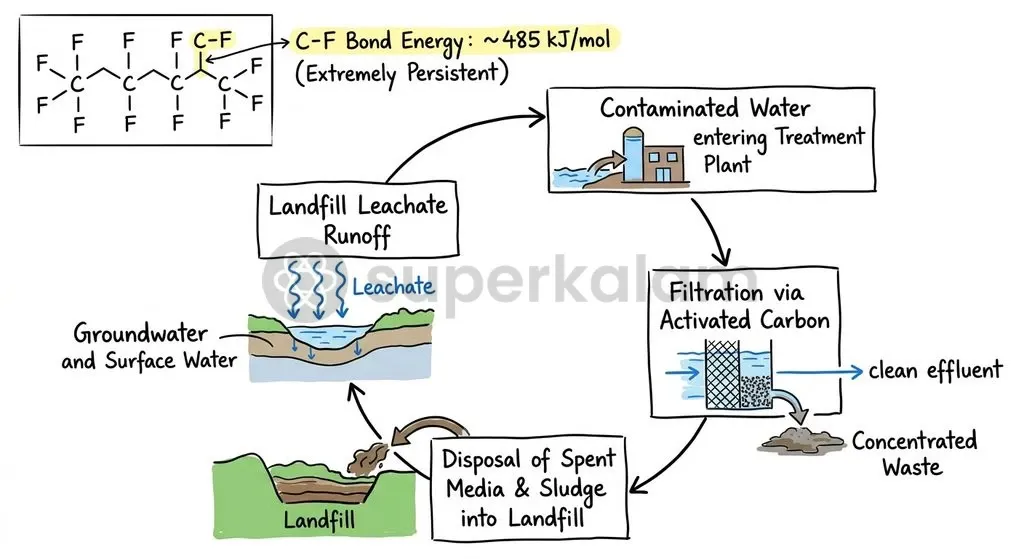
The Clean-Up Illusion: How Modern Filters Just Move the Poison into Sludge
Standard municipal purification systems like granular activated carbon and reverse osmosis cannot destroy synthetic fluorinated chemicals, functioning merely as physical separation tools. Water utilities across the globe rely heavily on Granular Activated Carbon (GAC), Ion Exchange (IX) resins, and Reverse Osmosis (RO) membranes to strip hazardous contaminants from municipal supplies. As documented by the US EPA Drinking Water Treatability Database, these processes operate purely through phase transfer and surface adsorption without altering the underlying molecular structure.
This separation mechanism produces a severe disposal paradox. Contaminants removed from the liquid stream do not vanish; they accumulate on solid media or inside concentrated industrial effluents:
- Spent Carbon Canisters: Granular activated carbon traps fluorinated molecules within its porous structure until saturation. The exhausted carbon then constitutes hazardous solid waste requiring specialised management.
- Reverse Osmosis Reject Brine: Membrane filtration generates a high-salinity concentrate carrying elevated levels of fluorinated compounds. Facilities routinely discharge this toxic reject stream back into surface canals or sewers.
- Landfill Leachate Circulation: Dumping spent filters into municipal landfills allows rainwater to strip the chemicals back out, forming contaminated leachate that seeps into local aquifers.
- Sub-optimal Incineration: Dispatching spent filtration media to standard municipal incinerators operating below complete mineralisation temperatures disperses volatile fluorinated byproducts across neighbouring airsheds.
The US EPA Interim Guidance on PFAS Destruction confirms that conventional filtration simply transforms dilute water contamination into concentrated solid or liquid hazardous waste. EPA recognises GAC, anion exchange, RO and nanofiltration as effective removal technologies. Their treatment residues require safe management; removal should not be confused with destruction.
Discuss with Superkalam
How does the amphiphilic architecture of a PFAS molecule explain both its industrial utility and its persistence in aquatic environments?
Ask NowIndia's Ground Zero: Firefighting Foams, Textile Belts, and Untracked Runoff
Aqueous Film-Forming Foam used across Indian civil airfields, military bases, and petrochemical refineries represents the primary domestic vector of concentrated fluorinated chemical pollution. Formulated specifically to extinguish volatile Class B liquid fuel blazes, these fire suppression concentrates rely on fluorinated surfactants to spread a vapour-sealing film across burning hydrocarbons. As noted by the Stockholm Convention's Persistent Organic Pollutants Review Committee, routine training drills and system maintenance historically discharged massive volumes of legacy fluorinated foam directly into unlined topsoil and surface drains.
Beyond aviation and defence infrastructure, civilian industrial processing hubs act as substantial uncontrolled pathways for fluorinated chemical release. According to a technical assessment by the United Nations Industrial Development Organization and the Global Environment Facility (as reported in November 2023), unregulated industrial effluent from textile finishing and leather tanning clusters—such as those operating in Tamil Nadu, Uttar Pradesh, and Gujarat—serves as an ongoing vector of fluorinated chemical discharge into municipal sewers and nearby river basins. These manufacturing sectors apply fluorinated formulations to yield water-, stain-, and grease-repellent consumer goods. Common operational sources include:
- Civil and Military Airfields: Firefighting drills spreading legacy chemical concentrates across unlined drainage swales.
- Petrochemical Processing Refineries: Bulk foam fire suppression installations at fuel storage depots and offshore terminals.
- Textile Finishing Mills: Wet-processing factories discharging water-repellent finishing baths into common effluent treatment plants.
- Commercial Chrome Plating: Metal facilities using fluorinated mist suppressants to curb airborne hexavalent chromium emissions.
Discuss with Superkalam
If an industrial facility replaces long-chain PFAS like PFOA with short-chain alternatives such as PFBS, what specific filtration challenges will municipal water utilities face?
Ask Now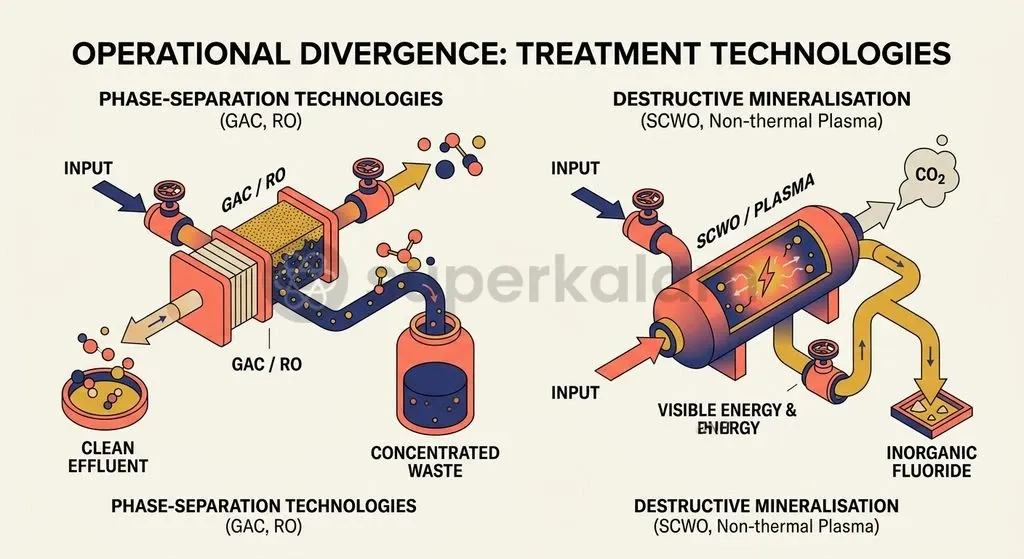
Slow-Motion Toxicity: How Forever Chemicals Build Up in the Human Body
The International Agency for Research on Cancer classifies perfluorooctanoic acid as a human carcinogen, reflecting severe biological accumulation across vital human organ systems. In its formal evaluation, the International Agency for Research on Cancer categorised PFOA as carcinogenic to humans (Group 1), citing sufficient animal data alongside strong mechanistic evidence of immunosuppression and epigenetic alteration. Concurrently, the agency categorised perfluorooctanesulfonic acid as possibly carcinogenic to humans (Group 2B).
Unlike classical organic contaminants that accumulate primarily in fatty tissue, fluorinated substances bind directly to serum albumin and circulating proteins. This biochemical affinity concentrates the substances within the liver, kidneys, and blood plasma. Data compiled by the Agency for Toxic Substances and Disease Registry indicates that long-chain compounds remain inside the human body across extensive spans:
- Perfluorooctanoic acid (PFOA): Biological elimination half-life spans 2.1 to 3.8 years in human blood serum.
- Perfluorooctanesulfonic acid (PFOS): Serum retention averages 3.4 to 5.4 years before clearing through excretion.
- Perfluorohexane sulfonic acid (PFHxS): Demonstrates an extreme biological persistence of up to 8.5 years in human blood.
Clinical findings released by the US Centers for Disease Control and Prevention link sustained low-dose chemical exposure to systemic physiological disruptions. Documented outcomes include suppressed vaccine antibody response in infants, elevated serum cholesterol levels, elevated hepatic enzymes, endocrine complications, and reductions in infant birth weight.
Discuss with Superkalam
Assess whether reliance on the Polluter-Pays Principle alone is sufficient to tackle legacy PFAS pollution where industrial runoff has already reached deep aquifers.
Ask NowA Broken Shield: Stockholm Convention Commitments versus India's Regulatory Blind Spot
The Bureau of Indian Standards currently excludes per- and polyfluoroalkyl substances from national drinking water specifications, leaving municipal supplies entirely unmonitored. Under Indian Standard IS 10500:2012 (Drinking Water Specification), statutory authorities define testing parameters and acceptable limits for heavy metals, pesticides, and microbial pathogens, yet provide zero testing protocols or limits for fluorinated industrial chemicals. Similarly, the Central Pollution Control Board has not introduced point-source effluent discharge benchmarks for fluorinated compounds under Schedule I of the Environment (Protection) Rules, 1986.
This absence of domestic standards stands in contrast to developments under international environmental treaties. The Stockholm Convention on Persistent Organic Pollutants operates as a legally binding global mechanism to phase out synthetic chemicals:
- PFOS Inclusion (2009): Listed under Annex B (Restriction), granting time-bound production and use exemptions.
- PFOA Inclusion (2019): Listed under Annex A (Elimination), mandating global phase-out with minimal specific exemptions.
- PFHxS Inclusion (2022): Placed in Annex A with no exemptions, compelling absolute cessation of manufacture and deployment.
Although India ratified the Stockholm Convention in 2006, the Ministry of External Affairs opted into the procedural provisions of Article 25(4). This provision specifies that any amendment to Annex A, B, or C enters into force for India only after the formal deposit of an explicit instrument of ratification. As a consequence, international listings do not automatically transition into domestic enforcement orders under the Environment (Protection) Act, 1986, creating a prolonged regulatory gap.
Discuss with Superkalam
Design a regulatory roadmap for the Central Pollution Control Board to transition from physical filtration methods to destructive mineralisation infrastructure across major industrial hubs.
Ask Now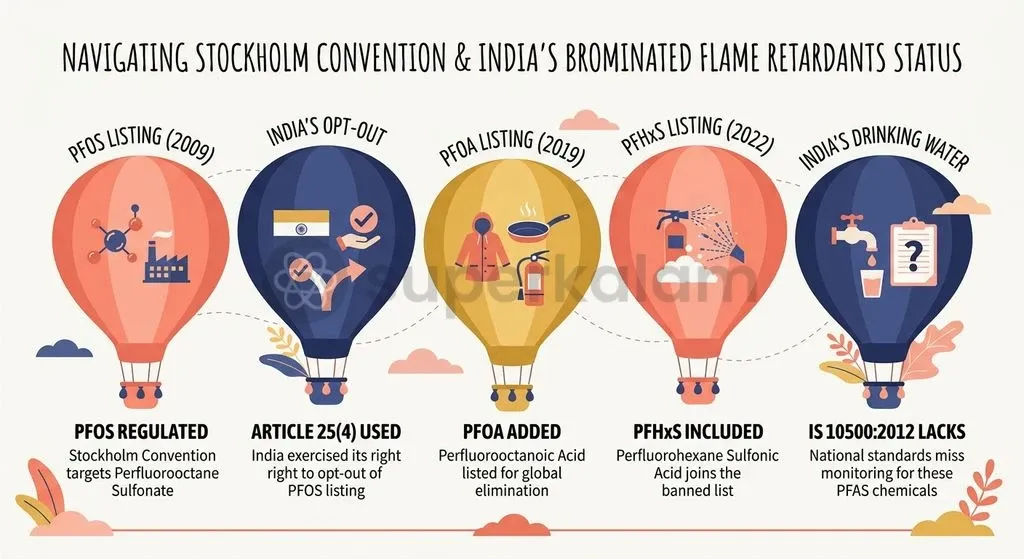
Beyond Dilution: What Genuine Chemical Destruction and Strict Limits Will Take
Supercritical water oxidation and non-thermal plasma are among emerging PFAS destruction approaches. Their performance, byproducts and suitability depend on the process and waste stream; complete harmless destruction is not guaranteed. Achieving genuine chemical destruction requires moving beyond phase-separation filtration and adopting technologies capable of breaking the resilient carbon-fluorine bond:
- Supercritical Water Oxidation (SCWO): Operating above water's thermodynamic critical threshold of 374°C and 22.1 MPa, supercritical water acts as a non-polar solvent. EPA identifies SCWO as a promising destruction approach, but performance and byproduct management must be assessed for each waste stream.
- Electrochemical Oxidation: Employing Boron-Doped Diamond (BDD) anodes, this method cleaves carbon-fluorine bonds via direct surface electron transfers and hydroxyl radical bombardment. However, managing chloride-rich industrial effluent remains essential to avoid the formation of hazardous chlorate and perchlorate byproducts.
- Non-Thermal Plasma Systems: High-voltage electrical discharges at the gas-liquid interface generate solvated electrons, hydroxyl radicals, and ozone molecules at ambient room temperatures. This approach achieves rapid defluorination without requiring pre-chemical reagents.
Securing clean water systems across India also demands structural policy reforms:
- Updating Bureau of Indian Standards Rules: The Bureau of Indian Standards must revise IS 10500:2012 to establish mandatory testing thresholds for PFOA and PFOS, using modern liquid chromatography-tandem mass spectrometry protocols.
- Enforcing Industrial Discharge Standards: The Ministry of Environment, Forest and Climate Change must notify point-source discharge restrictions under the Environment (Protection) Rules, 1986 for industrial parks, chemical refineries, and textile dyeing hubs.
- Remediating Firefighting Stocks: Aviation and defence authorities must transition to certified fluorine-free foams while collecting and managing legacy fluorinated inventories.
- Safeguarding Downstream Agriculture: As highlighted by the Food and Agriculture Organization and the WHO Food Standards Programme (as reported in September 2023), downstream peri-urban farming communities face environmental injustice because untreated municipal wastewater carries fluorinated pollutants into agricultural topsoil and crops. State pollution control boards must deploy the Polluter-Pays Principle under Section 20 of the National Green Tribunal Act, 2010 to finance regional aquifer remediation and protect vulnerable food systems.
Key Takeaways
- The carbon-fluorine covalent bond displays a dissociation energy of approximately 485 kJ/mol, making it the strongest single bond in organic chemistry and completely resistant to natural environmental breakdown.
- Standard municipal treatment methods such as Granular Activated Carbon and Reverse Osmosis only achieve phase separation, concentrating toxic compounds into spent media, reject brine, and landfill sludge without destroying the pollutants.
- The International Agency for Research on Cancer classifies PFOA as a Group 1 human carcinogen, while long-chain compounds exhibit human serum half-lives ranging from 2.1 to 8.5 years.
- India's national drinking water code (IS 10500:2012) and the Environment (Protection) Rules, 1986 currently contain no testing mandates, permissible concentrations, or effluent standards for fluorinated substances.
- Emerging destruction approaches such as supercritical water oxidation require process-specific evidence on effectiveness, byproducts and residuals. EPA guidance notes continuing uncertainties in destruction and disposal.
Mains Question
"Conventional municipal water treatment technologies function merely as an expensive relocation service for toxic chemicals rather than a solution." In light of this statement, critically examine the operational limitations of physical separation technologies in handling PFAS contamination. (15 Marks)
Evaluate NowMains Question
The exclusion of per- and polyfluoroalkyl substances (PFAS) from Indian Standard IS 10500:2012 highlights a critical regulatory blind spot in India's environmental governance. Comment. (10 Marks)
Evaluate NowPractice MCQs
QUESTION 1
With reference to Per- and Polyfluoroalkyl Substances (PFAS), consider the following statements:
- The extreme environmental resilience of PFAS is due to the carbon-fluorine bond, which possesses a bond dissociation energy of approximately 485 kJ/mol.
- In the human body, PFAS accumulate primarily in adipose (fatty) tissue rather than binding to circulating serum proteins.
- Short-chain PFAS substitutes generally exhibit higher aquatic mobility and poorer adsorption kinetics on conventional activated carbon filters compared to long-chain variants. Which of the statements given above is/are correct?
QUESTION 2
Consider the following statements regarding the regulatory classifications and standards for fluorinated compounds:
- The International Agency for Research on Cancer (IARC) classifies perfluorooctanoic acid (PFOA) as carcinogenic to humans (Group 1).
- The US EPA has established legally enforceable Maximum Contaminant Levels of 4.0 parts per trillion for both PFOA and PFOS in public drinking water.
- The Bureau of Indian Standards standard IS 10500:2012 sets explicit maximum permissible thresholds for PFOS and PFOA in municipal tap water. Which of the statements given above is/are correct?
QUESTION 3
Regarding the remediation of PFAS through conventional water purification systems, consider the following statements:
- Granular Activated Carbon (GAC) and Reverse Osmosis (RO) degrade PFAS molecules through chemical oxidation.
- Sub-optimal incineration of spent filtration media can disperse volatile fluorinated byproducts into neighbouring airsheds.
- Disposal of spent filter media in municipal landfills poses a risk of groundwater contamination via landfill leachate. Which of the statements given above are correct?
QUESTION 4
According to data from the Agency for Toxic Substances and Disease Registry cited in the context of persistent pollutants, which of the following compounds exhibits a biological elimination half-life of up to 8.5 years in human blood serum?
QUESTION 5
In the context of industrial contamination in India, which of the following is identified as the primary domestic vector of concentrated fluorinated chemical pollution?