PERM Labor Certification: Green Card Process and US Audits
Understand PERM labor certification, its role in employment-based US green cards, employer recruitment requirements and audit risks for Indian IT firms.
Oct, 2026
•9 min read

Overview
Under Section 212(a)(5)(A) of the Immigration and Nationality Act and federal employment regulations, the Program Electronic Review Management system mandates that sponsoring employers prove qualified American workers are unavailable before hiring foreign professionals permanently. This statutory labour market test forms the mandatory foundation for employment-based permanent residency in the United States.
Heightened administrative scrutiny by the US Department of Labor exposes structural vulnerabilities in cross-border IT staffing. This shifts routine certification into an active non-tariff trade barrier.
Consequently, Indian technology exporters face stringent recruitment audits, escalating wage benchmarks, and procedural delays. These bottlenecks threaten their traditional offshore-onshore delivery pipeline.
Why in the News: US Labor Department Escalates Scrutiny on Tech Employers
On 8 October 2026, the US Department of Labor announced the suspension of named technology employers from PERM, including TCS, Infosys, Wipro, HCLTech, Cognizant and Capgemini. Microsoft and Adobe were also named. The announcement said the Department would not accept new or process pending labour-certification applications involving these employers.
US officials cited alleged misuse and ongoing investigations. Those allegations are not findings of guilt. The action concerns the labour-certification stage of employment-based permanent residence; it does not shut down the entire PERM programme or automatically cancel existing H-1B visas.
The immediate concern for affected workers is delay in employer-sponsored green-card processing. Any effect on an individual's immigration status or extension eligibility depends on their case. Source: Indian Express, October 2026.
Discuss with Superkalam
Identify the specific US federal form used by employers to obtain a Prevailing Wage Determination from the National Prevailing Wage Center.
Ask NowWhat Is the PERM Process: How Labor Certification Actually Works
The Program Electronic Review Management system, administered under federal immigration law, requires sponsoring employers to prove that hiring foreign professionals will not displace American workers. Codified under Title 20 of the Code of Federal Regulations, Part 656, the process establishes that domestic wages and working conditions will not suffer adverse effects from hiring foreign nationals.
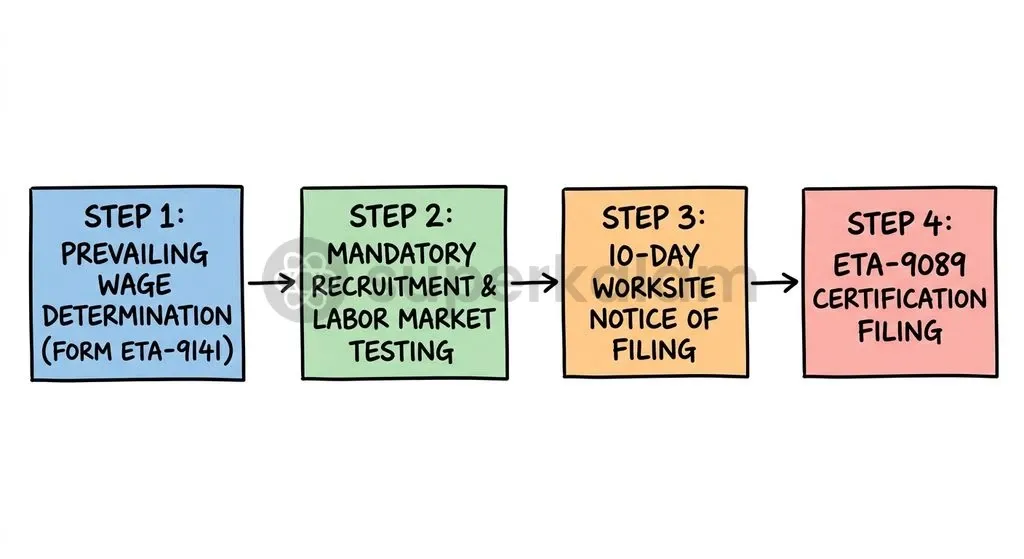
Sponsoring organisations must execute a structured, multi-step statutory workflow:
- Prevailing Wage Determination: Before initiating recruitment, the employer must submit Form ETA-9141 to the National Prevailing Wage Center under 20 CFR § 656.40.
- Mandatory Labor Market Testing: The petitioner conducts mandatory recruitment advertisements across designated media to test whether qualified US applicants are available.
- Internal Notice Posting: The firm must place a physical Notice of Filing for at least 10 consecutive business days at the worksite under 20 CFR § 656.10(d).
- Electronic Submission: If no qualified US workers apply, the sponsoring enterprise submits Form ETA-9089 to the Office of Foreign Labor Certification.
| Procedural Stage | Regulatory Provision | Administrative Body | Core Statutory Objective |
|---|---|---|---|
| Prevailing Wage Request | 20 CFR § 656.40 | National Prevailing Wage Center | Establishes minimum allowable wage to prevent wage suppression |
| Notice of Filing | 20 CFR § 656.10(d) | Sponsoring Employer | Informs internal workforce of open permanent positions |
| Form ETA-9089 Filing | 20 CFR § 656.17 | Office of Foreign Labor Certification | Certifies lack of qualified, available domestic applicants |
| Compliance Audits | 20 CFR § 656.20 | Department of Labor Certifying Officer | Verifies authenticity of recruitment and evaluates lawful rejections |
Under 20 CFR § 656.17(l), the job opportunity offered in a petition must represent a bona fide opportunity clearly open to any qualified US applicant. Federal rules prohibit drafting job criteria tailored to the individual credentials of the foreign beneficiary.
The Core Friction: Why Third-Party Client Deployments Trigger Federal Flags
Third-party client deployments managed by Indian technology firms face federal flags because off-site work arrangements complicate statutory Notice of Filing physical posting rules. Under 20 CFR § 656.10(d), employers must post a physical notice for at least 10 consecutive business days at the facility or location of employment.
When technology consulting firms assign roving engineers to client premises, complying with this requirement creates severe practical friction. Consulting companies rarely possess operational authority over physical notice boards or internal intranets at customer offices. Consequently, federal regulators frequently challenge whether client-site workers received genuine statutory notice.
| Placement Tier | Operational Entity | Regulatory Friction Point |
|---|---|---|
| Sponsor of Record | IT Consulting Firm | Submits statutory petition and manages employment records |
| Worksite Placement | Third-Party Client | Hosts technical personnel without sharing administrative systems |
| Statutory Notice | Certifying Officer Review | Scrutinises physical posting compliance under 20 CFR § 656.10(d) |
Federal regulators also interrogate whether the job opportunity is genuinely open to domestic applicants. When staffing agencies structure job requirements around niche proprietary platforms configured specifically for an end-client, the Certifying Officer may determine that the petition improperly tailors requirements to exclude US workers.
Under 20 CFR § 656.20, certifying officers can issue comprehensive audit letters requiring complete recruitment documentation within 30 days. If documentation proves deficient, authorities can mandate Supervised Recruitment under 20 CFR § 656.21. Under 20 CFR § 656.24(f), material misrepresentations or substantial failures can force an employer into supervised recruitment across all future applications for up to two years.
Discuss with Superkalam
Explain why off-site client deployments make it difficult for IT staffing firms to satisfy statutory Notice of Filing mandates.
Ask NowWage Standards and Market Tests: Legitimate Protection or Covert Trade Barrier?
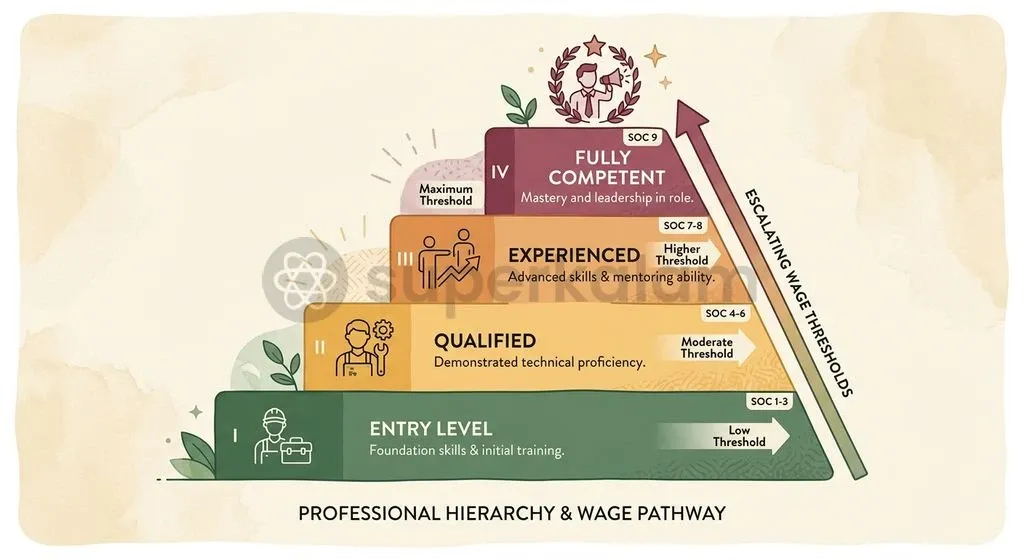
Wage benchmarks set by the National Prevailing Wage Center create a contested boundary between legitimate domestic workforce safeguards and protectionist non-tariff regulatory barriers. The wage determination framework enforces four distinct wage levels ranging from Level I (entry level) to Level IV (fully competent), indexed to Standard Occupational Classification codes under the Occupational Employment and Wage Statistics programme.
Administrative guidelines dictate that when an employer specifies alternate hiring criteria in Form ETA-9141, the agency assigns the higher of the prevailing wages between primary and alternate requirements. This calculation significantly increases operational payroll costs for technology firms sponsoring mid-tier technical personnel.
Trade analysts evaluate heightened certification scrutiny as a covert non-tariff barrier affecting Mode 4 trade under the General Agreement on Trade in Services. Mode 4 governs the temporary presence of natural persons across international borders to deliver commercial services.
India initiated formal dispute settlement proceedings against United States visa restrictions on March 3, 2016, in dispute DS503, titled United States — Measures Concerning Non-Immigrant Visas. Although India and the United States mutually settled six long-standing disputes at the World Trade Organization in June 2023, dispute DS503 remained excluded from the bilateral settlement package.
| Timeline | Bilateral Action | Mode 4 Trade Implication |
|---|---|---|
| March 3, 2016 | India files WTO Dispute DS503 | Formally challenges US non-immigrant visa measures and fee hikes |
| June 2023 | Six bilateral WTO disputes settled | Dispute DS503 remained excluded from final compromise package |
| January 2024 | 14th India-US Trade Policy Forum | India advocates for a bilateral Totalization Agreement |
At the 14th India-US Trade Policy Forum Ministerial in January 2024, New Delhi pressed Washington for a Social Security Totalization Agreement. The proposed agreement aims to eliminate dual social security withholding taxes levied on Indian technical professionals temporarily residing in the United States.
Discuss with Superkalam
How might an Indian IT enterprise modify its onshore-offshore staffing ratio if a Certifying Officer mandates Supervised Recruitment under 20 CFR § 656.21?
Ask NowBusiness Fallout: How Delays and Audits Reshape the Indian IT Offshore Model
Operational bottlenecks from federal audits have forced Indian IT majors to restructure their talent delivery architecture and curtail reliance on cross-border personnel transfers. When the Department of Labor orders Supervised Recruitment under 20 CFR § 656.21, the government actively oversees advertising channels and routes all applicant resumes directly through federal certifying officers.
Under 20 CFR § 656.21(e), the employer must furnish a signed, exhaustive recruitment report within 30 days detailing lawful, job-related justifications for rejecting every domestic applicant. This intensive administrative oversight imposes crippling operational delays, disrupting long-term workforce retention for enterprise clients.
To mitigate compliance vulnerability, Indian industry leaders including Tata Consultancy Services, Infosys, and Wipro have altered their human resource strategy:
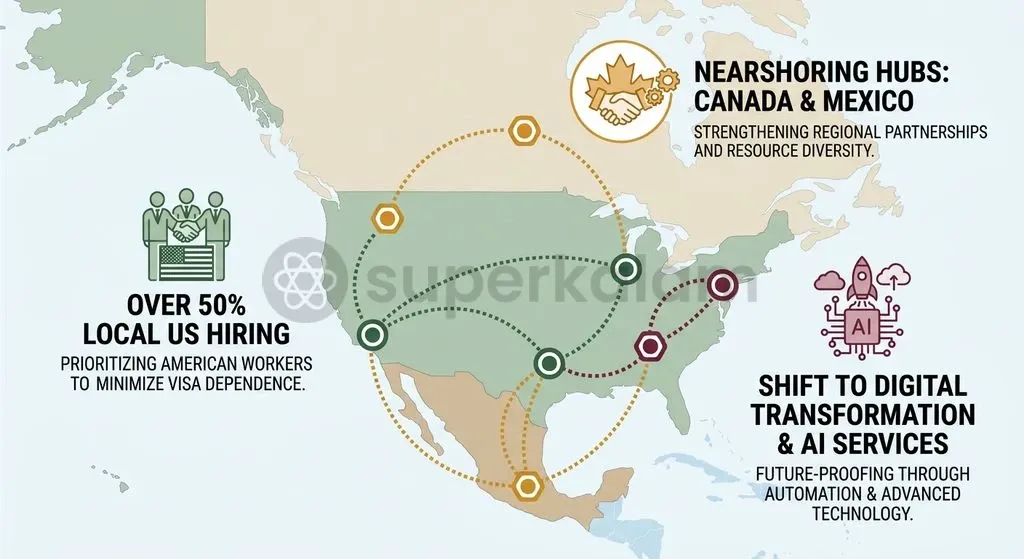
- Onshore Workforce Localisation: Leading Indian IT service firms have progressively expanded domestic American recruiting, raising local hires to exceed 50% of total US headcount.
- Nearshoring Expansion: Indian technology exporters have accelerated operational expansion across Canada and Mexico, servicing North American clients across identical time zones without requiring US labor certifications.
- Higher-Value Service Transition: Enterprise revenue models are shifting from traditional staff augmentation toward advanced artificial intelligence deployment, specialised cloud infrastructure, and enterprise digital transformation.
Way Forward: Enterprise Compliance Reforms and the Shift to Nearshoring
Long-term resilience for technology exporters requires deep regulatory compliance alongside a strategic migration toward nearshore delivery hubs in Canada and Mexico. Navigating tightening immigration audits requires technical service providers to shift from reactive legal defence toward systemic organisational reforms.
Technology firms must standardise electronic audit trails for labour market recruitment, avoiding ambiguous job descriptions that invite scrutiny under 20 CFR § 656.17(l). Clear physical and electronic notice-posting protocols at customer premises must be contractually guaranteed within third-party master services agreements.
On the diplomatic track, India must continue leveraging bilateral frameworks such as the India-US Trade Policy Forum to decouple technical mobility from broader immigration debates. Standardising professional qualifications, operationalising totalization pacts, and addressing outstanding issues highlighted in WTO dispute DS503 remain central to safeguarding cross-border trade in high-tech services.
Discuss with Superkalam
Analyze how prevailing wage benchmarks can act as a covert non-tariff trade barrier under Mode 4 of the General Agreement on Trade in Services (GATS).
Ask NowKey Takeaways
- Under Section 212(a)(5)(A) of the Immigration and Nationality Act and 20 CFR Part 656, permanent labor certification requires proof that hiring a foreign national will not adversely affect domestic wages or displacement of qualified US workers.
- Sponsoring companies file Form ETA-9089 with the Office of Foreign Labor Certification following prevailing wage determinations from the National Prevailing Wage Center under 20 CFR § 656.40.
- Third-party client placement models trigger regulatory audits under 20 CFR § 656.10(d) due to physical Notice of Filing posting requirements at customer worksites.
- Supervised recruitment mandates direct Department of Labor oversight of advertising and resumes under 20 CFR § 656.21, carrying potential two-year filing penalties under 20 CFR § 656.24(f).
- Heightened visa and labor certifications function as non-tariff barriers under Mode 4 of the WTO General Agreement on Trade in Services, maintaining unresolved bilateral friction illustrated by dispute DS503.
- Indian IT majors including TCS, Infosys, and Wipro have localized US hiring past 50% and expanded nearshoring hubs in Canada and Mexico to insulate operations from regulatory delays.
Mains Question
"Heightened administrative scrutiny under the PERM labor certification process shifts routine domestic regulatory compliance into an active non-tariff trade barrier for technical services." Critically examine the impact of US workforce mobility regulations on India's cross-border IT service export model. (15 Marks)
Evaluate NowMains Question
Discuss the institutional challenges faced by Indian IT consulting companies in complying with the physical 'Notice of Filing' requirement under 20 CFR § 656.10(d) during third-party client deployments. (10 Marks)
Evaluate NowPractice MCQs
QUESTION 1
With reference to the Program Electronic Review Management (PERM) process under US federal regulations, consider the following statements:
- It requires sponsoring employers to prove that qualified domestic workers are unavailable before hiring foreign professionals permanently.
- Sponsoring employers are permitted to tailor job requirements to match the unique individual qualifications of the foreign beneficiary.
- The statutory Notice of Filing must be physically posted at the worksite for at least 10 consecutive business days. Which of the statements given above are correct?
QUESTION 2
Consider the following statements regarding the regulatory framework of the US PERM labor certification:
- Form ETA-9141 is submitted to the National Prevailing Wage Center to establish minimum allowable wages to prevent wage suppression.
- Under 20 CFR § 656.24(f), material misrepresentations can mandate supervised recruitment across all future filings for an employer for up to two years.
- Form ETA-9089 is submitted directly to the National Prevailing Wage Center to certify the lack of domestic applicants. Which of the statements given above is/are correct?
QUESTION 3
Regarding international trade in services and bilateral disputes between India and the United States, consider the following statements:
- Cross-border temporary movement of natural persons to supply commercial services is governed under Mode 4 of the General Agreement on Trade in Services (GATS).
- Dispute DS503 at the World Trade Organization was filed by India regarding US measures concerning non-immigrant visas.
- In June 2023, India and the United States resolved all bilateral WTO disputes, including dispute DS503. Which of the statements given above is/are correct?
QUESTION 4
In the context of the US Department of Labor's prevailing wage determination framework, how are wage levels determined when an employer specifies alternate hiring requirements in Form ETA-9141?
QUESTION 5
With reference to bilateral discussions at the 14th India-US Trade Policy Forum Ministerial in January 2024, what was the primary objective of the Social Security Totalization Agreement sought by India?