Pediatric GLP-1 Drugs in India: CDSCO Norms, Risks, and Bioethics
As adolescent obesity rises, CDSCO balances potent metabolic therapies with strict prescription gatekeeping to avert widespread cosmetic misuse.
Sep, 2026
•9 min read

Context
Glucagon-Like Peptide-1 receptor agonists are expanding into paediatric care. This expansion marks a significant biotechnology development for managing adolescent obesity. However, introducing these potent metabolic therapies requires strict regulatory safeguards and clear bioethical boundaries under the Central Drugs Standard Control Organisation.
Clinical trials show substantial weight reduction in adolescents with severe obesity. Even so, pharmaceutical intervention cannot fix obesogenic dietary environments or replace sustained lifestyle changes. Safe paediatric access demands strict clinical gatekeeping, strong enforcement against unapproved cosmetic prescribing, and clear protections for minors against commercial exploitation.
Why in the News? Rising Pediatric Obesity and GLP-1 Demand
The Central Drugs Standard Control Organisation recently examined the growing demand for anti-obesity medications among adolescents. This review prompted heightened regulatory surveillance across supply chains as of March 2026. Data from the National Family Health Survey (NFHS-5, 2019–21) showed that overweight prevalence among Indian children under five years rose to 3.4%, up from 2.1% in NFHS-4.
Estimates from the Comprehensive National Nutrition Survey and international projections project that India will house over 27 million children and adolescents aged 5 to 19 years living with obesity by 2030. This cohort represents roughly 11% of the global burden. Consequently, healthcare providers face mounting pressure to deploy advanced therapies such as Glucagon-Like Peptide-1 (GLP-1) receptor agonists.
The commercial arrival of adult weight-loss drugs has triggered clinical interest in adolescents. This trend creates an urgent need to stop unverified off-label consumption. Public health authorities must now balance clinical benefits against the systemic risks of drug dependency in minors.
Discuss with Superkalam
What are the minimum age and body weight benchmarks recommended by the CDSCO Subject Expert Committee for paediatric Semaglutide prescription?
Ask NowWhat Are GLP-1 Receptor Agonists and How Do They Work?
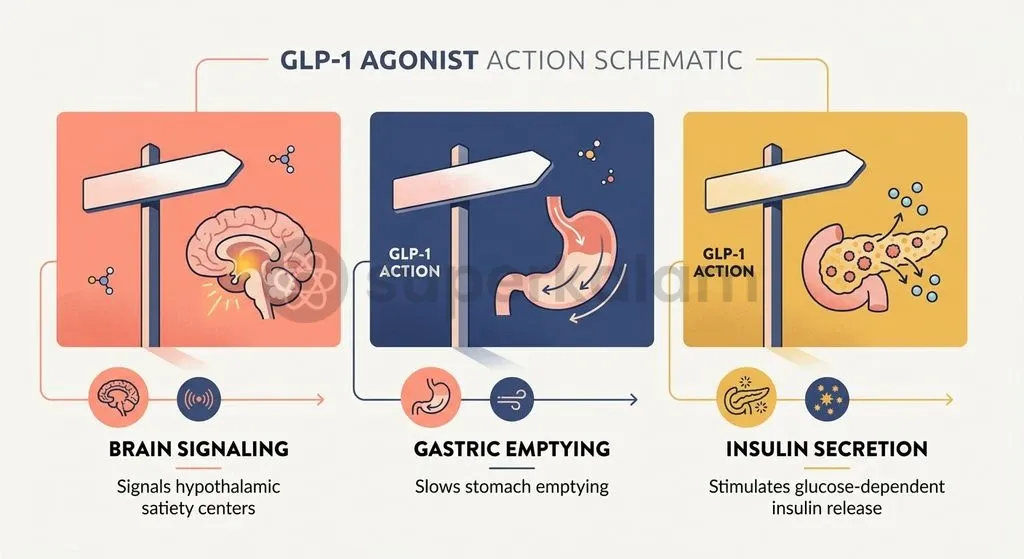
GLP-1 receptor agonists mimic the biological action of natural incretin hormones. The gastrointestinal tract releases these metabolic hormones after meals to trigger insulin secretion and regulate energy balance.
Research published in JAMA Pediatrics outlines the primary physiological mechanisms:
- Glucose-Dependent Insulin Secretion: They stimulate pancreatic beta cells to produce insulin when blood glucose levels rise.
- Glucagon Suppression: They lower postprandial glucagon secretion from alpha cells, reducing hepatic glucose output.
- Gastric Emptying Delay: They slow food transit through the stomach, prolonging nutrient absorption.
- Hypothalamic Satiety Induction: They bind central hypothalamic appetite receptors across the blood-brain barrier to suppress hunger signals and reduce daily caloric intake.
In the global STEP TEENS phase 3a clinical trial, researchers evaluated once-weekly subcutaneous semaglutide 2.4 mg alongside lifestyle interventions in adolescents aged 12 to younger than 18 years. The trial recorded a mean BMI reduction of 16.1% at week 68. In contrast, the placebo group experienced a 0.6% increase in BMI.
These drugs alter metabolic signalling rather than cure underlying genetic or behavioural drivers of obesity.
Discuss with Superkalam
Explain how GLP-1 receptor agonists interact with both the digestive tract and the central nervous system to regulate metabolic balance.
Ask NowCDSCO Regulatory Framework: Approving Weight-Loss Drugs for Minors
The Central Drugs Standard Control Organisation is the Central Licensing Authority under the Drugs and Cosmetics Act, 1940, and the New Drugs and Clinical Trials Rules, 2019. Headed by the Drugs Controller General of India, CDSCO regulates all investigational protocols, manufacturing permissions, and marketing authorisations in India.
The Subject Expert Committee for Endocrinology and Metabolism within CDSCO recommended approving the label expansion of Semaglutide for paediatric patients. The therapy is restricted to adolescents aged 12 years and older with a body weight exceeding 60 kg. It must be prescribed strictly alongside a reduced-calorie diet and physical activity.
Paediatric clinical trial approvals follow specific statutory criteria under Indian regulations:
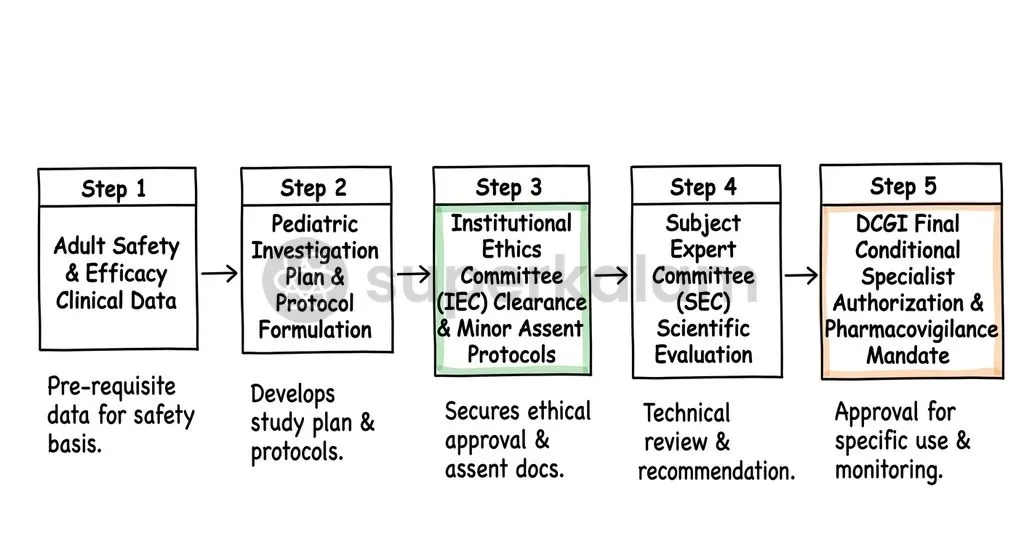
- Mandatory Adult Precedents: Schedule III of the New Drugs and Clinical Trials Rules, 2019, prohibits enrolling paediatric subjects unless safety and efficacy are first established in adult trials.
- Paediatric-Specific Protocols: Sponsors must submit dedicated pharmacokinetic models, clear dosing justifications, and age-appropriate outcome indicators.
- Ethics Committee Clearance: Every trial site requires registration and mandatory ethical review by an Institutional Ethics Committee.
- Specialist Prescription Mandates: The DCGI restricted lawful prescribing authority strictly to Endocrinologists, Internal Medicine Specialists, and for specific indications, Cardiologists.
These safeguards prevent arbitrary clinical deployment and require paediatric metabolic drugs to clear strict scrutiny before distribution.
The Off-Label Prescription Dilemma: Why Minors Face Unique Risks
Off-label prescribing happens when a doctor writes a prescription outside approved age brackets, dosages, or indications. While common in adult medicine, using off-label drugs in adolescents introduces serious clinical and legal risks.
Under the National Medical Commission Registered Medical Practitioner Professional Conduct Regulations, doctors prescribing drugs off-label must show documented clinical necessity, non-responsiveness to first-line therapies, and formal consent. Bypassing clinical trial verifications exposes developing bodies to unstudied risks.
Adolescents face distinct developmental concerns when taking long-term GLP-1 receptor agonists:
- Skeletal and Muscular Development: Rapid weight reduction often cuts lean muscle mass. This loss can disrupt bone density accumulation during key growth phases.
- Gastrointestinal and Pancreatic Complications: Heightened risks of acute pancreatitis, biliary disease, and chronic nausea can impair nutrient absorption.
- Rebound Weight Gain: Discontinuing GLP-1 receptor agonists frequently triggers rebound metabolic relapse, creating long-term drug dependence.
- Psychosocial Vulnerabilities: Prescribing anti-obesity drugs during puberty can reinforce body dysmorphia or worsen underlying eating disorders without psychiatric oversight.
Because adolescents undergo rapid hormonal changes, unsupervised off-label prescriptions turn controlled treatments into serious health hazards.
Discuss with Superkalam
How should a registered medical practitioner apply the NMC Professional Conduct Regulations when evaluating a request for off-label adolescent weight-loss pharmacotherapy?
Ask NowComparing Approaches: India vs US FDA and European Regulators
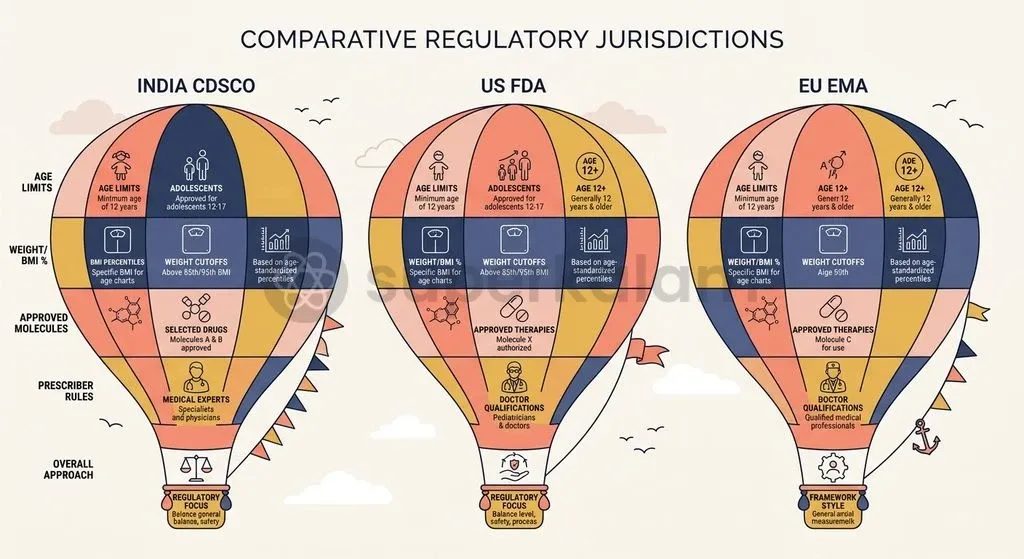
Major regulatory bodies have established structured evaluation pathways for paediatric metabolic therapies, though their eligibility benchmarks differ.
The US Food and Drug Administration approved Liraglutide for paediatric chronic weight management in December 2020 for patients aged 12 and older. It later approved Semaglutide in December 2022 for adolescents with a baseline BMI at or above the 95th percentile. The European Medicines Agency authorised Semaglutide for adolescents aged 12 and older with an initial BMI corresponding to ≥30 kg/m² in adults and a body weight exceeding 60 kg.
| Feature / Metric | India (CDSCO) | United States (US FDA) | European Union (EMA) |
|---|---|---|---|
| Primary Statutory Basis | Drugs & Cosmetics Act, 1940; CT Rules 2019 | Federal Food, Drug, and Cosmetic Act | Regulation (EC) No 726/2004 |
| Minimum Age Threshold | 12 years and older | 12 years and older | 12 years and older |
| Weight / BMI Criteria | Body weight > 60 kg | Initial BMI ≥ 95th percentile for age and sex | Adult-equivalent BMI ≥ 30 kg/m² and weight > 60 kg |
| Approved Paediatric Agents | Semaglutide (label expansion approved by SEC) | Liraglutide (2020) and Semaglutide (2022) | Semaglutide (2023) |
| Prescription Gatekeeping | Restricted to Endocrinologists, Internal Medicine, Cardiologists | Licensed physicians (general paediatricians, endocrinologists) | Specialist medical practitioners per member-state rules |
International regulators rely on growth chart percentiles, whereas CDSCO pairs age criteria with absolute weight floors and specialist restrictions.
Bioethical Concerns: Pediatric Assent, Equity, and Cosmetic Use
Prescribing long-term metabolic drugs to minors raises ethical questions around autonomy, medicalisation, and healthcare equity.
The Indian Council of Medical Research sets clear rules in its National Ethical Guidelines for Bio-Medical Research Involving Children. These guidelines require parental consent alongside mandatory oral assent for children aged 7 to 12 years and formal written assent for adolescents aged 13 to 18 years. In daily practice, separating genuine patient assent from parental pressure remains difficult.
Discuss with Superkalam
Compare the eligibility benchmarks established by the US FDA and the European Medicines Agency with the criteria formulated by India's CDSCO.
Ask NowKey bioethical challenges include:
- Medicalisation of Lifestyle Determinants: Relying on appetite suppressants distracts from structural public health issues. The Economic Survey 2024–25 noted that retail sales of ultra-processed food in India surged from USD 900 million in 2006 to USD 37.9 billion in 2019, creating obesogenic food environments.
- Cosmetic Exploitation: Social media trends push adolescents with normal body weights toward GLP-1 drugs for cosmetic weight loss, raising the risk of unmonitored physical harm.
- Healthcare Inequity: High prices limit access to wealthy urban patients. Public healthcare systems remain unable to supply these treatments to lower-income adolescents with severe metabolic disease.
Managing adolescent obesity requires addressing broader socio-economic conditions rather than treating it solely as an individual metabolic deficit.
Key Gaps in India's Drug Enforcement and Pharmacovigilance
India faces enforcement challenges across online pharmacies and retail supply chains.
Under the Drugs and Cosmetics Rules, 1945, GLP-1 receptor agonists are classified as Schedule H or Schedule H1 prescription medications. Selling them over the counter without a prescription is illegal. Furthermore, Section 3 read with Item 41 of the Schedule to the Drugs and Magic Remedies (Objectionable Advertisements) Act, 1954, prohibits advertising drugs for the diagnosis, cure, mitigation, or treatment of obesity.
Regulatory surveillance continues to uncover serious enforcement gaps:
- Surrogate and Digital Advertising: Wellness apps and slimming clinics often bypass advertising bans by marketing GLP-1 drugs through lifestyle campaigns.
- Targeted Enforcement Audits: On March 10, 2026, the CDSCO issued an advisory against surrogate promotions and audited 49 entities, including e-pharmacies, retailers, and slimming clinics.
- Under-Reporting in Pharmacovigilance: The Pharmacovigilance Programme of India, run by the Indian Pharmacopoeia Commission, tracks adverse drug reactions. Even so, complications like adolescent pancreatitis and gallstones remain under-reported outside major hospitals.
Tightening retail enforcement is necessary to stop potent prescription drugs from spilling into cosmetic markets.
Way Forward: Building Safe Clinical Guidelines and Ethical Oversight
A sustainable framework for paediatric obesity must combine regulatory discipline with broad public health interventions.
India needs a coordinated strategy across several areas:
- Standardised ICMR Treatment Guidelines: The Indian Council of Medical Research should issue clear clinical management protocols. Pharmacotherapy should remain a second-line option for adolescents with severe comorbidities when lifestyle changes fail.
- Digital Prescription Audits: State Drug Control Administrations must enforce electronic logging for Schedule H1 metabolic injections to track distribution across e-pharmacies.
- Active Paediatric Pharmacovigilance Registries: The Indian Pharmacopoeia Commission should maintain dedicated registry tracking for all minors prescribed GLP-1 drugs to monitor long-term endocrine outcomes.
- School Nutrition and Food Policy Reforms: Central and state authorities must curb ultra-processed food advertising near schools and promote exercise under Fit India and Poshan 2.0.
Discuss with Superkalam
Design a comprehensive regulatory and pharmacovigilance strategy that public health authorities could adopt to prevent cosmetic misuse of GLP-1 drugs while preserving clinical access for severe adolescent obesity.
Ask NowBy uniting CDSCO drug regulation with preventative public health measures, India can safeguard adolescent health while preventing misuse.
Key Takeaways
- Childhood overweight rates reached 3.4% in NFHS-5, with projections pointing to 27 million Indian children facing obesity by 2030.
- GLP-1 receptor agonists mimic natural incretin hormones to delay gastric emptying, stimulate insulin secretion, and activate central hypothalamic satiety receptors.
- CDSCO's Subject Expert Committee recommended Semaglutide for adolescents aged 12 and older weighing over 60 kg, restricted strictly to specialist prescription.
- The Drugs and Magic Remedies (Objectionable Advertisements) Act, 1954, prohibits advertising drugs for obesity, leading CDSCO to audit 49 entities for surrogate promotions.
- Bioethical standards under ICMR mandate written assent for adolescents aged 13 to 18 years and oral assent for children aged 7 to 12 years to prevent coercive cosmetic use.
Mains Question
Data from NFHS-5 and national nutrition surveys project that India will house roughly 11% of the global burden of child and adolescent obesity by 2030. In this context, examine the statutory safeguards and gatekeeping mechanisms instituted by the CDSCO to regulate paediatric metabolic therapies. (10 Marks)
Evaluate NowMains Question
'Pharmaceutical intervention cannot fix obesogenic dietary environments or replace sustained lifestyle changes, yet off-label prescribing of metabolic therapies among minors introduces severe developmental and ethical hazards.' Critically analyse this statement in light of clinical risks and ICMR bioethical guidelines. (15 Marks)
Evaluate NowPractice MCQs
QUESTION 1
With reference to the regulatory framework for paediatric drug approvals in India under the Central Drugs Standard Control Organisation (CDSCO), consider the following statements:
- Schedule III of the New Drugs and Clinical Trials Rules, 2019 prohibits enrolling paediatric subjects unless safety and efficacy are first established in adult trials.
- The Subject Expert Committee recommended paediatric Semaglutide approval strictly for adolescents aged 12 years and older with a body weight exceeding 60 kg.
- Prescribing authority for approved paediatric GLP-1 therapies is open to all registered medical practitioners including general paediatricians across primary care. Which of the statements given above is/are correct?
QUESTION 2
Regarding the physiological mechanism of action of Glucagon-Like Peptide-1 (GLP-1) receptor agonists, consider the following statements:
- They stimulate pancreatic beta cells to secrete insulin in a glucose-dependent manner.
- They accelerate gastric emptying to promote rapid nutrient absorption.
- They suppress postprandial glucagon secretion from pancreatic alpha cells, thereby reducing hepatic glucose output. Which of the statements given above is/are correct?
QUESTION 3
Consider the following statements regarding the bioethical norms and international regulatory benchmarks for paediatric metabolic therapies:
- Under the Indian Council of Medical Research (ICMR) ethical guidelines, paediatric biomedical research mandates oral assent for children aged 7 to 12 years and formal written assent for adolescents aged 13 to 18 years.
- The US Food and Drug Administration (FDA) approved Semaglutide for paediatric weight management in adolescents with a baseline BMI at or above the 95th percentile.
- The European Medicines Agency (EMA) relies exclusively on age thresholds without requiring an adult-equivalent BMI baseline. Which of the statements given above is/are correct?
QUESTION 4
Consider the following statements regarding findings from clinical trials and nutritional surveys cited in the context of adolescent obesity in India:
- The STEP TEENS phase 3a clinical trial recorded a mean BMI reduction of 16.1% at week 68 in adolescents receiving once-weekly Semaglutide 2.4 mg alongside lifestyle interventions.
- Projections from the Comprehensive National Nutrition Survey and international estimates indicate India will house over 27 million children and adolescents with obesity by 2030. Which of the statements given above is/are correct?
QUESTION 5
Under the Drugs and Cosmetics Act, 1940 and the New Drugs and Clinical Trials Rules, 2019, which statutory body serves as the Central Licensing Authority regulating clinical trial approvals and marketing authorisations for metabolic drugs in India?