Operation Absolute Resolve: The US Strike on Venezuela (2026)
Venezuela US military strike January 2026: Why in news, Maduro's capture, Monroe Doctrine, impact on India & world. Essential UPSC current affairs topic.
Jan, 2026
•4 min read
Why in the News?
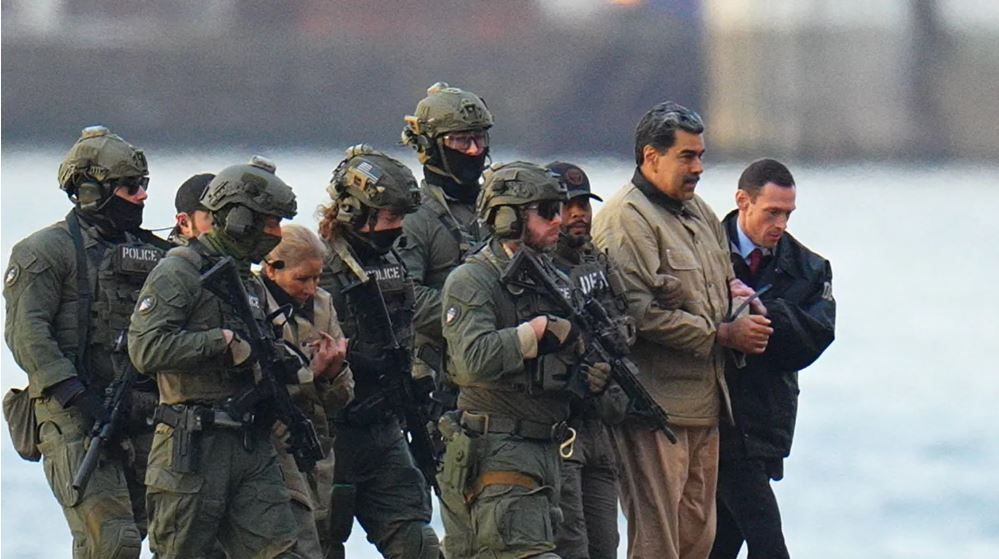
On January 3, 2026, the United States launched "Operation Absolute Resolve," a military strike that captured Venezuelan President Nicolás Maduro and his wife during a coordinated dawn raid on Caracas.
Why Cover this Topic for UPSC?
- High relevance for Prelims & Current Affairs
- GS Paper II: International Relations and International Organisations & Global Governance.
- GS Paper III: Economy, Energy & Internal Security
- Ethics Paper (GS IV): Ethics of regime change, targeted operations and abduction of a sitting head of state.
- Essay Paper: international law vs power politics, crisis of the “rules‑based order”, sovereignty and non‑intervention.
USA-Venezuela Relations
The relationship between the United States and Venezuela has been marked by deep tension, particularly since Hugo Chavez's rise to power in 1999. Over the past decade, these relations deteriorated further during Nicolas Maduro's presidency.
- Tensions began under Hugo Chávez (1999–2013), who promoted "Bolivarian Socialism" and anti-US sentiment.
- Since 2015, the US has imposed heavy sanctions on Venezuela’s oil sector (PDVSA), central bank, and government officials to pressure the regime.
- The US recognised opposition leader Juan Guaidó as interim president, severing diplomatic ties with Maduro.
- In 2020, the US Department of Justice indicted Maduro for "narco-terrorism," accusing him of leading the Cartel of the Suns to flood the US with cocaine.
- Relations hit a breaking point with "Operation Southern Spear" (late 2025), a massive US naval buildup in the Caribbean to enforce a blockade against "illegal drug trafficking".
- Operation Absolute Resolve in 2026 was executed, involving 150+ aircraft and Delta Force commandos.
Also read: India-China Relations UPSC Notes: History, Wars, and Border Disputes
What is the Monroe Doctrine?
The Monroe Doctrine was a US foreign policy which stated that North and South America were the sphere of influence of the United States, and any European interference or colonisation in the region would be considered a hostile act against the USA.
The Monroe Doctrine, articulated by President James Monroe on December 2, 1823, remains a central pillar in understanding U.S. foreign policy in the Western Hemisphere.
Four Core Principles:
- The United States will not interfere in European conflicts or internal politics.
- The US recognises existing European colonies and will not interfere with them.
- The Western Hemisphere is closed to future colonisation by European powers.
- Any attempt by foreign powers to interfere with independent states in the Americas is a hostile act against the US.
The Monroe Doctrine initially aimed to prevent European colonial powers from interfering in the Americas. After World War II, it was applied more broadly to oppose any foreign interference in the Western Hemisphere.
President Donald Trump openly referred to it during the Venezuela crisis, calling it the “Donroe Doctrine”, to assert that US dominance in the Western Hemisphere would not be challenged.
Also read: India-Pakistan Relations UPSC Notes: History, Wars, Indus Water Treaty
Why Did the US Attack Venezuela?
The US justifies the strike not as a war on the people, but as a "law enforcement operation" against a criminal regime.
- Combating Narco-Terrorism: The primary official justification is to dismantle the Cartel of the Suns, allegedly run by the Venezuelan military and government, to traffic drugs into the US.
- Restoring Democracy: To remove an authoritarian leader (Maduro) who allegedly stole elections and violated human rights, paving the way for a transition of power.
- Energy Security: To secure Venezuela's vast oil reserves and prevent them from being monopolised by US rivals like China and Russia, who have heavily invested in the region.
- Regional Security: Officials argued that Venezuela under Maduro posed a threat to regional stability and US security interests.
While the US invoked Article 51 of the UN Charter (self-defence), international law experts and the UN Security Council majority rejected this justification, as self-defence requires an "imminent armed attack," which Venezuela did not pose.
Also read: UPSC Notes on First World War: Causes, Consequences & Key Treaties
About Venezuela
Venezuela, officially the Bolivarian Republic of Venezuela, is a South American nation strategically located on the northern coast of the continent.
Geography & Borders
- Located on the northern coast of South America, bordering the Caribbean Sea.
- Borders: Colombia to the west, Brazil to the south, Guyana to the east.
Topography & Physical Features
- Andes Mountains in the northwest with Pico Bolívar (4,978 m) – Venezuela's highest peak.
- The Maracaibo Lowlands in the northwest are home to Lake Maracaibo.
- The Central llanos (extensive grassy plains) stretch from the Colombian border to the Orinoco Delta.
- The Guiana Highlands in the southeast have distinctive table-top mountains (Tepuis).
- Orinoco River: a major South American river for transportation and resources.
Capital & Major Cities
- Capital: Caracas (located on the central northern coast along the Guaire River).
- Other major cities: Valencia, Maracay
Natural Resources
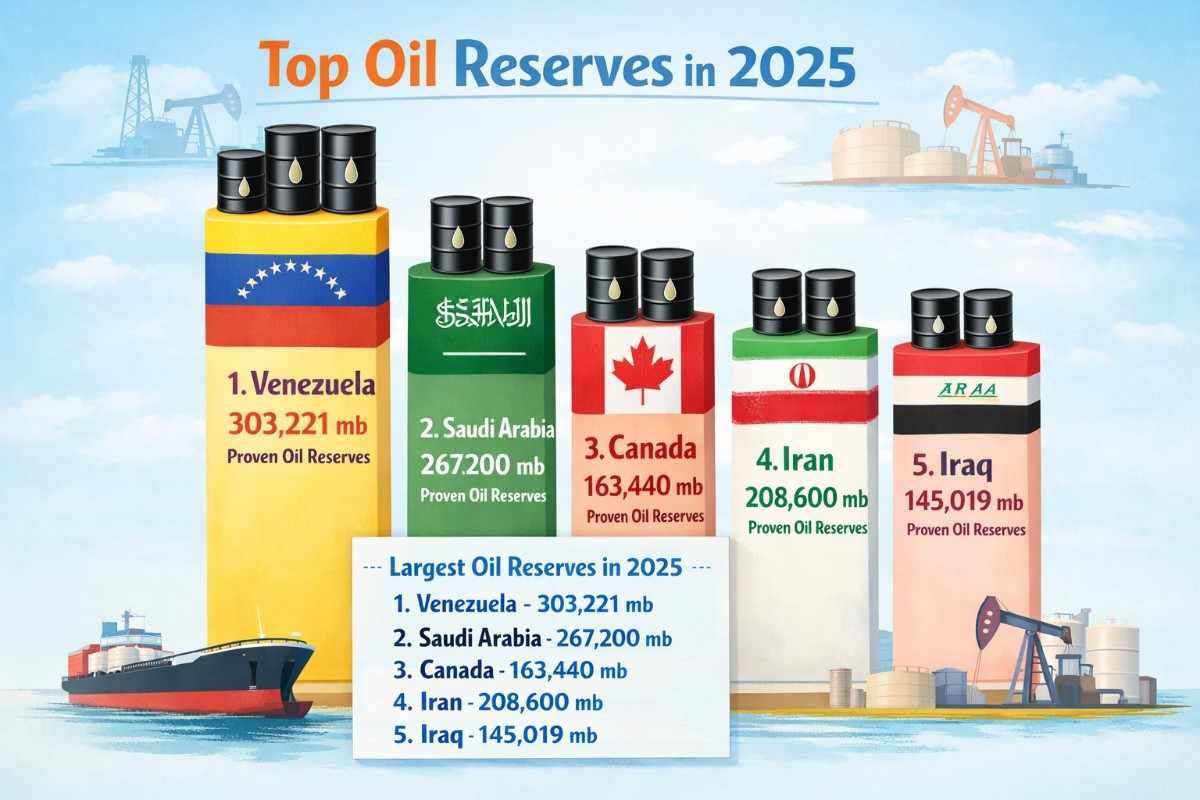
- World's largest proven oil reserves: 303 billion barrels (17% of global reserves).
- Orinoco Heavy Oil Belt: One of the world's largest hydrocarbon deposits containing heavy crude.
- Other resources: Natural gas, iron ore, gold, bauxite, diamonds, hydropower
OPEC & Oil Economy
- Founding member of OPEC (since the 1960s)
- Venezuela's production grew over 1 million barrels per day by late 2025, lifting its OPEC share to 4.5 per cent.
Climate & Environment
- Tropical and humid climate, with a more moderate climate in the highlands.
- Vulnerable to climate variations affecting agriculture.
- Rich biodiversity with the Amazon Basin presence in the southern regions.
Also read: NATO: History, Structure, Challenges & Relations with India
Impact of the US-Venezuelan Conflict
The military strike and capture of Maduro have created immediate and long-term consequences across economic, political, and security domains.
- Regime Change: Acting President Delcy Rodríguez now leads the interim government under significant US pressure to remove Cuban, Russian, Chinese, and Iranian advisers.
- Continued US Presence: US military presence expected to remain in the region; Trump threatened potential occupation if cooperation is lacking.
- Caribbean Instability: Nuclear submarine and guided-missile destroyer maintained in the region; declared nuclear-weapons-free zone status threatened.
- Oil Supply Disruption: Venezuelan oil production already collapsed; additional chaos may further reduce global supply.
- UN Charter Violation: Precedent for military intervention without Security Council authorisation; threatens the non-intervention principle.
- BRICS Weakness: Failure of BRICS allies to protect Venezuela shows limits of anti-Western coalition; weakens energy-sanctions alliance
Also read: QUAD At Sea Observer Mission: Strengthening Maritime Security in the Indo-Pacific
Impact of the US-Venezuelan Conflict on India
India's response to the US-Venezuelan operation reveals important principles of Indian foreign policy and current geopolitical calculations.
India's Diplomatic Position:
- Cautious Statement (January 3-4, 2026): MEA called developments "a matter of deep concern" and urged peaceful dialogue, notably avoiding direct US condemnation.
- Contrast with BRICS: Russia, China, Brazil, and South Africa strongly condemned; India's muted response is notable.
Economic Impacts on India:
- Oil Import Dependency Minimal: Venezuela accounted for only 0.3% of India's oil imports in the current financial year, up to November 2025, due to pre-existing sanctions.
- Investment Recovery Opportunity: ONGC Videsh may recover $536 million in unpaid dividends if sanctions eventually ease.
- Future Oil Access: If Venezuelan oil returns to global markets, it could increase supply and exert downward pressure on prices, beneficial to India.
Geopolitical Implications:
- Iran and Strait of Hormuz: Venezuela crisis weakens Iran's position; raises risk premiums on Strait of Hormuz shipping, directly affecting Indian supply chains.
- Regional Stability: India's call for peaceful dialogue is consistent with its Ukraine and Gaza positions, maintaining a non-alignment image.
- BRICS Cohesion Test: Operation exposed weaknesses in the BRICS energy-sanctions alliance; demonstrates limits of bloc power against US unilateralism.
UPSC Prelims PYQ on Major Oil Reserves of the World
QUESTION 1
Consider the following statements:
Statement-I: Recently, Venezuela has achieved a rapid recovery from its economic crisis and succeeded in preventing its people from fleeing/emigrating to other countries. Statement-II: Venezuela has the world's largest oil reserves.
Which one of the following is correct in respect of the above statements?
Criticism of US Actions
The US military action has faced strong criticism worldwide, with experts, countries, and human rights groups saying it breaks international law and basic global rules.
- UN Charter Article 2(4) Violation: Prohibition against "threat or use of force against the territorial integrity or political independence of any state" directly violated.
- Lack of Security Council Authorisation: Operation proceeded without UNSC approval or authorisation; US self-defence claim lacks merit as Venezuela posed no "armed attack".
- UN Human Rights Office: Stated the military intervention violates international law and makes "every other country less safe.
- UN Security Council Meeting (January 5): Russia and China called for Maduro's immediate release; global consensus that the operation breached the Charter.
- Human Rights Organisations: ITUC-TUCA and the International Labour Confederation condemned the operation as a sovereignty violation.
- Joint Statement (Spain, Brazil, Chile, Colombia, Mexico, Uruguay): Declared actions violated "basic principles of international law" and "constitute a dangerous precedent for peace, regional security.
UPSC Mains Practice Question
What do you understand by the Monroe Doctrine? How has its interpretation evolved from 1823 to the present time?
Evaluate Your Answer Now!Way Forward
The Venezuela crisis requires diplomatic solutions, not military force. The world must restore international law, support fair elections, manage the humanitarian crisis, and strengthen global rules equally for all nations.
- Hold the US accountable at the International Court of Justice for military actions without UN approval, which violate international law.
- Let Venezuelans decide their future through free, fair, internationally monitored elections; regional countries like Brazil should mediate, not allow US occupation.
- Provide humanitarian aid to Colombia and Brazil to manage refugee pressure; Venezuela’s resources should benefit its people, not foreign companies.
- Strengthen multilateral rules so powerful UN members are accountable, and reinforce regional blocs like CELAC and BRICS to protect national sovereignty.
Start Your UPSC Preparation with SuperKalam
SuperKalam is your AI-powered personal mentor, keeping your preparation disciplined, focused, and effective with:
- Instant Mains answer evaluation
- Instant doubt resolution
- Personalised guidance
- Unlimited MCQs and PYQs
- Progress tracking through daily goals, streaks, and leaderboards.