Khelo India Sports Goods Scheme: Can Subsidies Drive High-Tech Manufacturing?
Subsidies cannot upgrade India's sports goods sector without domestic mastery over composite materials, proprietary patents, and global testing homologation.
Nov, 2026
•10 min read
Context
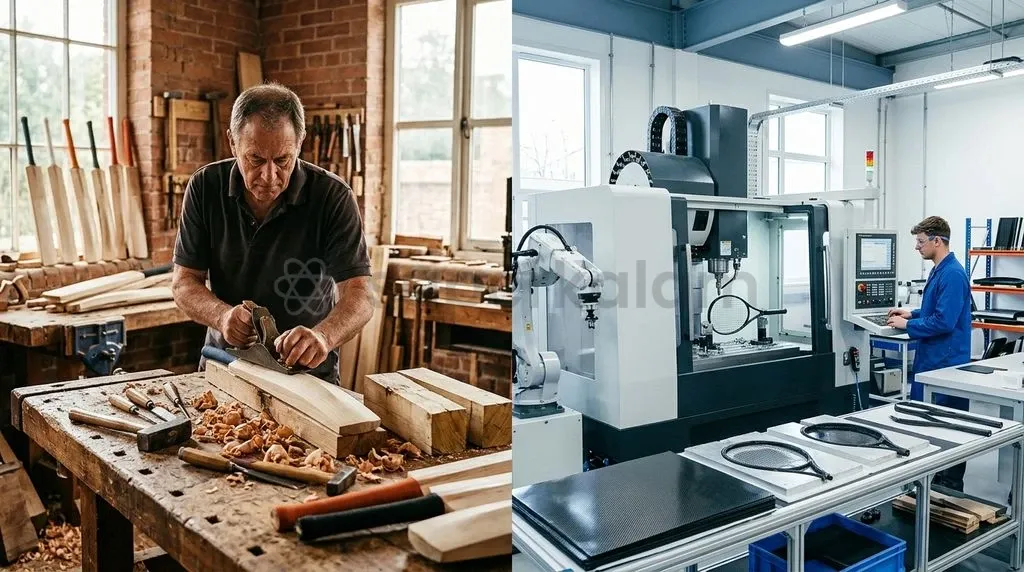
India has approved the ₹1,856.67 crore Khelo India Sports Goods Manufacturing Scheme. The move signals a decisive break from informal workshops toward high-precision sports engineering.
Yet factory subsidies alone will not bridge technical deficits. Domestic firms face persistent gaps in composite synthesis, global homologation, and patent generation. The policy aims to turn heritage clusters into export-ready production hubs.
Global sporting goods sales are climbing from USD 140 billion toward USD 283 billion. To capture market share, Indian manufacturers must clear the strict technical certifications governing international play.
Why in the News: The Push for Indigenous Sports Equipment
On 28 October 2026, the Union Cabinet formally approved the Khelo India Sports Goods Manufacturing Scheme with an outlay of ₹1,856.67 crore spanning FY 2026-27 to FY 2033-34, as announced by [PIB Delhi: Cabinet approves Khelo India Sports Goods Manufacturing Scheme for Building a Globally Competitive Sports Manufacturing Ecosystem]. This initiative operationalises the manufacturing directives laid out in the Khelo Bharat Niti 2025 (National Sports Policy).
As of October 2026, domestic sports production remains tethered to manual craftsmanship. Because of this gap, elite athletes and national centres remain heavily dependent on foreign imports.
The reform targets three strategic priorities:
- Private capital leverage: The government projects the scheme to mobilise approximately ₹6,800 crore in private sector investment per an official press briefing.
- Technological problem-solving: Attracting private capital requires clearing deep engineering hurdles that standard turnover grants cannot resolve alone.
- Advanced materials transition: Long-term competitiveness requires mastery over domestic polymer chemistry and international laboratory homologation.
From Willow Bats to Carbon Fibre: The Reality of India's Sports Manufacturing
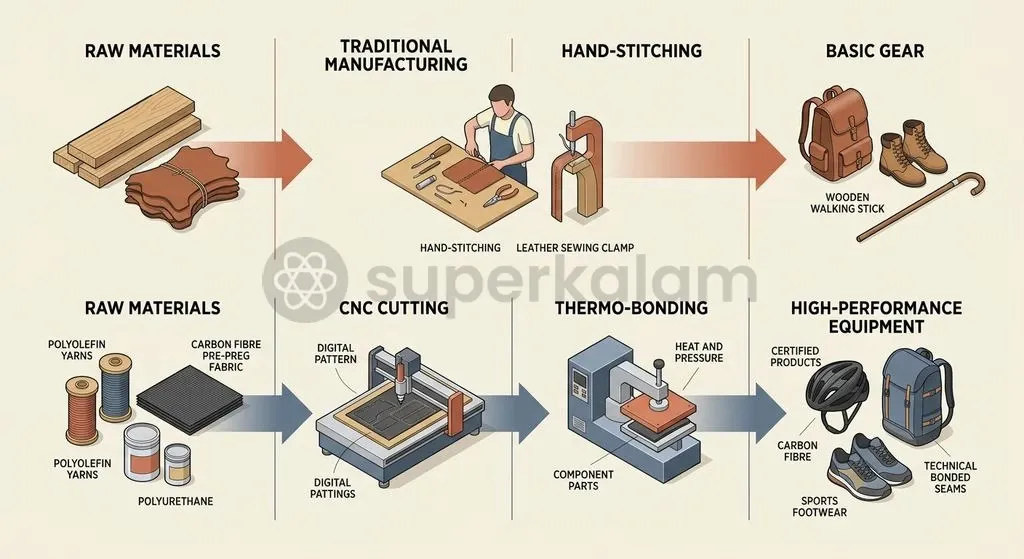
India's sporting equipment base is geographically concentrated. The sector has long rested on twin artisanal hubs: Jalandhar in Punjab and Meerut in Uttar Pradesh, documented by the [Ministry of Commerce and Industry / SGEPC Working Paper]. These historic centres built their standing on labour-intensive processing of organic inputs: English and Kashmir willow for cricket bats, vegetable-tanned leather for balls, and hand-stitched inflatables.
Scale remains heavily fragmented. According to a [PIB Delhi: Khelo India Sports Goods Manufacturing Scheme Backgrounder], micro, small, and medium enterprises (MSMEs) account for nearly 90% of domestic production. Today, that workshop tradition faces severe technological displacement.
Modern athletic competition runs on aerospace engineering. Top-tier gear relies on aerospace-grade carbon fibre, Kevlar, and specialised polyurethane formulations, according to an [EXIM Bank Working Paper on Indian Sports Goods Industry]. In competitive football manufacturing, for instance, hand-stitched leather panels have yielded to thermo-bonded synthetic bladders and textured surfaces. Manual stitching lines cannot match those tolerances.
| Parameter | Traditional Indian Cluster Production | Global High-Performance Standard |
|---|---|---|
| Dominant Materials | English/Kashmir willow, raw leather, vulcanised rubber | Carbon-fibre composites, Kevlar, synthetic polyurethane |
| Manufacturing Technique | Manual shaping, artisan hand-stitching | Automated CNC cutting, thermo-bonding, autoclave curing |
| Testing & Quality Control | Visual appraisal, manual drop tests | Computational aerodynamics, multi-axis impact sensors |
| Certification Status | Bureau of Indian Standards (BIS) or uncertified | Mandatory homologation (FIFA Quality Pro, BWF, FIH) |
| Value Addition | Low-to-moderate commodity processing | High margins driven by proprietary patent formulations |
Modern sports engineering is fundamentally materials chemistry. Indian firms excel at woodwork and leatherwork. However, international tournaments mandate synthetic polyurethane and polyolefin yarns.
Indian processors still import these critical chemical masterbatches. Without proprietary resin formulations, domestic producers stay confined to the lower tiers of value addition.
Discuss with Superkalam
Recall the two historic manufacturing clusters in India that account for the vast majority of traditional sports goods production.
Ask NowKey Features of the Khelo India Sports Goods Scheme
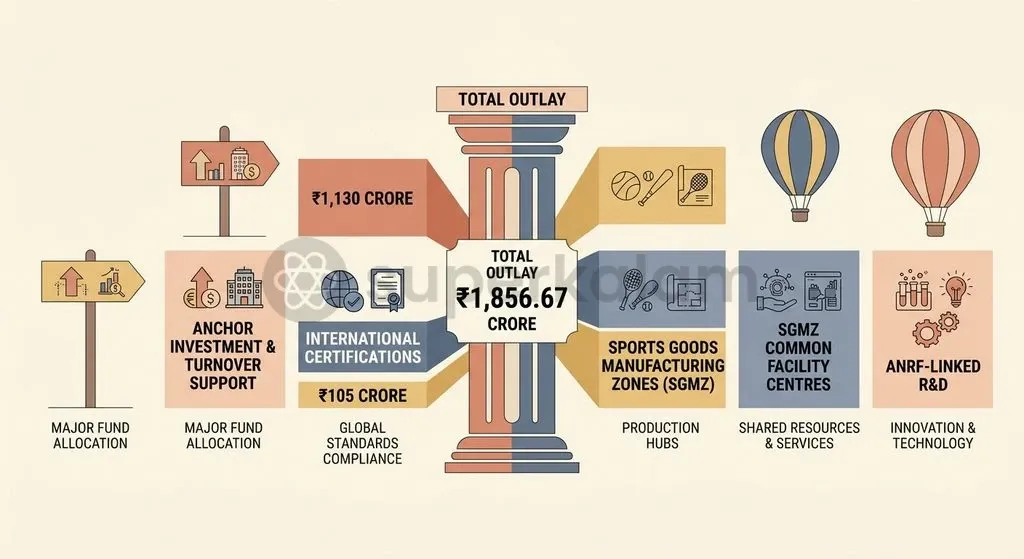
The Khelo India Sports Goods Manufacturing Scheme relies on specific fiscal levers to counter MSME fragmentation, as detailed by [PIB Delhi: Cabinet approves Khelo India Sports Goods Manufacturing Scheme for Building a Globally Competitive Sports Manufacturing Ecosystem]. From the total budget, the government earmarks a combined outlay of ₹1,130 crore strictly for direct capital and production support.
The policy deploys four distinct operational mechanisms:
- Anchor Investment Support: Grants capital subsidies of up to 20% on capital investments inside designated industrial nodes. This incentivises primary manufacturers to build integrated regional supply networks.
- Turnover Linked Support: Delivers production incentives of up to 15% for manufacturers investing ₹10 crore or more, rewarding factory scale and balance-sheet throughput.
- Dedicated Sports Goods Manufacturing Zones (SGMZs): Industrial corridors linking raw material converters, prototyping workshops, and testing infrastructure, developed alongside the Bharat Audyogik Vikas Yojana (BHAVYA) and National Industrial Corridor Development Corporation (NICDC) Industrial Parks.
- Cluster Modernisation: Upgrades existing units in Meerut and Jalandhar by financing Common Facility Centres (CFCs) and shared technical workshops for small producers.
The mandate pushes manufacturers beyond generic goods into specialised equipment. Target categories include carbon-composite archery bows, high-density kabaddi mats, and International Shooting Sport Federation (ISSF) standard match pellets, as noted during the official press briefing.
These export initiatives align with the broader Export Promotion Mission. Simultaneously, the Remission of Duties and Taxes on Exported Products (RoDTEP) scheme continues tariff remissions for outbound consignments.
The Certification Hurdle: Meeting Global Standards from FIFA to BWF
Factory subsidies lower capital barriers, but they do not guarantee international market access. High-performance gear must clear exacting laboratory protocols to secure homologation — the formal badge of approval issued by governing federations like the Federation Internationale de Football Association (FIFA), the Badminton World Federation (BWF), and the International Hockey Federation (FIH).
Indian producers run into three persistent barriers during this process:
- Offshore testing mandates: The [Sports Goods Export Promotion Council (SGEPC) Industry Report] confirms that federations mandate compliance evaluations at accredited overseas laboratories.
- Prohibitive recurring expenses: Small firms must handle foreign logistics, shoulder steep periodic audit charges, and absorb lengthy evaluation delays.
- Commercial exclusion: A ball or shuttlecock stitched in Meerut or Jalandhar cannot enter sanctioned international competition without these federation stamps, irrespective of physical quality.
To help domestic suppliers clear this hurdle, the scheme allocates ₹105 crore specifically for international accreditations, reported by [PIB Delhi: Cabinet approves Khelo India Sports Goods Manufacturing Scheme for Building a Globally Competitive Sports Manufacturing Ecosystem]. This facility covers 70% of registration costs for initial certifications and 50% of the cost for renewal of accreditations from International Sports Federations.
While this subsidy cushions upfront testing fees, it exposes an institutional deficit. India possesses no domestic testing body qualified to issue these international homologation marks directly.
Discuss with Superkalam
Explain why international federation homologation (from bodies like FIFA or BWF) acts as a non-tariff commercial barrier for domestic MSMEs.
Ask NowWhy Capital Grants Fall Short: R&D, Patents, and Advanced Material Deficits
Turnover subsidies rest on an incomplete premise: that capital alone creates industrial leadership. In elite sports equipment, the enduring moat comes from proprietary resin formulations, aerodynamic profiles, and impact kinetics defended by patents.
Engineering an Olympic-grade track bicycle frame, composite hockey stick, or feather shuttlecock requires deep materials science. Traditional MSME grants do not build this expertise. To address the gap, the scheme establishes four institutional links:
- Dedicated research hubs: Financing specialised Centres of Excellence (CoEs) across premier academic institutions, as outlined by [PIB Delhi: Cabinet approves Khelo India Sports Goods Manufacturing Scheme for Building a Globally Competitive Sports Manufacturing Ecosystem].
- National research alignment: Directing these centres to focus on structural mechanics and polymers in coordination with the Anusandhan National Research Foundation (ANRF).
- Startup incubation: Teaming up with Startup India to supply hardware incubators, advanced CAD suites, and prototyping machinery for sports startups.
- Technical workforce skilling: Rolling out training in computerised numerical control (CNC) cutting, automated pre-preg layup, and thermo-bonding through the Ministry of Skill Development and Entrepreneurship (MSDE).
Without this collaborative foundation, factory grants simply subsidise obsolete assembly methods.
Institutional Levers: Public Procurement, SAI Infrastructure, and GeM Mandates
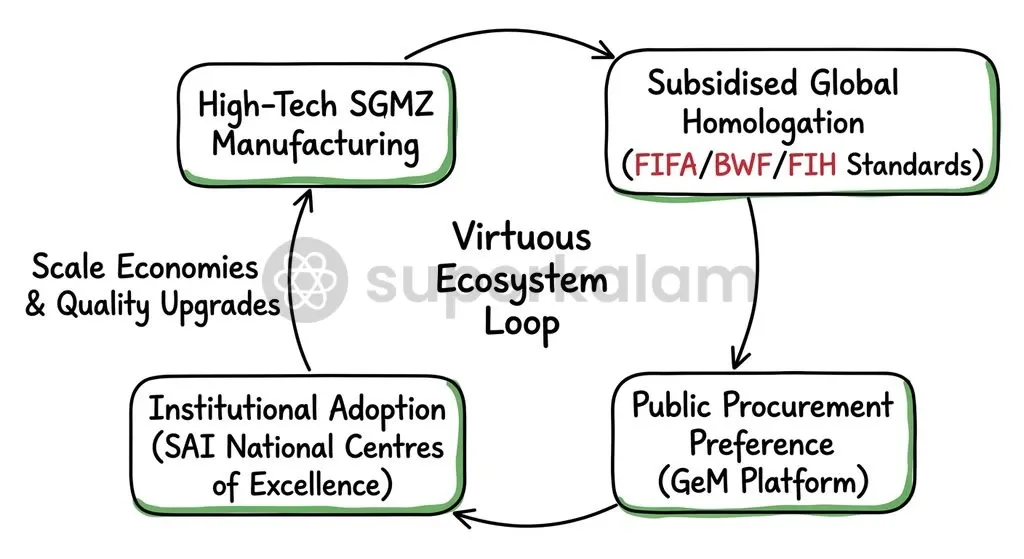
State purchasing is a powerful demand-side instrument for scaling industrial capacity. Under the Public Procurement (Preference to Make in India) Order 2017, the Sports Authority of India (SAI) applies domestic purchase preferences across its National Centres of Excellence (NCOE) via the Government e-Marketplace (GeM), as outlined in the [Sports Authority of India Procurement Guidelines and Bid Standard Operating Procedures].
Yet this preference rule historically hit an institutional dead end. Elite coaching academies require equipment certified to international competition benchmarks. Because local suppliers lacked these credentials, documented in [Sports Authority of India Tender Documents (NSNIS Patiala & NCOE Procurements)], official tenders remained locked into foreign equipment brands.
Connecting certification grants under the Khelo India scheme with GeM preference clauses resolves this bottleneck through five sequential stages:
- Domestic MSMEs access shared prototyping tools in designated SGMZ clusters.
- Up to 20% capital subsidies help automate assembly floors with modern machinery.
- The scheme reimburses 70% of homologation fees across bodies such as FIFA, BWF, and FIH.
- Certified domestic equipment becomes eligible for purchase preferences under GeM tenders.
- Large-scale domestic procurement by SAI provides the operational scale needed to target exports.
By helping local manufacturers secure international badges, domestic procurement creates guaranteed baseline sales. That domestic volume provides the revenue stability required to recover costly development investments.
Discuss with Superkalam
If you were advising the Ministry of Commerce, how would you apply the scheme's accreditation subsidies to ensure domestic firms win Sports Authority of India (SAI) public procurement tenders?
Ask NowGlobal Lessons: How China and Taiwan Mastered Sports Technology
India's policy shift reflects strategies pursued across East Asia over the past forty years. Both China and Taiwan migrated from low-margin contract workshops into world leaders in athletic manufacturing by binding capital grants to advanced materials science.
- Taiwan's institutional materials strategy: Taiwan built a dominant global position in high-end composite sports gear — including carbon-fibre bicycle frames and composite archery limbs — by anchoring private firms to state laboratories like the Industrial Technology Research Institute (ITRI). Instead of handing out small industrial doles, the government underwrote autoclave curing facilities, resin formulation, and pre-preg composite chemistry. This research umbrella enabled local firms to master structural composite fabrication, graduating them from contract builders to high-margin patent owners.
- China's co-located certification clusters: China developed vast industrial parks across Guangdong and Fujian by pairing manufacturing facilities with on-site, internationally recognised testing laboratories. Instead of shipping batches to Europe for homologation, domestic factories accessed joint international testing facilities built right inside their manufacturing zones. Combined with automated machinery and guaranteed orders from provincial sports academies, this ecosystem gave Chinese producers commanding economies of scale that anchor world supply chains.
Discuss with Superkalam
Analyse the key material and technological differences between traditional Indian cluster manufacturing and global high-performance sports engineering standards.
Ask NowWay Forward: Building an Ecosystem for High-Performance Sports Engineering
Transforming India from a manual equipment assembler into a precision sports engineering hub requires balancing capital incentives with technical depth:
- Establish Domestic Accredited Testing Facilities: Direct part of the ₹105 crore certification allocation toward setting up testing facilities accredited by international federations (FIFA, BWF, FIH, World Athletics) within the planned SGMZs, eliminating the cost of foreign testing.
- Incentivise Upstream Materials Synthesis: Expand production-linked incentives to cover upstream raw materials, such as structural carbon-fibre composites, aerospace resins, and synthetic polyurethane masterbatches, reducing import dependence.
- Integrate Academic Research with Cluster MSMEs: Connect the ANRF and Centres of Excellence directly with MSME units in Jalandhar and Meerut, commercialising academic breakthroughs in impact dampening, vibration mechanics, and polymer durability.
- Harmonise BIS Standards with International Norms: Update Bureau of Indian Standards (BIS) technical codes to mirror the testing protocols of global federations, preventing domestic standards from falling behind international market requirements.
- Target High-Value Export Corridors: Leverage SGEPC export networks and RoDTEP remissions to expand beyond cricket equipment in established export markets like the United States, the United Kingdom, Germany, and Australia, into competitive composite categories.
Key Takeaways
- The Union Cabinet approved the Khelo India Sports Goods Manufacturing Scheme (FY 2026-27 to FY 2033-34) with an outlay of ₹1,856.67 crore to build a modern domestic sports equipment ecosystem.
- Financial support includes ₹1,130 crore allocated across Anchor Investment Support (up to 20% capital subsidy) and Turnover Linked Support (up to 15% incentive for investments of ₹10 crore or more).
- MSMEs generate nearly 90% of India's sports production, concentrated in traditional clusters in Jalandhar and Meerut, which face challenges transitioning from wood and leather to carbon fibre and synthetic composites.
- The scheme provides ₹105 crore for international accreditations, covering 70% of first-time certification costs and 50% of renewal fees for standards set by global federations like FIFA, BWF, and FIH.
- Capital subsidies alone cannot resolve the technical deficit; sustained competitiveness requires domestic accredited testing laboratories, advanced materials research via the ANRF, and targeted public procurement through the Government e-Marketplace (GeM).
Mains Question
"Turnover subsidies and capital grants rest on an incomplete premise if deep materials science and certification hurdles are left unaddressed." In the context of the Khelo India Sports Goods Manufacturing Scheme, critically analyse the structural constraints facing India's transition from artisanal manufacturing to high-tech sports engineering. (15 Marks)
Evaluate NowMains Question
Elucidate the key policy levers under the Khelo India Sports Goods Manufacturing Scheme aimed at upgrading legacy clusters and integrating domestic MSMEs into global value chains. (10 Marks)
Evaluate NowPractice MCQs
QUESTION 1
With reference to the Khelo India Sports Goods Manufacturing Scheme approved in 2026, consider the following statements:
- It operationalises the manufacturing directives established under the Khelo Bharat Niti 2025.
- It provides anchor investment support offering capital subsidies of up to 20% within designated industrial nodes.
- It offers turnover-linked production incentives of up to 15% exclusively for micro-enterprises with investments below ₹1 crore.
Which of the statements given above is/are correct?
QUESTION 2
Consider the following statements regarding the sports goods manufacturing sector in India:
- Traditional clusters in Jalandhar and Meerut are dominated by micro, small, and medium enterprises (MSMEs).
- Under the Khelo India Sports Goods Manufacturing Scheme, dedicated Sports Goods Manufacturing Zones (SGMZs) are planned alongside the Bharat Audyogik Vikas Yojana (BHAVYA).
- India possesses multiple accredited domestic laboratories authorized by FIFA and BWF to grant mandatory international homologation marks directly.
Which of the statements given above is/are correct?
QUESTION 3
Regarding the financial support for international accreditations under the Khelo India Sports Goods Manufacturing Scheme, consider the following statements:
- The scheme dedicates a specific outlay of ₹105 crore to subsidise international federations' certification costs.
- It reimburses 100% of registration costs for both initial certifications and subsequent renewals.
- The subsidy targets homologation from bodies such as the International Hockey Federation (FIH) and Badminton World Federation (BWF).
Which of the statements given above is/are correct?
QUESTION 4
Consider the following pairs of technological domains and their application in sports equipment manufacturing as highlighted in the Khelo India Sports Goods Scheme:
- Anusandhan National Research Foundation (ANRF): Coordinating research on structural mechanics and polymers across Centres of Excellence
- Ministry of Skill Development and Entrepreneurship (MSDE): Workforce training in CNC cutting and automated pre-preg layup
- Common Facility Centres (CFCs): Dedicated solely to issuing international export patents
How many of the pairs given above are correctly matched?
QUESTION 5
Why has the Public Procurement (Preference to Make in India) Order historically failed to fully open Sports Authority of India (SAI) tenders to domestic sports equipment manufacturers?