India's First Transgender Disaster Squad: Inclusive Crisis Governance
How Kolhapur's pioneering transgender rescue squad transforms disaster risk reduction from exclusionary binary relief into constitutional empowerment.
Sep, 2026
•9 min read
Overview
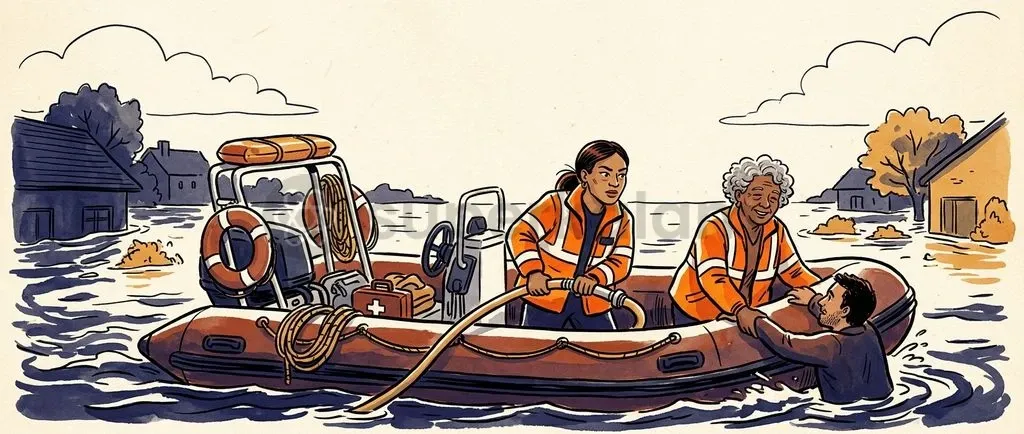
India's first transgender disaster rescue squad, established in Maharashtra's Kolhapur district in 2026, marks an institutional transition from viewing gender minorities as passive humanitarian victims to certified first responders in crisis governance. Trained in aquatic lifesaving, flood assessment, and emergency medicine, this pioneer unit addresses systemic operational gaps in traditional disaster management.
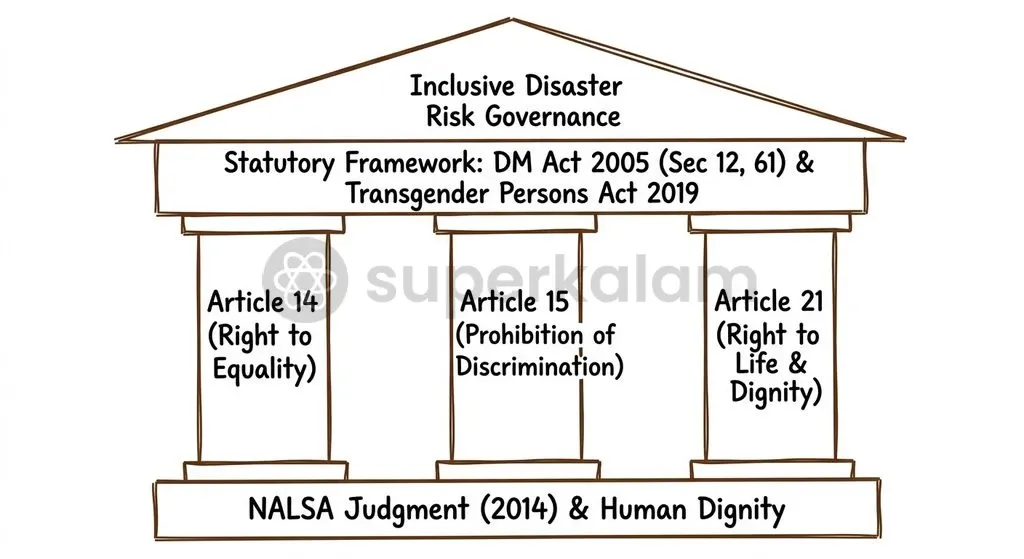
The initiative operationalises constitutional guarantees under Articles 14, 15, and 21. By integrating transgender personnel into mainstream emergency response alongside community volunteers, the initiative bridges statutory relief mandates under the Disaster Management Act, 2005 with international commitments under the Sendai Framework for Disaster Risk Reduction.
Why Is India's First Transgender Disaster Squad in the News?
The Kolhapur District Disaster Management Authority (DDMA) established India's first transgender disaster management and rescue squad in 2026 in Maharashtra. As of September 2026, this pioneer initiative trained transwomen associated with the Maitri NGO to serve as certified frontline rescue personnel during severe monsoon emergencies, according to district reporting by Pune News.
Kolhapur district frequently battles catastrophic flood surges along the Panchganga river basin, requiring rapid community mobilisation. By integrating ten trained transwomen directly into the district's frontline disaster response apparatus alongside more than 2,000 Aapda Mitra and Aapda Sakhi volunteers, the administration established an operational precedent for inclusive disaster risk reduction in India.
Discuss with Superkalam
Recall the specific river basin in Maharashtra where India's first transgender disaster squad was deployed in 2026.
Ask NowUnderstanding the Vulnerabilities: How Disasters Disproportionately Impact Transgender Communities
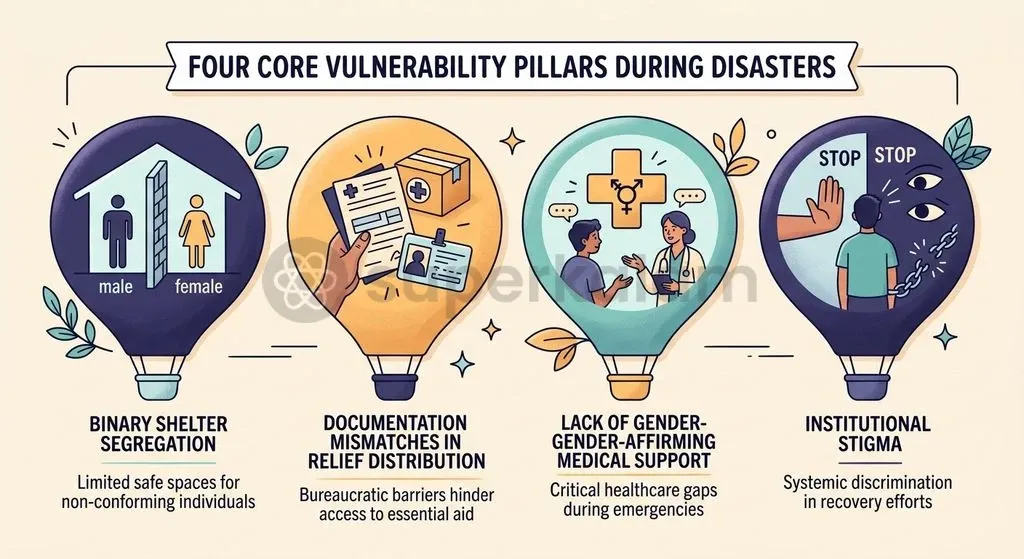
Transgender persons face acute socio-economic marginalisation that multiplies physical danger and institutional neglect during sudden-onset natural emergencies. Structural vulnerabilities emerge primarily because existing emergency infrastructure remains strictly organised around rigid male-female binaries.
The Kerala State Disaster Management Authority (KSDMA) observed that conventional disaster response systems generate distinct structural barriers for gender minorities:
- Binary Relief Shelters: Evacuation centres and relief camps segregate facilities strictly by binary sex, exposing transgender individuals to harassment, physical violence, and loss of privacy.
- Secondary Displacement: Transgender victims frequently avoid state-run relief shelters due to fear of institutional stigma, seeking refuge in unsafe, flood-prone fringes.
- Identity Documentation Hurdles: Official ex-gratia compensation and Public Distribution System (PDS) registries rely on rigid binary identity cards, as highlighted in the NITI Aayog India Voluntary National Review 2025, which often conflict with an individual's self-identified gender expression.
- Healthcare and Medical Exclusion: Disaster health camps routinely lack provisions for gender-affirming medical care, hormone therapy continuity, and specialised psychosocial counselling.
Inside the Groundbreaking Initiative: Structure, Training, and Operational Role
The Kolhapur disaster squad completed comprehensive multi-hazard response training designed by professional emergency managers and civil defence trainers. According to local administration reports, the curriculum equipped the personnel with technical capabilities required for high-risk flood rescue operations.
The operational training module incorporated specific lifesaving capabilities:
- Aquatic Rescue and Navigation: Operating motorised rescue boats in turbulent flood currents, deep-water rescue swimming, and navigating submerged urban topography.
- Lifesaving Interventions: Executing wet and dry lifesaving techniques, casualty extraction from fast-flowing waters, and administering Cardio-Pulmonary Resuscitation (CPR) alongside advanced first aid.
- Obstacle Clearance and Logistics: Clearing uprooted trees and debris blocking arterial evacuation routes using specialised mechanical cutters.
- Flood Hazard Mapping: Conducting localised risk assessment, vulnerability zoning, and vulnerable household mapping ahead of seasonal reservoir discharge.
The squad operates within the National Disaster Management Authority (NDMA) community resilience framework. By embedding these personnel alongside Aapda Mitra volunteers, the district administration created a scalable model for Community-Based Disaster Risk Reduction (CBDRR) across hazard-prone regions.
Discuss with Superkalam
Explain how rigid binary documentation requirements create barriers for transgender victims seeking disaster compensation.
Ask NowConstitutional and Legal Framework Protecting Gender Minorities in India
Constitutional jurisprudence in India guarantees substantive equality and bodily autonomy, extending complete legal protections to gender minorities during crisis situations. Fundamental Rights under Part III of the Constitution act as an unconditional shield against discriminatory state action during relief distribution and emergency rescue.
The Supreme Court of India in the landmark National Legal Services Authority (NALSA) v. Union of India (2014) judgment established that fundamental rights guaranteed under Articles 14, 15, 19(1)(a), and 21 apply equally to transgender persons as the third gender. The Court explicitly held that non-discrimination on grounds of "sex" under Articles 15 and 16 encompasses gender identity.
| Legal / Constitutional Provision | Operational Protection in Disaster Governance |
|---|---|
| Article 14, Constitution of India | Guarantees equality before the law in relief distribution. |
| Article 15, Constitution of India | Prohibits discrimination based on gender identity. |
| Article 21, Constitution of India | Protects right to life, dignity, and emergency shelter. |
| Section 12, DM Act, 2005 | Mandates minimum standards of relief for shelter and health. |
| Section 61, DM Act, 2005 | Prohibits discrimination in relief and compensation. |
| Section 3 & 9, Transgender Act 2019 | Forbids service denial in public welfare and healthcare. |
Section 12 of the Disaster Management Act, 2005 requires the National Disaster Management Authority to recommend guidelines for minimum standards of relief, covering shelter, food, drinking water, and medical assistance.
Furthermore, Section 61 of the Disaster Management Act, 2005 bars discrimination on grounds of sex, caste, community, descent, or religion in granting disaster compensation. Complementing this, the Transgender Persons (Protection of Rights) Act, 2019 prohibits discrimination across public access, healthcare, and social security provisions.
Gaps in India's Traditional Disaster Risk Reduction Frameworks
Traditional disaster governance frameworks in India have historically operated on binary assumptions, overlooking the distinct protection needs of sexual and gender minorities. Relief standard operating procedures (SOPs) frequently conflate gender mainstreaming solely with cisgender women, leaving transgender individuals administratively invisible.
| Structural Dimension | Traditional Disaster Architecture | Inclusive Disaster Governance (KSDMA Model) |
|---|---|---|
| Camp Layout | Binary (Men/Women) dormitories and shared open bathrooms | Gender-neutral sanitation cubicles and safe family spaces |
| Vulnerability Data | Aggregated binary demographic censuses | Disaggregated vulnerability mapping capturing gender identity |
| First Responder Profile | Uniformed state units and binary civil defence teams | Integrated volunteer squads including transgender personnel |
| Relief Identification | Rigid ration cards requiring head-of-household validation | Flexible biometric verification accepting self-identification |
| Healthcare Focus | Basic trauma care and maternal health packages | Trauma care integrated with gender-affirming medical support |
The Kerala State Disaster Management Authority became the first state authority in India to formulate an institutionalised Transgender and Queer Inclusive Disaster Risk Reduction policy framework in partnership with the Social Justice Department.
The KSDMA framework documented that binary-segregated camps and restricted access to gender-affirming clinical assistance represent the primary drivers of secondary displacement during monsoon floods and landslides.
Discuss with Superkalam
How can the structural innovations of the KSDMA inclusive disaster framework be applied to design urban flood relief shelters?
Ask NowGlobal Best Practices: Aligning with the Sendai Framework for Disaster Risk Reduction
The United Nations Office for Disaster Risk Reduction (UNDRR) advocates for an all-of-society approach to build resilient disaster governance systems. Global disaster mitigation paradigms increasingly recognise that vulnerable populations must actively shape emergency planning and operational response.
In May 2026, the UNDRR expanded the Sendai Stakeholder Engagement Mechanism (SEM) by establishing a dedicated LGBTIQ+ Persons constituency group, securing structured global representation for gender minorities in disaster policy forums.
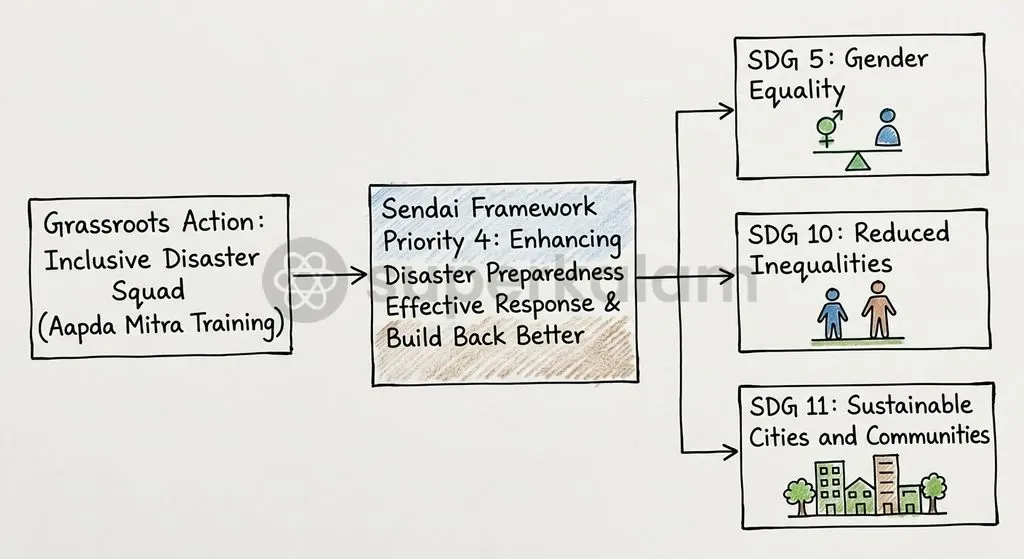
This institutional expansion operationalises Priority 4 of the Sendai Framework for Disaster Risk Reduction (2015–2030), which mandates enhancing disaster preparedness for effective response and to "Build Back Better" in recovery and reconstruction through inclusive community participation. Furthermore, gender-inclusive disaster governance directly advances the United Nations Sustainable Development Goals:
- SDG 5 (Gender Equality): Eliminating systemic discrimination against gender minorities in institutional public services.
- SDG 10 (Reduced Inequalities): Ensuring equal protection, social inclusion, and legal representation for marginalised populations.
- SDG 11 (Sustainable Cities and Communities): Enhancing human settlements through inclusive, participatory disaster management planning.
Discuss with Superkalam
Analyse the link between binary camp architecture and the phenomenon of secondary displacement during natural disasters.
Ask NowEthical Dimension: Human Dignity, Inclusivity, and Compassion in Governance
Transformative constitutionalism requires public institutions to dismantle historical hierarchies and uphold substantive human dignity during humanitarian crises. The ethical imperative of crisis governance lies in moving beyond charity toward institutional empathy, fairness, and fundamental rights.
Transitioning marginalised groups from perceived passive aid recipients into trained, capable frontline rescuers operationalises transformative constitutionalism, instilling agency, equity, and institutional empathy in emergency leadership.
By validating the leadership and physical agency of transwomen during life-threatening crises, the Kolhapur initiative challenges deeply entrenched social stigmas and asserts the universal ethical principle of human dignity.
Way Forward: Mainstreaming Queer and Transgender Inclusion in Disaster Management
Institutionalising inclusive disaster governance across India requires structural policy adjustments, infrastructure redesign, and capacity-building programmes across all disaster management tiers.
The guidelines outlined by the Kerala State Disaster Management Authority highlight several critical policy interventions needed across state and national frameworks:
- Standardised Infrastructure Protocols: Mandating separate gender-neutral sanitation cubicles and safe living quarters in every state relief camp under Section 12 of the Disaster Management Act, 2005.
- Sensitisation of First Responders: Integrating comprehensive gender-identity sensitisation modules into basic training curricula for the National Disaster Response Force (NDRF), State Disaster Response Forces (SDRF), and civil defence personnel.
- Flexible Relief Distribution Protocols: Modifying ex-gratia compensation guidelines and PDS ration protocols to honour self-identified gender cards under the Transgender Persons (Protection of Rights) Act, 2019, removing dependencies on rigid binary family registries.
- Institutionalising Community Task Forces: Replicating the Kolhapur model nationwide by embedding transgender rescue cohorts within the NDMA's Aapda Mitra Scheme across all multi-hazard prone districts.
- Disaggregated Disaster Data Collection: Establishing mandatory socio-demographic indicators within District Disaster Management Plans (DDMPs) to map vulnerable transgender populations and design targeted evacuation strategies.
Key Takeaways
- Pioneer Unit: Kolhapur DDMA in Maharashtra formed India's first transgender disaster rescue squad in 2026, training transwomen associated with the Maitri NGO in aquatic lifesaving, flood risk assessment, and CPR.
- Constitutional Anchor: The initiative enforces Supreme Court jurisprudence in NALSA v. Union of India (2014), which secured fundamental rights under Articles 14, 15, 19(1)(a), and 21 for transgender persons.
- Statutory Compliance: Section 12 and Section 61 of the Disaster Management Act, 2005 mandate non-discriminatory relief standards, reinforced by the Transgender Persons (Protection of Rights) Act, 2019.
- State Innovation: Kerala (KSDMA) established India's first institutionalised Transgender and Queer Inclusive Disaster Risk Reduction framework, addressing secondary displacement in relief camps.
- International Alignment: Inclusive disaster response supports Priority 4 of the Sendai Framework for Disaster Risk Reduction (2015–2030) alongside UN Sustainable Development Goals 5, 10, and 11.
Mains Question
"Disaster risk reduction frameworks in India have historically remained blind to gender non-conforming populations, treating gender mainstreaming merely through a binary lens." In light of this statement, examine the institutional gaps in traditional disaster management and evaluate how initiatives like the Kolhapur transgender disaster squad operationalise constitutional and statutory guarantees. (15 Marks)
Evaluate NowMains Question
Elucidate the key structural innovations introduced by the Kerala State Disaster Management Authority (KSDMA) framework in addressing the vulnerabilities of sexual and gender minorities during disaster response. (10 Marks)
Evaluate NowPractice MCQs
QUESTION 1
With reference to disaster management and the protection of transgender persons in India, consider the following statements:
- Section 61 of the Disaster Management Act, 2005 explicitly prohibits discrimination on the grounds of sex, caste, community, descent, or religion in granting compensation and relief.
- The Supreme Court in the NALSA v. Union of India (2014) judgment held that fundamental rights under Articles 14, 15, 19(1)(a), and 21 extend to transgender persons as the third gender.
- Section 12 of the Disaster Management Act, 2005 mandates the National Disaster Management Authority (NDMA) to recommend guidelines for minimum standards of relief. Which of the statements given above are correct?
QUESTION 2
Consider the following statements regarding institutional disaster risk reduction frameworks:
- The Kerala State Disaster Management Authority (KSDMA) formulated an institutional Transgender and Queer Inclusive Disaster Risk Reduction policy framework in partnership with the Social Justice Department.
- In 2026, the United Nations Office for Disaster Risk Reduction (UNDRR) expanded the Sendai Stakeholder Engagement Mechanism by establishing a dedicated LGBTIQ+ Persons constituency group.
- Priority 4 of the Sendai Framework for Disaster Risk Reduction (2015–2030) specifically focuses on enhancing disaster preparedness for effective response and to 'Build Back Better'. Which of the statements given above is/are correct?
QUESTION 3
Which among the following river basins witnessed the deployment of India's first transgender disaster rescue squad in Maharashtra's Kolhapur district?
QUESTION 4
Consider the following statements regarding the structural vulnerabilities faced by transgender persons during natural disasters:
- Binary segregation of relief camps creates secondary displacement where transgender persons avoid state shelters due to fear of institutional stigma.
- Access to ex-gratia compensation and PDS registries is hindered by rigid binary identity documentation requirements.
- Traditional disaster health camps routinely lack provisions for gender-affirming medical care and hormone therapy continuity. Which of the statements given above are correct?
QUESTION 5
Under the community resilience framework of the National Disaster Management Authority (NDMA), the transwomen disaster squad in Kolhapur was integrated with which of the following frontline volunteer cadres?