India–New Zealand FTA: Dairy Shields, Work Visas, and Trade Architecture
How New Delhi shielded 80 million small dairy farmers while unlocking zero-tariff manufacturing exports and critical mobility pathways in the Pacific.
Oct, 2026
•9 min read
Context
The India–New Zealand Free Trade Agreement entered into force on October 20, 2026, establishing a pragmatic compromise that completely shields India's cooperative dairy sector while opening access for professional services and industrial goods. Under the pact, New Zealand eliminated tariffs on all Indian goods from day one, while New Delhi preserved steep tariff barriers against commercial milk imports. This settlement demonstrates how middle powers can secure strategic economic integration without sacrificing politically sensitive, subsistence-level agrarian livelihoods.
Why in the News?
The India–New Zealand Free Trade Agreement officially took effect on October 20, 2026, following formal ratification by both nations in September 2026. Bilateral negotiators unlocked the agreement in New Delhi on April 27, 2026, concluding more than a decade of stalled diplomatic negotiations. As of October 2026, the deal represents New Delhi's latest major trade integration within the Asia-Pacific region.
This pact delivers asymmetric tariff concessions in goods alongside crucial talent-mobility pathways for Indian workers. New Zealand eliminated customs duties across 100 percent of Indian tariff lines on day one, granting immediate zero-duty access to 8,284 product lines, including labor-intensive apparel, leather, footwear, and pharmaceuticals. In return, India retained strict structural protections on its agricultural economy while offering phased market access across select commodities.
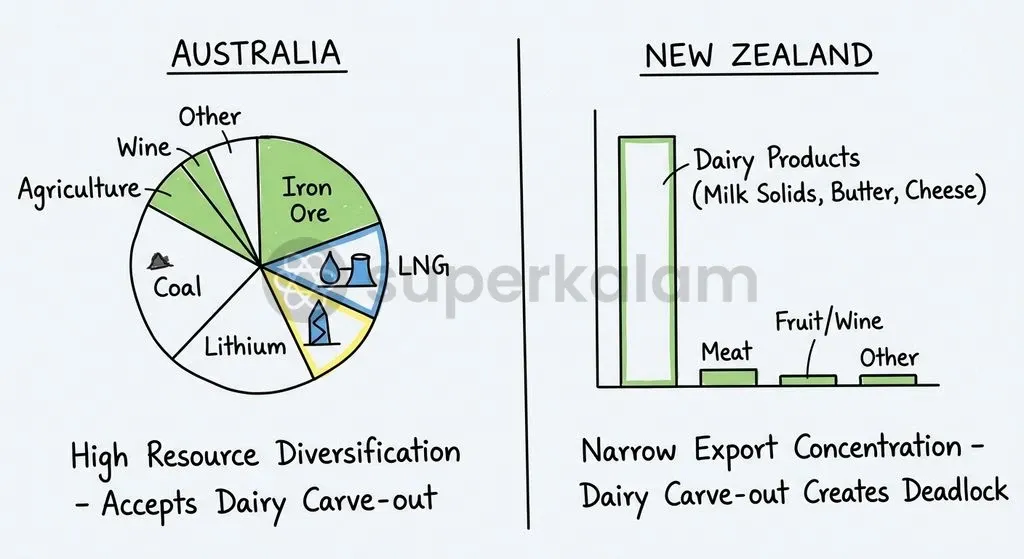
The Core Deadlock: Why Wellington Cannot Accept an Australia-Style Carve-Out
The fundamental obstacle during bilateral trade talks was Wellington's deep economic reliance on milk exports. Dairy constitutes over 25 percent of New Zealand's total merchandise export earnings, making an outright dairy exclusion domestically unpalatable for any Kiwi government.
During negotiations for the 2022 India-Australia Economic Cooperation and Trade Agreement (Ind-Aus ECTA), Canberra accepted an absolute dairy carve-out to secure immediate concessions for its critical minerals, metallurgical coal, and premium wine industries. New Zealand lacked equivalent industrial leverage. The country's trade basket remains concentrated in pasteurised products, meat, and forestry, leaving Wellington with limited room to compromise on primary agricultural access.
To resolve this impasse, Wellington agreed to exclude core liquid milk, butter, and cheese from the tariff schedule. In return, negotiators inserted a dairy consultation commitment. Under this clause, India must immediately re-enter negotiations with New Zealand if New Delhi subsequently grants core dairy tariff concessions to any competing trading partner.
Discuss with Superkalam
What percentage of New Zealand's merchandise export earnings comes from dairy, and what percentage of global milk output does India produce?
Ask NowFonterra vs Amul: Mega-Exporters Clash with 80 Million Small Farmers
The clash between Indian and New Zealand dairy illustrates a stark divide between industrial farming and cooperative rural subsistence. In New Zealand, the dairy sector operates as an export machine dominated by the Fonterra Co-operative Group, which collects and processes approximately 80 percent of the nation's raw milk.
| Dimension | India (Domestic Cooperative Model) | New Zealand (Export Mega-Processor Model) |
|---|---|---|
| Primary Economic Anchor | Rural livelihood, nutrition, and income support | Commercial, export-oriented capital accumulation |
| Dominant Institutions | NDDB, GCMMF (Amul), and state milk federations | Fonterra Co-operative Group |
| Farmer Base | Over 80 million small, marginal, and landless farmers | Roughly 10,000 highly mechanised commercial farms |
| Herd Size & Method | 2 to 5 cattle per household; stall-fed and crop-residue | Hundreds of cattle per farm; extensive open-pasture grazing |
| Output Share | World's largest milk producer (~24% of global output) | Over 25% of national merchandise export earnings |
| Market Destination | Domestic consumption (~98% consumed locally) | Export markets (~95% processed for global export) |
| Applied Tariff Protection | Core dairy preserved under 30 to 60 percent MFN tariffs | Zero-tariff regime sought in trade negotiations |
India's milk production model serves as a socio-economic lifeline rather than a commercial export industry. The country is the world's largest milk producer, generating roughly 24 percent of global output through decentralized dairy cooperatives like Amul and the National Dairy Development Board (NDDB).
Allowing cheap New Zealand milk solids into the domestic market risked triggering catastrophic price drops for over 80 million small and marginal producers. Consequently, India maintained Most-Favoured-Nation tariff barriers of 30 to 60 percent on liquid milk, butter, and whole milk powder.
To address Wellington's commercial priorities without hurting local farmers, both governments signed a parallel Agricultural Productivity Arrangement. Under this framework, NDDB partnered with New Zealand's Livestock Improvement Corporation (LIC) to introduce modern herd genetics, pasture-management techniques, and digital farm-monitoring solutions across Indian villages.
Discuss with Superkalam
Explain how a Tariff-Rate Quota (TRQ) mechanism operates to balance consumer import costs with domestic price stability.
Ask NowWhat Else Is on the Table: Apples, Kiwifruit, Wine, and Forestry Tariffs
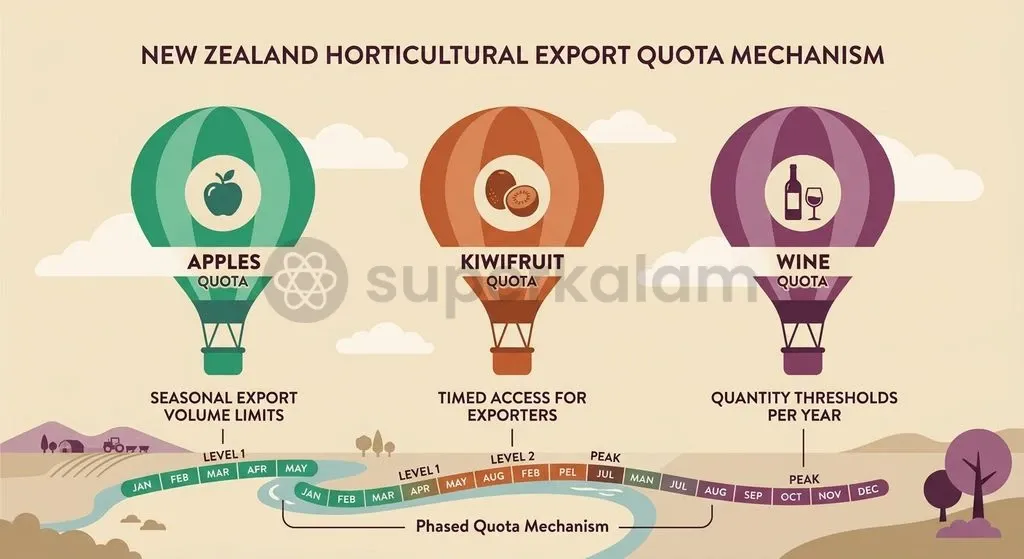
India granted calibrated concessions on non-dairy agricultural commodities and natural resources to balance the trade pact. The Directorate General of Foreign Trade (DGFT) instituted controlled Tariff-Rate Quota (TRQ) mechanisms to protect domestic growers from sudden market gluts while lowering import costs for Indian food processors.
A Tariff-Rate Quota is a two-tiered trade mechanism that allows a predetermined volume of imports to enter at a concessional tariff rate, while any imports exceeding that threshold face standard Most-Favoured-Nation duties. For New Zealand apples, India halved its baseline 50 percent tariff to 25 percent, capping import volumes at 35,000 tonnes in 2027 and expanding gradually to 45,000 tonnes by 2031.
For fresh kiwifruit, New Delhi created a zero-duty TRQ starting at 8,000 tonnes in 2027 and rising to 15,000 tonnes by 2031. To prevent downward pressure on domestic harvests in Himachal Pradesh and Jammu & Kashmir, this quota enforces a minimum CIF value of US$1.80 per kilogram and restricts imports to the off-season window between April 1 and November 15.
Indian customs duties on New Zealand wine, historically set at 150 percent, will step down to 25 or 50 percent across a 10-year implementation schedule depending on bottle price tiers. Furthermore, India abolished import duties on day one for raw wool, metallurgical coal, sheep meat (waiving a 33 percent duty), and over 95 percent of wood and timber tariff lines.
India's Top Demand: Easing Work Visas and Post-Study Mobility for Professionals
India's primary goal during bilateral negotiations centred on cross-border mobility for skilled professionals under Mode 4 of the General Agreement on Trade in Services (GATS). New Zealand addressed these priorities by formalizing guaranteed visa routes for Indian graduates, IT engineers, and skilled workers.
The agreement introduces two Temporary Employment Entry (TEE) visa categories reserved for Indian nationals, capped at a maximum of 5,000 professionals holding active 3-year visas at any point. This provides reliable access for Indian software developers, healthcare professionals, and engineers seeking global experience without navigating standard corporate sponsorship hurdles.
In addition, Wellington introduced an annual Working Holiday Scheme granting 1,000 visas to young Indian citizens aged 18 to 30, permitting 12-month stays with open temporary work permissions.
The agreement also expands educational pathways for Indian university students. International students now receive 20 hours per week of term-time employment rights, backed by post-study work visas lasting up to 3 years for regular graduates and up to 4 years for STEM doctoral scholars.
Discuss with Superkalam
How might Indian food processors utilize off-season import windows for kiwifruit without hurting domestic growers in Jammu & Kashmir and Himachal Pradesh?
Ask NowStrategic Imperatives: Maritime Security and Supply Chains in the Indo-Pacific
The strategic logic underpinning the agreement reflects a shared desire to diversify supply chains away from Chinese trade dominance. Wellington faces acute trade concentration risks, as China purchases approximately 30 percent of New Zealand's total goods exports, leaving the domestic economy exposed to demand downturns in Beijing.
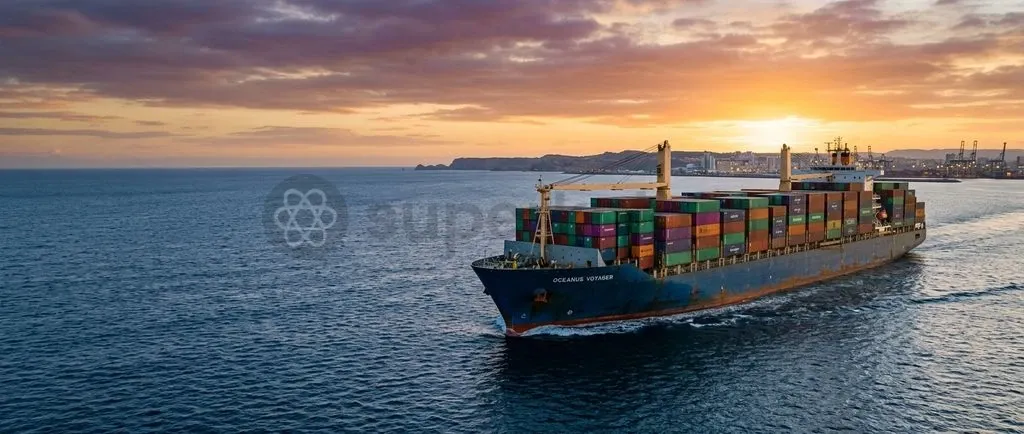
In July 2026, Prime Minister Narendra Modi and Prime Minister Christopher Luxon elevated bilateral relations to a formal Strategic Partnership, inaugurating an annual Maritime Security Dialogue alongside planning for a dedicated bilateral naval exercise. Both countries view secure sea lanes across the Malacca Strait, the Tasman Sea, and the broader Indo-Pacific as essential for commercial navigation.
Alongside geopolitical alignment, the trade agreement establishes long-term economic commitments. New Zealand committed to facilitate US$20 billion in direct investment into India over a 15-year horizon, targeting renewable energy, agro-processing logistics, and technology parks. The pact targets more than doubling two-way trade from NZ$3.95 billion (US$2.4 billion) to NZ$7 billion (₹35,000 crore) by 2030.
Way Forward: Targeted Milk Powder Quotas, Processing Tech, and Phased Entry
The India–New Zealand economic partnership offers a workable blueprint for balancing open trade with smallholder livelihoods. Rather than viewing agriculture as an all-or-nothing proposition, negotiators unlocked progress by decoupling primary milk production from high-value industrial dairy processing.
India enabled targeted Tariff-Rate Quota channels for specialized dairy ingredients such as milk albumins, casein, and specialized whey derivatives strictly destined for high-end domestic manufacturing and re-export. This targeted opening supports India's domestic pharmaceutical, nutraceutical, and infant food industries without depressing local farmgate milk prices.
Moving forward, both nations must focus on institutionalizing the technology transfers outlined in the Agricultural Productivity Arrangement. Operationalizing the Centres of Excellence for apples and kiwifruit, alongside the Kolkata honey testing center, will help Indian farmers match international export standards. Pairing targeted industrial import quotas with domestic cooperative upgrades allows India to expand its global trade ties while keeping rural incomes secure.
Discuss with Superkalam
Compare Canberra's willingness to accept an absolute dairy carve-out in the Ind-Aus ECTA with Wellington's negotiating constraints under the India–New Zealand FTA.
Ask NowKey Takeaways
- The India–New Zealand Free Trade Agreement entered into force on October 20, 2026, granting Indian goods immediate zero-duty access across 100 percent of New Zealand tariff lines while safeguarding India's domestic dairy sector.
- India excluded liquid milk, butter, and cheese from tariff cuts, preserving 30 to 60 percent Most-Favoured-Nation duties to protect more than 80 million cooperative dairy farmers from subsidized foreign imports.
- New Zealand secured phased Tariff-Rate Quotas for non-dairy agricultural exports, including halved 25 percent tariffs on apples, off-season entry for kiwifruit, and phased tariff reductions on premium wines.
- Indian professionals secured enhanced mobility through 5,000 Temporary Employment Entry work visas, an annual 1,000-seat Working Holiday Scheme, and extended post-study work rights lasting up to 4 years for STEM doctoral graduates.
- Both nations elevated ties to a Strategic Partnership, targeting NZ$7 billion in bilateral trade by 2030 and advancing US$20 billion in long-term New Zealand investment to de-risk supply chains across the Indo-Pacific.
Mains Question
"India's milk production model serves as a socio-economic lifeline rather than a commercial export industry." In light of this statement, examine how the India–New Zealand FTA balanced domestic agrarian protections with bilateral trade concessions. (15 Marks)
Evaluate NowMains Question
The India–New Zealand FTA reflects a shift towards securing cross-border services and talent mobility under Mode 4 of GATS. Elucidate the key mobility outcomes secured by India under the pact. (10 Marks)
Evaluate NowPractice MCQs
QUESTION 1
With reference to the India–New Zealand Free Trade Agreement (FTA), consider the following statements:
- New Zealand eliminated customs duties across 100 percent of Indian tariff lines upon entry into force of the agreement.
- India completely opened its domestic market to core New Zealand liquid milk and butter under zero-duty tariff concessions.
- The agreement includes a dairy consultation clause requiring India to re-enter talks if it grants core dairy tariff concessions to any competing trading partner. Which of the statements given above is/are correct?
QUESTION 2
Consider the following statements regarding the structural differences between Indian and New Zealand dairy sectors mentioned in the trade context:
- In New Zealand, the dairy sector is dominated by a cooperative group that collects and processes approximately 80 percent of the nation's raw milk.
- While India accounts for roughly 24 percent of global milk output, approximately 98 percent of its production is consumed domestically.
- The average herd size in New Zealand consists of 2 to 5 cattle per farm reliant primarily on crop residues. Which of the statements given above is/are correct?
QUESTION 3
Regarding the agricultural tariff-rate quota (TRQ) mechanisms in the India–New Zealand trade agreement, consider the following statements:
- A Tariff-Rate Quota allows a specified volume of imports to enter at a lower tariff rate, while imports above the quota face standard Most-Favoured-Nation duties.
- For New Zealand apples, India reduced its baseline 50 percent tariff to 25 percent under an expanding volume cap.
- For fresh kiwifruit, India implemented a zero-duty TRQ with an off-season import restriction and a minimum CIF price threshold. Which of the statements given above is/are correct?
QUESTION 4
Under the mobility provisions established in the India–New Zealand Free Trade Agreement, what is the maximum post-study work visa duration granted to Indian STEM doctoral scholars?
QUESTION 5
Consider the following statements regarding tariff concessions granted by India under the trade agreement:
- Basic customs duties on New Zealand wine were brought to zero immediately on day one of the agreement.
- India abolished import duties on day one for raw wool, metallurgical coal, and sheep meat. Which of the statements given above is/are correct?