India-Liberia UN Group of Friends on Shipping and Seafarers' Safety
India and Liberia's new Group of Friends brings seafarer-supplying and flag states together to address shipping and crew safety amid attacks on commercial vessels.
Sep, 2026
•10 min read
Overview
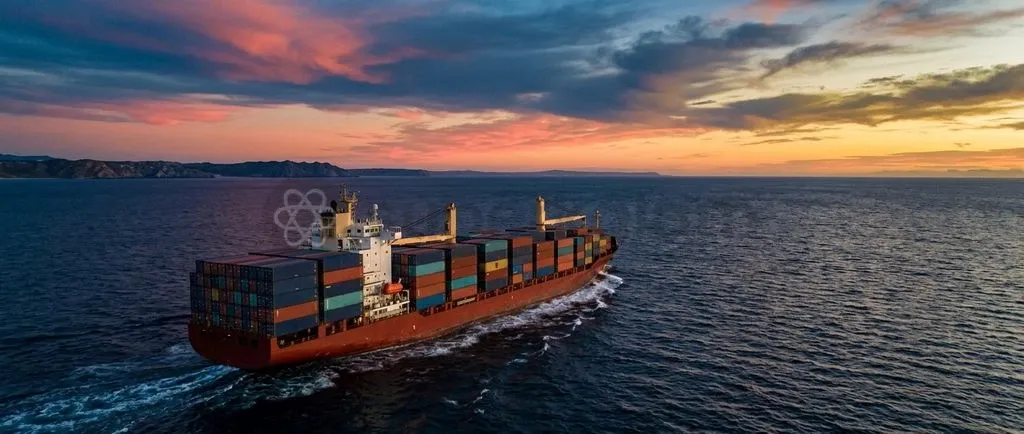
India and Liberia co-launched the Group of Friends on Safety and Security of Shipping and Seafarers at the United Nations to establish a multilateral diplomatic mechanism that protects civilian maritime crews, coordinates crisis responses across strategic waterways, and upholds flag-state accountability under international law. Over 80% of global commercial merchandise trade travels by sea, powered by approximately 2 million civilian seafarers navigating increasingly contested waters. By pairing the world's largest flag state by gross tonnage with its second-largest supplier of maritime human capital, this initiative bridges long-standing diplomatic divides between coastal registries and labour-sending states. The coalition addresses urgent threats, ranging from missile and drone strikes in the Red Sea to piracy in the Gulf of Guinea and operational risks from alternative maritime fuels.
Why in the News?
On 25 September 2026, India and Liberia officially established the Group of Friends on Safety and Security of Shipping and Seafarers (GoF on S4) on the sidelines of the 81st Session of the United Nations General Assembly in New York. The inaugural ministerial meeting brought together representatives from 25 member countries, spanning major flag registries, seafarer-supplying countries, and ship-owning nations.
External Affairs Minister S. Jaishankar addressed the session, asserting that targeted strikes against commercial merchant vessels and civilian crews have become legally and morally indefensible. As of September 2026, maritime disruptions have shifted from sporadic incidents into structural challenges across primary trade arteries. The initiative seeks to elevate seafarer security into a central talking point within UN diplomatic forums.
What is the Group of Friends on Safety and Security of Shipping and Seafarers?
The United Nations diplomatic architecture defines a Group of Friends as an informal, voluntary association of member states organized around a shared thematic priority. These flexible groupings build diplomatic consensus, facilitate structured consultations, and direct multilateral attention toward pressing international issues without establishing a rigid statutory body or cumbersome treaty secretariat.
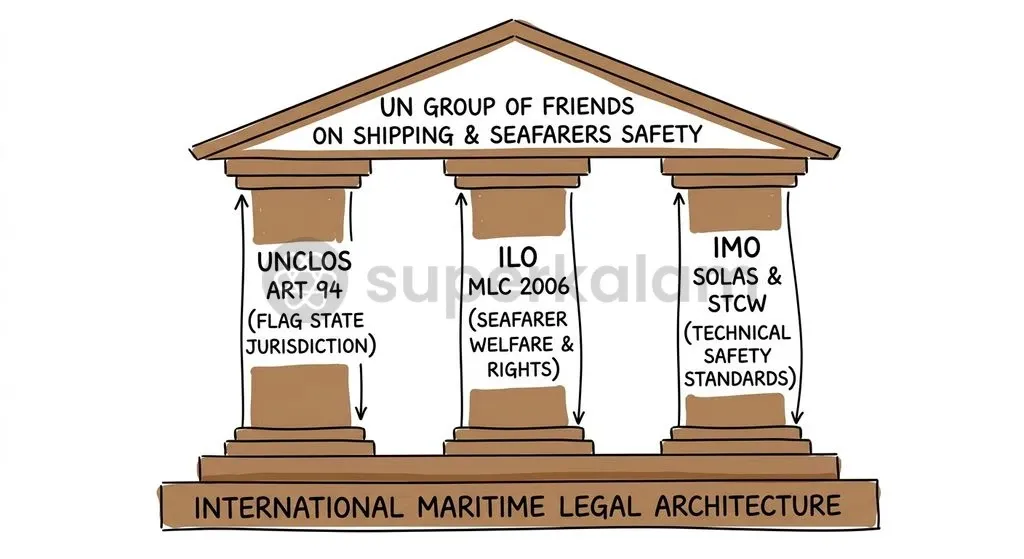
The GoF on S4 serves as a specialised consultative platform focused on maritime human security and supply chain resilience. Rather than duplicating existing technical bodies, the group aligns international advocacy with established international conventions:
- United Nations Convention on the Law of the Sea (UNCLOS, 1982): Upholds freedom of navigation and operational duties under Article 94, which mandates that every flag state effectively exercise jurisdiction and control over administrative, technical, and social aspects of ships flying its flag.
- Maritime Labour Convention (MLC, 2006): Operates under the International Labour Organization as the comprehensive Seafarers' Bill of Rights, enforcing minimum global standards for working conditions, wages, repatriation, and occupational safety.
- International Maritime Organization (IMO) Conventions: Builds upon core safety baselines, including the Safety of Life at Sea (SOLAS) framework and the Standards of Training, Certification and Watchkeeping (STCW) regime.
Discuss with Superkalam
What percentage of global merchandise trade is carried by sea, and how many civilian seafarers power this trade?
Ask NowWhy India and Liberia Formed This Maritime Coalition
The partnership between India and Liberia unites the primary supplier of maritime labour with the largest open vessel registry in the world. Global commercial shipping relies on a structural separation between flag administration, vessel ownership, and crew nationality, which frequently leads to jurisdictional friction during armed conflicts or ship abandonments.
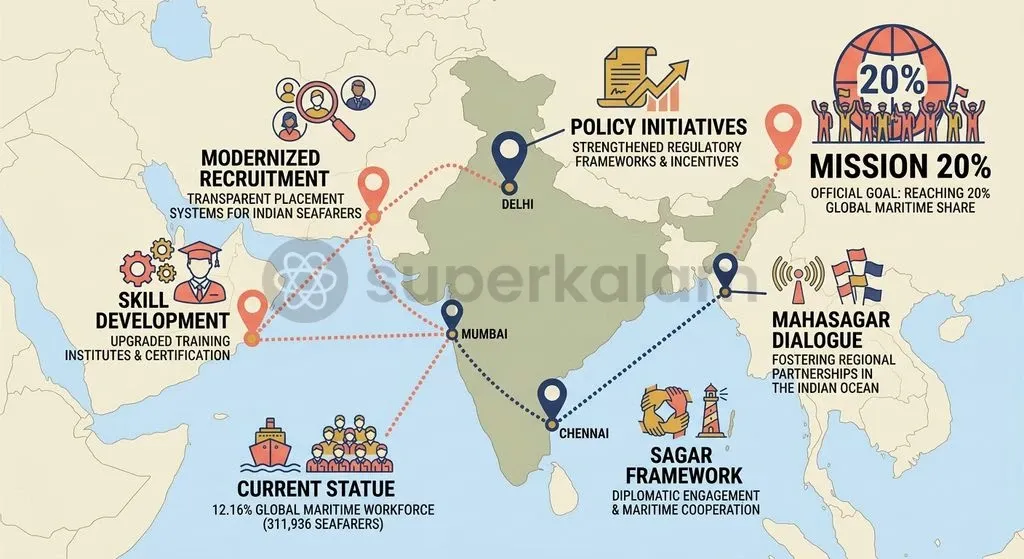
Liberia's registry accounts for roughly 17% to 18% of global merchant shipping, while India provides 12.16% of the global seafaring workforce. By anchoring this coalition together, both nations combine flag-state jurisdiction with labour-state advocacy, closing enforcement loopholes that often leave merchant crews unprotected in high-risk zones.
Discuss with Superkalam
Why does the separation of vessel flag registration from crew nationality create legal hurdles during maritime crises?
Ask NowRising Threats to Global Shipping: Red Sea, Gulf of Guinea, and the Indo-Pacific
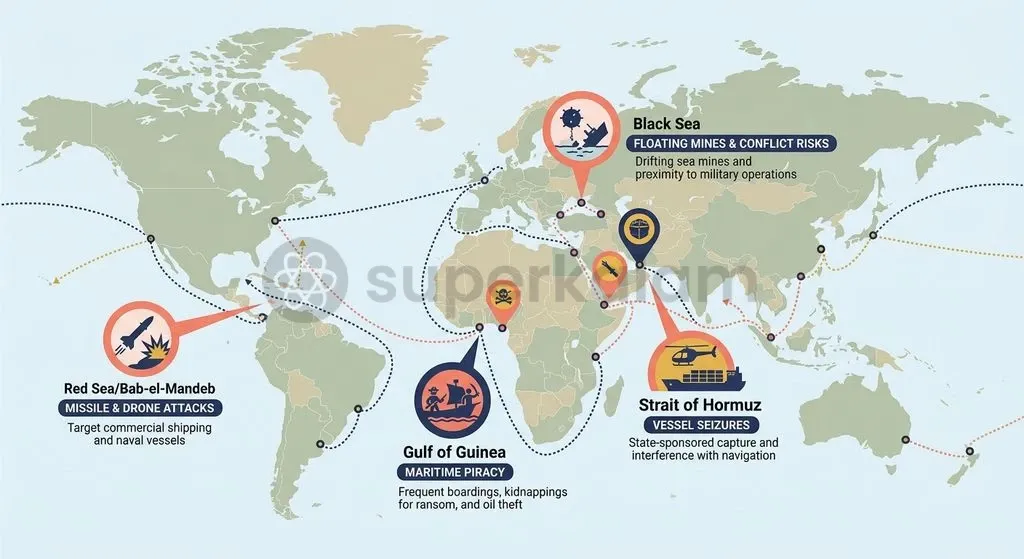
Asymmetric warfare and regional conflicts have placed commercial maritime transit under unprecedented physical jeopardy across critical chokepoints. Merchant vessels operating under civilian commercial charters increasingly face targeted military-grade weapons and maritime crime:
- Red Sea and Bab-el-Mandeb Strait: Sustained Houthi drone and anti-ship missile strikes have targeted commercial shipping corridors, compelling cargo vessels to divert around the Cape of Good Hope, which adds significant transit time and operational costs.
- Gulf of Oman and Strait of Hormuz: Persistent vessel seizures, mine attacks, and naval stand-offs threaten energy supply security and endanger multinational civilian crews navigating regional chokepoints.
- Gulf of Guinea and Western Indian Ocean: Maritime piracy, armed sea robbery, and hostage-taking off the Somali coast and the West African littoral impose sustained threats to merchant crew safety.
- Black Sea Corridor: Military naval strikes, floating sea mines, and naval blockades have repeatedly jeopardised grain carriers and commercial merchant navigation.
Key Mandate and Objectives of the Group of Friends at the UN
The Ministry of External Affairs outlined the core operational mandate of the GoF on S4, structuring international action around concrete protection mechanisms. The coalition coordinates diplomatic and administrative support across several high-priority areas:
- Rapid Emergency Evacuation Networks: Setting up coordinated consular and operational mechanisms to protect and evacuate seafarers trapped in active war theatres.
- Anti-Hostage and Anti-Piracy Protocols: Formulating unified international procedures among flag states and labour-supplying nations to secure the release of abducted merchant mariners.
- Preventing Vessel and Crew Abandonment: Ensuring strict compliance with the financial security provisions of the MLC, 2006 so that shipowners and insurers do not abandon seafarers in foreign ports without food, wages, or repatriation support.
- Transition Safety for Alternative Fuels: Establishing updated technical safety protocols as commercial fleets adopt new green propellants such as ammonia, hydrogen, and methanol.
Discuss with Superkalam
How might a labour-sending country utilize the GoF on S4 framework if its civilian seafarers are stranded in an active maritime conflict zone?
Ask NowStrategic Significance for India: Global Seafarer Workforce and Maritime Diplomacy
India's leadership in the GoF on S4 aligns domestic maritime workforce goals with its broader foreign policy strategy in the Global South. The Ministry of Ports, Shipping and Waterways launched Mission 20% under the Maritime India Vision 2030 and Maritime Amrit Kaal Vision 2047, setting an official national objective to raise India's share of global seafarers to 20%.
India's active diplomatic role directly supports its SAGAR doctrine (Security and Growth for All in the Region) and its extended MAHASAGAR framework. By leading the GoF on S4, India reinforces its position as a reliable maritime security provider and champion for the welfare of Global South workers across international forums.
Soft Coalition vs Hard Law: Can an Informal Group Deter Kinetic Threats?
A Group of Friends at the UN operates primarily as a voluntary diplomatic consultation forum, which brings both institutional agility and practical enforcement limits. While informal coalitions can rapidly build political consensus without protracted treaty negotiations, they lack the statutory authority to mandate binding rules or deploy naval task forces.
Informal coalitions cannot directly neutralize kinetic strikes from anti-ship missiles or armed piracy. However, the GoF on S4 creates the political leverage needed to speed up regulatory action within the IMO and the UN Security Council. It bridges the gap between high-level diplomatic commitments and the legal obligations enforced under UNCLOS and the Maritime Labour Convention.
Challenges Facing Multilateral Action on Maritime and Seafarer Security
Multilateral initiatives to protect commercial mariners face complex jurisdictional and geopolitical obstacles across international waters. Commercial shipping relies on fragmented legal arrangements that disperse accountability across multiple sovereign states:
- Jurisdictional Fragmentation under Flags of Convenience: When a ship is owned in one country, flagged in another, managed by a third, and crewed by multinational mariners, assigning legal responsibility during an armed attack or abandonment proves exceedingly difficult.
- Geopolitical Polarisation in the UN Security Council: Deep diplomatic divisions among permanent members frequently obstruct unified UN resolutions and enforcement mandates targeting regional non-state actors.
- Gaps in Flag-State Enforcement: Certain open ship registries lack the institutional resources or political will to enforce Article 94 of UNCLOS, leading to inadequate safety provisions on high-risk transit routes.
- Emerging Technology Hazards: The rapid adoption of alternative fuels and autonomous vessel systems outpaces current safety regulations, creating new occupational hazards for civilian crews.
Discuss with Superkalam
Contrast the functional utility of an informal 'Group of Friends' with formal treaty-based bodies like the IMO in responding to rapid maritime security crises.
Ask NowThe Way Forward: Strengthening International Maritime Law and Protection Frameworks
Addressing asymmetric threats to merchant shipping requires translating diplomatic advocacy into actionable maritime security architecture. Practical institutional reforms should focus on four coordinated tracks:
- Integrating Flag and Labour State Protocols: Formalize operational communication channels between major registries like Liberia and labour suppliers like India to coordinate swift consular, naval, and legal assistance during maritime crises.
- Reinforcing Mandatory Financial Protections: Ensure all port authorities strictly enforce the 2014 amendments to the MLC, 2006, guaranteeing valid insurance coverage to protect seafarers against sudden abandonment or unpaid wages.
- Enhancing Maritime Domain Awareness: Broaden intelligence-sharing partnerships between international naval coalitions, the Indian Navy's Information Fusion Centre–Indian Ocean Region (IFC-IOR), and civilian merchant fleets navigating designated high-risk areas.
- Standardising Green Fuel Safety Mandates: Direct the International Maritime Organization to accelerate comprehensive safety and firefighting certifications under the STCW framework for mariners handling toxic or volatile alternative marine fuels.
Key Takeaways
- Diplomatic Coalition: India and Liberia co-launched the informal Group of Friends on Safety and Security of Shipping and Seafarers (GoF on S4) at the 81st UN General Assembly on 25 September 2026.
- Core Membership & Coverage: The coalition's inaugural ministerial meeting brought together 25 nations, linking the world's largest open flag registry (Liberia, >300M GT) with the second-largest seafarer supplier (India, 311,936 maritime professionals).
- Strategic Objective: The initiative coordinates multilateral action to safeguard civilian crews from missile strikes in the Red Sea, piracy in the Gulf of Guinea, vessel abandonments, and hazards linked to green marine fuels.
- Institutional Governance: The platform connects soft diplomatic advocacy with binding statutory instruments, specifically UNCLOS Article 94 flag-state obligations, the ILO Maritime Labour Convention (MLC, 2006), and IMO safety regimes.
- National Policy Alignment: The initiative supports India's SAGAR doctrine and advances its Maritime Amrit Kaal Vision 2047 target to capture 20% of the global seafaring workforce.
Mains Question
"The structural dichotomy between open flag registries and seafarer-supplying nations often exacerbates jurisdictional vulnerabilities during maritime conflicts." In this context, evaluate the significance of the India-Liberia co-led 'Group of Friends on Safety and Security of Shipping and Seafarers'. (15 Marks)
Evaluate NowMains Question
Highlighting the emerging kinetic and asymmetric threats across major commercial maritime corridors, discuss how India's maritime diplomacy aligns with 'Mission 20%' under the Maritime Amrit Kaal Vision 2047. (10 Marks)
Evaluate NowPractice MCQs
QUESTION 1
With reference to the 'Group of Friends on Safety and Security of Shipping and Seafarers' (GoF on S4), consider the following statements:
- It was established as a statutory body with a permanent treaty secretariat under the United Nations.
- It was co-launched by India and Liberia on the sidelines of the UN General Assembly session.
- The coalition bridges flag-state jurisdictions with labour-supplying countries to protect civilian merchant crews.
Which of the statements given above are correct?
QUESTION 2
Consider the following statements regarding international maritime conventions and doctrines:
- Article 94 of UNCLOS obligates every flag state to effectively exercise jurisdiction and control over administrative, technical, and social matters on ships flying its flag.
- The Maritime Labour Convention (MLC, 2006) operates under the International Maritime Organization (IMO) as the Seafarers' Bill of Rights.
- India's Mission 20% aims to expand its share of the global seafaring workforce under the Maritime Amrit Kaal Vision 2047.
Which of the statements given above is/are correct?
QUESTION 3
Consider the following pairs of maritime chokepoints/regions and associated security threats mentioned in international trade:
- Bab-el-Mandeb Strait : Drone and anti-ship missile strikes
- Gulf of Guinea : Maritime piracy and armed robbery
- Strait of Hormuz : Vessel seizures and naval stand-offs
How many of the pairs given above are correctly matched?
QUESTION 4
With reference to the global maritime human capital and registry capacity, which of the following statements is correct?
QUESTION 5
Consider the following statements regarding the objectives of the Group of Friends on Safety and Security of Shipping and Seafarers (GoF on S4):
- Establishing rapid emergency consular and operational evacuation networks for seafarers in conflict zones.
- Enforcing compliance with financial security provisions of MLC 2006 to prevent vessel and crew abandonment.
- Formulating technical safety protocols for the operational adoption of alternative fuels like ammonia and methanol.
Which of the statements given above are correct?