India-Egypt Trade: Overcoming Cairo's Dollar Crunch at the 7th JTC
As bilateral targets reach USD 12 billion, overcoming Cairo's dollar crunch requires direct rupee settlement and dedicated industrial hubs.
Nov, 2026
•9 min read
Overview
The ministerial-level 7th India-Egypt Joint Trade Committee marks an active institutional push to expand bilateral commerce towards a target of USD 12 billion. Yet realising this economic potential depends on overcoming Egypt's acute foreign exchange shortages and clearing persistent regulatory hurdles.
Elevated diplomatic ties culminated in a Comprehensive Strategic Partnership in 2023. However, macroeconomic distress in Cairo has created practical bottlenecks for Indian exporters, including trapped currency repatriations, import licensing curbs, and Red Sea shipping disruptions.
Addressing this friction requires clear bilateral clearing mechanisms:
- Operationalising rupee-pound settlement channels
- Instituting targeted commodity counter-trade
- Integrating Indian manufacturing into the Suez Canal Economic Zone
Why in the News? The 7th Joint Trade Committee in Context
The Union Ministry of Commerce and Industry convened the 7th session of the India-Egypt Joint Trade Committee at the ministerial level in Egypt's New Administrative Capital on November 15, 2026. As of November 2026, this meeting represents the first time the bilateral trade mechanism has met at the ministerial rank. It was co-chaired by Union Minister Piyush Goyal and Egypt's Minister of Investment and Foreign Trade Dr. Mohamed Farid Saleh.
Both governments formally agreed to establish a Joint Working Group to formulate the Terms of Reference for a potential bilateral Preferential Trade Agreement (PTA), Free Trade Agreement (FTA), or Comprehensive Economic Partnership Agreement (CEPA).
Trade data from the Ministry of Commerce and Industry highlights rapid recent growth alongside persistent settlement risks:
- Bilateral trade expanded 35% year-on-year to reach USD 6.5 billion in FY 2025-26.
- Commerce accelerated 65% year-on-year during April-September 2026 to touch USD 5.04 billion.
- Both delegations reaffirmed their ambition of scaling bilateral merchandise exchange to a joint target of USD 12 billion.
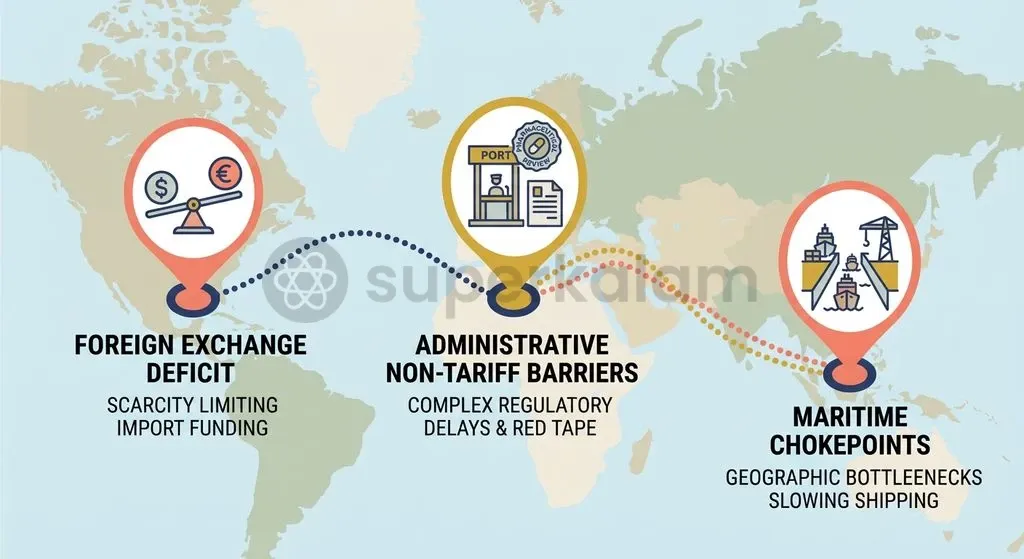
This rapid expansion faces a sharp macroeconomic vulnerability. Egypt's domestic economy remains constrained by a shortage of foreign exchange reserves. That illiquidity limits Cairo's capacity to settle import bills through conventional dollar-denominated trade channels.
Discuss with Superkalam
What bilateral trade target was reaffirmed by India and Egypt during the 7th Joint Trade Committee session?
Ask NowFrom Cairo to New Delhi: The Geopolitical Push for Stronger Ties
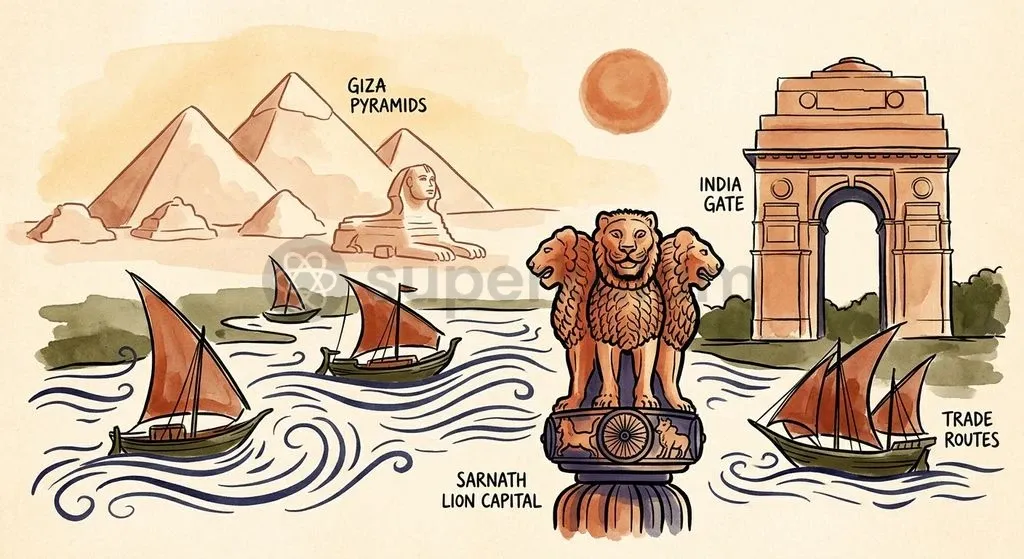
Prime Minister Narendra Modi and President Abdel Fattah el-Sisi elevated bilateral relations to a Comprehensive Strategic Partnership during the Indian Prime Minister's official state visit to Cairo in June 2023. Prime Minister Modi was conferred Egypt's highest civilian honour, the Order of the Nile, reflecting a conscious diplomatic revival of historical non-aligned solidarity.
Commercial ties have deepened in step with political engagement:
- Over 70 Indian companies maintain active operations within Egypt.
- These firms represent aggregate capital investments surpassing USD 5 billion across textiles, chemicals, renewable energy, and automotive assembly.
- Egypt formally joined the BRICS grouping as a full member on January 1, 2024.
BRICS membership enables New Delhi and Cairo to coordinate institutional strategies on alternative cross-border settlement systems and financial diversification. This strategic convergence creates political goodwill, but high-level diplomacy alone cannot resolve the structural balance-of-payments crisis facing the Egyptian economy.
The Dollar Trap: How Egypt's Foreign Currency Crisis Stalls Commerce
The Central Bank of Egypt devalued the national currency by over 35% in March 2024, floating the exchange rate near 50 Egyptian pounds per US dollar to secure emergency financing. This structural adjustment accompanied an expanded USD 8 billion Extended Fund Facility managed by the International Monetary Fund.
Foreign currency illiquidity in Cairo worsened due to regional maritime conflict along the Red Sea corridor. Persistent Houthi missile and drone strikes directed against commercial vessels in the Bab el-Mandeb strait diverted major shipping lines around the Cape of Good Hope. This detour caused Suez Canal transit revenues to drop by over 50% in early 2024, depriving the Egyptian state of its primary source of foreign exchange income.
Department of Commerce assessments indicate that Cairo resorted to stringent administrative measures to manage this dollar deficit:
- Enforcing mandatory letters of credit on incoming commercial consignments
- Restricting import approvals and rationing official foreign exchange allocations
- Accumulating trapped export proceeds and payment delays for Indian exporters of engineering goods, consumer merchandise, and agricultural products
Discuss with Superkalam
Explain how regional conflict in the Bab el-Mandeb strait directly contributed to Egypt's domestic foreign exchange shortage.
Ask NowWhy Previous Trade Pacts Stalled: The Implementation Gap Explained
The Department of Commerce identified persistent non-tariff barriers and currency repatriation backlogs as the structural reasons earlier Joint Trade Committee agreements failed to deliver their targeted commercial outcomes. Administrative friction inside Egypt's customs clearing machinery consistently undermined high-level bilateral trade declarations.
| Structural Dimension | Historical Bottlenecks (Prior JTC Rounds) | 7th JTC Structural Framework (2026) |
|---|---|---|
| Trade Architecture | Ad-hoc bilateral agreements without preferential market access | Joint Working Group created to draft Terms of Reference for PTA/FTA/CEPA |
| Payment Modalities | Complete reliance on third-party US dollars vulnerable to foreign exchange dry-ups | Central bank talks to establish direct INR-EGP settlement and Special Rupee Vostro Accounts |
| Non-Tariff Barriers | Prolonged pharmaceutical registration timelines and bureaucratic customs delays | Four-point action agenda targeting time-bound removal of regulatory barriers |
| Industrial Co-location | Fragmented private commercial ventures without shared infrastructure | Dedicated Indian Industrial Zone offered inside the Suez Canal Economic Zone (SCZONE) |
| Bilateral Trade Target | Informal ministerial aspirations lacking time-bound benchmarks | Reaffirmed formal target of USD 12 billion backed by ministerial review |
Indian pharmaceutical exporters faced prolonged registration timelines before the Egyptian Drug Authority, which restricted Indian generic medicines from entering public procurement channels. Complex documentation procedures at Egyptian ports regularly caused clearance delays for Indian consignments. When combined with commercial banks delaying foreign currency releases, these operational barriers created an implementation gap between political announcements and ground-level trade performance.
What Each Side Needs: Indian Industry vs Egyptian Import Curbs
Indian exporters face administrative currency rationing and import documentation hurdles when shipping pharmaceuticals, engineering goods, and agricultural produce into Egyptian consumer markets. Domestic businesses require predictable payment terms and rapid repatriation of their foreign earnings to sustain regular trade ties.
Egyptian policymakers face the competing challenge of conserving scarce foreign exchange reserves while maintaining supplies of essential commodities. Cairo seeks steady shipments of critical food grains, meat, and engineering inputs, but must prevent rapid currency depreciation. Import restrictions are an emergency stabilisation tool for the Central Bank of Egypt, but they penalise international trading partners who rely on standard trade credit.
The economic goals of both countries are summarised below:
- India's Commercial Objectives: Securing prompt clearance of overdue export receivables; removing non-tariff barriers in pharmaceuticals and technical textiles; and securing preferential industrial access to maritime shipping routes.
- Egypt's Economic Priorities: Securing uninterrupted access to affordable wheat, bovine meat, and machinery without worsening foreign currency outflows; and attracting foreign direct investment to generate local employment.
Discuss with Superkalam
How can Indian manufacturing firms leverage a dedicated industrial zone inside the SCZONE to overcome global logistics shocks?
Ask NowStrategic Supply Chains: Suez Canal Access, Wheat, and Fertilizers
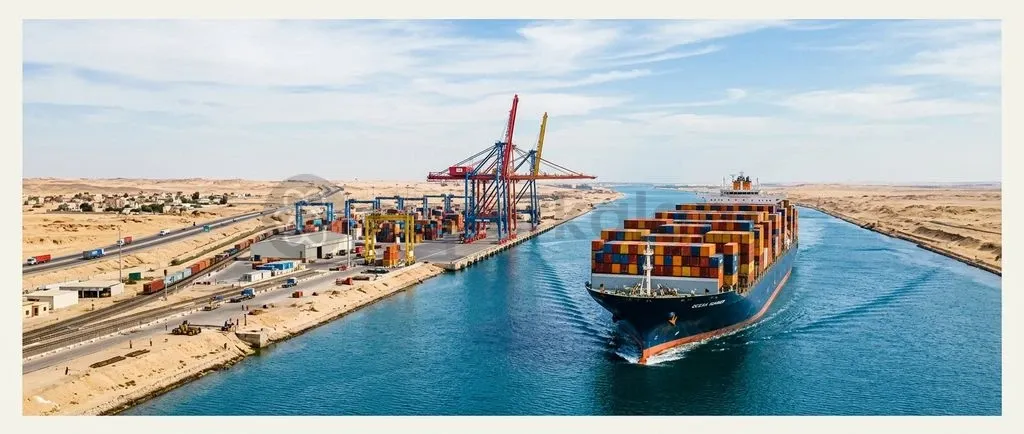
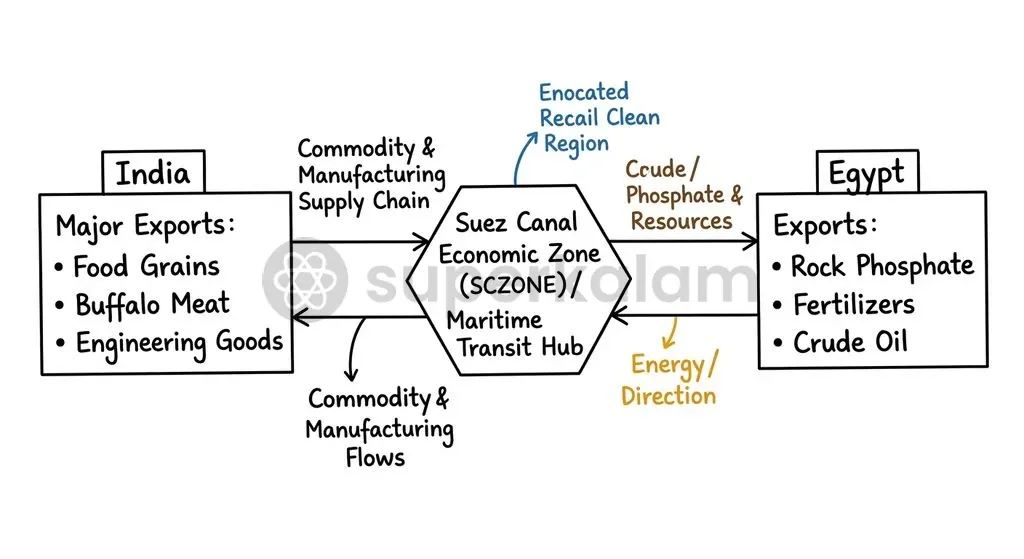
The Suez Canal Economic Zone provides Indian manufacturers with an industrial platform that connects domestic supply chains to European, Middle Eastern, and North African markets. The Egyptian government has formally offered a dedicated land allotment for an Indian Industrial Zone within the SCZONE corridor. Establishing domestic manufacturing operations inside this logistics hub enables Indian companies to bypass maritime chokepoints and process raw materials close to destination markets.
Maritime security directly underpins this economic corridor through specific operational measures:
- The Indian Navy maintains continuous operations under Operation Sankalp, deploying frontline guided-missile destroyers and frigates across the Arabian Sea, Gulf of Aden, and Bab el-Mandeb approaches.
- In March 2024, Indian naval forces executed a 40-hour operation involving INS Kolkata, INS Subhadra, MARCOS commandos, and an Indian Air Force C-17 air-drop, liberating the hijacked merchant vessel MV Ruen and apprehending 35 Somali pirates.
- India maintains an independent naval posture under Operation Sankalp rather than joining the multilateral coalition Operation Prosperity Guardian, preserving strategic autonomy while safeguarding commercial shipping.
Persistent naval escort missions de-risk the maritime transit corridor required to make long-term industrial investments in the SCZONE economically viable, as assessed by the Integrated Defence Staff (in maritime doctrine assessments reported in June 2024).
Bilateral commodity arrangements help both partners circumvent current foreign currency constraints. Bilateral records confirm that India and Egypt have evaluated commodity counter-trade arrangements to exchange Indian food grains, meat, and engineering goods for Egyptian rock phosphate, chemical fertilisers, and crude oil. This mechanism secures key fertiliser inputs for Indian agriculture while shielding Egyptian food security from global market volatility.
Discuss with Superkalam
Compare the effectiveness of instituting bilateral currency settlement mechanisms against relying on traditional foreign exchange allocations during a sovereign balance-of-payments crisis.
Ask NowFixing Payment Bottlenecks: A Realistic Economic Way Forward
The Reserve Bank of India and the Central Bank of Egypt are evaluating operational modalities to conduct bilateral trade settlements directly in Indian Rupees and Egyptian Pounds. Establishing this bilateral mechanism eliminates the need for intermediary hard currencies, protecting trade volumes from dollar shortages in Cairo.
The regulatory framework for this transition already exists within India's financial system:
- The Reserve Bank of India's Special Rupee Vostro Account framework, notified on July 11, 2022, permits authorised foreign correspondent banks to open designated accounts with domestic financial institutions.
- Egyptian commercial banks can utilise these accounts to invoice, settle, and clear trade contracts directly in rupees.
- This clearing structure funds imports of Indian industrial goods through the sale of Egyptian fertilisers and mineral resources.
At the 7th JTC, Indian officials also proposed exploring an interconnection between the Unified Payments Interface and Egypt's domestic payment systems, such as InstaPay, to lower commercial transaction expenses, as reported by the Ministry of Commerce and Industry in November 2026. During the accompanying India-Egypt Business Forum, Minister Piyush Goyal presented a four-point action agenda aimed at dismantling non-tariff barriers ahead of the 80th anniversary of diplomatic relations in 2027. The agreed minutes established that the 8th Session of the Joint Trade Committee will convene in New Delhi in 2028, or earlier by mutual diplomatic consent.
Key Takeaways
- The 7th India-Egypt Joint Trade Committee met at the ministerial level for the first time on November 15, 2026, setting a bilateral merchandise trade target of USD 12 billion.
- Bilateral trade expanded 35% year-on-year to reach USD 6.5 billion in FY 2025-26, and grew to USD 5.04 billion in the first half of FY 2026-27.
- Severe foreign currency shortages in Egypt, compounded by a greater than 35% currency devaluation in March 2024 and falling Suez Canal transit fees, have created payment bottlenecks for Indian exporters.
- Both countries agreed to create a Joint Working Group to prepare the Terms of Reference for a potential preferential or comprehensive economic partnership agreement (PTA/FTA/CEPA).
- The Reserve Bank of India and the Central Bank of Egypt are evaluating direct rupee-pound trade settlement utilising the Special Rupee Vostro Account (SRVA) framework notified on July 11, 2022.
- Strategic initiatives include an Indian Industrial Zone in the Suez Canal Economic Zone (SCZONE) and counter-trade exchanging Indian food grains and engineering products for Egyptian rock phosphate and crude oil.
Mains Question
"High-level diplomatic momentum between New Delhi and Cairo faces practical bottlenecks arising from Egypt's foreign currency illiquidity and regulatory friction." Critically analyse the structural challenges in India-Egypt commercial ties and examine the measures required to achieve the bilateral trade target of USD 12 billion. (15 Marks)
Evaluate NowMains Question
In the backdrop of ongoing maritime security challenges in the Red Sea corridor, elucidate the strategic and economic significance of the Suez Canal Economic Zone (SCZONE) and Operation Sankalp for India. (10 Marks)
Evaluate NowPractice MCQs
QUESTION 1
With reference to the India-Egypt Joint Trade Committee (JTC) and bilateral relations, consider the following statements:
- The 7th session of the Joint Trade Committee held in November 2026 marked the first time the bilateral trade mechanism convened at the ministerial rank.
- A Joint Working Group was established to formulate the Terms of Reference for a potential bilateral trade pact such as a PTA, FTA, or CEPA.
- Egypt became a full member of the BRICS grouping on January 1, 2024. Which of the statements given above are correct?
QUESTION 2
Consider the following statements regarding the economic and maritime factors affecting India-Egypt commercial ties:
- Suez Canal transit revenues dropped by over 50% in early 2024 due to vessel diversions caused by maritime strikes in the Bab el-Mandeb strait.
- The Central Bank of Egypt managed its foreign exchange crisis by transitioning completely away from mandatory letters of credit for commercial consignments.
- The Indian Navy conducts operations in the Arabian Sea and Gulf of Aden under Operation Sankalp rather than joining Operation Prosperity Guardian. Which of the statements given above is/are correct?
QUESTION 3
With reference to bilateral trade and investments between India and Egypt, consider the following statements:
- Bilateral trade reached USD 6.5 billion in FY 2025-26, with an established joint ambition to scale to USD 12 billion.
- Egyptian authorities have offered a dedicated land allotment for an Indian Industrial Zone inside the Suez Canal Economic Zone (SCZONE).
- Non-tariff barriers faced by Indian exporters include registration timelines before the Egyptian Drug Authority. Which of the statements given above are correct?
QUESTION 4
Which among the following was a primary macroeconomic adjustment undertaken by the Central Bank of Egypt in March 2024 in conjunction with an expanded IMF Extended Fund Facility?
QUESTION 5
Consider the following statements regarding the rescue of the hijacked merchant vessel MV Ruen:
- The operation was executed by the Indian Navy under the multilateral framework of Operation Prosperity Guardian.
- The rescue involved INS Kolkata, INS Subhadra, MARCOS commandos, and an Indian Air Force C-17 air-drop. Which of the statements given above is/are correct?
Discuss with Superkalam
Given India's choice to operate under Operation Sankalp rather than joining Operation Prosperity Guardian, evaluate the merits of strategic autonomy in regional maritime security operations.
Ask Now