India-Azerbaijan Relations After Jaishankar's Baku Visit 2026
Jaishankar's Baku visit is the first high-level contact since ties soured over Operation Sindoor. What the reset means for India's Caucasus outreach and the INSTC.
Oct, 2026
•10 min read
Overview
India's renewed diplomatic engagement with Azerbaijan operates within defined structural constraints. New Delhi must balance commercial energy investments and freight ambitions along the International North-South Transport Corridor against Baku's entrenched military alignment with Pakistan and Turkey in the South Caucasus.
External Affairs Minister S. Jaishankar's visit to Baku on October 23, 2026, initiated a dialogue to manage bilateral strains stemming from regional disputes and contested defence alignments. However, India's expanding security supplies to Armenia create a structural counterweight to Azerbaijan's diplomatic coordination with Islamabad on Jammu and Kashmir. While transactional cooperation in hydrocarbons and logistics remains mutually beneficial, the geopolitical architecture of Eurasia restricts the bilateral relationship to pragmatic trade rather than an authentic strategic partnership.
Why in the News: Renewed Diplomatic Outreach in the South Caucasus
External Affairs Minister S. Jaishankar visited Baku on October 23, 2026, marking the first standalone ministerial visit from New Delhi to Azerbaijan in eight years. The high-level outreach sought to establish a diplomatic bridge following years of worsening diplomatic friction between the two capitals.
Talks focused on stabilizing functional ties despite political rifts:
- Diplomatic dialogue: As reported by The Hindu on 23 October 2026, External Affairs Minister S. Jaishankar met Azerbaijani President Ilham Aliyev and Foreign Minister Jeyhun Bayramov. The leaders agreed to establish a pathway forward to expand cooperation in energy, bilateral trade, and trans-continental transport corridors.
- Underlying friction: Bilateral ties had deteriorated significantly throughout 2025. According to reports from The Wire and The Indian Express, diplomatic friction intensified after Azerbaijan extended vocal political backing to Pakistan and publicly condemned India's cross-border counter-terror operations conducted under Operation Sindoor.
The diplomatic outreach indicates a mutual desire to prevent bilateral ties from collapsing into active hostility. However, this re-engagement faces rigid geopolitical boundaries: while New Delhi seeks to safeguard freight routes and legacy energy equity, Baku remains anchored to a trilateral security axis hostile to Indian core interests.
Discuss with Superkalam
Which missing 162-kilometre rail link in northern Iran currently bottlenecks the Western branch of the INSTC?
Ask NowThe Core Dilemma: Can India De-Hyphenate Baku from Armenia?
Armenia has emerged as India's primary strategic partner in the South Caucasus, complicating New Delhi's diplomatic balancing act with Azerbaijan. Following Azerbaijan's decisive military victory in Nagorno-Karabakh, Yerevan sought to overhaul its defence inventory away from traditional suppliers.
Armenia turned directly to Indian public and private defence manufacturers to rebuild its conventional deterrence. Per reporting by idrw.org and Defense Express, Armenia entered into bilateral defence procurement contracts with India totaling an estimated $2 billion between 2022 and 2025.
Deliveries of Indian weaponry to Armenia encompass high-technology systems across multiple military domains:
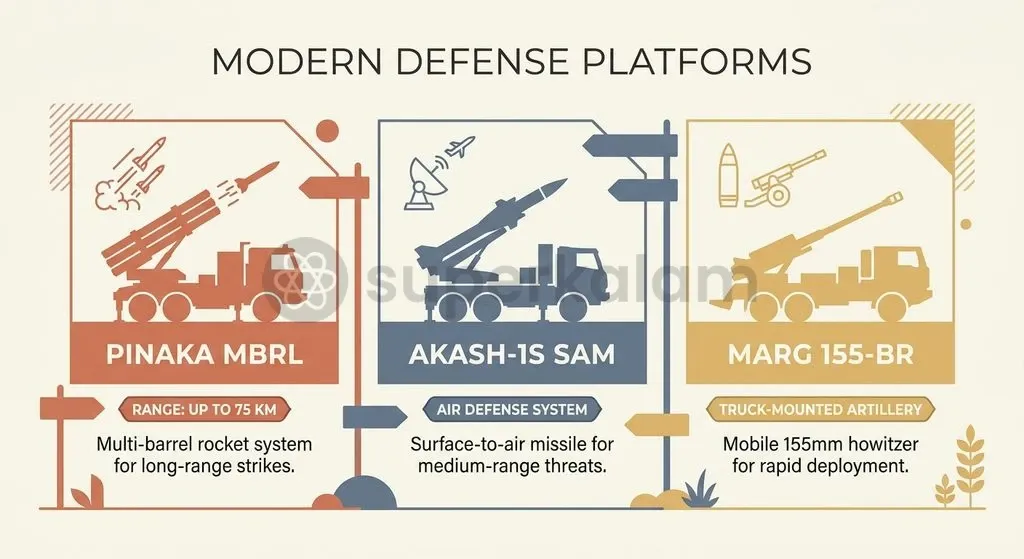
- Artillery saturation: India supplied indigenous Pinaka multi-barrel rocket launcher systems under contracts finalized in late 2022, providing saturation firepower across ranges up to 75 kilometres.
- Air defence coverage: Armenia received initial deliveries of Bharat Dynamics Limited-manufactured Akash-1S surface-to-air missile systems in late 2024 to restore its low-to-medium altitude airspace defence.
- Mobile field artillery: Yerevan procured 155mm artillery systems, including the Advanced Towed Artillery Gun System and truck-mounted MArG 155-BR mobile howitzers produced by Bharat Forge.
Azerbaijan views Indian arms deliveries to Armenia as a direct security challenge that alters the conventional balance of power in the South Caucasus. Consequently, New Delhi faces structural hurdles in attempting to de-hyphenate its bilateral ties with Baku from its defence partnership with Yerevan.
The Ankara-Baku-Islamabad Axis: Azerbaijan's Structural Entanglement with Pakistan
Azerbaijan maintains an institutionalised security partnership with Turkey and Pakistan that directly challenges India's core territorial integrity and sovereign interests. This alignment traces back to Pakistan becoming the second nation to recognise Azerbaijan's independence in December 1991, while historically withholding diplomatic ties with Armenia.
In July 2021, the parliamentary speakers of Azerbaijan, Turkey, and Pakistan formalised the Three Brothers trilateral axis by signing the Baku Declaration. The agreement established formal coordination across defence, political, and strategic domains, cementing an ideological bloc connecting the South Caucasus, Anatolia, and South Asia.
Military cooperation progressed rapidly following the political declaration. In September 2021, the three nations conducted their inaugural joint special forces combat drill, designated Three Brothers - 2021, hosted in Baku.
Diplomatically, Baku regularly aligns with Islamabad on multilateral platforms:
- OIC Contact Group alignment: Azerbaijan sits as a permanent member of the Organisation of Islamic Cooperation Contact Group on Jammu and Kashmir alongside Pakistan, Turkey, Saudi Arabia, and Niger.
- United Nations rhetoric: At an OIC ministerial meeting held on September 22, 2026, on the sidelines of the 81st UN General Assembly, Azerbaijani Foreign Minister Jeyhun Bayramov explicitly called for resolving the Jammu and Kashmir dispute under UN Security Council resolutions.
This diplomatic posture makes it difficult for New Delhi to treat Azerbaijan as a neutral regional actor. Baku's institutional backing of Pakistan's territorial claims remains an immovable barrier to bilateral political intimacy.
Discuss with Superkalam
How did Indian oil refiners substituting Azeri Light with Russian Urals crude drive the contraction of India-Azerbaijan bilateral trade after 2022?
Ask NowEnergy and Connectivity: Why India Cannot Write Off Baku Completely
Hydrocarbon assets and critical transport corridors prevent India from disengaging entirely from Azerbaijan despite ongoing political divergences. New Delhi maintains substantial commercial equity within Azerbaijan's offshore energy basin and relies on Caspian infrastructure for transit access.
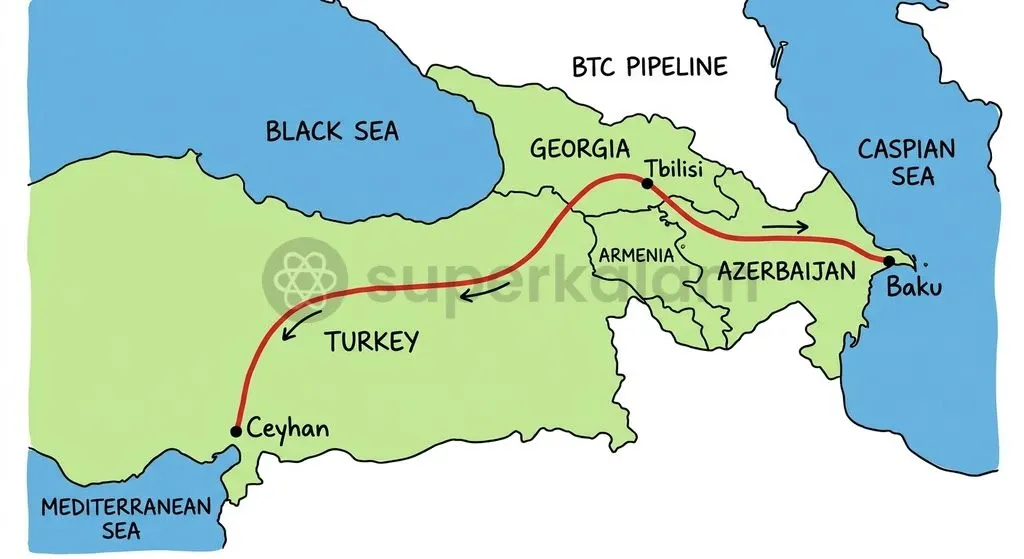
ONGC Videsh Limited has invested over $1.2 billion in acquiring upstream participating interests in Azerbaijan's offshore Azeri-Chirag-Gunashli oil fields and the associated transport pipeline. On November 29, 2024, ONGC Videsh completed the acquisition of an additional 0.615 percent stake in the ACG field and 0.737 percent shares in the Baku-Tbilisi-Ceyhan pipeline from Norway's Equinor for $60 million.
Following the Equinor transaction, ONGC Videsh Limited holds a 2.925 percent participating interest in the ACG oil field and a 3.097 percent equity stake in the BTC pipeline company. The 1,768-kilometre pipeline carries crude from Baku to the Turkish Mediterranean port of Ceyhan, supplying international markets and Indian refineries.
Bilateral commercial trade has experienced significant volatility in recent years:
- Merchandise trade contraction: India-Azerbaijan trade stood at $401 million in 2025, falling from a high of $1.882 billion in 2022.
- Crude import substitution: The decline was primarily driven by Indian public and private refiners substituting Azeri Light crude with discounted Russian Urals crude shipments.
Transit logistics along the 7,200-kilometre International North-South Transport Corridor also intersect with Azerbaijani territory. Azerbaijan fully modernised and operationalised its 511-kilometre railway section running from Yalama on the Russian border to Astara on the Iranian border in 2018.
However, the Western branch of the INSTC remains throttled by an unbuilt 162-kilometre missing rail link between Rasht and Astara in northern Iran. Per reports by Russian Railways and Interfax in October 2026, active construction under a €1.3 billion Russian state credit facility is scheduled to begin in 2027 with completion slated for 2030.
The Alternative Map: How India's Armenia Pivot Reshapes Eurasian Trade
India has pursued alternative multimodal transport corridors through Armenia to circumvent structural transit dependencies across Azerbaijani territory. Transit risks through Azerbaijan became evident as bilateral geopolitical friction widened across international institutions.
In April 2023, India, Iran, and Armenia convened an inaugural trilateral consultation in Yerevan to evaluate the Persian Gulf-Black Sea multimodal corridor. The envisioned route links maritime cargo from Mumbai to Iran's Chabahar Port, moving northward through Armenia and Georgia before reaching European markets.
| Corridor Dimension | INSTC Western Branch (via Azerbaijan) | Persian Gulf-Black Sea Corridor (via Armenia) |
|---|---|---|
| Transit Route | India → Bandar Abbas/Chabahar → Iran → Azerbaijan → Russia | India → Chabahar → Iran → Armenia → Georgia (Black Sea) → Europe |
| Key Rail Infrastructure | Fully modernised 511 km line across Azerbaijan; missing 162 km Rasht-Astara link | No direct rail across the border; relies on Armenia's North-South road corridor |
| Geopolitical Alignment | Azerbaijan allied with Pakistan and Turkey; high risk of transit coercion | Armenia aligned with India; secure political partnership |
| Primary Destination | Moscow and Northern Eurasia | European Union and Eastern European markets |
| Terrain and Geography | Coastal plains along the Caspian Sea; easier freight logistics | High-altitude transit through the rugged Zangezur mountain range |
The Armenian route provides New Delhi with a viable strategic hedge against Azerbaijani transit chokepoints. However, the Eurasian Development Bank notes that the Persian Gulf-Black Sea corridor faces major operational challenges due to the complete lack of a direct rail link between Iran and Armenia across the Zangezur mountains, making it reliant on highway trucking.
Discuss with Superkalam
In the event of diplomatic coercion or transit disruption through Azerbaijan, how could India utilise the Persian Gulf-Black Sea corridor via Armenia as an alternative freight route?
Ask NowReality Check: The Structural Limits to a Bilateral Reset
Multilateral disputes and public friction demonstrate the tight boundaries limiting any strategic rapprochement between New Delhi and Baku. While formal diplomatic interactions continue, political friction frequently disrupts functional ties.
Diplomatic confrontation surfaced in international groupings in late 2025. Per diplomatic reporting from OC Media and ThePrint in September 2025, India reportedly objected to Azerbaijan's accession bid in the Shanghai Cooperation Organisation, while Pakistan reciprocally moved to block Armenia's engagement with the organisation.
Civilian and cultural exchanges have suffered alongside political ties:
- Tourism contraction: Indian outbound visits to Azerbaijan fell from a record 243,589 travellers in 2024 to 166,944 in 2025, registering a 31.5 percent drop.
- Public consumer boycotts: The contraction followed public boycott campaigns in India driven by Baku's overt diplomatic and defence alignment with Pakistan.
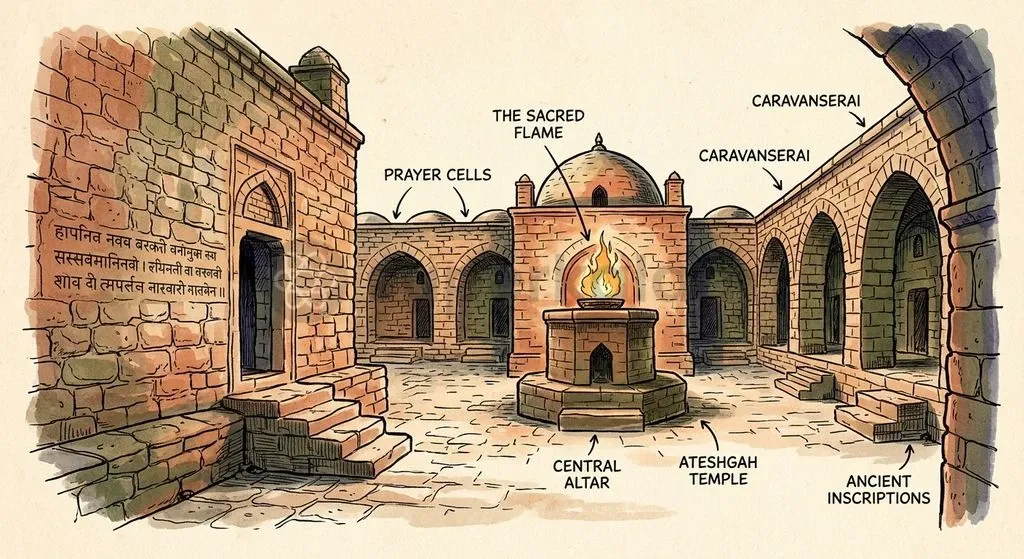
- Historical ties: These tensions contrast with long-standing civilisational links dating back to formal ties on February 28, 1992, and historic trade commemorated at the 17th-century Ateshgah fire temple near Baku.
Strategic analysts at the Observer Research Foundation and the Carnegie Endowment assess that a deep bilateral partnership remains unattainable. Baku's institutionalised security alignment with Islamabad and Ankara establishes an enduring ceiling, restricting bilateral ties to transactional trade and transit management.
Way Forward: A Pragmatic Roadmap for South Caucasus Multi-Alignment
New Delhi must adopt a calibrated multi-alignment strategy in the South Caucasus to secure its economic interests while defending its geopolitical redlines. Engaging Azerbaijan selectively prevents India from being excluded from major Caspian transport corridors without undermining its core partnerships.
- Transactional engagement with Baku: Diplomatic communication must focus on protecting ONGC Videsh Limited's upstream investments in the ACG basin and managing INSTC transit mechanics, without offering unreciprocated political concessions on multilateral forums.
- Sustain Armenian defence ties: Maintaining supplies of conventional deterrent platforms, such as Pinaka MBRLs and Akash-1S air defence systems, establishes India as a credible security partner in Eurasia and prevents an unchecked Turkish-Pakistani monopoly in the South Caucasus.
- Chabahar-Armenia multimodal bypass: Policymakers should accelerate infrastructure spending on this route. Upgrading road links through southern Armenia ensures India retains alternative trade corridors to Europe if Caspian rail routes face politically induced delays.
- Firm diplomatic redlines: Indian diplomacy must communicate clear redlines regarding Kashmir at the OIC. Bilateral trade normalisation and ministerial visits should remain calibrated against Azerbaijan's public statements on India's internal sovereignty.
Discuss with Superkalam
Analyse the structural drivers behind the Ankara-Baku-Islamabad trilateral alignment and how it constrains New Delhi's diplomatic leverage in the South Caucasus.
Ask NowKey Takeaways
- External Affairs Minister S. Jaishankar conducted a standalone visit to Baku on October 23, 2026, working to stabilise bilateral ties after friction in 2025 over Operation Sindoor.
- The trilateral 'Three Brothers' axis formalised by Azerbaijan, Turkey, and Pakistan in July 2021 creates an enduring structural barrier to an authentic India-Azerbaijan strategic partnership.
- India's defence exports to Armenia—including Pinaka rocket systems, Akash-1S missiles, and ATAGS artillery—preclude a neutral geopolitical reset with Baku.
- ONGC Videsh Limited retains significant commercial interests in Azerbaijan, holding a 2.925 percent participating interest in the ACG oil field and a 3.097 percent stake in the BTC pipeline.
Mains Question
'While transactional cooperation in hydrocarbons and logistics remains mutually beneficial, the geopolitical architecture of Eurasia restricts the India-Azerbaijan relationship to pragmatic trade rather than an authentic strategic partnership.' Examine the structural constraints governing New Delhi's engagement with Baku. (10 Marks)
Evaluate NowMains Question
India's expanding defence supplies to Armenia and exploration of the Persian Gulf-Black Sea multimodal corridor reflect an active effort to safeguard strategic and trade interests in Eurasia. In light of the 'Three Brothers' alignment, critically analyse the geopolitical implications and operational challenges of India's South Caucasus transit strategy. (15 Marks)
Evaluate NowPractice MCQs
QUESTION 1
Consider the following statements regarding Eurasian transit corridors intersecting the South Caucasus: 1. Azerbaijan has modernised and operationalised its 511-kilometre railway section between Yalama and Astara along the INSTC route. 2. The Western branch of the International North-South Transport Corridor (INSTC) is constrained by an unbuilt rail link between Rasht and Astara. 3. The Persian Gulf-Black Sea corridor features a fully operational direct railway link connecting Iran and Armenia across the Zangezur mountains. Which of the statements given above is/are correct?
QUESTION 2
Consider the following statements regarding India's commercial energy equity in Azerbaijan: 1. ONGC Videsh Limited holds participating equity in the offshore Azeri-Chirag-Gunashli (ACG) oil fields. 2. The Baku-Tbilisi-Ceyhan (BTC) pipeline transports crude to a terminal situated on the Mediterranean Sea. 3. Bilateral trade between India and Azerbaijan expanded between 2022 and 2025 due to increased Indian intake of Azeri Light crude. Which of the statements given above is/are correct?
QUESTION 3
With reference to the trilateral security dynamics in the South Caucasus, consider the following statements: 1. The Baku Declaration of July 2021 formalised trilateral coordination across defence and political domains between Azerbaijan, Turkey, and Pakistan. 2. Azerbaijan is a member of the Organisation of Islamic Cooperation (OIC) Contact Group on Jammu and Kashmir. 3. Pakistan withheld diplomatic recognition of Azerbaijan upon the dissolution of the Soviet Union in 1991. Which of the statements given above is/are correct?
QUESTION 4
Consider the following statements regarding India's defence exports to Armenia: 1. Armenia procured indigenous Pinaka multi-barrel rocket launcher systems providing saturation firepower up to 75 kilometres. 2. Bharat Dynamics Limited delivered Akash-1S surface-to-air missile systems to support Armenian airspace defence. 3. Armenian procurements include truck-mounted MArG 155-BR mobile howitzers produced by Bharat Forge. Which of the statements given above are correct?
QUESTION 5
The Western branch of the International North-South Transport Corridor (INSTC) is currently constrained by an unbuilt 162-kilometre missing railway link between which of the following locations?