ICJ Ruling on Myanmar: Erga Omnes Partes, UNSC Veto and Geopolitics
The ICJ's binding orders on Myanmar highlight a vital global justice paradox: judicial decrees remain unenforceable when UNSC vetoes shield accused regimes.
Nov, 2026
•9 min read
Context
The International Court of Justice ruling against Myanmar highlights a structural paradox. International judicial decrees establish binding erga omnes obligations against genocide. Yet they remain functionally paralysed without executive enforcement when geopolitical vetoes block the United Nations Security Council.
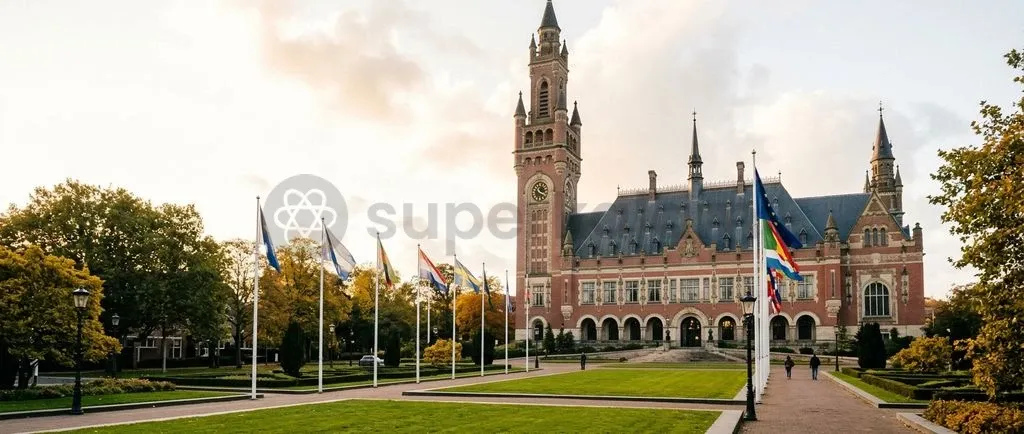
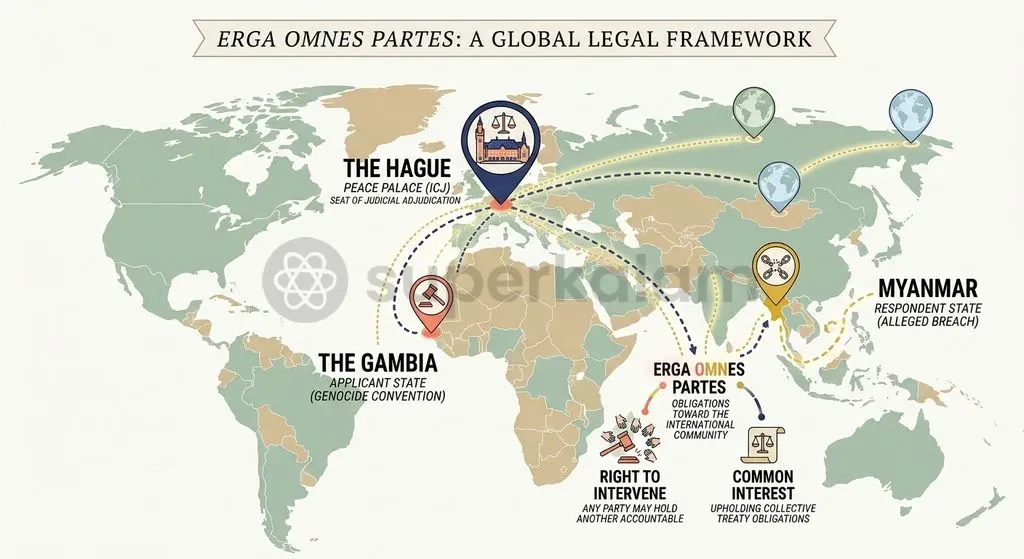
Filed by The Gambia under the 1948 Genocide Convention, the case sets a watershed precedent for universal legal standing. Non-injured states now actively use multilateral courts to enforce humanitarian norms against sovereign nations accused of mass atrocities.
International legal mandates still collide with sovereign realpolitik. Because international courts possess no independent constabulary, judicial pronouncements rely on global powers that routinely prioritise strategic containment, infrastructure interests, and regional alliances over human rights protections.
Why in the News: The ICJ's Ruling on Myanmar and the Rohingya
On 19 November 2026, the International Court of Justice delivered its final judgment in The Gambia v. Myanmar and found Myanmar responsible for genocide against the Rohingya during the 2016-2017 clearance operations. The judges ruled nine to six for The Gambia, marking the first time the Court has found a State responsible for committing genocide.
The application was initiated by The Gambia in November 2019 under the 1948 Genocide Convention. The Court had earlier rejected Myanmar's preliminary objections and allowed the case to proceed to the merits, affirming that treaty parties share a common legal interest in preventing genocide.
This final ruling anchors legal accountability in international humanitarian law. It establishes that the obligation to prevent and punish mass atrocities transcends regional geography, even though enforcement still depends on political institutions.
Discuss with Superkalam
Recall the specific article of the United Nations Charter under which an aggrieved state can refer non-compliance of an ICJ decision to the Security Council.
Ask NowHow The Gambia Brought Myanmar to The Hague: Erga Omnes Partes in Action
The Gambia instituted proceedings against Myanmar by invoking the principle of erga omnes partes under the 1948 Genocide Convention. Under this legal doctrine, every state party to a multilateral treaty shares a common legal interest in upholding its core provisions, even without suffering direct territorial or citizen injury.
The Gambia's legal strategy rested on two pillars:
- Bypassing sovereign immunity: The Gambia established standing by showing that the prohibition against genocide is a peremptory norm of international law (jus cogens), from which no derogation is permitted.
- Third-party operationalisation: Third-party states increasingly operationalise multilateral treaties to challenge sovereign military actions when diplomacy fails, as seen in South Africa v. Israel under the same convention.
For developing nations, this shift carries significant foreign policy implications. The expanding appetite for third-party litigation exposes regional powers—including India—to prospective scrutiny from non-neighbouring states over domestic security operations or transboundary refugee policies.
What the Court Ordered: Final Judgment and Binding Legal Duties
The International Court of Justice issued binding orders after finding that Myanmar's security forces and other State organs intentionally committed acts covered by Article II of the Genocide Convention, including killing, causing serious bodily or mental harm, and imposing measures intended to prevent births.
The bench issued specific binding instructions:
- Cease ongoing violations: Myanmar must enact legislation giving full effect to its obligations under the Genocide Convention.
- Investigate and punish: Myanmar must take immediate and effective steps to investigate persons reasonably suspected of genocide-related acts and, where warranted, prosecute and punish them.
- Provide restitution and compensation: Myanmar must enable the safe, voluntary and dignified return of displaced Rohingya, reunify families, and compensate the Rohingya group and its members for the damage caused.
- Report within two years: Myanmar must transmit a report on its restitution measures and the amount and modalities of compensation, which the Court will decide in a subsequent phase.
The judgment is final, binding on the parties and without appeal. It assigns responsibility to Myanmar as a State; it does not determine individual criminal guilt.
Discuss with Superkalam
Explain how the doctrine of erga omnes partes alters the traditional understanding of state sovereignty and legal injury in international law.
Ask NowThe Enforcement Bottleneck: Why the ICJ Has No Army to Enforce its Decrees
The International Court of Justice lacks independent enforcement mechanisms, bailiffs, or standing military forces to execute its judicial pronouncements. Compliance with its verdicts relies entirely on voluntary sovereign consent or collective multilateral pressure.
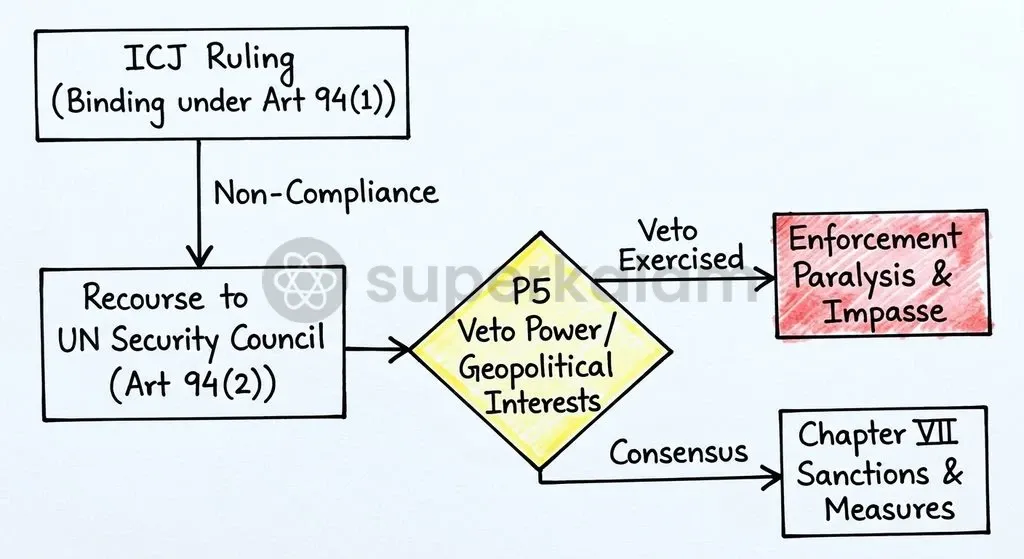
Under Article 94(2) of the United Nations Charter, if a state fails to perform its obligations under an ICJ judgment, the aggrieved party may turn to the United Nations Security Council. The Security Council may then decide whether to recommend or execute measures to give effect to the ruling.
This statutory route shifts legal questions straight into the diplomatic arena. When a ruling challenges an authoritarian regime, enforcement directives routinely stall before the five permanent members of the council.
| Stage | Step in Enforcement Process | Institutional Risk |
|---|---|---|
| 1. Judicial Decree | ICJ issues binding ruling or provisional measures | Non-compliance by sovereign defendant |
| 2. Political Escalation | Aggrieved state invokes UN Charter Article 94(2) | Referral shifts legal issue into political arena |
| 3. Diplomatic Review | UNSC deliberates on enforcement actions | Geopolitical alignment supersedes humanitarian law |
| 4. Executive Deadlock | Permanent member exercises veto power | Complete stall of multilateral enforcement |
Comparison: ICJ vs ICC in Handling State Responsibility and Individual Crimes
The International Court of Justice and the International Criminal Court occupy distinct institutional spaces in public international law. While both institutions sit at The Hague, their jurisdictional foundations, subjects, and statutory mechanisms differ fundamentally.
The following comparative table delineates the structural differences essential for international law analysis:
| Analytical Dimension | International Court of Justice (ICJ) | International Criminal Court (ICC) |
|---|---|---|
| Institutional Nature | Principal judicial organ of the United Nations | Independent treaty body established by the Rome Statute |
| Subject of Jurisdiction | Sovereign States only | Individual natural persons |
| Substantive Mandate | Inter-state disputes and advisory opinions | War crimes, genocide, crimes against humanity, aggression |
| Jurisdictional Basis | State consent, compromissory treaty clauses, special agreements | Rome Statute ratification, state acceptance, or UNSC referral |
| Enforcement Reliance | United Nations Security Council under Article 94(2) | State parties, domestic police cooperation, voluntary surrender |
| Application to Myanmar | Adjudicating State responsibility for Genocide Convention violations | Investigating individual Tatmadaw commanders for deportations |
The International Criminal Court exercises complementary jurisdiction over individual military commanders. In contrast, the ICJ assigns state responsibility directly to Myanmar as a sovereign legal entity.
Discuss with Superkalam
Analyse the geopolitical reasons behind China and Russia's diplomatic protection of Myanmar's junta at the UN Security Council.
Ask NowGeopolitical Realpolitik: How UNSC Vetoes Shield the Junta
The United Nations Security Council remains structurally incapable of enforcing the ICJ's final judgment against Myanmar due to persistent geopolitical friction. Permanent members exercise their veto power to insulate strategic partners from binding multilateral sanctions or peacekeeping interventions.
Two permanent members play a decisive role in shielding Naypyidaw:
- China's maritime corridor: Beijing regards Myanmar as an essential land corridor to the Indian Ocean through pipeline infrastructure and deep-sea port terminals in Rakhine State.
- Russia's defence partnerships: Moscow maintains significant defence export agreements and military-technical partnerships with the military junta.
This diplomatic shield exposes the limits of global governance. Western draft resolutions demanding asset freezes, arms embargoes, and compliance monitoring regularly face the threat of a double veto. Consequently, international legal obligations disintegrate into procedural gridlock at the Security Council.
India's Tightrope: Humanitarian Concerns vs Strategic Interests in Rakhine
New Delhi manages a delicate diplomatic balance between international humanitarian expectations and core national security interests along its eastern frontier. India shares a porous land boundary with Myanmar across four northeastern states: Arunachal Pradesh, Nagaland, Manipur, and Mizoram.
India's policy navigates three competing imperatives:
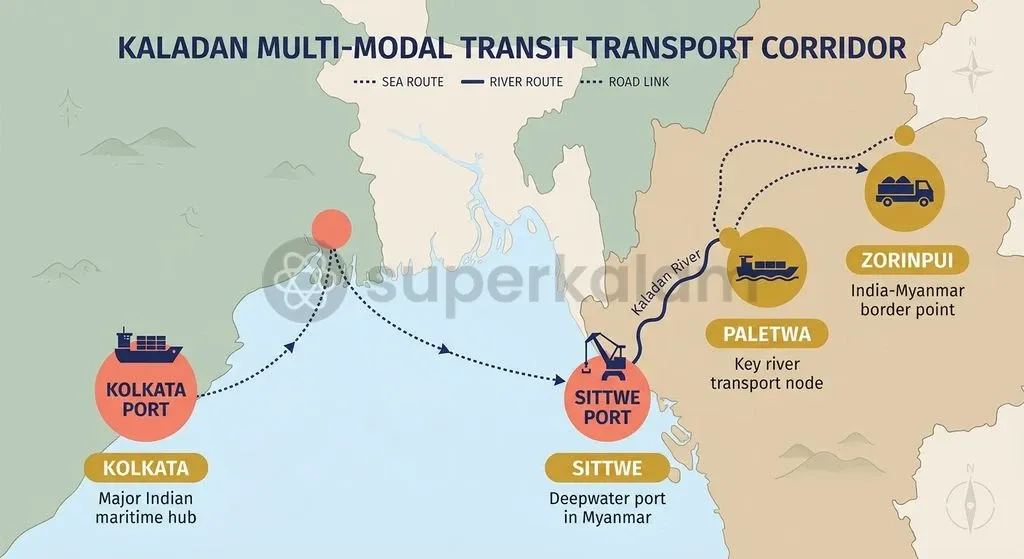
- Connectivity projects: The Kaladan Multi-Modal project provides vital alternative transit between Kolkata port and the landlocked northeastern states via Sittwe in Rakhine State.
- Border stability: Securing the cooperation of the Tatmadaw is necessary to neutralise cross-border insurgent networks operating in contiguous forest corridors.
- Refugee pressures: Instability in Rakhine State drives cross-border refugee flows into Mizoram and Manipur, straining local administrative resources.
India avoids endorsing coercive unilateral sanctions or external legal interventions. Instead, policymakers champion sustainable local rehabilitation in Rakhine State while engaging with the de facto authorities in Naypyidaw to safeguard regional maritime security against growing external influence.
GS4 Ethical Perspective: The Cost of Global Inaction on Genocide
The Rohingya humanitarian crisis reveals the moral failure of contemporary multilateralism when procedural realpolitik overrides the ethical duty to protect vulnerable communities. The concept of erga omnes obligations asserts that humanity possesses an indivisible moral claim to protection from physical extermination.
When sovereign boundaries become ethical shields for domestic oppression, international law suffers normative decay. The doctrine of state sovereignty was designed to preserve political self-determination, not to confer immunity for systemic atrocities against disenfranchised minorities.
Foreign ministries routinely put immediate economic, infrastructure, and defence considerations ahead of categorical moral imperatives. This ethical compromise normalises displacement and leaves persecuted populations stateless, exposing the deep divide between normative declarations and sovereign action.
Discuss with Superkalam
Evaluate whether third-party universal standing at the ICJ enhances global human rights protection or creates diplomatic vulnerabilities for regional powers like India.
Ask NowWay Forward: Reforming Multilateral Justice Mechanisms
Reforming international justice requires structural revisions to the relationship between judicial decrees and executive enforcement.
Key institutional reforms include:
- Invoking General Assembly mechanisms: When the Security Council deadlocks on mass atrocities, the United Nations General Assembly should operationalise the "Uniting for Peace" framework to recommend collective diplomatic and economic countermeasures.
- Building independent ICJ monitoring: Equipping the court with direct compliance tracking registries would ensure independent ground-level reporting on compliance with final judgments, rather than relying solely on self-reporting by accused states.
- Mobilising regional bodies: ASEAN must move past rigid interpretations of non-interference. Coordinated port access restrictions and targeted financial screening can enforce judicial orders without requiring unanimous Security Council backing.
Key Takeaways
- On 19 November 2026, the International Court of Justice found Myanmar responsible for genocide against the Rohingya in a nine-to-six final judgment under the 1948 Genocide Convention.
- The Gambia established legal standing via the principle of erga omnes partes, demonstrating that all treaty signatories maintain a shared legal right to oppose genocide without suffering direct territorial injury.
- Judicial enforcement remains structurally blocked by Article 94(2) of the United Nations Charter, where permanent-member vetoes by China and Russia shield the Tatmadaw from mandatory compliance actions.
- The ICJ handles state responsibility, whereas the International Criminal Court focuses on individual criminal accountability for specific military commanders.
- India maintains a non-interventionist diplomatic stance to protect critical regional interests, notably the Kaladan Multi-Modal Transit Transport Project and border security across northeastern states.
Mains Question
"The operationalisation of the erga omnes partes principle under the 1948 Genocide Convention marks a paradigm shift in international humanitarian law, yet international judicial decrees remain functionally paralysed without executive enforcement." Critically examine. (15 Marks)
Evaluate NowMains Question
Highlighting the Kaladan Multi-Modal project and cross-border security imperatives, evaluate the strategic tightrope India walks between humanitarian obligations and national interests regarding Myanmar. (10 Marks)
Evaluate NowPractice MCQs
QUESTION 1
With reference to the International Court of Justice (ICJ) and the International Criminal Court (ICC), consider the following statements:
- While the ICJ adjudicates state responsibility for treaty violations, the ICC exercises jurisdiction over individual natural persons.
- The ICJ is the principal judicial organ of the United Nations, whereas the ICC is an independent treaty body established by the Rome Statute.
- Both the ICJ and the ICC maintain their own independent standing constabulary forces to execute judicial pronouncements. Which of the statements given above is/are correct?
QUESTION 2
Consider the following statements regarding the legal doctrines applied in international humanitarian law and the ICJ proceedings:
- The principle of erga omnes partes allows any state party to a multilateral treaty to institute proceedings against another, even without suffering direct territorial or citizen injury.
- Jus cogens refers to a peremptory norm of international law from which no derogation is permitted.
- The ICJ's provisional measures assign individual criminal guilt and establish sovereign territorial boundaries during the preliminary stage. Which of the statements given above are correct?
QUESTION 3
With reference to the enforcement of International Court of Justice (ICJ) rulings, consider the following statements:
- Under Article 94(2) of the United Nations Charter, an aggrieved party may approach the United Nations Security Council if a state fails to comply with an ICJ judgment.
- The United Nations Security Council is mandated to automatically execute peacekeeping interventions without the possibility of a permanent member veto whenever an ICJ ruling is breached. Which of the statements given above is/are correct?
QUESTION 4
Which of the following Indian states share a land boundary with Myanmar, presenting cross-border security and refugee management challenges as highlighted in the context of the Rakhine crisis?
QUESTION 5
Consider the following statements regarding the geopolitical dynamics surrounding Myanmar at the United Nations Security Council (UNSC):
- Western draft resolutions imposing sanctions or arms embargoes face the risk of a double veto from China and Russia.
- Beijing views Myanmar as an essential land corridor to the Indian Ocean via pipeline and deep-sea port infrastructure in Rakhine State.
- Moscow's strategic engagement with Naypyidaw is primarily anchored in defence export agreements and military-technical partnerships. Which of the statements given above are correct?