Gene-Edited Rice in India: Why CRISPR Is Not a GM Crop
By exempting non-transgenic CRISPR crops from GM regulations, India bridges climate resilience and crop yields while facing crucial export and patent hurdles.
Nov, 2026
•10 min read
Overview
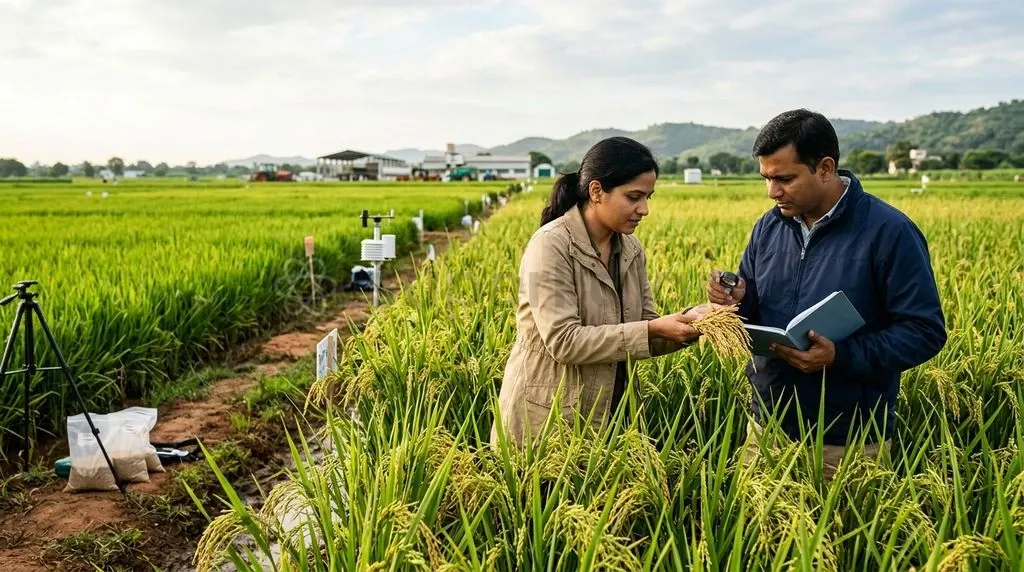
India's release of genome-edited rice varieties marks a decisive regulatory and technological transition from transgenic genetic modification to non-transgenic precision breeding, enabling targeted yield and climate-resilience gains without integrating foreign genetic material into the plant genome. The commercial clearance of DRR Dhan 100 (Kamala) and Pusa DST Rice 1 rests on the central government's policy decision to exempt Site-Directed Nuclease-1 (SDN-1) and Site-Directed Nuclease-2 (SDN-2) categories from the onerous genetic engineering regulations framed in 1989 under the Environment (Protection) Act, 1986. By treating targeted single-nucleotide modifications analogously to conventional mutation breeding, agricultural scientists have delivered crop varieties capable of withstanding saline conditions and delivering higher grain counts. This shift decouples domestic crop science from decades of political and environmental disputes surrounding foreign transgenes. However, realising the full developmental promise of these innovations requires resolving export-market compliance frictions, addressing off-target molecular cleavage, and securing robust licensing frameworks for foreign-held intellectual property.
Why in the News: The Release of Gene-Edited Rice Varieties
Union Agriculture Minister Shivraj Singh Chouhan officially announced India's first two genome-edited rice varieties, DRR Dhan 100 and Pusa DST Rice 1, on 4 May 2025. The public unveiling represents the first practical agricultural outcome of the regulatory overhaul initiated by the Union Government in 2022.
The varieties passed multi-location testing after the Review Committee on Genetic Manipulation (RCGM), operating under the Department of Biotechnology (DBT), approved biosafety deregulation during its 258th meeting on 30 May 2023. This milestone confirms the operational viability of India's fast-track biotechnology guidelines for crops that do not harbour introduced foreign genes.
Discuss with Superkalam
Which specific genes were modified in DRR Dhan 100 and Pusa DST Rice 1, and what physiological traits do they control?
Ask NowUnderstanding the Breakthrough: What Are Kamala and Pusa DST Rice-1?
DRR Dhan 100, designated popularly as Kamala, is an elite genome-edited rice line developed by the ICAR-Indian Institute of Rice Research (ICAR-IIRR) in Hyderabad. Plant breeders engineered the variety by editing the genetic architecture of Samba Mahsuri (BPT 5204), a popular Indica parent variety prized for fine grain quality but vulnerable to yield ceilings.
Scientists applied targeted genome editing to modify the OsCKX2 (cytokinin oxidase/dehydrogenase 2) gene, suppressing the premature degradation of cytokinin phytohormones in developing flowers. This targeted modification suppresses cytokinin degradation and raises grain count by 450 to 500 grains per panicle. During field trials conducted under the All India Coordinated Research Project on Rice (AICRPR), DRR Dhan 100 recorded a 19% mean yield gain over the unmodified Samba Mahsuri parent line.
Pusa DST Rice 1 was engineered by the ICAR-Indian Agricultural Research Institute (ICAR-IARI) in New Delhi using the genetic background of Cotton Dora Sannalu (MTU 1010). The variety incorporates targeted edits within the OsDST (Drought and Salt Tolerance) zinc-finger transcription factor gene.
Altering this regulatory sequence reshapes leaf stomatal density, cutting transpirational water loss while maintaining photosynthetic output under environmental stress. As reported by ICAR-IARI researchers, Pusa DST Rice 1 registered yield gains between 9.66% and 30.4% across degraded saline and alkaline ecologies.
How CRISPR Works: The Science of Targeted Gene Editing
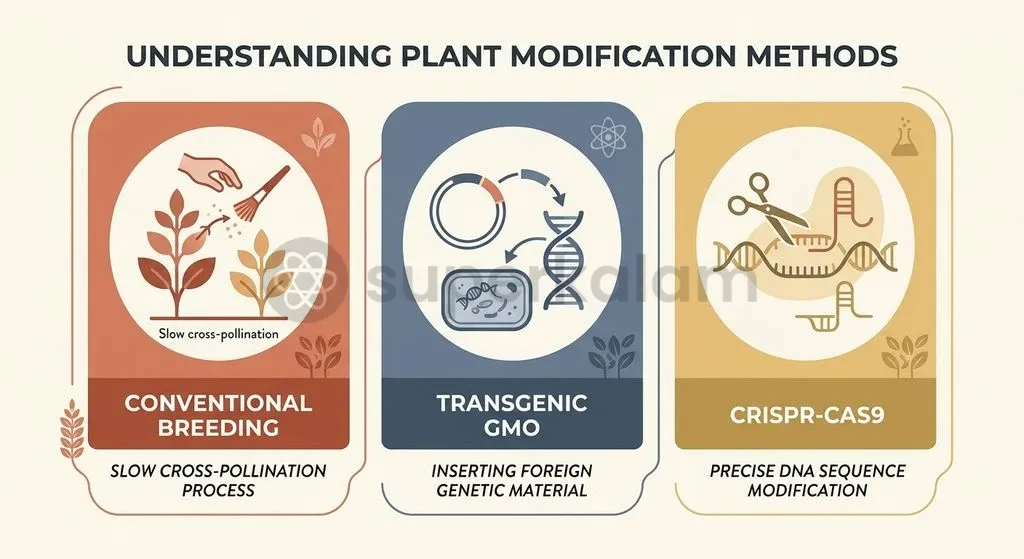
CRISPR-Cas9 operates as an RNA-guided molecular scissor complex capable of creating site-specific cuts at designated positions across an organism's DNA. The bacterial defence system consists of a Cas9 endonuclease enzyme and a laboratory-synthesised single-guide RNA (gRNA) programmed to match a targeted 20-nucleotide sequence in the host genome.
The process proceeds through four discrete biochemical steps:
- Target Identification: The synthetic gRNA locates and pairs with the complementary target sequence directly upstream of a specific genomic anchor called the Protospacer Adjacent Motif (PAM).
- Endonuclease Cleavage: Cas9 binds to the PAM sequence and induces a blunt double-strand DNA break exactly three nucleotides upstream of the motif.
- Host Cellular Repair: The plant's internal cellular repair machinery recognises the severed strands and initiates natural healing pathways.
- Targeted Inactivation or Modification: The cell activates Non-Homologous End Joining (NHEJ) or Homology-Directed Repair (HDR), modifying or knocking out the targeted gene sequence without introducing alien biological traits.
Gene Editing vs Genetic Modification: Breaking Down the Difference
The fundamental boundary between gene editing and genetic modification centres on the presence or absence of stably integrated foreign DNA from unrelated donor species. Genetically Modified Organisms (GMOs), such as Bt cotton, are transgenic constructs that introduce functional genes across species barriers through recombinant DNA vectors.
In contrast, non-transgenic genome editing (SDN-1 and SDN-2) rearranges or silences preexisting endogenous sequences inside the plant. The molecular machinery introduced to enact the edit is segregated out in subsequent breeding generations, leaving an edited variety that contains zero foreign DNA elements.
| Parameter | Conventional Breeding | Genetic Modification (Transgenics) | Gene Editing (SDN-1 and SDN-2) |
|---|---|---|---|
| Genetic Material | Recombines existing alleles within compatible species | Inserts exogenous recombinant DNA from alien species | Alters native genomic sequences directly |
| Precision | Low; introduces thousands of random unlinked genes | Moderate; transgene integrates at random genomic loci | High; targets exact base pairs via guide RNA |
| Foreign DNA in Product | None | Stably integrated foreign genes present | Completely free of foreign genetic material |
| Breeding Timeline | 8 to 12 years across multiple backcrosses | 10 to 15 years through selection and field checks | 3 to 5 years from edit to homozygous lines |
| Regulatory Burden | Minimal; standard seed testing protocols apply | Extensive; multi-year biosafety trials under GEAC | Tiered deregulation under DBT biosafety review |
Discuss with Superkalam
Explain how the cleavage mechanism of the Cas9 enzyme and guide RNA differs functionally from foreign transgene insertion in Bt cotton.
Ask NowThe Regulatory Shift: Why India Exempted SDN-1 and SDN-2 from GEAC Rules
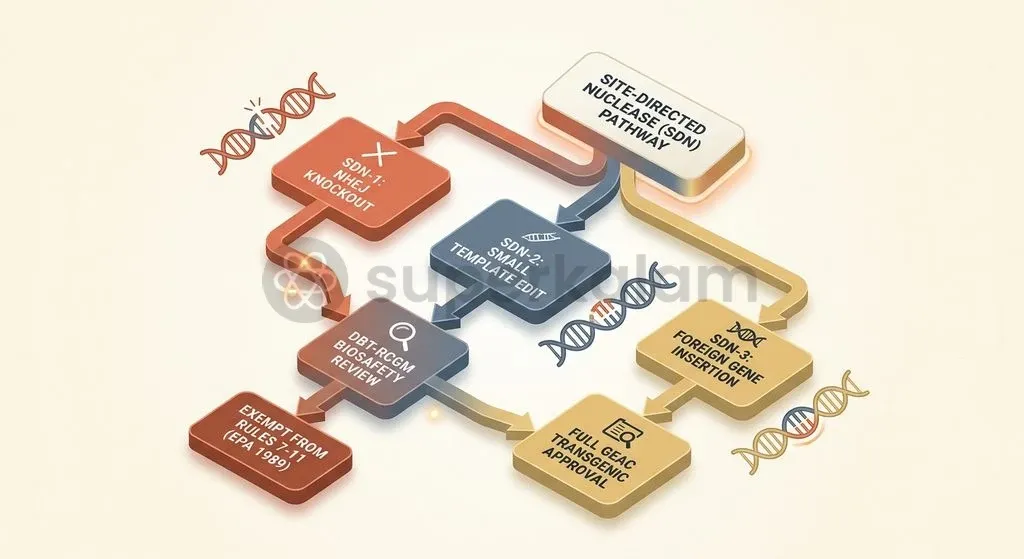
The Ministry of Environment, Forest and Climate Change (MoEFCC) issued Office Memorandum F. No. C-12013/3/2020-CS-III on 30 March 2022, exempting SDN-1 and SDN-2 genome-edited plants from Rules 7 to 11 of the 1989 Rules under the Environment (Protection) Act, 1986. Rules 7 to 11 mandate complex, multi-year approvals by the Genetic Engineering Appraisal Committee (GEAC) for environmental release, deliberate field discharge, and commercial production.
Scientific stratification divides Site-Directed Nucleases into three distinct tiers:
- SDN-1: Induces small insertions, deletions, or targeted gene knockouts repaired via non-homologous end joining without donor DNA templates.
- SDN-2: Utilises a small homologous template to direct homology-directed repair, achieving single-base substitutions without foreign sequence retention.
- SDN-3: Inserts large donor DNA fragments or complete foreign gene cassettes via HDR, remaining strictly regulated as transgenic GMOs under GEAC oversight.
+-------------------------------------------------------------------------+
|                  SITE-DIRECTED NUCLEASE (SDN) SPECTRUM                  |
+-------------------------------------------------------------------------+
|  SDN-1: Non-Homologous End Joining (NHEJ) -> Gene knockout              |
|         Exempt from Rules 7-11 of EPA 1989 (Regulated by DBT/RCGM)      |
+-------------------------------------------------------------------------+
|  SDN-2: Homology-Directed Repair (HDR) -> Small template edit           |
|         Exempt from Rules 7-11 of EPA 1989 (Regulated by DBT/RCGM)      |
+-------------------------------------------------------------------------+
|  SDN-3: Foreign gene insertion / large DNA integration                  |
|         Regulated strictly as transgenic GMO under GEAC                 |
+-------------------------------------------------------------------------+
To operationalise the MoEFCC exemption, the Department of Biotechnology notified the Guidelines for the Safety Assessment of Genome Edited Plants, 2022 on 17 May 2022. DBT followed this with comprehensive Standard Operating Procedures (SOPs) on 4 October 2022.
Institutional oversight now follows a streamlined two-tier protocol:
- The Institutional Biosafety Committee (IBSC) conducts initial laboratory evaluation and confirms the absence of foreign vector backbones.
- The Review Committee on Genetic Manipulation (RCGM) assesses molecular characterisation data and issues biosafety clearance.
- The Indian Council of Agricultural Research (ICAR) handles agronomic performance testing through the All India Coordinated Research Project, bypassing GEAC political bottlenecks.
Agricultural and Climate Promise: Yield, Water Use, and Disease Resistance
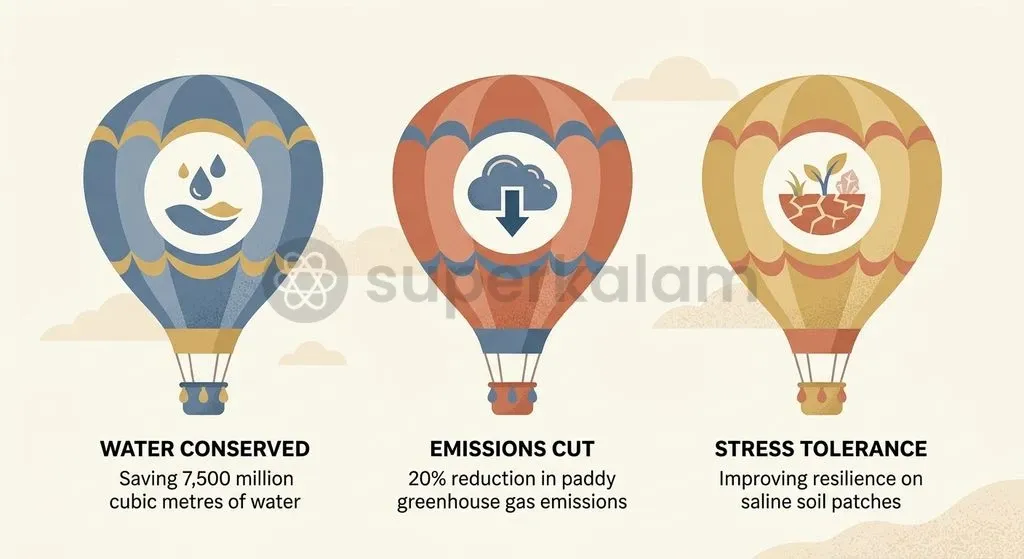
Paddy cultivation accounts for major freshwater withdrawals and non-carbon greenhouse emissions in India. Field models prepared by ICAR show that adopting DRR Dhan 100 and Pusa DST Rice 1 across their designated agro-climatic zones will save 7,500 million cubic metres of water.
The shortened field maturation duration cuts water stagnation time in flooded basins, resulting in an estimated 20% decline in paddy field methane emissions. This ecological reduction supports India's climate commitments without compromising per-hectare productivity.
To expand this technological platform, the Union Government allocated a ₹500 crore financial envelope in the 2023-24 Union Budget specifically targeting crop, oilseed, and pulse genome engineering. These funds finance ongoing public breeding programmes aimed at drought tolerance, nitrogen-use efficiency, and fungal blast resistance in staple crops.
Discuss with Superkalam
Compare the technical and regulatory distinctions between SDN-1, SDN-2, and SDN-3 under India's biotechnology guidelines.
Ask NowUnresolved Concerns: Ecological Risks, Trade Challenges, and Biosafety Debates
Unintended genetic alterations represent an enduring scientific concern in molecular crop design. Cas endonucleases can trigger off-target genetic cleavage at genomic loci sharing sequence homology with the synthetic gRNA. Such unintentional disruptions could theoretically alter metabolic pathways or secondary plant compounds.
Civil society networks, led by the Coalition for a GM-Free India, have raised objections regarding the regulatory exemption granted to SDN-1 and SDN-2 categories. Opponents contend that waiving Rules 7 to 11 bypasses independent long-term chronic toxicity assessments and comprehensive soil microbial studies.
Trade compliance introduces a separate economic vulnerability for Indian basmati and non-basmati rice exports. Because SDN-1 gene edits mimic natural point mutations, standard laboratory tests like promoter-specific PCR assays cannot differentiate gene-edited grain from unedited produce.
Several key overseas buyers enforce stringent, GMO-equivalent containment rules on gene-edited produce. Without harmonised bilateral standards, unlabelled gene-edited shipments risk triggering rejection at destination ports.
Commercialisation also encounters global proprietary obstacles. The foundational patents for CRISPR-Cas9 remain anchored within foreign institutions, obligating domestic public institutes to negotiate Freedom to Operate agreements prior to commercial licensing.
Way Forward: Balancing Innovation with Stringent Field Monitoring
Sustaining India's agricultural biotechnology momentum requires pairing regulatory speed with rigorous, transparent post-release monitoring. The RCGM and ICAR must institutionalise open-access databases detailing whole-genome sequencing results for every released variety to prove the absence of off-target cleavage.
At the international level, the Ministry of Commerce and Industry should coordinate with the Food and Agriculture Organization (FAO) and the Codex Alimentarius Commission to establish harmonised trade certifications. Establishing verifiable molecular profiling will safeguard export revenue while preventing trade disputes.
Finally, DBT and the Ministry of Science and Technology should direct targeted research grants toward discovering novel, indigenous site-directed nucleases. Developing domestic intellectual property will eliminate reliance on foreign patents and guarantee long-term seed sovereignty for Indian farmers.
Discuss with Superkalam
Assess the potential challenges Indian agricultural exporters might face if key overseas markets adopt different regulatory definitions for genome-edited crops.
Ask NowKey Takeaways
- DRR Dhan 100 (Kamala) modifies the OsCKX2 gene to increase grain count by 450 to 500 grains per panicle, securing a 19% yield gain over parent Samba Mahsuri.
- Pusa DST Rice 1 alters leaf stomatal density via the OsDST gene, enhancing rice yields by 9.66% to 30.4% under saline and alkaline soil stress.
- MoEFCC exempted SDN-1 and SDN-2 genome-edited plants from Rules 7 to 11 of the 1989 Rules under the Environment (Protection) Act, 1986, while SDN-3 remains strictly regulated under GEAC as a transgenic GMO.
- Widespread cultivation of the two varieties is projected to conserve 7,500 million cubic metres of water and lower flooded paddy greenhouse emissions by 20%.
- Commercial scaling faces unresolved frictions, including foreign CRISPR patent ownership, off-target cleavage checks, and disparate international export regulations.
Mains Question
"The central government's decision to exempt SDN-1 and SDN-2 categories from Rules 7 to 11 framed under the Environment (Protection) Act, 1986 marks a paradigm shift in India's agricultural biotechnology policy." Elucidate. (10 Marks)
Evaluate NowMains Question
In light of the release of DRR Dhan 100 and Pusa DST Rice 1, critically analyse the scientific, environmental, and trade dimensions of deploying genome-edited crops in India. (15 Marks)
Evaluate NowPractice MCQs
QUESTION 1
With reference to the genome-edited rice varieties developed in India, consider the following statements:
- DRR Dhan 100 (Kamala) was developed by editing the OsCKX2 gene to suppress cytokinin degradation.
- Pusa DST Rice 1 was engineered on the genetic background of Samba Mahsuri.
- The targeted edits in Pusa DST Rice 1 alter leaf stomatal density to reduce transpirational water loss.
Which of the statements given above are correct?
QUESTION 2
Regarding the regulatory classification of Site-Directed Nucleases (SDNs) in India, consider the following statements:
- SDN-1 introduces targeted gene knockouts repaired via non-homologous end joining without a donor template.
- SDN-2 achieves single-base substitutions using a small homologous template without foreign sequence retention.
- Both SDN-1 and SDN-2 categories remain subject to multi-year clearance by the Genetic Engineering Appraisal Committee (GEAC) under Rules 7 to 11 of the 1989 Rules.
Which of the statements given above is/are correct?
QUESTION 3
Consider the following statements regarding the molecular mechanism of CRISPR-Cas9 genome editing:
- The single-guide RNA (gRNA) pairs with a 20-nucleotide target sequence located directly upstream of the Protospacer Adjacent Motif (PAM).
- The Cas9 endonuclease creates a blunt double-strand break exactly three nucleotides upstream of the PAM sequence.
- The repair process in SDN-1 edits permanently integrates the Cas9 enzyme into the plant genome.
Which of the statements given above is/are correct?
QUESTION 4
Consider the following statements comparing conventional breeding, genetic modification, and non-transgenic gene editing:
- Conventional breeding typically requires 8 to 12 years across multiple backcrosses to develop homozygous lines.
- Genetic modification inserts exogenous recombinant DNA from alien species at random genomic loci.
- Non-transgenic gene editing (SDN-1 and SDN-2) completely retains foreign genetic material across subsequent generations.
Which of the statements given above are correct?
QUESTION 5
Under the regulatory framework notified by the Ministry of Environment, Forest and Climate Change (MoEFCC) in 2022, which category of Site-Directed Nucleases remains strictly regulated as a transgenic Genetically Modified Organism (GMO) under the Genetic Engineering Appraisal Committee (GEAC)?