Ebola Outbreak 2026: Nigeria Confirms Imported Bundibugyo Case, Key Facts
When an unvaccinable filovirus hits a major urban aviation hub, containment breaks down to non-pharmaceutical tracing, exposing global biosecurity blind spots.
Oct, 2026
•7 min read
Context
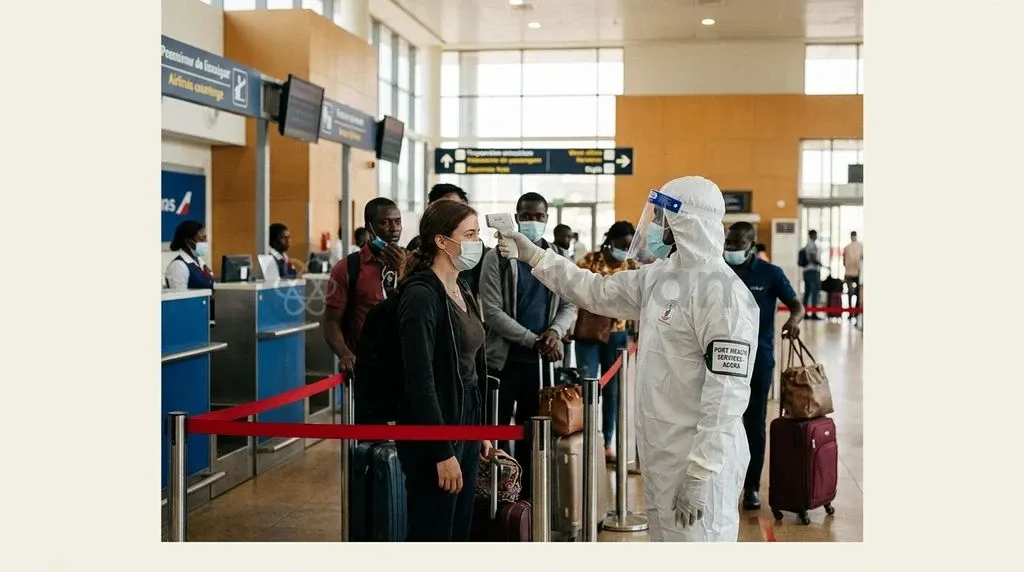
Nigeria confirmed its first imported case of Ebola Bundibugyo virus disease in Abuja on 20 October 2026. The diagnosis triggered an escalated World Health Organization alert. The pathogen entered a major continental aviation hub completely devoid of approved vaccines or targeted antiviral therapeutics.
This arrival in an urban transit centre marks a dangerous shift from historically remote forest outbreaks. Existing stockpiles protect only against the Zaire strain, leaving containment dependent entirely on non-pharmaceutical tracing. The importation exposes a systemic market failure in global biosecurity, proving that monovalent countermeasure pipelines leave international travel hubs vulnerable to neglected filoviruses.
Why in the News: The High-Stakes Bundibugyo Detection in West Africa
The Nigeria Centre for Disease Control confirmed an imported case of Ebola Bundibugyo virus disease in the Federal Capital Territory, Abuja, on 20 October 2026. This diagnosis established Nigeria as the fifth country to identify the virus during the 2026 epidemic, as reported by the WHO Regional Office for Africa News Release.
The clinical timeline highlights critical containment vulnerabilities:
- Initial Presentation (11 October 2026): The primary patient sought treatment at a private clinic and received symptomatic malaria therapy.
- Diagnostic Delay: This misdirection created a nine-day diagnostic window before confirmation on 20 October 2026, placing 44 contacts under active tracing per the WHO Regional Office for Africa News Release.
- Diagnostic Failure: Standard GeneXpert cartridges targeting the Zaire strain nucleoprotein fail to detect Bundibugyo, delaying triage across district clinics according to research in MDPI Pathogens.
Definitive confirmation required centralised molecular pan-filovirus reverse transcription polymerase chain reaction (RT-PCR) testing.
Discuss with Superkalam
Which specific viral surface protein exhibits a 35% amino acid sequence divergence between Bundibugyo and Zaire ebolaviruses?
Ask NowThe Vaccine Blind Spot: Why Ervebo Offers Zero Cross-Protection
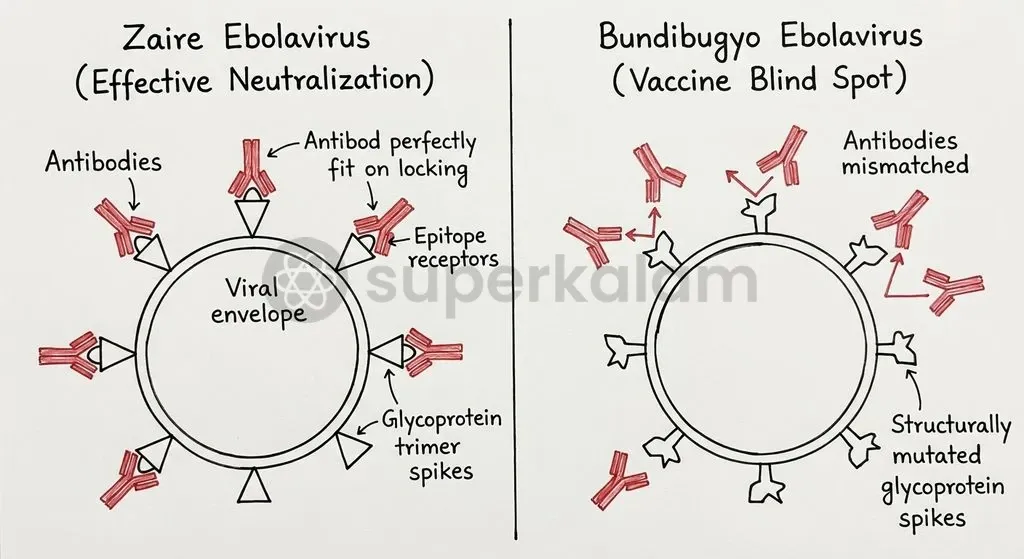
Bundibugyo ebolavirus exhibits structural divergence that invalidates existing single-strain pharmaceutical tools. A comparative genomics analysis published in F1000Research and PubMed Central established that Bundibugyo exhibits approximately 35% amino acid sequence divergence in its surface glycoprotein relative to Zaire ebolavirus. It shares only 65% sequence identity across its GP1 and GP2 coding regions.
The licensed Ebola vaccine Ervebo (rVSVΔG-ZEBOV-GP) targets exclusively the Zaire glycoprotein. According to WHO Emergency Guidance, Ervebo confers no validated neutralisation or clinical efficacy against the Bundibugyo species in human populations. The WHO Strategic Advisory Group of Experts (SAGE) recommends that Ervebo must not be deployed off-label for routine ring-vaccination against Bundibugyo outside authorised clinical protocols.
Monoclonal antibody therapies face identical species barriers. The European Medicines Agency Emergency Task Force confirmed that approved therapeutics Inmazeb and Ebanga are species-specific for Zaire. They lack regulatory clearance or demonstrated therapeutic neutralisation against Bundibugyo ebolavirus.
| Countermeasure Feature | Zaire Ebolavirus (EBOV) Standard Protocol | Bundibugyo Ebolavirus (BDBV) Status | Operational UPSC Implication |
|---|---|---|---|
| Primary Prophylactic Vaccine | Ervebo (rVSVΔG-ZEBOV-GP licensed) | Zero approved vaccines (Ervebo off-label use prohibited) | Complete absence of ring-vaccination containment barrier |
| Monoclonal Antibody Therapies | Inmazeb and Ebanga (licensed) | No approved therapeutics; lack cross-neutralisation | Case fatality rate relies entirely on supportive care |
| Rapid Field Diagnostics | Decentralised GeneXpert cartridge runs | GeneXpert negative; requires central pan-filovirus RT-PCR | Diagnostic delays expand secondary community transmission |
| Underlying Viral Target | Baseline Zaire glycoprotein | ~35% amino acid sequence divergence from Zaire | Cross-neutralising antibodies fail to bind target |
Discuss with Superkalam
Why does introducing a filovirus into an urban aviation hub alter containment compared to remote forest outbreaks?
Ask NowThe Transit Multiplier: Why an Urban Hub Changes Outbreak Dynamics
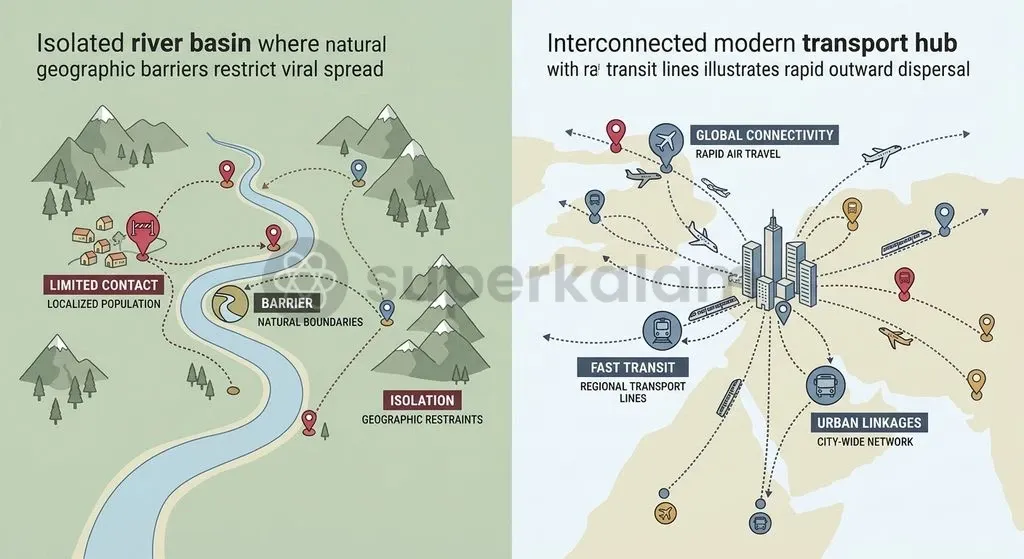
Abuja is a premier administrative, diplomatic, and air transport nexus for the West African sub-region. According to a UN News Global Health Briefing, introducing a filovirus into Nigeria’s high-density transport networks drastically amplifies transmission velocity compared to historically self-limiting outbreaks in remote equatorial river basins.
The World Health Organization declared the primary Bundibugyo outbreak originating in the Democratic Republic of the Congo a Public Health Emergency of International Concern on 17 May 2026. As of 18 October 2026, the cross-border epidemic had generated over 9,500 cumulative cases and more than 4,200 confirmed fatalities. This reflects a case fatality rate near 48%.
Dense urban living conditions eliminate the natural geographic containment that historically slowed filovirus diffusion. Without vaccines, the Nigeria Centre for Disease Control must rely on non-pharmaceutical interventions:
- Strict 21-day contact tracing across transit pathways.
- Immediate isolation of febrile individuals in designated wards.
- Rigorous infection prevention and control across primary healthcare facilities.
Decoding the Alert: How WHO Distinguishes Standard and Complex Threats
The International Health Regulations (2005) establish explicit surveillance metrics to classify cross-border public health crises. Under Annex 2, the convergence of an imported haemorrhagic fever into an urban transit corridor and the complete absence of approved countermeasures satisfies the mandate for an escalated alert.
The response profile differs sharply depending on countermeasure availability:
- Standard Outbreak Protocol: Pathogens have licensed vaccines, validated therapeutics, and decentralised diagnostics. Health authorities deploy ring-vaccination around confirmed index cases to rapidly sever transmission chains.
- Complex Threat Alert: The pathogen evades existing stockpiles while spreading across high-volume transit nodes. Standard containment collapses, forcing agencies into resource-intensive, manual contact tracing regimens.
Discuss with Superkalam
If a district hospital receives a suspected filovirus case but only stocks Zaire GeneXpert cartridges, what operational protocol should public health officials enforce?
Ask Now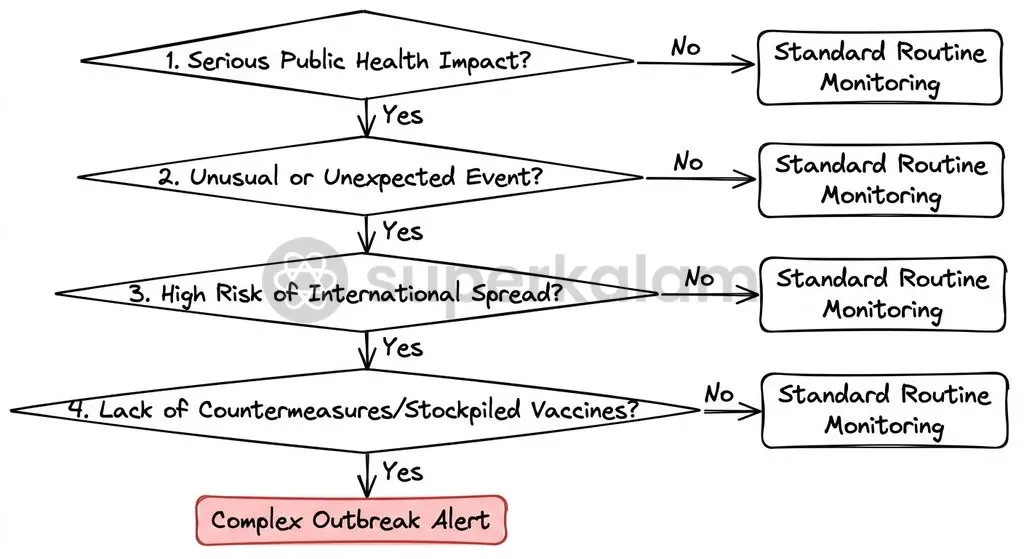
The Pipeline Failure: Why Non-Zaire Filoviruses Lack Stockpiled Countermeasures
Market failure in neglected filovirus research stems directly from commercial pharmaceutical pricing structures and procurement incentives. A portfolio analysis by the Coalition for Epidemic Preparedness Innovations (CEPI) demonstrated that commercial development stalls for non-Zaire filoviruses due to sporadic outbreak frequency, unpredictable product demand, and the concentration of caseloads within lower-income health systems.
Several structural barriers sustain this countermeasure void:
- Skewed Biodefence Spending: International biodefence procurement following 2014 focused almost exclusively on Zaire ebolavirus stockpiles.
- Preclinical Stagnation: Candidate vaccines and therapeutics for Bundibugyo and Sudan ebolaviruses remained stalled at preclinical stages or early Phase 1 trials.
- Neglect of Inter-Epidemic Windows: Public health agencies failed to finance non-commercial advanced trials between outbreaks. Private manufacturers prioritise commercial returns, leaving multilateral agencies without deployable stockpiles when urban outbreaks occur.
Global Biosecurity Lessons: Moving from Reactive Stockpiles to Pan-Filovirus Defence
Global biosecurity architecture requires a structural transition away from reactive, single-strain countermeasure development. Multilateral bodies and regional coalitions are exploring several strategic pathways:
- Multivalent Platform Vaccines: Operational outbreak response strategies are being urged to pivot from monovalent regimens toward multivalent viral vector platforms. These include bivalent or trivalent rVSV and chimpanzee adenovirus vectors incorporating glycoproteins from Zaire, Sudan, and Bundibugyo species, per a review in The Lancet Infectious Diseases (as reported on 15 October 2026).
- Broad-Spectrum Pan-Filovirus Monoclonal Antibodies: Therapeutic pipelines are shifting toward antibody cocktails such as MBP134. These target conserved internal glycoprotein epitopes to provide cross-species neutralisation against Zaire, Sudan, and Bundibugyo species simultaneously.
- Harmonised Regulatory Fast-Tracking: The African Medicines Agency, alongside the WHO African Vaccines Regulatory Forum and the European Medicines Agency, activated joint fast-track clinical trial approval mechanisms under the PARTNERS clinical platform to expedite access to investigational therapeutics.
- Coordinated Regional Genomic Surveillance: The Africa Centres for Disease Control and Prevention scheduled an extraordinary emergency meeting of African Union Health Ministers for 28 October 2026 to align cross-border sequencing and border health security protocols.
Discuss with Superkalam
How do commercial pharmaceutical pricing models create structural market failures in developing countermeasures for neglected filoviruses?
Ask NowKey Takeaways
- Nigeria confirmed its first imported case of Ebola Bundibugyo virus disease in Abuja on 20 October 2026, following a nine-day diagnostic delay.
- Bundibugyo ebolavirus exhibits approximately 35% amino acid sequence divergence from Zaire ebolavirus, rendering the licensed Ervebo vaccine immunologically ineffective.
- Under the International Health Regulations (2005) Annex 2 Decision Instrument, the introduction of a pathogen lacking medical countermeasures into an urban transit hub triggers a WHO complex alert.
- The cross-border epidemic originating in the Democratic Republic of the Congo accumulated over 9,500 cases and a case fatality rate near 48% as of 18 October 2026.
- Long-term biosecurity demands pivoting from monovalent stockpiles toward broad-spectrum pan-filovirus monoclonal antibodies like MBP134 and multivalent viral vector platforms.
Mains Question
"The importation of Bundibugyo ebolavirus into an aviation transit hub exposes systemic market failures in global biodefence architecture." Critically examine. (15 Marks)
Evaluate NowMains Question
Differentiate between a standard outbreak protocol and a complex threat alert under the International Health Regulations (2005) Annex 2 decision instrument. Elucidate in the context of recent filovirus epidemics. (10 Marks)
Evaluate NowPractice MCQs
QUESTION 1
With reference to medical countermeasures against filovirus outbreaks, consider the following statements:
- The licensed vaccine Ervebo (rVSVΔG-ZEBOV-GP) targets the Zaire ebolavirus glycoprotein and confers no validated neutralisation against Bundibugyo ebolavirus in human populations.
- Monoclonal antibody therapies Inmazeb and Ebanga possess broad-spectrum cross-neutralisation across all known ebolavirus species.
- Standard GeneXpert diagnostic cartridges targeting the Zaire strain nucleoprotein fail to detect Bundibugyo ebolavirus.
Which of the statements given above are correct?
QUESTION 2
Consider the following statements regarding Bundibugyo ebolavirus (BDBV):
- It exhibits approximately 35% amino acid sequence divergence in its surface glycoprotein relative to Zaire ebolavirus.
- The WHO Strategic Advisory Group of Experts (SAGE) recommends routine off-label deployment of the Ervebo vaccine for ring-vaccination during Bundibugyo outbreaks.
- Candidate therapeutic MBP134 is an antibody cocktail designed to target conserved internal glycoprotein epitopes to provide cross-species neutralisation.
Which of the statements given above is/are correct?
QUESTION 3
Under the International Health Regulations (2005) Annex 2 Decision Instrument, the escalation of an outbreak alert from a standard protocol to a 'complex threat alert' is primarily driven by which of the following conditions?
QUESTION 4
Consider the following statements regarding the regulatory and research initiatives for filoviruses mentioned in global health protocols:
- The PARTNERS clinical platform was activated by the African Medicines Agency, WHO African Vaccines Regulatory Forum, and European Medicines Agency to fast-track clinical trial approvals.
- The Coalition for Epidemic Preparedness Innovations (CEPI) identified high commercial profitability and constant demand as the main drivers of non-Zaire filovirus candidate pipelines.
- Multivalent platform vaccine candidates in development incorporate glycoproteins from Zaire, Sudan, and Bundibugyo species using viral vectors.
Which of the statements given above is/are correct?
QUESTION 5
Which among the following was the primary reason for the nine-day diagnostic delay observed during the October 2026 Bundibugyo ebolavirus detection in Abuja, Nigeria?