Cancer as a Notifiable Disease: Meaning and SC Direction
The Supreme Court asked 19 States and UTs to consider cancer notification. Read what a notifiable disease is and how reporting supports cancer registries.
Oct, 2026
•8 min read

Overview
Declaring cancer a notifiable disease under Indian law establishes a statutory obligation. This mandate requires clinical establishments, pathology laboratories, and medical practitioners to report diagnosed malignancies to public health authorities.
Moving from voluntary sample estimation to universal data collection fixes blind spots in epidemiological surveillance. At present, population registries capture under one-fifth of the national burden. Closing severe urban-rural data disparities equips policymakers to allocate targeted budgets, strengthen regional oncology infrastructure, and advance equitable healthcare delivery across all states.
Why in the News?
In August 2026, the Supreme Court of India directed the 19 States and Union Territories that have not yet declared cancer a notifiable disease to consider issuing statutory notifications and file compliance affidavits. The order came during hearings in Dr. Anurag Srivastava v. Union of India & Ors., as reported by The Hindu, where the bench examined why national surveillance remains fragmented despite rising disease incidence.
| Indicator | Statutory & Demographic Status (As of August 2026) |
|---|---|
| States/UTs Notified | 17 of 36 States and UTs |
| States/UTs Directed by SC | 19 States and UTs |
| PBCR Population Coverage | 10% to 16.4% of India |
As of August 2026, only 17 of 36 States and UTs have designated cancer as a notifiable condition under their respective state public health laws. The Supreme Court questioned the Union Government on why uniform national guidelines have not been enforced across the country, emphasising the urgent need for a cohesive disease-tracking framework.
What Is a Notifiable Disease and How Does It Work?
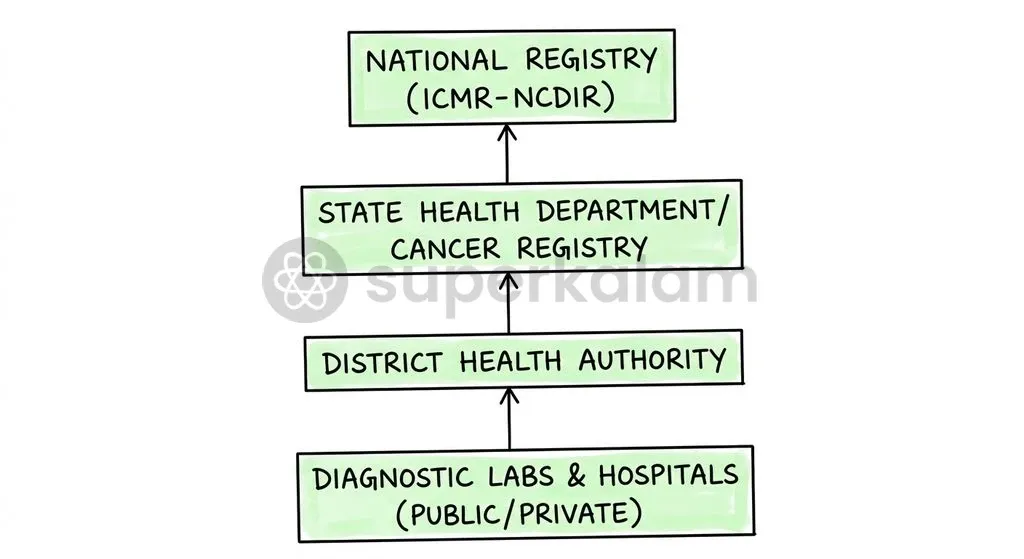
A notifiable disease is legally defined as any health condition whose occurrence must be reported by law by medical practitioners, hospitals, and diagnostic laboratories to designated public health authorities. Statutory reporting enables public health agencies to track disease incidence, identify geographic clusters, and monitor long-term epidemiological patterns.
The reporting mechanism operates through distinct statutory steps:
- State legislative mandate: Under Entry 6 of List II (State List) in the Seventh Schedule of the Constitution of India, public health, sanitation, hospitals, and dispensaries fall within state competence. Individual states issue notification orders under state public health enactments or municipal regulations.
- Standardised case transmission: Medical establishments transmit clinical records containing diagnostic confirmations, staging, and demographic details to state health departments or registries.
- Epidemiological baseline generation: This continuous surveillance flow provides the empirical data required to calculate age-adjusted incidence rates and allocate clinical resources.
Discuss with Superkalam
Which entry in the Seventh Schedule places public health and hospitals under state legislative competence?
Ask NowWhy the Supreme Court Stepped In on Cancer Tracking
The Supreme Court of India intervened to rectify severe regional disparities in cancer surveillance that undermine the fundamental right to health. The bench addressed three primary considerations during the proceedings:
- Constitutional rights violation: The public interest litigation submitted that the absence of uniform notification violates Article 21 (Right to Health and Life with Dignity) and Article 14 (Equality before Law) by denying citizens equal access to evidence-based oncological infrastructure.
- Parliamentary recommendations: Judicial scrutiny followed the 139th Report on Cancer Care Plan & Management by the Department-Related Parliamentary Standing Committee on Health and Family Welfare. The committee recommended declaring cancer notifiable nationwide to enable systematic surveillance and targeted resource allocation.
- The "documentable disease" compromise: The Health Ministry previously noted that statutory notification traditionally applied to communicable diseases requiring quarantine. To resolve this administrative concern, the Tata Memorial Centre proposed designating cancer as a documentable disease under law, securing mandatory reporting without triggering contagion protocols.
Discuss with Superkalam
How does the 'documentable disease' concept bridge the gap between voluntary cancer reporting and traditional infectious disease notification?
Ask NowHow Cancer Registries Currently Function in India
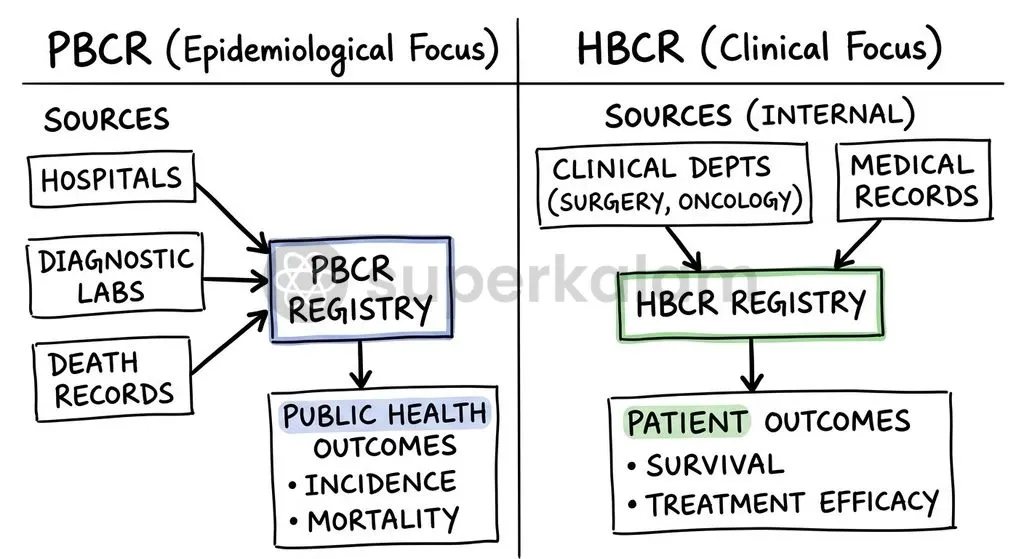
The Indian Council of Medical Research (ICMR) established the National Cancer Registry Programme (NCRP) in 1981 to collect systematic oncological data across India. Coordinated by the National Centre for Disease Informatics and Research (NCDIR) in Bengaluru, the NCRP aggregates data through two distinct registry models:
- Population-Based Cancer Registries (PBCRs): PBCRs record all new cancer cases occurring within a defined geographic population, drawing data from multiple hospitals, pathology labs, and vital statistics offices.
- Hospital-Based Cancer Registries (HBCRs): HBCRs collect detailed clinical, diagnostic, and treatment data exclusively from patients presenting at specific participating tertiary medical centres.
According to the Indian Journal of Medical Research, PBCRs under the NCRP cover only approximately 10% to 16.4% of India's total population, leaving vast rural regions unrepresented.
NCRP data demonstrates that total incident cancer cases reported across India increased from 14,61,427 in 2022 to 15,33,055 in 2024. Tobacco-related malignancies account for roughly 27% to 50% of the total cancer burden, with the highest age-adjusted incidence rates concentrated in the North-Eastern region.
Comparison: Existing Voluntary Reporting vs Mandatory Notification
The transition from voluntary registry participation to statutory disease notification alters the legal and operational framework of oncological epidemiology.
| Analytical Dimension | Voluntary Registry System (Current NCRP) | Mandatory Notifiable Disease Framework |
|---|---|---|
| Legal Mandate | Voluntary participation by selected medical centres. | Statutory reporting obligation backed by legal sanctions for non-compliance. |
| Population Coverage | Covers roughly 10% to 16.4% of the population via sample sentinel sites. | Universal coverage across 100% of the jurisdiction. |
| Private Sector Involvement | Minimal and inconsistent participation by private clinics and diagnostic labs. | Legally binding on all private hospitals, nursing homes, and pathology centres. |
| Data Utility | Relies on statistical extrapolation to estimate national cancer burdens. | Generates real-time, disaggregated empirical data for direct policy planning. |
| Infrastructure Planning | Constrained by data blind spots in rural and peri-urban geographies. | Facilitates targeted deployment of radiotherapy units and oncologists. |
Discuss with Superkalam
Evaluate whether declaring cancer a notifiable disease alone is sufficient to eliminate regional oncology care disparities in India without addressing rural digital infrastructure.
Ask NowKey Benefits of Making Cancer Notifiable Across States
Mandatory notification provides a clear epidemiological foundation to eliminate structural blind spots in public health. This reform delivers three direct advantages:
- Geographic cluster detection: Identifying localised disease hotspots linked to environmental carcinogens, occupational hazards, or dietary patterns.
- Evidence-based resource allocation: Deploying linear accelerators, surgical oncology units, and palliative care centres in high-incidence districts instead of relying on statistical extrapolations.
- Longitudinal outcome tracking: Monitoring survival rates, treatment efficacy, and stage-at-diagnosis metrics to evaluate screening programmes under the National Programme for Prevention and Control of Non-Communicable Diseases.
Challenges in Implementation: Infrastructure, Privacy, and Federal Hurdles
State-level legislative divergence remains a major constitutional hurdle in establishing a uniform national reporting standard. Because health is a State subject under Entry 6 of List II, the Union Government cannot unilaterally legislate a binding notification mandate for states without constitutional mechanisms.
To overcome this federal roadblock, Parliament can enact a model national law under Article 252 of the Constitution. This provision allows Parliament to legislate on a State subject if two or more state legislatures pass enabling resolutions. Alternatively, states can adopt a uniform policy through consensus in the Central Council of Health and Family Welfare.
Digital infrastructure deficits in rural healthcare centres present a significant operational constraint. Primary and secondary healthcare facilities often lack dedicated electronic health record systems and trained medical record personnel to manage digital notifications:
- Rural data latency: Weak digital connectivity in district hospitals impedes timely registry transmissions.
- Private sector non-compliance: Fragmented standalone diagnostic laboratories often resist compliance due to administrative burdens.
- Interoperability gaps: Disparate state software platforms fail to communicate seamlessly with the central NCDIR repository.
Ethical Dimensions: Right to Health and Data Confidentiality
Article 47 of the Constitution of India establishes a Directive Principle of State Policy obligating the State to regard the improvement of public health as among its primary duties. The Supreme Court has repeatedly interpreted this directive alongside Article 21, establishing that access to timely, quality medical treatment is an integral component of the right to life.
However, mandatory disease surveillance introduces ethical challenges regarding patient privacy and social stigma. A diagnosis of malignancy carries substantial socio-economic sensitivities, making data confidentiality paramount.
Key safeguards under the regulatory framework include:
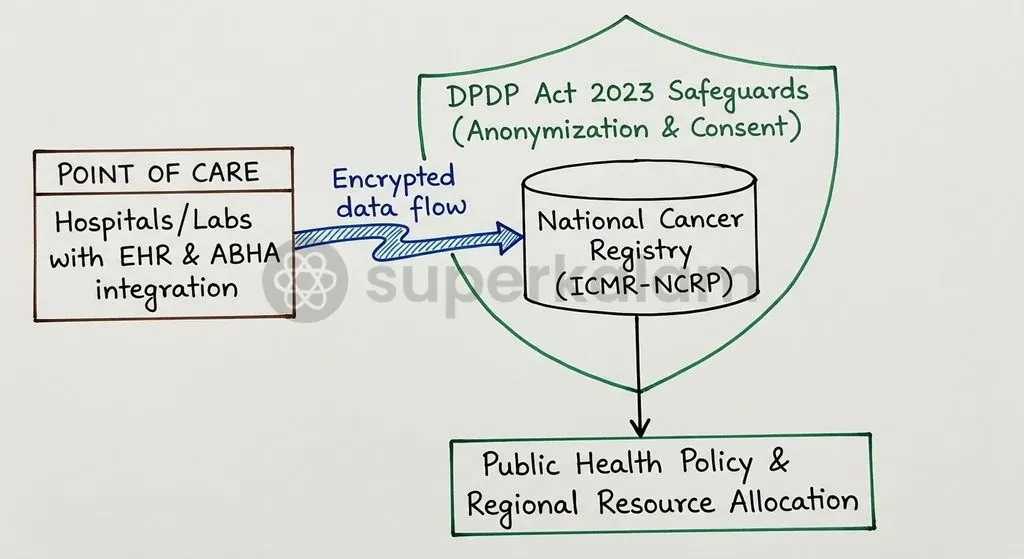
- Fiduciary obligations: Under the Digital Personal Data Protection Act, 2023, public health databases handling identifiable health information operate as data fiduciaries bound by statutory processing obligations.
- Technical safeguards: Public health agencies must implement strict anonymisation, pseudonymisation, and role-based access controls to protect patient dignity while maintaining epidemiological utility.
Discuss with Superkalam
Propose an institutional framework utilizing Article 252 to establish a seamless, interoperable national cancer surveillance network between state health departments and NCDIR.
Ask NowWay Forward: Building a Robust National Cancer Surveillance Architecture
A modern cancer surveillance architecture requires integrating mandatory reporting with the Ayushman Bharat Digital Mission (ABDM). Linking diagnostic entries to unique Ayushman Bharat Health Account (ABHA) IDs allows automated, secure case notification directly from digital lab reports to central registries, minimising the compliance burden on healthcare workers.
State governments should enact standardised public health notification rules that define uniform reporting formats and timelines. The Union Government can support this transition by extending fiscal incentives under the National Health Mission to states establishing universal hospital-based and population-based cancer registries.
Finally, public health authorities must ensure wide multi-stakeholder participation by integrating private oncology networks and rural diagnostic centres into the NCDIR network. Building a comprehensive, real-time national cancer registry transforms public health planning from retrospective estimation into proactive oncological care.
Key Takeaways
- Legal Definition: A notifiable disease legally obligates all clinical establishments and diagnostic laboratories to report diagnosed cases to public health authorities.
- Current Legal Status: As of August 2026, only 17 of 36 States and UTs have notified cancer, prompting the Supreme Court to direct the remaining 19 jurisdictions to take action.
- NCRP Coverage Limitations: The ICMR-NCDIR National Cancer Registry Programme covers only 10% to 16.4% of India's population through Population-Based Cancer Registries, creating substantial rural data gaps.
- Constitutional Framework: Health falls under Entry 6 of List II (State List), requiring federal coordination via Article 252 or consensus guidelines to achieve a uniform national notification standard.
- Surveillance and Privacy Safeguards: Mandatory reporting must align with the Digital Personal Data Protection Act, 2023, leveraging ABDM and ABHA IDs for secure longitudinal tracking.
Mains Question
Highlighting the recommendations of the Parliamentary Standing Committee's 139th Report on Cancer Care Plan & Management, examine how transitioning cancer from voluntary reporting to a notifiable disease strengthens evidence-based public health planning in India. (10 Marks)
Evaluate NowMains Question
'Federal legislative competence under Entry 6 of List II and digital infrastructure deficits present critical challenges to establishing a uniform national disease surveillance architecture.' In light of this statement, critically analyse the constitutional and operational hurdles in making cancer a notifiable disease nationwide. (15 Marks)
Evaluate NowPractice MCQs
QUESTION 1
With reference to cancer surveillance and registries in India, consider the following statements:
- The National Cancer Registry Programme (NCRP) is coordinated by the National Centre for Disease Informatics and Research (NCDIR) in Bengaluru.
- Population-Based Cancer Registries (PBCRs) currently cover more than 50% of the country's population.
- Hospital-Based Cancer Registries (HBCRs) collect detailed clinical and diagnostic data exclusively from patients presenting at participating medical centres.
Which of the statements given above are correct?
QUESTION 2
Consider the following statements regarding the constitutional and legal framework of declaring diseases notifiable in India:
- Public health, sanitation, hospitals, and dispensaries fall under Entry 6 of List II (State List) in the Seventh Schedule.
- Parliament can enact a binding model national law on a State subject under Article 252 if two or more state legislatures pass enabling resolutions.
- The Supreme Court observed that the lack of uniform cancer notification infringes upon Article 21 and Article 14 of the Constitution.
Which of the statements given above is/are correct?
QUESTION 3
With reference to cancer patterns and epidemiology in India based on NCRP data, consider the following statements:
- Tobacco-related malignancies account for roughly 27% to 50% of the total cancer burden in India.
- The highest age-adjusted incidence rates of cancer are concentrated in the North-Eastern region of the country.
- As of August 2026, all Union Territories have notified cancer under their respective public health laws.
Which of the statements given above is/are correct?
QUESTION 4
In the context of public health administration in India, the 'documentable disease' framework was proposed primarily to:
QUESTION 5
Consider the following statements comparing the existing voluntary cancer registry system with a mandatory notifiable disease framework:
- The voluntary registry system relies on statistical extrapolation to estimate national cancer burdens.
- A mandatory notification framework legally obligates private hospitals and pathology centres to report cases under threat of sanctions.
Which of the statements given above is/are correct?