GS 2: GovernanceGS 3: Science & TechnologyGS 2: Social JusticePrelimsGS 2: Government policies and interventions for development in various sectors
On guard, Pg6
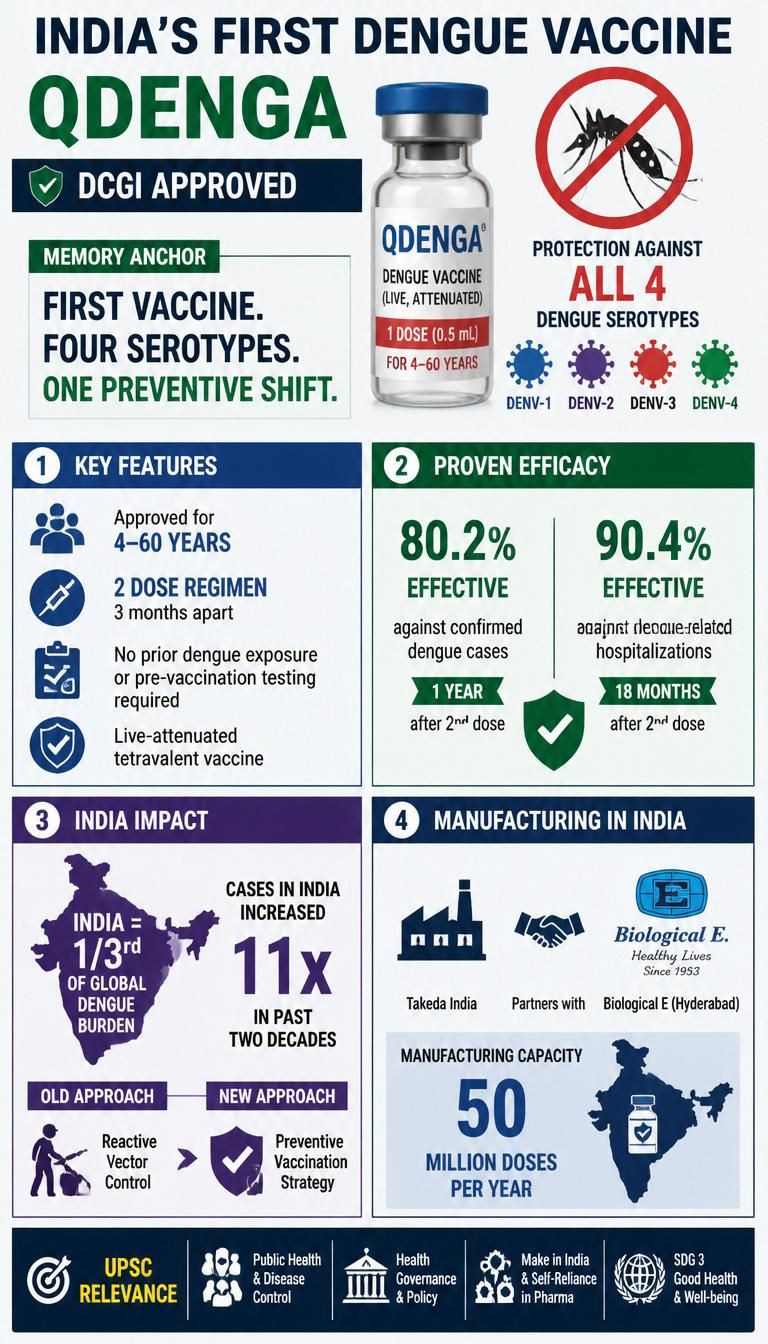
India's CDSCO approves Qdenga dengue vaccine, first in history, sparking concerns over variable serotype efficacy, high cost, and migrant worker accessibility.
Practice MCQs
767 Students attempted
Key Highlights:
- The Central Drugs Standard Control Organisation (CDSCO) has approved Qdenga, India's first dengue vaccine, developed by Japan-based Takeda.
- The vaccine has received WHO prequalification and is licensed in over 40 countries globally.
- Qdenga is administered in two doses, three months apart, and does not require prior dengue infection screening.
- Concerns exist regarding the vaccine's varying protection against the four dengue serotypes, particularly DENV-3 and DENV-4, in individuals without prior exposure.
- The vaccine's high cost, due to Takeda's tiered pricing strategy, may pose an accessibility challenge for vulnerable populations in India.
Dengue Vaccine.jpg
Detailed Insights:
- India faces a significant dengue burden, with Aedes mosquitoes expanding into semi-urban and rural areas, making conventional vector control difficult.
- Developing an effective dengue vaccine is complex due to the existence of four distinct serotypes and the risk of antibody-dependent enhancement (ADE).
- The previous dengue vaccine, Dengvaxia, faced controversy in the Philippines in 2017 due to increased disease severity risk in previously uninfected individuals.
- The TIDES trial for Qdenga indicated a potential 'negative efficacy' against hospitalization for DENV-3 among seronegative children after the first dose.
- Ensuring that highly mobile populations, such as migrant workers, receive both doses of the vaccine presents a significant logistical challenge.
- Government intervention through price negotiation is crucial to ensure equitable access and widespread uptake of Qdenga among high-risk groups.
Scientific/Technical Concepts Involved:
- CDSCO (Central Drugs Standard Control Organisation): India's national regulatory authority responsible for ensuring the quality, safety, and efficacy of drugs, medical devices, and cosmetics.
- WHO Prequalification: A World Health Organization program that assesses health products to ensure they meet global standards for quality, safety, and efficacy for international procurement.
- Dengue Serotypes: The four distinct viral strains (DENV-1, DENV-2, DENV-3, DENV-4) that cause dengue fever, with infection by one not providing immunity against the others.
- Antibody-Dependent Enhancement (ADE): A immunological phenomenon where pre-existing, non-neutralizing antibodies can worsen a subsequent infection by a different serotype, leading to more severe disease.
- Aedes Mosquitoes: The primary genus of mosquitoes, particularly Aedes aegypti, responsible for transmitting dengue, commonly found in human habitats and breeding in small water containers.

SuperKalam is your personal mentor for UPSC preparation, guiding you at every step of the exam journey.
Download the App


STUDY RESOURCES
CONTACT US
ⓒ Snapstack Technologies Private Limited