GS 2: GovernanceGS 1: Indian SocietyGS 3: EconomyPrelimsGS 3: Inclusive Growth
A growth story that needs women at work, Pg6
India's 'Viksit Bharat' dream faces headwinds as low female work participation, exacerbated by past policy shocks and distress-driven agriculture, threatens 2% GDP growth.
Practice MCQs
767 Students attempted
Key Highlights:
- India aims to become a developed country, Viksit Bharat, by 2047, but faces challenges like youth unemployment and low female work participation.
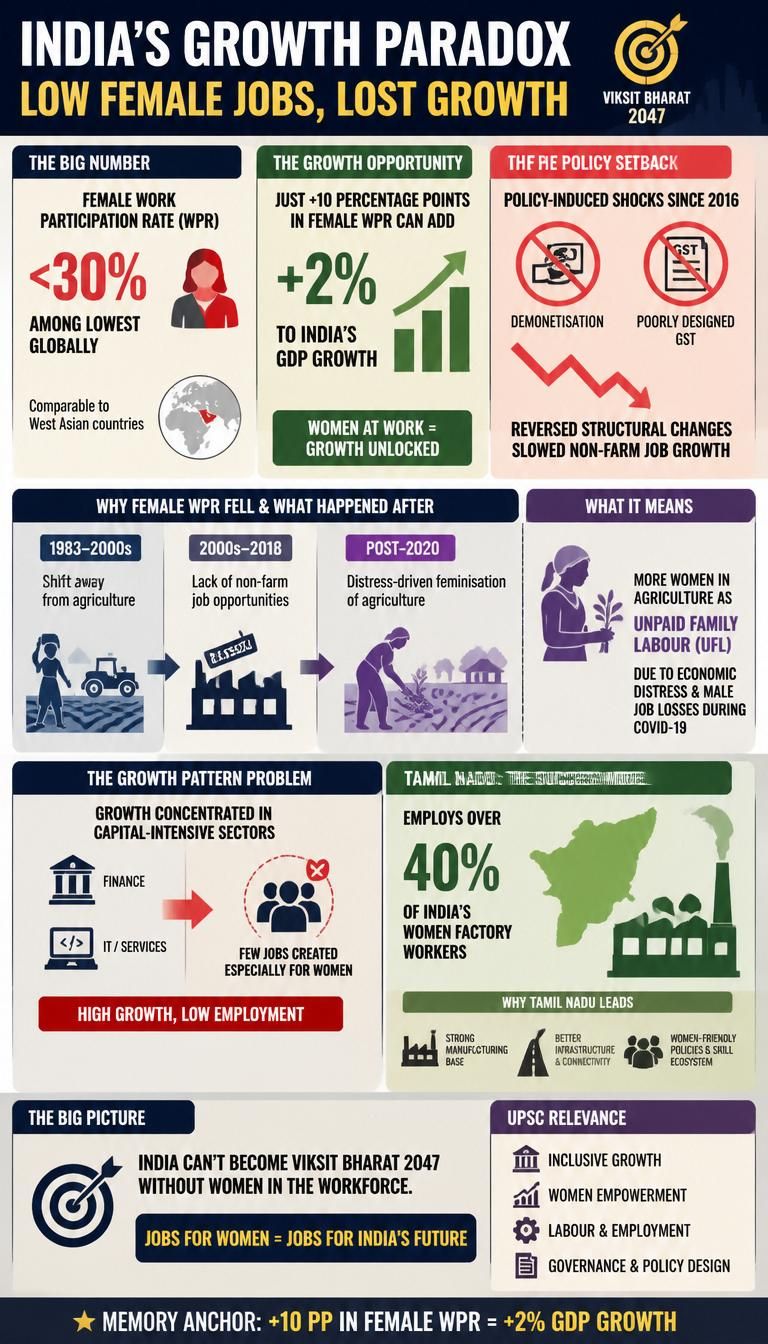
- India's female Work Participation Rate (WPR) is below 30%, among the lowest globally, comparable to West Asian countries.
- A 10-percentage-point increase in India’s female WPR could add nearly two percentage points to GDP growth.
- Policy-induced shocks since 2016, including demonetisation and a poorly designed Goods and Services Tax (GST), reversed structural changes and slowed non-farm job growth.
- Tamil Nadu demonstrates a successful model, employing over 40% of India's women factory workers due to its strong manufacturing base and supportive infrastructure.
FLFPR.jpg
Detailed Insights:
- The article highlights that India's economic growth has been slower than official figures suggest, partly due to policy-induced shocks.
- The decline in female WPR between 1983 and 2018 was initially due to a shift away from agriculture and later exacerbated by a lack of non-farm job opportunities.
- Post-2020, an increase in female WPR was largely "distress-driven feminisation of agriculture," with women engaging in subsistence farming as Unpaid Family Labour (UFL) due to economic distress and male job losses during COVID-19.
- India's economic growth has been concentrated in capital-intensive sectors like finance and IT, which do not create large numbers of jobs, especially for women.
- Labour-intensive sectors such as textiles and garments saw a fall in women's employment between 2013 and 2019, despite initiatives like Make in India.
- Educated young women in India face high and rising unemployment rates, with over 100 million young women (15-29 years) neither working nor in education by 2018.
- The success of states like Tamil Nadu in female employment is attributed to investments in education, mobility, and labor-intensive industries like textiles and electronics.
Key Concepts Involved:
- Viksit Bharat: India's vision to become a developed nation by 2047, coinciding with 100 years of independence.
- Work Participation Rate (WPR): The percentage of the population that is employed or actively seeking employment.
- Labour Force Participation Rate (LFPR): The percentage of the working-age population that is either employed or unemployed but looking for work.
- Unpaid Family Labour (UFL): Work performed by individuals within a family enterprise without receiving a direct wage or salary.
- Demonetisation: The act of stripping a currency unit of its status as legal tender, as seen in India in 2016.
- Goods and Services Tax (GST): An indirect tax used in India on the supply of goods and services, implemented in 2017.

SuperKalam is your personal mentor for UPSC preparation, guiding you at every step of the exam journey.
Download the App


STUDY RESOURCES
CONTACT US
ⓒ Snapstack Technologies Private Limited