With growing energy needs should India keep on expanding its nuclear energy programme? Discuss the facts and fears associated with nuclear energy.
With growing energy needs should India keep on expanding its nuclear energy programme? Discuss the facts and fears associated with nuclear energy.
India's nuclear energy programme stands at a crucial juncture, requiring careful evaluation of strategic benefits against legitimate safety concerns. With rising energy demands and climate commitments, nuclear power presents both compelling opportunities and significant challenges.
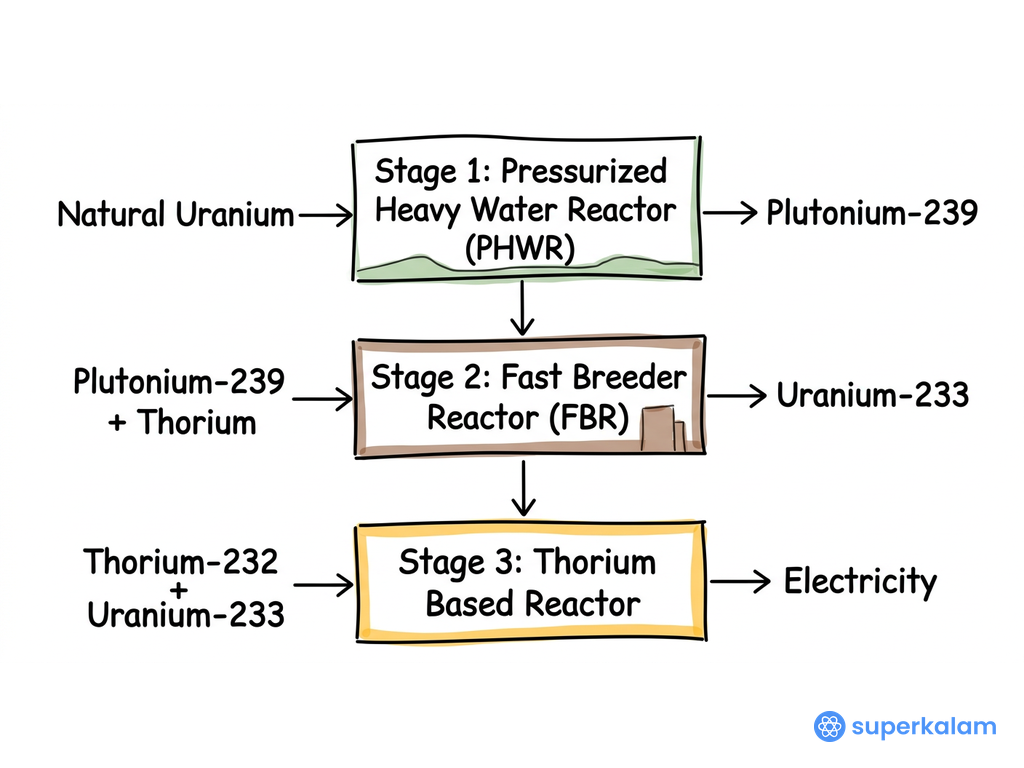
India's Three Stage Nuclear Programme
Facts Supporting Nuclear Energy Expansion
-
Clean Energy Contribution: Nuclear power generates zero direct carbon emissions, supporting India's Net Zero by 2070 commitment and COP28 pledge to triple renewable capacity by 2030.
-
Current Capacity and Growth: India operates 23 nuclear reactors with 7,480 MW installed capacity, contributing 3.2% to total electricity generation as of 2024.
-
Strategic Energy Security:
- Reduces dependence on fossil fuel imports worth $175 billion annually
- Provides baseload power unlike intermittent solar and wind energy
- Enhances energy independence amid global supply chain disruptions
-
Technological Advancement: Indigenous Pressurized Heavy Water Reactor (PHWR) technology and development of Fast Breeder Reactors demonstrate self-reliance in nuclear technology.
-
Economic Multiplier Effects: Nuclear sector employs over 65,000 people directly and supports downstream industries, contributing to Make in India initiative.
Fears and Challenges Associated with Nuclear Energy
-
Safety and Accident Risks:
- Fukushima (2011) and Chernobyl (1986) incidents create public apprehension
- Risk of radiation exposure affecting public health
- Need for robust emergency response mechanisms
-
Radioactive Waste Management:
- High-level waste remains hazardous for thousands of years
- Limited Deep Geological Repository facilities in India
- Environmental contamination concerns around storage sites
-
High Capital Costs:
- Nuclear plants require ₹12-15 crore per MW investment
- Long construction periods of 10-15 years affect project economics
- Cost overruns in projects like Kudankulam and Jaitapur
-
Water Resource Stress: Nuclear plants require massive water for cooling, straining local water resources, particularly concerning given India's water scarcity issues.
-
Public Resistance: Local communities often oppose nuclear projects due to displacement concerns and safety fears, as seen in Jaitapur and Haripur projects.
Given India's growing energy demands projected to triple by 2040 and climate commitments, nuclear energy expansion appears necessary but must be pursued with enhanced safety protocols, transparent public consultation, and robust waste management systems. The government's target of 22,480 MW nuclear capacity by 2031 requires balancing energy security with legitimate safety concerns.
Answer Length
Model answers may exceed the word limit for better clarity and depth. Use them as a guide, but always frame your final answer within the exam’s prescribed limit.
Evaluate this PYQ now
Write your answer & evaluate in just 60 seconds




500+ students evaluated
Model Answers from
- 2018Economy15 MarksView Answer
How has the emphasis on certain crops brought about changes in cropping patterns in the recent past? Elaborate the emphasis on millet production and consumption.
- 2018Economy15 MarksView Answer
Assess the role of the National Horticulture Mission (NHM) in boosting the production, productivity and income of horticulture farms. How far has it succeeded in increasing the income of farmers?
- 2018Economy15 MarksView Answer
How would the recent phenomena of protectionism and currency manipulations in world trade affect the macroeconomic stability of India?
- 2018Economy15 MarksView Answer
How are the principles followed by NITI Aayog different from those followed by the erstwhile planning commission in India?
- 2018Economy10 MarksView Answer
Sikkim is the first ‘Organic State’ in India. What are the ecological and economic benefits of an Organic State?
- 2018Economy10 MarksView Answer
Examine the role of supermarkets in supply chain management of fruits, vegetables and food items. How do they eliminate the number of intermediaries?
Model Answers by Subject


Crack UPSC with your
Personal AI Mentor
An AI-powered ecosystem to learn, practice, and evaluate with discipline



