In the light of recent controversy regarding the use of Electronic Voting Machines (EVM), what are the challenges before the Election Commission of India to ensure the trustworthiness of elections?
In the light of recent controversy regarding the use of Electronic Voting Machines (EVM), what are the challenges before the Election Commission of India to ensure the trustworthiness of elections?
Recent EVM controversies have intensified debates about electoral integrity. The Election Commission of India faces multifaceted challenges in maintaining public trust and ensuring credible elections.
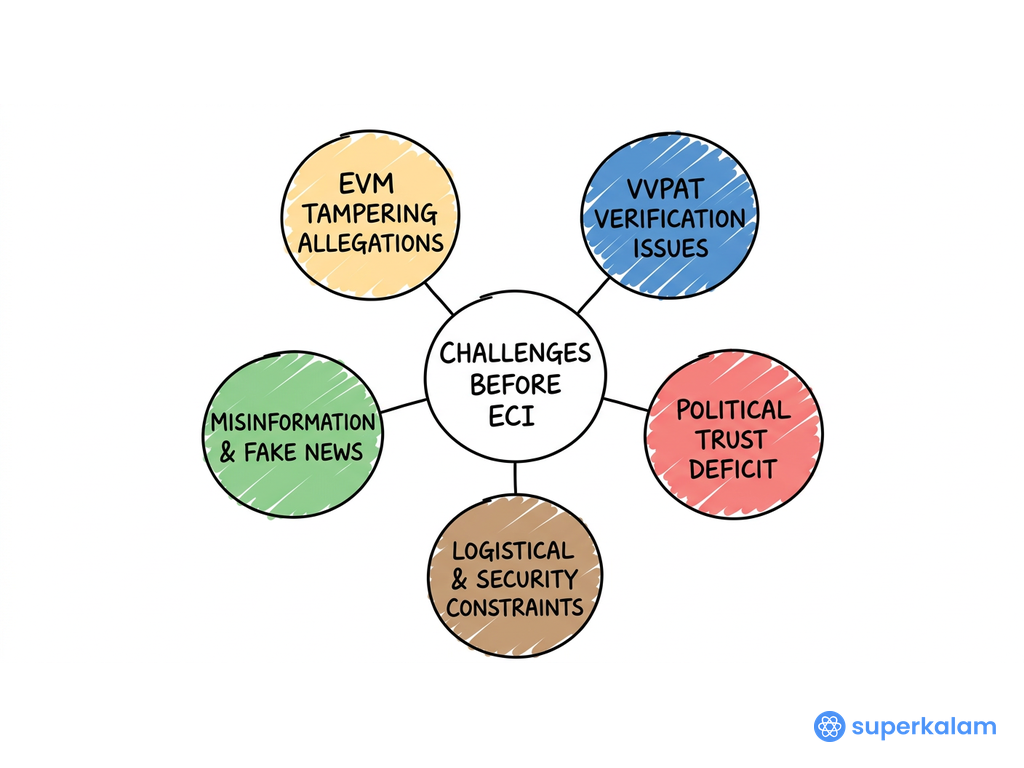
Challenges Before Election Commission of India
Technical Security Challenges
- Hardware Vulnerabilities: Ensuring tamper-proof design and preventing unauthorized physical access during storage, transportation, and polling phases
- Software Integrity: Protecting source code from manipulation and maintaining secure programming protocols throughout the electoral process
- VVPAT Synchronization: Managing seamless integration between EVMs and Voter Verifiable Paper Audit Trail (VVPAT) systems for transparent verification
- Cybersecurity Threats: Addressing potential digital attacks and ensuring robust encryption mechanisms
- Technical Malfunctions: Handling machine breakdowns during polling and maintaining backup systems for uninterrupted voting
Administrative and Operational Challenges
- Chain of Custody Management: Implementing foolproof tracking systems from manufacturing to counting centers with detailed documentation
- Personnel Training: Continuous capacity building of polling officials on technical operations, troubleshooting, and security protocols
- Logistical Coordination: Managing deployment of lakhs of machines across diverse geographical terrains with varying infrastructure
- Quality Assurance: Conducting comprehensive pre-poll testing and mock polls to ensure machine functionality
- Storage Security: Maintaining secure warehouses with 24/7 surveillance and controlled access systems
Trust and Transparency Challenges
- Public Skepticism: Addressing widespread misconceptions about EVM hackability through evidence-based communication
- Political Allegations: Responding to parties' claims of tampering while maintaining institutional neutrality and credibility
- Media Narratives: Countering misinformation campaigns and conspiracy theories through factual clarifications
- Stakeholder Engagement: Facilitating meaningful participation of political parties in testing and verification processes
- International Scrutiny: Maintaining India's democratic reputation amid global observers and diplomatic pressures
| Challenge Category | Impact Level | Mitigation Measures |
|---|---|---|
| Technical Security | High | Enhanced encryption, regular audits |
| Public Trust | Critical | Transparency initiatives, demonstrations |
| Administrative | Medium | Better training, improved logistics |
Way Forward and Solutions
- Enhanced Verification Systems: Implementing 100% VVPAT verification in constituencies with close contests to boost confidence
- Independent Auditing: Regular third-party security assessments by IIT and C-DAC experts for technical validation
- Transparency Measures: Open-source verification protocols and allowing media coverage of testing processes under Section 61A of Representation of People Act
- Stakeholder Demonstrations: Organizing hackathons and technical exhibitions for political parties and civil society organizations
The ECI must balance technological advancement with democratic principles, ensuring that Article 324 provisions are upheld while adapting to contemporary challenges through continuous innovation and stakeholder engagement.
Answer Length
Model answers may exceed the word limit for better clarity and depth. Use them as a guide, but always frame your final answer within the exam’s prescribed limit.
Evaluate this PYQ now
Write your answer & evaluate in just 60 seconds




500+ students evaluated
Model Answers from
- 2018Indian Polity15 MarksView Answer
Multiplicity of various commissions for the vulnerable sections of the society leads to problems of overlapping jurisdiction and duplication of functions. Is it better to merge all commissions into an umbrella Human Rights Commission? Argue your case.
- 2018Indian Polity15 MarksView Answer
Assess the importance of the Panchayat system in India as a part of local government. Apart from government grants, what sources can the Panchayats look out for financing developmental projects?
- 2018Indian Polity15 MarksView Answer
How is the Finance Commission of India constituted? What do you know about the terms of reference of the recently constituted Finance Commission? Discuss.
- 2018Indian Polity15 MarksView Answer
India and the USA are two large democracies. Examine the basic tenets on which the two political systems are based.
- 2018Indian Polity15 MarksView Answer
How far do you agree with the view that tribunals curtail the jurisdiction of ordinary courts? In view of the above, discuss the constitutional validity and competency of the tribunals in India.
- 2018Indian Polity15 MarksView Answer
Whether the Supreme Court Judgement (July 2018) can settle the political tussle between the Lt. Governor and elected government of Delhi? Examine.
Model Answers by Subject


Crack UPSC with your
Personal AI Mentor
An AI-powered ecosystem to learn, practice, and evaluate with discipline