What are the aims and objectives of recently passed and enforced, The Public Examination (Prevention of Unfair Means) Act, 2024? Whether University/State Education Board examinations, too, are covered under the Act?
What are the aims and objectives of recently passed and enforced, The Public Examination (Prevention of Unfair Means) Act, 2024? Whether University/State Education Board examinations, too, are covered under the Act?
Subject: Governance
Enacted into law, the Public Examinations (Prevention of Unfair Means) Act, 2024, responds to repeated incidents such as NEET‑UG paper leaks that shattered public trust. It seeks to restore credibility, fairness, and transparency in recruitment and entrance examinations conducted at the national level.
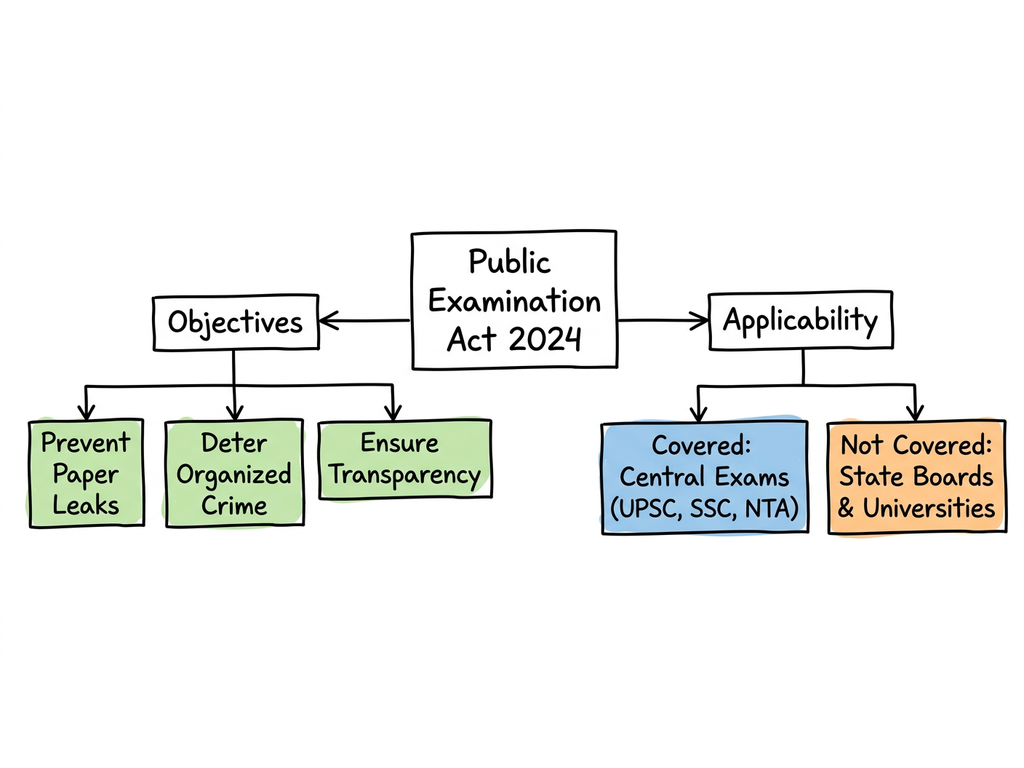
Public Examination Act 2024 Overview
Key Aims of the Act
-
Prevention of Malpractices: The Act criminalises various malpractices—paper leaks, impersonation, collusion, tampering with answer sheets or ranking, fake websites or admit cards, hacking systems, and more.
-
Enhance Examination Integrity and Credibility: It aims to reassure candidates that exams will reward genuine merit and uphold meritocracy.
-
Deterrence Through Severe Penalties:
- Individuals face 3–5 years imprisonment, extending up to 10 years for organised crime, along with fines up to ₹10 lakh.
- Service providers (e.g., exam agencies) face fines up to ₹1 crore, liability for exam costs, blacklisting for 4 years, and if executives are complicit, fines and prison up to ₹1 crore or 10 years.
-
Clear Attribution of Accountability: Offences are cognizable, non‑bailable, non‑compoundable, and investigations must be led by officers of DSP/ACP rank or higher.
-
Technology and Institutional Safeguards: Establishes a National Technical Committee to prescribe IT security protocols for digital and computer-based examinations.
Objectives of the Act
-
Deterrence Framework: Creating a comprehensive legal framework to deter individuals and organizations from engaging in unfair practices.
-
Standardization: Setting uniform standards and procedures for conducting public examinations across the country.
-
Technological Integration: Promoting the use of technology for better monitoring and conduct of examinations.
-
Stakeholder Protection: Safeguarding the interests of genuine students and maintaining the credibility of educational institutions.
Scope and Coverage
-
Primary Focus: The Act primarily covers central government recruitment examinations and competitive tests. These include: UPSC, SSC, RRBs, IBPS, NTA, and central ministries/departments.
-
State and University Exams Excluded: State government boards and universities are not currently covered, unless the Central Government chooses to notify them under the Act. It instead serves as a model framework for states to enact similar legislation.
The Act serves as a blueprint for educational reform, encouraging states and institutions to develop robust examination systems aligned with national standards while maintaining their administrative independence.
Answer Length
Model answers may exceed the word limit for better clarity and depth. Use them as a guide, but always frame your final answer within the exam’s prescribed limit.
Evaluate this PYQ now
Write your answer & evaluate in just 60 seconds




500+ students evaluated
Model Answers from
- 2024Governance15 MarksView Answer
E-governance is not just about the routine application of digital technology in service delivery process. It is as much about multifarious interactions for ensuring transparency and accountability. In this context, evaluate the role of the "Interactive Service Model" of e-governance.
- 2024Governance15 MarksView Answer
The citizen charter has been a landmark initiative in ensuring citizen- centric administration. But it is yet to reach its full potential. Identify the factors hindering the full realization of its promise and suggest measures to overcome them.
- 2024Governance10 MarksView Answer
The Doctrine of Democratic governance makes it necessary that the public perception of the integrity and commitment of civil servants becomes absolutely positive. Discuss.
- 2024Governance10 MarksView Answer
Public charitable trusts have the potential to make India’s development more inclusive as they relate to certain vital public issues. Comment.
Model Answers by Subject


Crack UPSC with your
Personal AI Mentor
An AI-powered ecosystem to learn, practice, and evaluate with discipline



