Discuss the impediments India is facing in its pursuit of a permanent seat in the UNSC.
Discuss the impediments India is facing in its pursuit of a permanent seat in the UNSC.
India's quest for a permanent UNSC seat reflects its growing global stature, yet faces multiple structural and political barriers. Recent developments, including changing voting patterns on international issues, highlight the complexity of this diplomatic challenge.
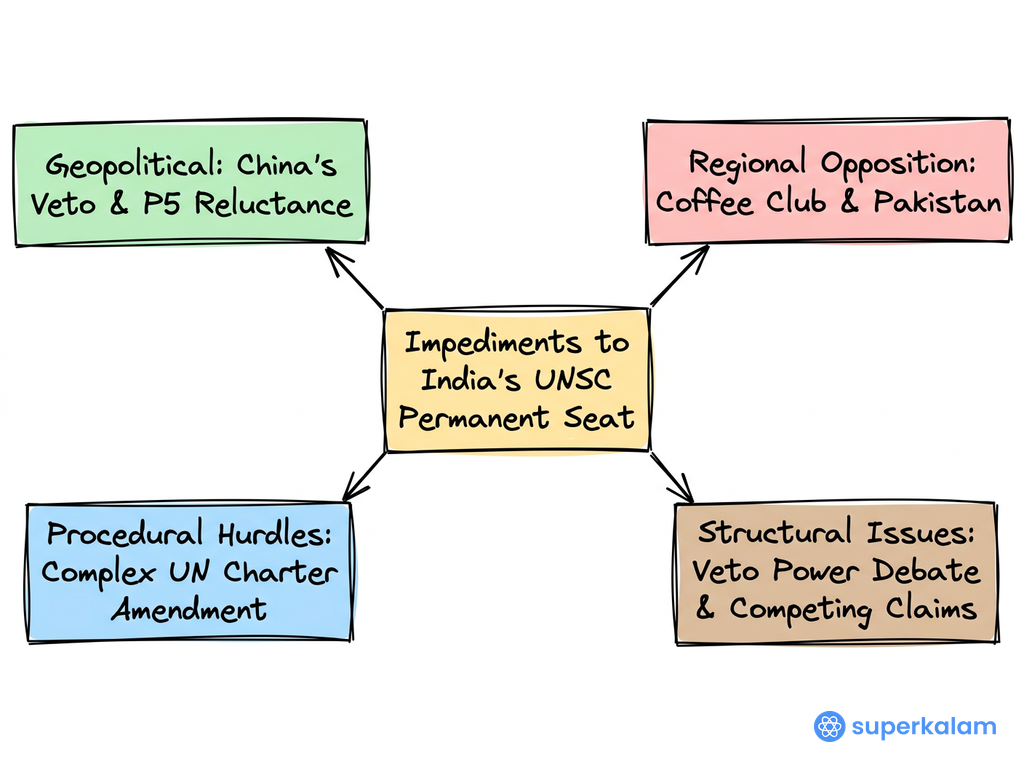
India's UNSC Permanency Impediments Hub and Spoke
Structural and Institutional Impediments
- Charter Amendment Process: Requires two-thirds majority in UN General Assembly and ratification by all P5 members, creating insurmountable veto barriers
- Veto Power Monopoly: Existing P5 members reluctant to dilute their exclusive privileges and decision-making authority
- UN Reform Stalemate: Lack of consensus on expansion modalities - whether to add only permanent members or both permanent and non-permanent seats
- Intergovernmental Negotiations (IGN): Ongoing since 2009 with minimal progress due to procedural deadlocks
- "Coffee Club" Opposition: Italy, Pakistan, and 40+ nations actively resist permanent seat expansion, proposing alternative reforms
Regional and Geopolitical Challenges
- China's Strategic Opposition: Beijing's concerns about India's rise and support for Pakistan create persistent roadblocks
- Pakistan's Counter-Campaign: Islamabad mobilizes OIC and other forums against India's candidature citing regional tensions
- Lack of Regional Consensus: Unlike EU's support for Germany, Asia remains divided on India's bid
- G4 Limitations: Brazil, Germany, India, Japan face collective resistance despite coordinated approach
- African Union's Demands: Insistence on African representation complicates expansion negotiations
Contemporary Diplomatic Hurdles
- Voting Pattern Scrutiny: India's abstentions on Ukraine resolutions (2022-2025) raise questions about alignment with Western positions
- Israel-Palestine Stance: Balancing traditional Palestinian support with growing Israel ties affects credibility
- Climate Leadership Gaps: Despite COP28 commitments, coal dependency undermines environmental leadership claims
- Economic Vulnerabilities: GDP per capita concerns and development challenges question "developed nation" status
India's path requires sustained diplomatic engagement, demonstrated global leadership, and building broader consensus beyond traditional allies. Success depends on navigating the delicate balance between sovereign interests and international expectations while addressing legitimate concerns of opposing nations.
Answer Length
Model answers may exceed the word limit for better clarity and depth. Use them as a guide, but always frame your final answer within the exam’s prescribed limit.
Evaluate this PYQ now
Write your answer & evaluate in just 60 seconds




500+ students evaluated
Model Answers from
- 2015International Relations12.5 MarksView Answer
Terrorist activities and mutual distrust have clouded India–Pakistan relations. To what extent the use of soft power like sports and cultural exchange could help generate goodwill between the two countries? Discuss with suitable examples.
- 2015International Relations12.5 MarksView Answer
Project ‘Mausam’ is considered a unique foreign policy initiative of the Indian government to improve relationships with its neighbours. Does the project have a strategic dimension? Discuss.
- 2015International Relations12.5 MarksView Answer
The Increasing interest of India in Africa has its pros and cons. Critically Examine.
Model Answers by Subject


Crack UPSC with your
Personal AI Mentor
An AI-powered ecosystem to learn, practice, and evaluate with discipline



