GS 3: Environment & EcologyGS 3: EconomyGS 3: Science & TechnologyGS 2: GovernancePrelims
India’s cheapest power is here, the grid must catch up, Pg6
India's grid bottlenecks strand 50 GW of cheap solar and wind power, demanding smart upgrades and policy shifts to unlock 1000 GW clean energy potential.
Practice MCQs
724 Students attempted
Key Highlights:
- India is facing challenges in integrating its rapidly expanding and cost-effective solar and wind power into the national grid.
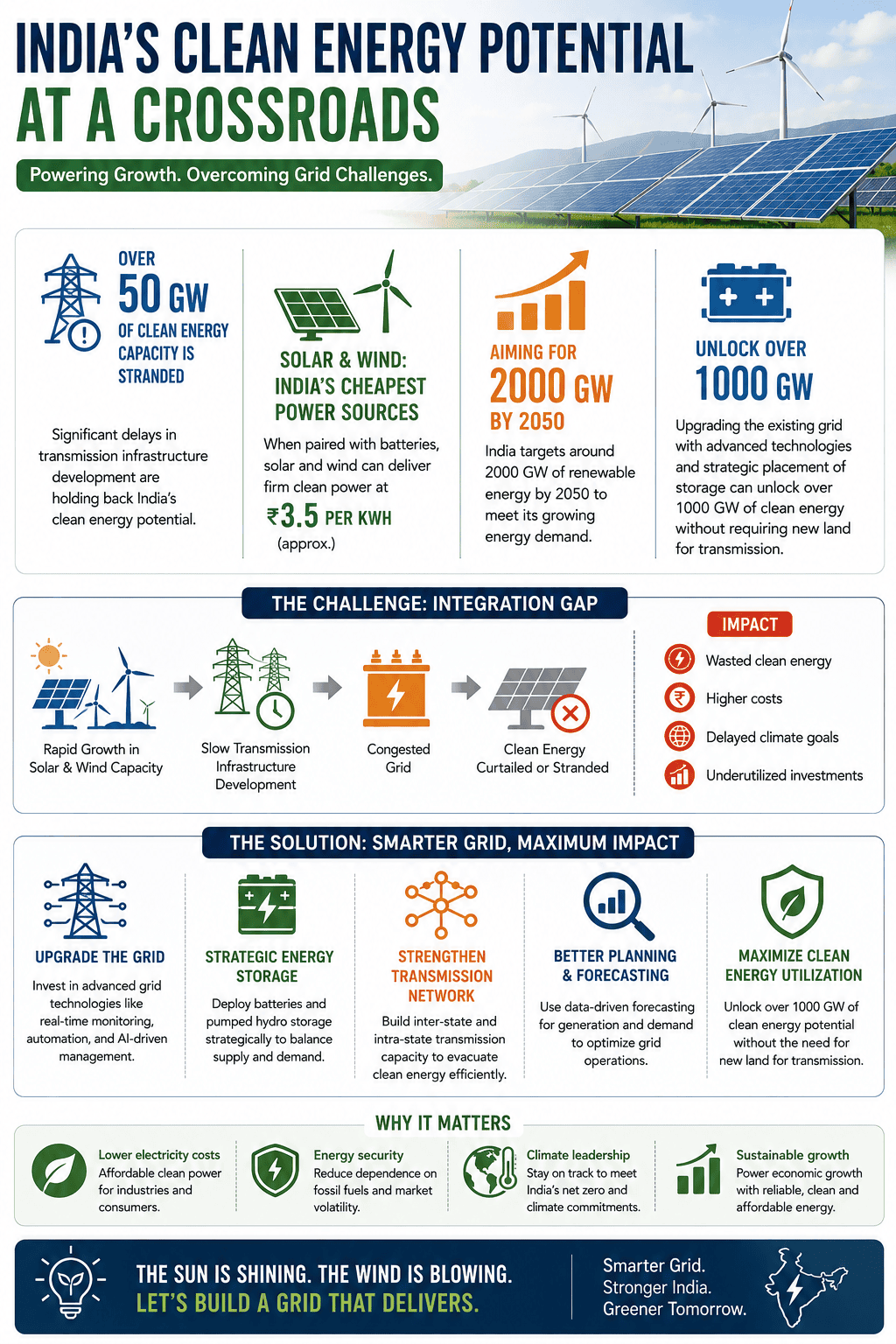
- Over 50 GW of clean energy capacity is currently stranded due to significant delays in transmission infrastructure development.
- Solar and wind have emerged as India's cheapest power sources, capable of delivering firm clean power at approximately ₹3.5 per kWh when paired with batteries.
- India aims to achieve around 2000 GW of renewable energy by 2050 to meet its growing demand.
- Upgrading the existing grid with advanced technologies and strategic placement of storage could unlock over 1000 GW of clean energy without requiring new land for transmission.
Clean energy.png
Detailed Insights:
- The construction of new transmission lines typically takes 3-5 years, which is considerably longer than the 12-18 months required for renewable energy projects.
- Existing transmission lines are often underutilized, operating at about 25% capacity, a problem that can be mitigated by integrating battery storage systems.
- Repurposing the transmission corridors of underperforming coal-based power plants offers a practical solution to integrate an additional 100 GW of clean energy.
- Modernizing the grid by replacing older wires with high-temperature, low-sag conductors can effectively double the power transfer capacity on existing towers.
- Policy adjustments are essential, including the state-level implementation of rules for solar-plus-storage and incentivizing advanced transmission technologies.
- The coordinated development of Renewable Energy Zones and optimized transmission corridors is crucial for the efficient movement of large volumes of clean energy.
- India's unified national grid provides a significant structural advantage in accelerating its energy transition compared to many developed countries.
Key Concepts Involved:
- Grid Modernization: The process of upgrading electricity transmission and distribution infrastructure with advanced technologies for enhanced efficiency and reliability.
- Renewable Energy Zones (REZs): Designated geographical areas with high renewable energy potential, where infrastructure is strategically planned for efficient generation and transmission.
- Energy Storage Systems: Technologies, such as batteries, that store electrical energy for later use, helping to manage the intermittency of renewable power sources.

SuperKalam is your personal mentor for UPSC preparation, guiding you at every step of the exam journey.
Download the App


STUDY RESOURCES
CONTACT US
ⓒ Snapstack Technologies Private Limited