GS 3: Environment & EcologyGS 2: GovernancePrelims
Four sites on Nicobar west coast identified for coral translocation, says Zoological Survey, Pg8
Zoological Survey identifies four new sites for critical coral and giant clam translocation from Great Nicobar's controversial Galathea Bay port project, amidst environmental scrutiny.
Practice MCQs
855 Students attempted
Key Highlights:
- The Zoological Survey of India (ZSI) has identified four new sites on the west coast of Great Nicobar Island for the translocation of coral colonies and giant clams.
- This measure is to mitigate the environmental impact of the proposed trans-shipment port at Galathea Bay, part of the Great Nicobar Island (GNI) mega project.
- ZSI informed a biodiversity committee about these plans on November 7, with the minutes released by the Andaman and Nicobar Island Integrated Development Corporation Ltd (ANIIDCO) on June 10.
- The National Green Tribunal (NGT), in its February 16 order, upheld the project's Environmental Clearance (EC), while directing the protection of coral reefs.
Great Nicobar Project.png
Detailed Insights:
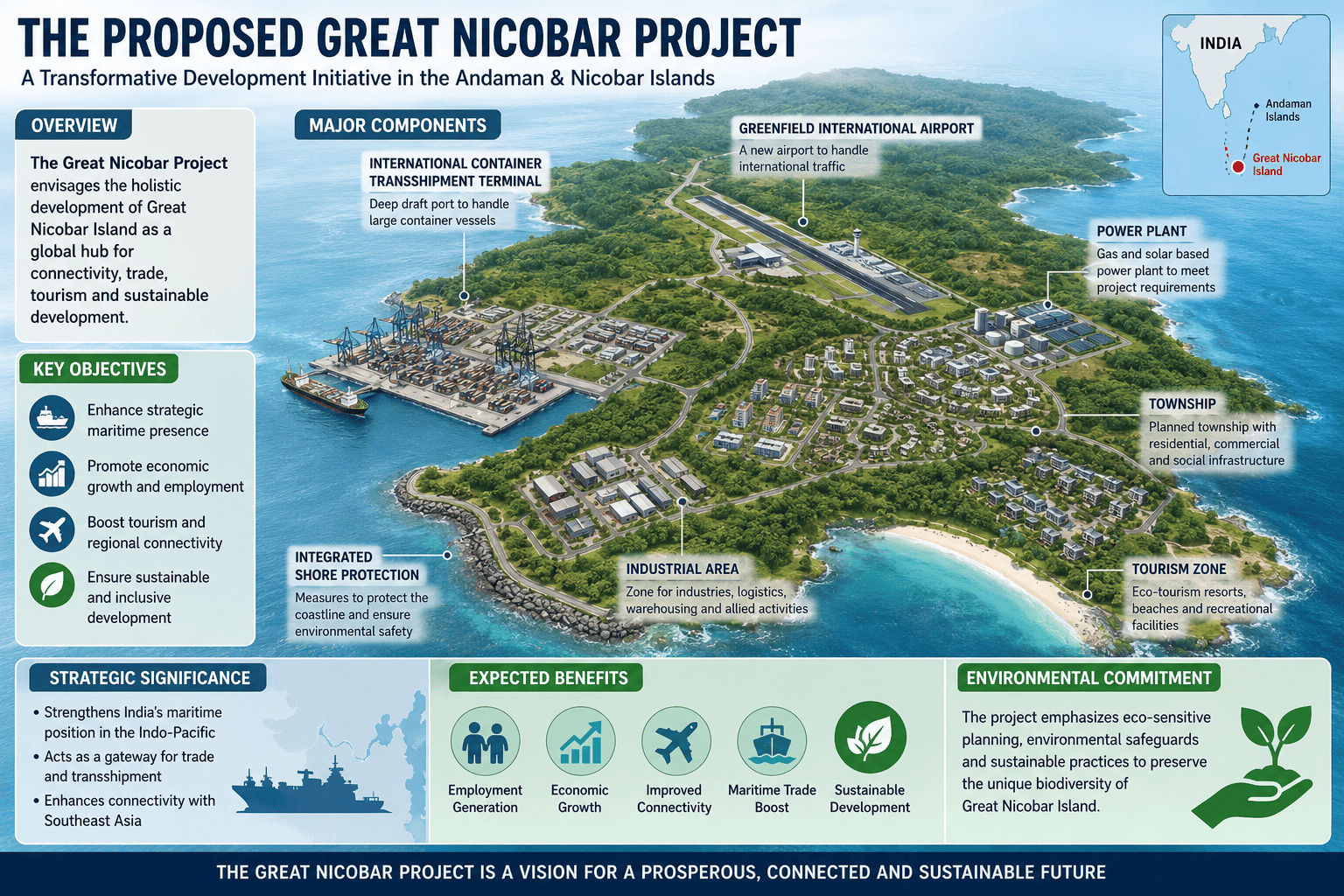
- The Great Nicobar Island (GNI) mega project is a large infrastructure initiative aimed at establishing an international container trans-shipment terminal, a dual-use airport, a power plant, and a township to enhance India's strategic presence and reduce reliance on foreign trans-shipment hubs.
- ZSI plans to translocate an estimated 16,150 coral colonies from the project impact area, with systematic data collection and GPS tagging for monitoring their survival.
- A dedicated biodiversity-related committee has been formed to oversee wildlife conservation plans for endemic species such as the Nicobar Megapode, leatherback marine turtles, saltwater crocodiles, and Nicobar Macaque.
- The Wildlife Institute of India (WII) reported finding 14 leatherback turtle nests, and experts have suggested prioritizing satellite tagging of these turtles before project work begins.
- The Salim Ali Centre for Ornithology and Natural History (SACON) has completed a pilot survey of endemic and tree-cavity nesting birds and is currently surveying Coconut Crabs in GNI.
- The project's Environmental Clearance (EC) and Coastal Regulation Zone (CRZ) clearance include specific conditions for biodiversity mitigation and environmental management.
- ZSI will secure necessary approvals under the Wildlife Protection Act, 1972, before handling Schedule-I species like coral colonies and giant clams.
Key Concepts Involved:
- Coral Translocation: The process of carefully moving coral colonies from an area threatened by development to a new, suitable habitat to ensure their survival.
- Environmental Clearance (EC): A mandatory approval granted by the Ministry of Environment, Forest and Climate Change for projects that have potential environmental impacts.
- Coastal Regulation Zone (CRZ): Specific areas along India's coastline where developmental activities are regulated under the Environment Protection Act, 1986, to protect coastal ecosystems.
- Wildlife Protection Act, 1972: An Act of the Parliament of India enacted for the protection of wild animals, birds, and plants, categorizing species into schedules with varying degrees of protection.

SuperKalam is your personal mentor for UPSC preparation, guiding you at every step of the exam journey.
Download the App


STUDY RESOURCES
CONTACT US
ⓒ Snapstack Technologies Private Limited