US-Iran Tensions and India's Strategic Balancing Act in West Asia - UPSC Mains Notes
Navigating US-Iran tensions through strategic autonomy, energy security, and continental connectivity via Chabahar Port.
Aug, 2026
•12 min read
Overview
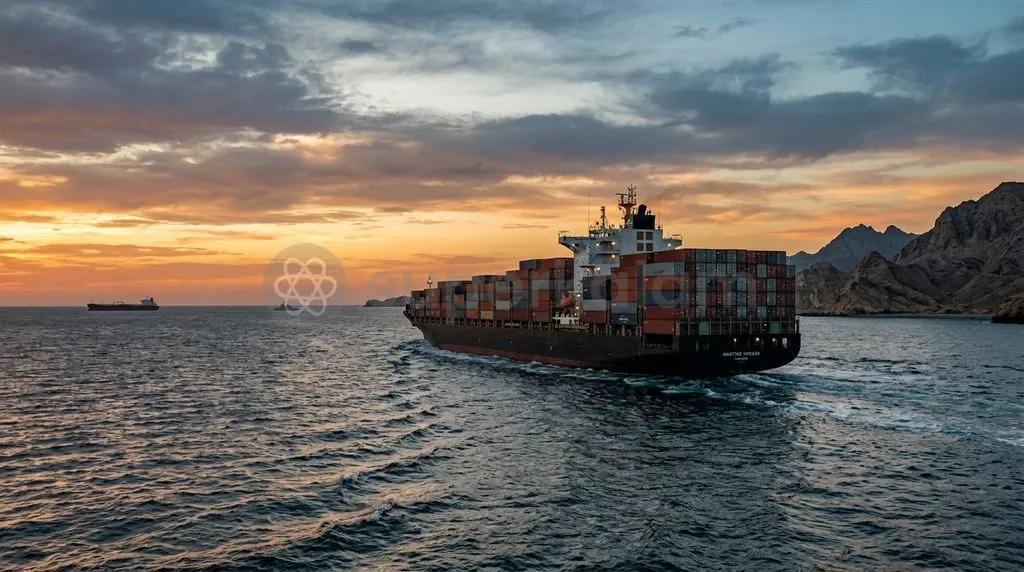
Fig: India's strategic interest in West Asian sea lanes demands a careful diplomatic balance amid rising US-Iran tension.
As of August 2026, the protracted stalemate between the United States and Iran remains fundamentally propelled by a structural security dilemma. Defensive counter-measures by one nation provoke immediate threat perceptions in the other. Deep ideological divergence since the 1979 Islamic Revolution further compounds this friction.
The conflict has re-escalated following two major catalyst events:
- The 2018 collapse of the Joint Comprehensive Plan of Action (JCPOA).
- Post-October 7 proxy network engagements across West Asia.
For India, this volatile regional dynamic demands a delicate balancing act under its strategic autonomy framework. New Delhi must preserve vital security ties with Washington while securing logistics access through Iran's Chabahar Port. According to official data from the Ministry of External Affairs, India's multi-alignment strategy seeks to preserve energy security and continental connectivity without succumbing to external secondary sanctions.
Why the US-Iran Stalemate is Driven by Security Dilemmas, Not Just Ideology
A structural security dilemma and rigid ideology combine to lock Washington and Tehran in persistent confrontation. According to the UN Security Council Debates, US-Iran relations are defined by a security dilemma where defensive military preparations by one side are perceived as offensive threats by the other.
This deadlock stems from two primary drivers:
- Structural escalation: Non-hostile deterrence measures are routinely misinterpreted by opposing strategists, triggering an endless escalation spiral.
- Ideological divergence: Washington operates within a liberal democratic framework, whereas Tehran adheres to its post-1979 Islamic theocracy principles.
This normative divide makes routine diplomatic concessions politically costly for domestic leadership in both capitals. Consequently, foreign policy decisions in both nations are heavily constrained by ideological legitimacy. Every strategic manoeuvre by Washington or Tehran is framed through the lens of state survival, preventing sustained bilateral convergence even when mutual security interests briefly align.
Historical Roots: How Operation Ajax and the 1979 Revolution Forged Permanent Mistrust
Deep-seated historical grievances continue to undermine modern US-Iran diplomacy. In August 1953, the US Central Intelligence Agency and British MI6 executed Operation Ajax to overthrow Iran's democratically elected Prime Minister Mohammad Mosaddegh. As documented in CIA declassified clandestine service history, this covert operation was launched after Mosaddegh nationalised the Anglo-Iranian Oil Company, successfully re-establishing Shah Mohammad Reza Pahlavi's authoritarian rule.
This foreign intervention planted deep institutional skepticism within Iranian political thought regarding Western diplomatic intentions. Decades later, two key events cemented this mutual animosity:
- The 1979 Revolution: Ayatollah Ruhollah Khomeini led the political upheaval that ousted the pro-Western Shah.
- The Hostage Crisis: In November 1979, Iranian revolutionaries initiated the 444-day US Embassy hostage crisis in Tehran.
According to the US Department of State Office of the Historian, this confrontation established state-led anti-Americanism as a founding constitutional pillar of the Islamic Republic, institutionalising systemic hostility between the two nations.
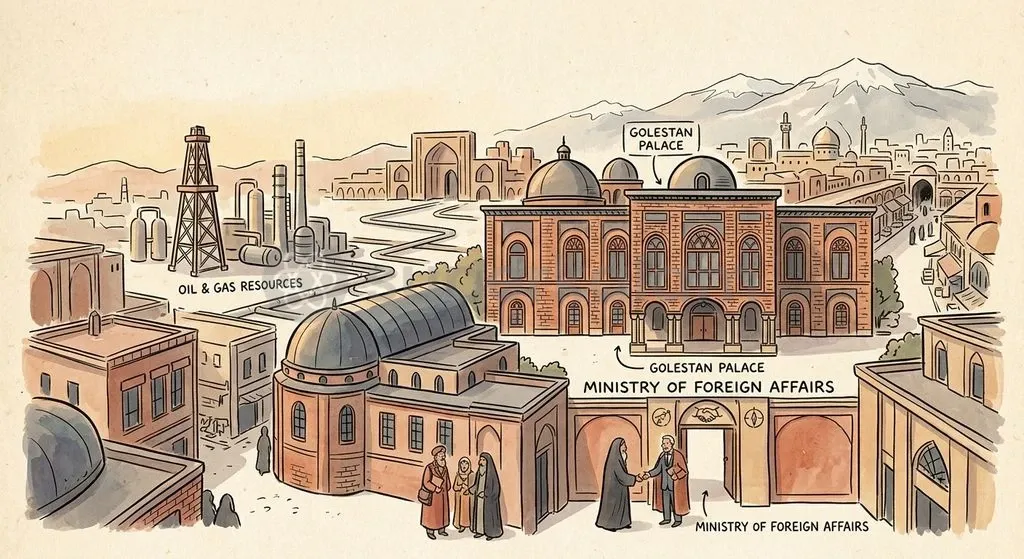
Fig: Historical milestones from 1953 to 1979 anchored the structural mistrust between Washington and Tehran.
Discuss with Superkalam
How can defensive measures in a security dilemma lead to diplomatic deadlock?
Ask NowThe JCPOA Rise and Fall: Why the 2015 Nuclear Deal Collapsed and Left a Vacuum
The collapse of the 2015 nuclear deal dismantled West Asia's non-proliferation framework and escalated regional nuclear friction.
The lifecycle of the accord developed across three critical phases:
- The Agreement (July 14, 2015): Iran and the P5+1 powers concluded the Joint Comprehensive Plan of Action (JCPOA) to cap Iranian uranium enrichment in exchange for targeted sanctions relief. As affirmed by UN Security Council Resolution 2231, the accord placed verified technical limits on Iranian nuclear facilities at Natanz and Fordow.
- Multilateral Endorsement (July 20, 2015): The UN Security Council unanimously adopted Resolution 2231, legally endorsing the JCPOA and establishing a 30-day snapback mechanism to restore global sanctions if Iran defaulted on its commitments. This multilateral framework temporarily stabilised West Asian non-proliferation architecture.
- US Withdrawal (May 8, 2018): US President Donald Trump unilaterally withdrew the United States from the JCPOA, re-imposing nuclear secondary sanctions under a maximum pressure campaign.
Following this withdrawal, Iran incrementally expanded its nuclear activities, enriching uranium up to 60% purity at Natanz and Fordow as confirmed by International Atomic Energy Agency inspection reports.
The New West Asian Chessboard: Post-October 7 Realignment and Proxy Networks
The post-October 7 landscape has reshaped West Asian security through proxy clashes and shifting diplomatic alliances. Following the October 7, 2023 events, Iran's regional Axis of Resistance coordinated military strikes targeting Israeli interests and US military positions across West Asia.
According to UN Security Council briefings, this conflict environment involves distinct regional dynamics:
- Proxy Coordination: The Axis of Resistance network includes Hezbollah, Hamas, the Houthis, and the Islamic Resistance in Iraq.
- Diplomatic Realignment: On March 10, 2023, Saudi Arabia and Iran signed a China-brokered agreement in Beijing to restore diplomatic relations, reopen embassies within two months, and reactivate their 2001 security cooperation accord.
- Maritime Disruption: Since November 2023, Yemen's Houthi movement targeted commercial shipping in the Bab al-Mandab Strait with anti-ship missiles and drones.
Despite diplomatic normalisation efforts, maritime security deteriorated rapidly in key trade choke points. Global maritime freight was forced to reroute around Africa's Cape of Good Hope as reported by the International Maritime Organization.
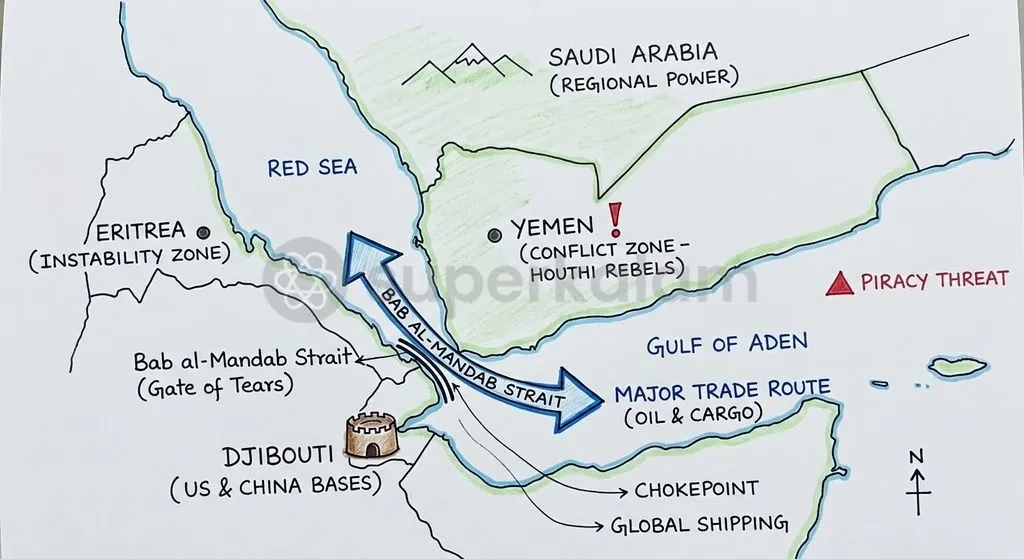
Fig: The post-October 7 security landscape features interconnected regional proxy networks and vulnerable maritime transit points.
Economic Warfare and Alternatives: Sanctions, Payment Mechanisms, and Trade Routing
To bypass Western financial chokeholds, the International North-South Transport Corridor offers a 7,200-kilometre multimodal transit framework connecting India, Iran, and Russia. Established by a 2000 framework agreement, the Ministry of External Affairs notes that the INSTC reduces transit time from Mumbai to Saint Petersburg by up to 40% compared to the traditional Suez Canal route.
In contrast, Western powers have supported alternative connectivity initiatives. On September 9, 2023, India, the US, Saudi Arabia, the UAE, France, Germany, Italy, and the EU signed a Memorandum of Understanding at the G20 New Delhi Summit to launch the India-Middle East-Europe Economic Corridor.
The table below outlines the key structural differences between these competing trade integration models:
| Dimension | International North-South Transport Corridor (INSTC) | India-Middle East-Europe Economic Corridor (IMEC) |
Foundational Year | 2000 Framework Agreement | 2023 G20 Summit MoU |
Key Anchor Nations | India, Iran, Russia | India, US, Saudi Arabia, UAE, EU |
Primary Route Geography | Mumbai to Saint Petersburg via Iranian ports and Caspian Sea | Western Coast of India to Europe via Arabian Gulf rail/sea |
Strategic Focus | Bypassing Suez route and Western economic sanctions | Creating Western-backed trade integration counter-corridors |
Sanctions Exposure | High exposure to US secondary sanctions on Iranian transit | Low sanction risk; vulnerable to regional conflict disruption |
Discuss with Superkalam
How have post-October 7 tensions affected the viability of INSTC and IMEC?
Ask NowIndia's Tightrope Walk: Balancing Strategic Ties with the US against Energy and Regional Realities with Iran
India balances its strategic ties with Washington while securing economic and logistics access through Chabahar Port. On May 13, 2024, India Ports Global Limited signed a long-term ten-year contract with Iran's Ports and Maritime Organization to operate the Shahid Beheshti Terminal at Chabahar. According to details provided in Rajya Sabha Starred Question No. 44, India committed $120 million for port equipment procurement alongside a $250 million credit window for infrastructure projects.
Between taking over operations on December 24, 2018 and late 2024, India Ports Global Limited handled significant trade volumes at the terminal:
- Over 450 vessels docked for cargo operations.
- 134,082 TEUs of containerised cargo moved through the port.
- Over 8.7 million metric tons of bulk cargo handled.
To protect this strategic investment from US secondary sanctions, New Delhi relies on established legislative exemptions. In November 2018, the US Department of State granted India an exception under Section 1244(f) of the Iran Freedom and Counter-Proliferation Act of 2012 to support Afghanistan's economic reconstruction.
Key Takeaways
- Security Dilemma Core: US-Iran hostility is structurally sustained by mutual threat perceptions and an ideological divide established during the 1979 Revolution.
- Historical Grievances: Operation Ajax in 1953 and the 1979 Tehran hostage crisis created durable institutional mistrust that continues to hamper diplomacy.
- Nuclear Escalation: Following the 2018 US exit from the JCPOA, Iran expanded uranium enrichment to 60% purity at Natanz and Fordow.
- Chabahar Commitment: India Ports Global Limited secured a 10-year contract in May 2024 for Shahid Beheshti Terminal, backed by a $120 million equipment commitment.
- Sanctions Safeguard: India relies on US exceptions under Section 1244(f) of the Iran Freedom and Counter-Proliferation Act of 2012 to operate Chabahar Port safely.
Mains Question
"The structural security dilemma defining US-Iran relations and post-October 7 West Asian realignments present dual challenges for regional transit frameworks." Critically analyse the strategic trade-offs for India between the International North-South Transport Corridor (INSTC) and the India-Middle East-Europe Economic Corridor (IMEC). (15 marks)
Evaluate NowMultiple Choice Questions
QUESTION 1
Q1. Consider the following statements regarding the International North-South Transport Corridor (INSTC):
- It is a 7,200-kilometre multimodal transit framework established by a 2000 framework agreement.
- It connects India, Iran, and Russia, reducing transit time from Mumbai to Saint Petersburg by up to 40% compared to the Suez Canal route.
- It was formally launched during the G20 Summit in New Delhi in September 2023.
Which of the statements given above are correct?
QUESTION 2
Q2. With reference to regional maritime disruptions and connectivity corridors in West Asia, consider the following statements:
- Houthi missile and drone attacks in the Bab al-Mandab Strait forced global maritime freight to reroute around Africa's Cape of Good Hope.
- Unlike IMEC, the INSTC faces high exposure to US secondary sanctions due to transit through Iranian territory.
Which of the statements given above is/are correct?
QUESTION 3
Q3. With reference to India's involvement in Iran's Chabahar Port, consider the following statements:
- In May 2024, India Ports Global Limited signed a ten-year contract to operate the Shahid Beheshti Terminal.
- To safeguard operations from US secondary sanctions, India relies on statutory exceptions under Section 1244(f) of the Iran Freedom and Counter-Proliferation Act of 2012.
- India committed a $120 million credit window for infrastructure projects alongside $250 million for port equipment procurement.
Which of the statements given above is/are correct?