Pygmy Hog Conservation in Assam: How India Saved the World's Smallest Pig
The pygmy hog, the world's smallest wild pig, was pulled back from near-extinction by captive breeding and grassland rewilding in Assam's Manas and Orang.
Sep, 2026
•9 min read
Overview
The Pygmy Hog Conservation Programme demonstrates that recovering India's most endangered micro-mammals requires moving beyond charismatic megafauna to restore fragile, non-forest ecosystems through specialized captive breeding, ecological conditioning, and scientific reintroduction into protected alluvial grasslands. As an obligate habitat specialist and umbrella species, the world's smallest wild pig reflects the structural and hydrological integrity of sub-Himalayan floodplains. As of April 2026, targeted interventions in Assam have transformed a founder group of six individuals into viable, wild-born populations across restored habitats, offering an empirical blueprint for grassland rewilding across the wider Terai-Duar landscape.
Why in the News: The Revival of the World's Smallest Wild Pig
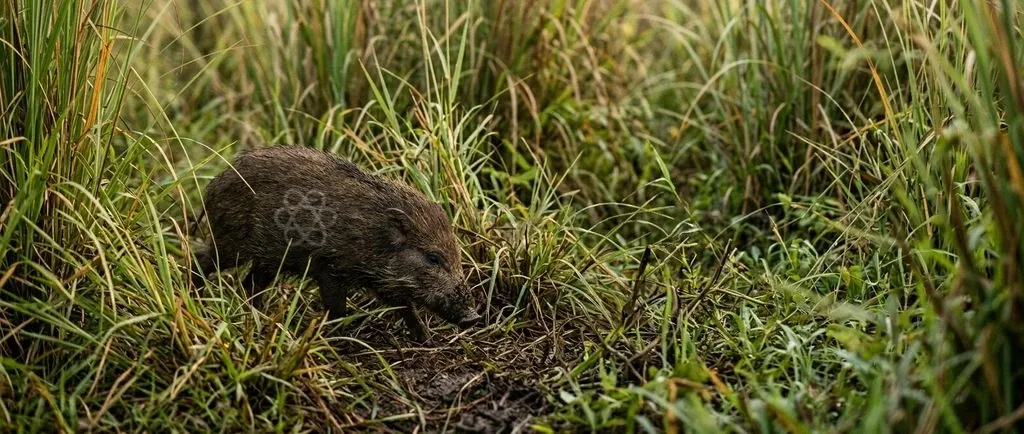
The Pygmy Hog (Porcula salvania), the world's smallest and rarest suid (member of the pig family), is witnessing a remarkable conservation revival across the protected floodplains of Assam. According to the Threatened Species Recovery Programme by Aaranyak, this monotypic genus (a genus containing only a single species) is uniquely adapted to the tall wet alluvial grasslands of the sub-Himalayan foothills
| Parameter | Legal & Conservation Classification |
|---|---|
| IUCN Red List Status | Endangered |
| Wild Life (Protection) Act, 1972 | Schedule I (Highest legal protection) |
| CITES Appendices | Appendix I (Trade strictly prohibited) |
| Endemic Habitat | Sub-Himalayan tall alluvial grasslands |
| Primary Protected Refuges | Manas, Orang, Barnadi (Assam) |
The species receives the highest degree of statutory safeguard under Schedule I of the Wild Life (Protection) Act, 1972, alongside international protection under Appendix I of CITES. Once feared extinct across its historical range, collaborative reintroduction efforts have restored viable breeding groups to protected landscapes, establishing a rare benchmark in Indian wildlife recovery.
Discuss with Superkalam
Recall the legal status and primary protected refuges of the Pygmy Hog mentioned in the statutory profile.
Ask NowThe Terai Grassland Crisis: Why Saving the Ecosystem Needs an Indicator Species
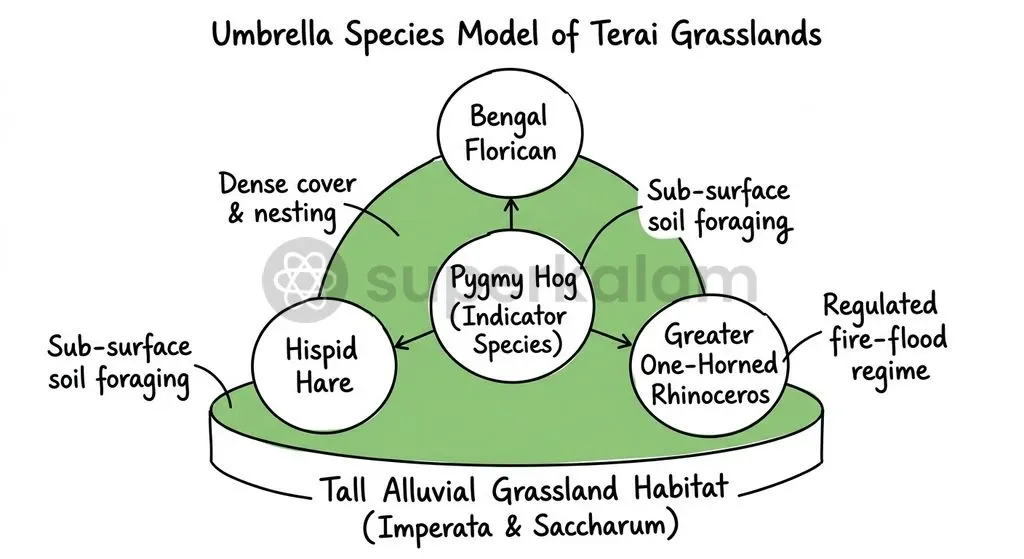
The Terai-Duar ecoregion represents an early-successional, flood-dependent biome whose ecological equilibrium is uniquely preserved by indicator species like the Pygmy Hog. As an obligate habitat specialist, Porcula salvania survives exclusively in early-successional, flood-prone tall alluvial grasslands dominated by grass species such as Saccharum, Narenga, and Imperata.
| Co-occurring Threatened Species | Ecological Niche & Shared Dependence |
|---|---|
| Bengal Florican (Houbaropsis bengalensis) | Critically endangered bustard nesting in open, early-successional grasslands |
| Hispid Hare (Caprolagus hispidus) | Specialist herbivore utilizing dense ground thatch for cover and foraging |
| Greater One-Horned Rhinoceros (Rhinoceros unicornis) | Megafauna herbivore dependent on tall alluvial grass for primary forage |
Down To Earth and the Durrell Wildlife Conservation Trust highlight that the Pygmy Hog functions as both an indicator and umbrella species whose survival directly mirrors the structural matrix and hydrological health of sub-Himalayan floodplains. Unlike all other wild suids, the Pygmy Hog is the only wild pig species that constructs year-round, roofed nests by excavating a shallow ground depression and lining it with dense thatch grasses. Protecting these specialized nesting micro-habitats simultaneously safeguards the entire community of sympatric, grassland-dependent wildlife.
Case Study: Inside the Pygmy Hog Conservation Programme Pipeline
The Pygmy Hog Conservation Programme (PHCP) operates as a dedicated multi-institutional recovery mechanism established to rescue Porcula salvania from imminent extinction. Formalized under an institutional partnership, the initiative unites the Assam Forest Department, the Ministry of Environment, Forest and Climate Change (MoEFCC), the Durrell Wildlife Conservation Trust, the IUCN/SSC Wild Pig Specialist Group, Aaranyak, and EcoSystems-India.
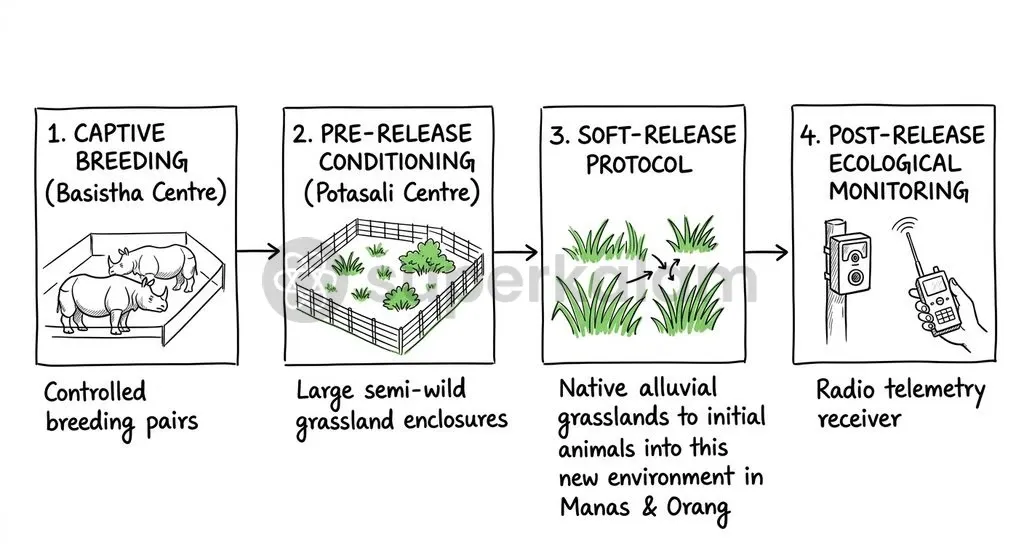
The conservation intervention follows a sequential four-phase operational model:
- Founder Stock Capture & Captive Breeding (1996): PHCP initiated its ex-situ breeding programme using six founder hogs captured from Manas National Park, housing them at the specialized Pygmy Hog Research and Breeding Centre at Basistha near Guwahati.
- Genetic Management & Population Expansion: The facility maintained high genetic diversity and natural social structures, preventing inbreeding depression across subsequent generations.
- Pre-Release Ecological Acclimatization: Captive-born hogs undergo behavioral conditioning in semi-wild conditions before field release.
- Soft Release & Post-Release Ecological Monitoring: Conditioned groups are reintroduced into designated protected areas, followed by intensive field surveillance.
Discuss with Superkalam
Explain why the Pygmy Hog is characterized as an 'umbrella species' and an 'obligate habitat specialist' in alluvial grasslands.
Ask NowFrom Captivity to the Wild: The Science of Conditioning and Soft Releases
The PHCP rewilding framework replaces abrupt translocations with an evidence-based conditioning protocol that prepares captive-bred individuals for wild survival. Before release into natural floodplains, hogs are transferred to a specialized pre-release facility at Potasali near Nameri National Park, where they occupy large, semi-wild grassland enclosures. This critical intermediate stage enables captive animals to hone foraging skills, develop natural predator avoidance behaviors, and master the construction of roofed thatch nests.
| Monitoring Technique | Operational Purpose & Data Captured |
|---|---|
| Radio-Telemetry | Tracks immediate post-release dispersal patterns |
| Automated Camera Traps | Records long-term survival and group composition |
| Passive Microchip Trans | Provides permanent, individual animal identities |
| Field Sign Surveys | Maps foraging foraging digs and roofed nests |
Since field reintroductions commenced in 2008, more than 190 captive-bred pygmy hogs have been released into protected habitats across Assam. In Orang National Park, systematic reintroduction has yielded exceptional conservation dividends, establishing a self-sustaining wild population estimated at approximately 250 wild-born pygmy hogs. Field biologists track these populations using an integrated surveillance grid combining radio-telemetry, automated camera-trap networks, microchip tracking, and continuous field sign surveys.
Discuss with Superkalam
How might the multi-phase PHCP pipeline (captive breeding, semi-wild conditioning, and soft release) be applied to recover other endangered micro-mammals in India?
Ask NowGrassland Management Dilemma: Fire Regimes, Weed Invasions, and Cattle Encroachment
The long-term persistence of reintroduced Pygmy Hog populations depends upon mitigating acute anthropogenic and ecological pressures within alluvial grasslands. Unregulated and late dry-season burning poses an existential threat to the species by incinerating delicate thatch nesting structures and causing widespread mortality among juveniles and adults.
Conservation scientists advocate replacing indiscriminate fires with early dry-season mosaic patch-burning to prevent catastrophic wildfires while maintaining varied successional grass stages across the landscape.
| Degradation Factor | Ecological Mechanism & Habitat Impact |
|---|---|
| Invasive Alien Flora | Chromolaena odorata, Mikania micrantha, and Mimosa diplotricha smother native thatch grasses |
| Woody Encroachment | Bombax ceiba and Leea asiatica transition open grasslands into closed-canopy woodland biomes |
| Livestock Grazing | Unregulated cattle cause severe forage competition, soil compaction, and zoonotic disease vectors |
Invasive alien plants severely degrade tall alluvial floodplains by outcompeting palatable and nest-forming native grasses. Simultaneously, uninhibited ecological succession driven by woody species such as Bombax ceiba, Leea asiatica, and Lagerstroemia parviflora converts open grasslands into closed-canopy woodlands, permanently destroying the Pygmy Hog's specialized niche. Furthermore, unregulated livestock grazing introduces severe forage competition, compacts delicate topsoil, and elevates the risk of zoonotic disease transmission to wild suid populations.
Discuss with Superkalam
Compare the ecological impacts of uncontrolled late dry-season burning versus early dry-season mosaic patch-burning on grassland biodiversity.
Ask NowBeyond Megafauna: What Pygmy Hog Rewilding Teaches Indian Conservation Policy
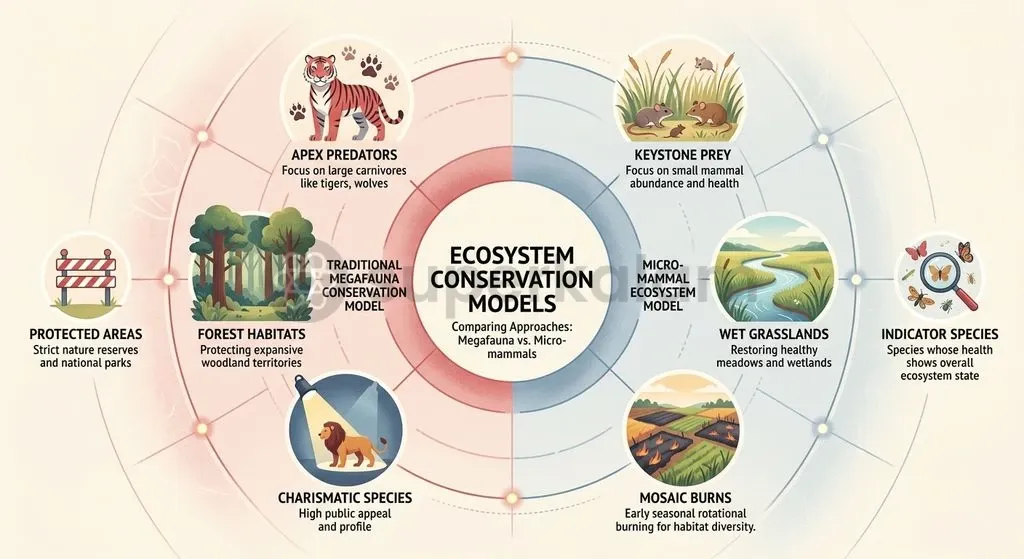
India's wildlife governance architecture has historically operated with a pronounced megafauna bias, channeling disproportionate financial and administrative resources into apex species under Project Tiger and Project Elephant. While these flagship initiatives successfully preserved large forested tracts, non-forest ecosystems such as floodplains, savanna grasslands, and semi-arid scrublands were frequently neglected or misclassified as degraded wastelands.
The PHCP provides a practical model for moving beyond single-species recovery toward integrated, ecosystem-level grassland rewilding. Securing the micro-habitat requirements of Porcula salvania automatically restores the hydrological and botanical regimes necessary to sustain a wider community of imperiled floodplain specialists.
Way Forward: Scaling Micro-Mammal Conservation and Habitat Restoration
A resilient national strategy for grassland restoration requires institutionalizing species recovery pipelines across all non-forest biomes in India. Managing agencies must implement scientific mosaic burning schedules early in the dry season, halting destructive late-season fires that wipe out ground-nesting wildlife.
Protected area managers must also integrate aggressive, mechanical eradication of invasive alien weeds like Mikania micrantha alongside strict boundary buffer zones to halt unregulated livestock intrusion and mitigate pathogen spillovers. Broadening India's conservation finance to support endangered micro-mammals under species recovery programmes will ensure that fragile grassland biomes receive statutory, scientific, and financial parity with apex forest landscapes.
Discuss with Superkalam
Evaluate whether India's wildlife conservation policy focuses disproportionately on megafauna, and assess the ecological justification for prioritizing micro-mammals.
Ask NowKey Takeaways
- Taxonomic & Legal Status: The Pygmy Hog (Porcula salvania) is the world's smallest suid, classified as Endangered on the IUCN Red List and protected under Schedule I of the Wild Life (Protection) Act, 1972, and Appendix I of CITES.
- Ecological Indicator: As an obligate specialist of early-successional tall alluvial grasslands, the Pygmy Hog serves as an umbrella species for endangered co-occurring wildlife like the Bengal Florican and Hispid Hare.
- Unique Behavioral Biology: It is the only suid in the world that constructs year-round, roofed nests utilizing thatch grasses and excavated shallow depressions.
- PHCP Multi-Institutional Framework: Established in 1996 from six founder hogs from Manas, the programme unites the Assam Forest Department, MoEFCC, Durrell Wildlife Conservation Trust, and Aaranyak.
- Empirical Rewilding Success: Over 190 captive-bred hogs have been released since 2008, establishing a wild-born population of approximately 250 individuals in Orang National Park.
- Ecosystem Management Mandates: Long-term survival requires shifting from destructive late-season burns to early-season mosaic patch-burning, alongside aggressive control of invasive weeds and livestock grazing.
Mains Question
"Grassland conservation in India necessitates looking beyond charismatic megafauna towards habitat-specialist indicator species." In light of the Pygmy Hog Conservation Programme (PHCP), examine how micro-mammal recovery serves as a blueprint for non-forest ecosystem restoration. (15 Marks)
Evaluate NowMains Question
The long-term success of rewilding programmes in the Terai-Duar ecoregion hinges upon resolving conflicting ecological pressures and habitat degradation drivers. Elucidate. (10 Marks)
Evaluate NowPractice MCQs
QUESTION 1
With reference to the Pygmy Hog (Porcula salvania), consider the following statements:
- It is a monotypic genus uniquely adapted to the tall wet alluvial grasslands of the sub-Himalayan foothills.
- Unlike other wild suids, it constructs year-round, roofed nests using thatch grasses.
- It is listed under Schedule I of the Wild Life (Protection) Act, 1972 and Appendix I of CITES. Which of the statements given above are correct?
QUESTION 2
Consider the following statements regarding the ecology and conservation of sub-Himalayan alluvial grasslands:
- Late dry-season burning is recommended by conservationists to maintain diverse successional grass stages.
- Woody species such as Bombax ceiba and Leea asiatica threaten grassland specialists by converting open floodplains into closed-canopy woodlands.
- Invasive alien plants such as Chromolaena odorata and Mikania micrantha smother native thatch grasses required by Pygmy Hogs. Which of the statements given above is/are correct?
QUESTION 3
With reference to the Pygmy Hog Conservation Programme (PHCP), consider the following statements:
- The initial ex-situ captive breeding stock was established using founder individuals captured from Manas National Park.
- A dedicated pre-release facility at Potasali near Nameri National Park is used for semi-wild behavioral conditioning before final release.
- Reintroduction efforts in Orang National Park have successfully established a self-sustaining wild population. Which of the statements given above are correct?
QUESTION 4
Which of the following grass genera constitute the primary dominant vegetation in the early-successional, flood-prone alluvial grassland habitat of the Pygmy Hog?
- Saccharum
- Narenga
- Imperata Select the correct answer using the code given below:
QUESTION 5
In the context of wildlife monitoring under the Pygmy Hog Conservation Programme, which of the following techniques is specifically utilized to provide permanent individual identities for reintroduced hogs?