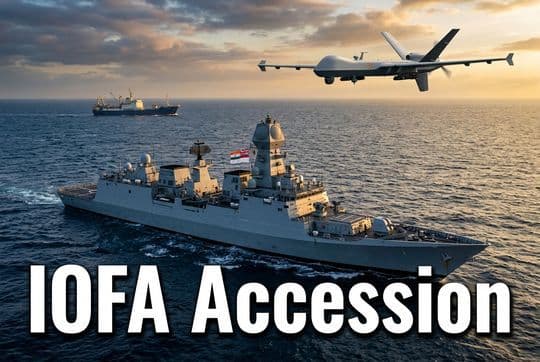
K-4 Ballistic Missile Test by India | UPSC
K-4 missile test 2025: India successfully tested a 3,500 km nuclear-capable SLBM from INS Arighaat. Read key facts, features, and UPSC significance of India's latest defence achievement.
Jan, 2026
•4 min read
Why in the News?
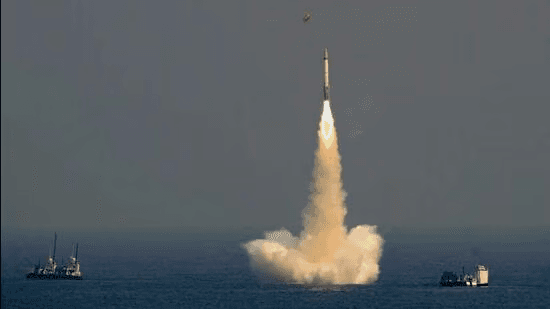
On December 23, 2025, India successfully test-fired the K-4 submarine-launched ballistic missile (SLBM) from INS Arighaat in the Bay of Bengal, marking a significant milestone in the nation's strategic defence capabilities.
Why Cover this Topic for UPSC?
- High relevance for Prelims & Current Affairs
- GS Paper II: International Relations (Strategic balance of power, Nuclear doctrine)
- GS Paper III: Science & Technology (Indigenisation of defence, DRDO achievements) & Internal Security
- Ethics Paper (GS IV): Ethics of deterrence, 'No First Use' policy, responsible statecraft
- Essay Paper: National security, Atmanirbhar Bharat (Self-reliance), geopolitical dynamics
What is the K-4 Missile?
The K-4, also called the Kalam-4, is a nuclear-capable intermediate-range submarine-launched ballistic missile (SLBM) developed by India's Defence Research and Development Organisation (DRDO) to arm its Arihant-class submarines.
- Part of the ‘K-series’ missiles, named after Dr A.P.J. Abdul Kalam, who guided India's missile development program.
- The range is approximately 3,500 km, covering all of Pakistan and significant portions of China.
- The missile was launched from Arihant-class nuclear submarines (INS Arighaat).
- It can deliver a nuclear warhead weighing 2 to 2.2 tons.
Also read: Samudrayaan Mission: India’s Journey into the Deep Ocean
Features of the K-4 Missile
The K-4 Missile is one of the strongest weapons in India's arsenal, featuring advanced technologies that make it hard to detect and intercept.
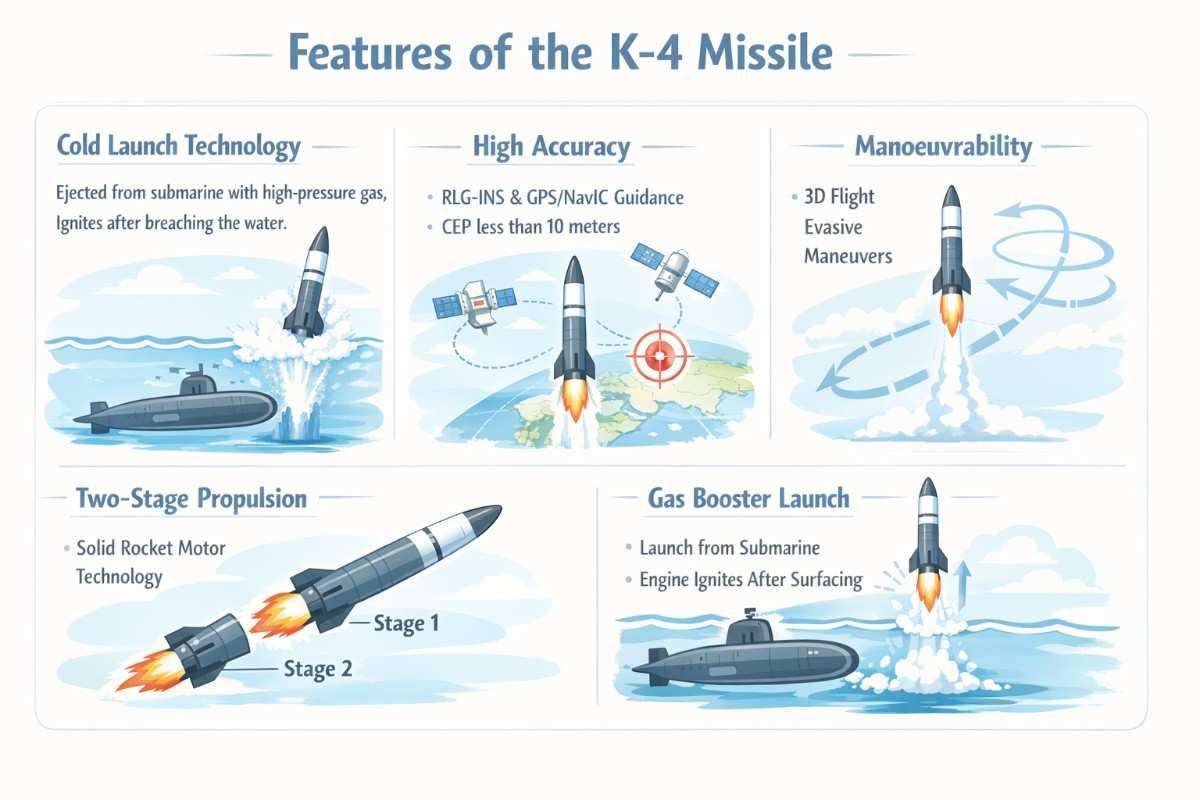
1. Cold Launch Technology:
- The missile is ejected from the submarine's underwater silo using high-pressure gas.
- Its rocket motor ignites only after it breaches the water's surface, protecting the submarine from heat and damage.
2. High Accuracy:
- It uses a Ring Laser Gyro Inertial Navigation System (RLG-INS) supported by GPS/NavIC satellite guidance, ensuring a Circular Error Probability (CEP) of less than 10 meters.
3. Manoeuvrability:
- The missile can perform 3D manoeuvres in flight, making it difficult for the enemy’s Ballistic Missile Defence (BMD) systems to track or intercept it.
4. Propulsion:
- Powered by a two-stage solid rocket motor, which is safer and quicker to launch than liquid-fuelled missiles.
5. Gas Booster Cold Launch System:
- A gas booster pushes the missile out of the submarine without firing the engine, keeping the submarine hidden.
- The main engine starts only after the missile emerges from the water.
Also read: Mission Sudarshan Chakra: India’s Indigenous Air Defence System
Submarine-Launched Ballistic Missile (SLBM)
An SLBM is a long-range missile launched from underwater. After launch, it follows a curved path and can hit targets thousands of kilometres away.
Types of SLBMs Based on Range
1. Intercontinental SLBMs (>5,500 km)
- US Trident II D5: 7,600 km (with 8 warheads)
- Russia RSM-56 Bulava: 8,300 km
- India K-6: 8,000 km (under development)
2. Intermediate-Range SLBMs (3,000-5,500 km)
- India K-4: 3,500 km (operational)
- India K-5: 5,000-6,000 km (development completed 2025)
3. Medium-Range SLBMs (1,000-3,000 km)
- India K-15 Sagarika: 750 km (operational)
Types of SLBMs Based on Launch Mechanism
1. Cold Launch
- Gas booster ejects missile; engine ignites after surface breach
- Examples: K-4, K-15, Trident II, Bulava
- Minimal submarine damage, rapid launch capability
2. Hot Launch
- The engine ignites inside the launch tube while submerged
- Less common in modern systems
- High heat damage, slower launch rate
Types of SLBMs Based on Warhead Configuration
1. Single Warhead SLBMs
- One nuclear warhead per missile
- Example: India's K-15, K-4 (currently)
- The disadvantage is that one missile = one target
2. MIRV SLBMs (Multiple Independently Targetable Reentry Vehicles)
- Multiple independent warheads striking different targets
- US Trident II: 8-12 warheads
- Russia Bulava: 6-10 warheads
- India K-5: 2-3 warheads (planned)
- India K-6: 4 warheads (under development)
Also read: Bharat Forecast System: Launch, Objectives & Key Details
Why a Submarine-Launched Missile Matters?
Submarine-launched missiles are a crucial component of nuclear deterrence because they are extremely difficult to detect and destroy. Submarines hidden deep in the ocean are almost invisible to enemy radar and satellites.
- Ultimate Survivability: Submarines constantly move underwater, making them nearly impossible for enemies to track or target in a surprise attack.
- Guaranteed Retaliation: They ensure a "Second Strike Capability", even if a nation’s land and air bases are destroyed, its submarines can still launch a counter-attack.
- Supports "No First Use": For countries like India with a "No First Use" policy, these missiles provide the confidence that they can survive a first hit and strike back.
- Safe Launch Zones: Longer-range missiles (like the K-4) allow submarines to launch attacks from safe waters near their own coast, avoiding dangerous enemy waters.
- Psychological Deterrence: The mere presence of a hidden, silent nuclear threat creates a powerful psychological barrier against aggression.
UPSC Prelims MCQ on K-4 Missile
QUESTION 1
Which of the following statements about the K-4 missile is/are correct?
- K-4 is a submarine-launched ballistic missile with a range of 3,500 km.
- It can be deployed from nuclear-powered submarines INS Arihant and INS Arighaat.
- It uses solid-fuel propulsion system.
Select the correct answer using the code given below:
Strategic Significance of K-4 Missile
The K-4 missile test strengthens India’s nuclear deterrence by making it credible, survivable and reliable in South Asia and the Indo-Pacific.
- Completes the Nuclear Triad: India can launch nuclear weapons from land, air, and sea, making its deterrence much stronger.
- Ensures Second-Strike Capability: Even if India is attacked first, submarines with K-4 missiles can survive and retaliate.
- Better Than K-15: K-4 has a significantly longer range, enabling submarines to remain safe in Indian waters.
- Made in India: The K-4 is fully developed by the DRDO, strengthening India's strategic self-reliance.
- Balances China: K-4 helps India maintain nuclear balance with China’s submarine forces.
UPSC Mains Practice Question
Discuss the significance of India's growing defence exports in shaping its strategic autonomy and global influence.
Evaluate Your Answers nowWay Forward
While the K-4 is a massive success, India’s strategic program continues to evolve to match global superpowers.
- Work is underway on the K-5 (5,000 km) and K-6 (6,000+ km) missiles, which will bring true intercontinental range to India's underwater fleet.
- India plans to induct larger S-5 class submarines (13,500 tonnes) capable of carrying more long-range missiles than the current Arihant class.
- Future variants may incorporate Multiple Independently Targetable Reentry Vehicles (MIRV) to defeat enemy missile defences.
Unlock your UPSC potential with SuperKalam, get instant doubt resolution, personalised study plans, unlimited MCQ practice, and rapid Mains answer evaluation.
Join thousands of aspirants excelling with India’s leading AI-powered super mentor today!