India-Pakistan 1991 Naval Agreement: Article 10 and Maritime CBMs Explained
As naval close encounters test Arabian Sea stability, Article 10's three-nautical-mile buffer highlights the urgent need to modernize bilateral maritime CBMs.
Sep, 2026
•6 min read
Overview
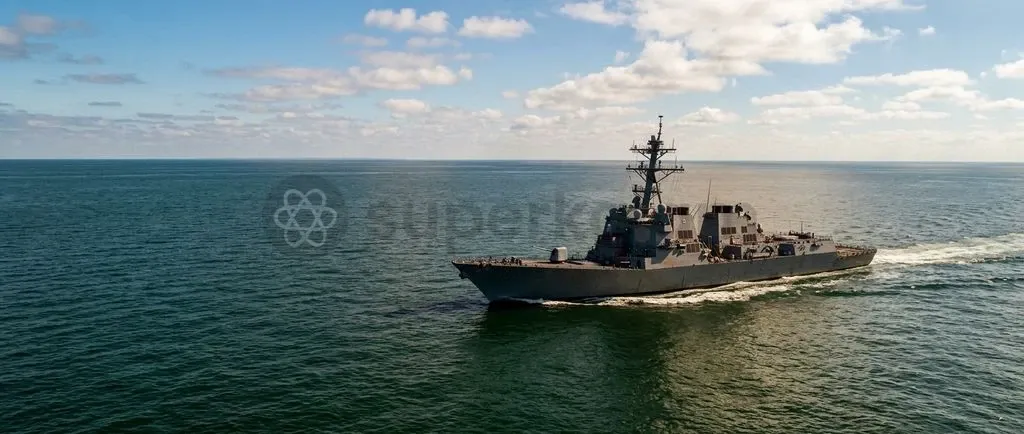
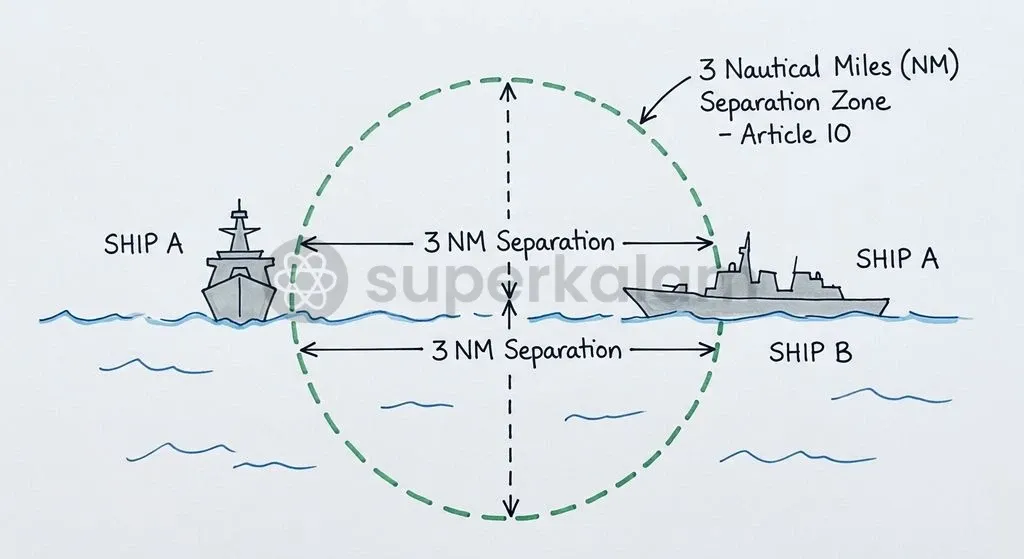
The 1991 bilateral Agreement on Advance Notice on Military Exercises between India and Pakistan establishes mandatory protocols to prevent naval collisions. Its core provision, Article 10, prohibits warships and submarines of both navies from approaching within three nautical miles of each other in international waters.
This framework serves as a foundational instrument of crisis de-escalation in the congested waters of the Arabian Sea. However, recurrent tactical close encounters, communication deficits, and unresolved maritime boundaries test its enforcement. Upgrading these measures with direct bridge-to-bridge communication links remains essential for regional maritime stability.
Why in the News: The Recent Maritime Incident
Bilateral naval safety protocols drew fresh diplomatic scrutiny following an incident in the North Arabian Sea:
- 15 September 2026 Collision: INS Kolkata, lead ship of India's Project 15A Kolkata-class guided-missile destroyers (commissioned August 2014, about 7,400 tonnes, armed with BrahMos supersonic cruise missiles), collided with Pakistan Navy offshore patrol vessel PNS Hunain (F-273, about 2,600 tonnes, first of the OPV 2600 class, commissioned July 2024) in international waters in the North Arabian Sea, roughly 120 nautical miles from the Gulf of Oman.
- India's Allegation: New Delhi said PNS Hunain executed a dangerous overtaking manoeuvre at high speed, causing the collision in violation of Article 10's three-nautical-mile (about 5.6 km) separation rule for naval vessels in international waters.
- Damage and Aftermath: INS Kolkata sustained no major damage and remained at sea; PNS Hunain was damaged and returned to harbour. Pakistan rejected India's allegations and presented a different account of the incident.
- Diplomatic Demarche: India's Ministry of External Affairs summoned Pakistan's Charge d'Affaires Saad Ahmad Warraich in New Delhi on 16 September 2026 to lodge a formal diplomatic protest, and also instructed its own Charge d'Affaires in Islamabad to raise the matter with Pakistan's Foreign Ministry, citing violations of Article 10 of the 1991 agreement.
- June 2011 Precedent: Pakistan Navy frigate PNS Babur brushed against Indian Navy frigate INS Godavari in the Gulf of Aden, damaging the Indian vessel's helicopter safety net.
These recurring encounters highlight the operational vulnerability of bilateral agreements during routine naval patrols.
Background of the 1991 Agreement on Air Space and Territorial Waters
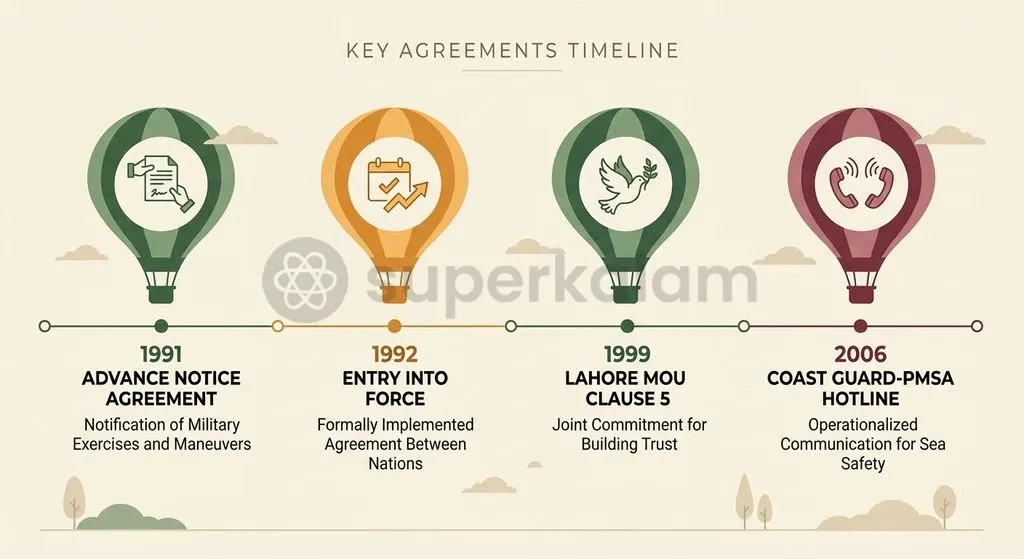
The Government of India and the Government of Pakistan signed the Agreement on Advance Notice on Military Exercises, Manoeuvres and Troop Movements on 6 April 1991.
Diplomatic representatives formulated the pact alongside airspace safety measures to build institutional transparency. The treaty officially entered into force on 19 August 1992, creating a legal framework for prior notifications of major troop movements across land, airspace, and maritime boundaries.
Discuss with Superkalam
What is the mandatory minimum separation distance stipulated under Article 10 of the 1991 Agreement for naval combatants in international waters?
Ask NowThe post-Cold War security environment in South Asia demanded predictable rules for military manoeuvres. By instituting mandatory notification thresholds, both nations sought to prevent routine training exercises from being misread as offensive preparations.
Decoding Article 10: Maritime Conduct and Communication Protocols
Article 10 of the 1991 Agreement establishes the primary operational safety buffer governing naval vessels and submarines of India and Pakistan in international waters.
The clause mandates that naval ships and submarines of both countries shall not close within three nautical miles (approximately 5.6 km) of each other while navigating international waters. This buffer eliminates collision hazards and curtails aggressive tactical posturing.
| Regulatory Dimension | 1991 Bilateral Agreement (Article 10) | Standard High-Seas Norms (UNCLOS / COLREGs) |
|---|---|---|
| Minimum Safe Distance | Fixed mandatory buffer of three nautical miles | Contextual "safe distance" based on vessel speed and sea conditions |
| Applicable Platforms | Surface combatants and submerged submarines | All civilian vessels and sovereign military ships |
| Notification Requirement | Mandatory for exercises with 6+ major surface vessels | Voluntary notifications via standard Notices to Mariners (NOTAMs) |
| Primary Objective | Prevent bilateral military escalation and accidental rammings | Ensure universal navigational safety and prevent collisions |
The rule provides an unambiguous benchmark for bridge officers navigating crowded shipping corridors. Maintaining this fixed distance preserves adequate reaction time if a vessel encounters mechanical failure or navigational drift.
Discuss with Superkalam
How does the absence of dedicated bridge-to-bridge tactical communication links between frontline warships escalate peacetime naval encounters?
Ask NowCommunication between the two defence establishments relies primarily on established military channels. The Director General of Military Operations (DGMO) hotline serves as the primary conduit for high-level clarifications during unexpected operational encounters.
Analysis: Gaps in Implementation and Risk of Escalation at Sea
Structural deficits within existing India-Pakistan maritime agreements undermine operational compliance and elevate escalation risks during unplanned encounters.
According to the Institute for Defence Studies and Analyses (IDSA), the 1991 framework lacks automated technical verification mechanisms, institutionalised bridge-to-bridge tactical communication links, and binding dispute-resolution provisions. When frontline warships meet unexpectedly, bridge teams lack a shared radio frequency to clarify navigational intent in real time.
- Tactical Encounter at Sea: Warships encounter one another during high-seas surveillance.
- Absence of Direct Tactical Hotline: Bridge officers lack dedicated radio links to exchange intentions.
- Manoeuvre Ambiguity: Navigational movements risk misinterpretation as hostile posturing.
- High-Risk Close Pass: Uncoordinated steering creates collision hazards and diplomatic escalation.
Under Clause 5 of the Lahore Memorandum of Understanding signed on 21 February 1999, both states agreed to conclude a dedicated bilateral Agreement on Prevention of Incidents at Sea. However, bilateral progress stalled following subsequent geopolitical developments, leaving tactical naval interactions reliant on the outdated 1991 mechanisms.
Discuss with Superkalam
Weigh the efficacy of bilateral CBMs versus multilateral frameworks like the Code for Unplanned Encounters at Sea (CUES) in managing Arabian Sea security.
Ask NowIndia-Pakistan Maritime Security: Broader Geopolitical Context
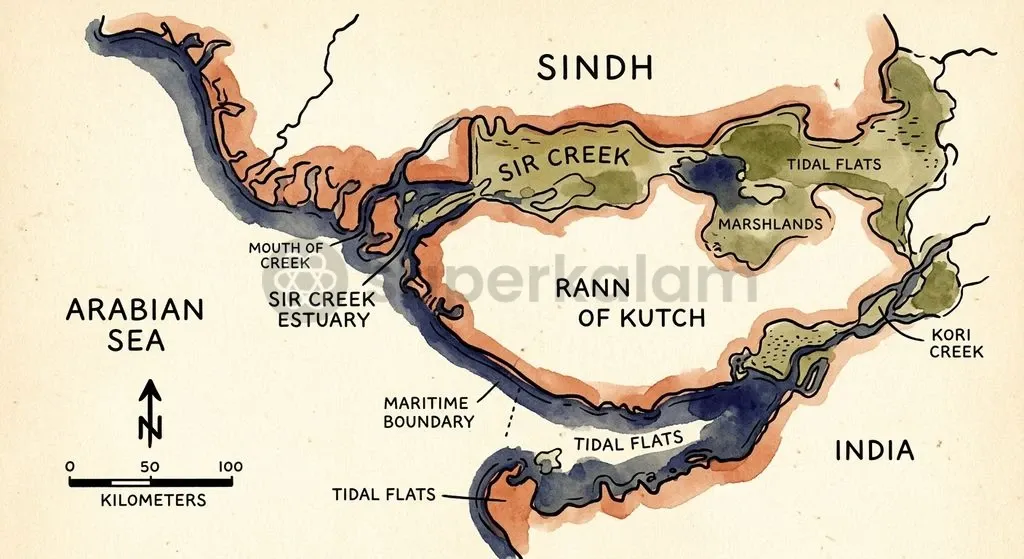
The unresolved Sir Creek dispute remains a primary maritime flashpoint shaping naval interactions and border enforcement between India and Pakistan:
- Sir Creek Boundary: The dispute centres on a 96-kilometre tidal estuary in the Rann of Kutch dividing Gujarat from Pakistan's Sindh province.
- Overlapping Maritime Zones: Because the land boundary terminus in the creek remains contested, the delimitation of the maritime boundary and the Exclusive Economic Zone extends into conflicting claims across the North Arabian Sea.
- Fishermen Apprehensions: The absence of a settled maritime frontier leads to frequent apprehensions of civilian fishermen by the Indian Coast Guard and the Pakistan Maritime Security Agency near the International Maritime Boundary Line.
- Coast Guard Hotline: To mitigate low-level enforcement friction, the Indian Coast Guard and the Pakistan Maritime Security Agency operationalised a dedicated communication hotline in November 2006 following an agreement signed in October 2005.
Discuss with Superkalam
Design a institutional mechanism to de-escalate civilian fishermen detentions near the Sir Creek estuary while formal boundary delimitation remains pending.
Ask NowWay Forward: Upgrading Bilateral Maritime Confidence-Building Measures
Modernising maritime safety frameworks requires establishing institutionalised tactical communication channels and adopting updated multilateral operating codes.
- Finalising an INCSEA Pact: Both nations should implement the pending commitment under the 1999 Lahore Memorandum of Understanding to establish precise rules of engagement for naval combatants.
- Adopting CUES Protocols: Maritime security experts recommend incorporating the Code for Unplanned Encounters at Sea (CUES) standards into bilateral naval standard operating procedures.
- Establishing Tactical Navy-to-Navy Links: A direct communication channel between naval operation directorates would prevent operational ambiguities from escalating into diplomatic confrontations.
- Separating Humanitarian Maritime Issues: Establishing coordinated patrol mechanisms near the Sir Creek estuary can reduce civilian fishermen detentions while formal boundary negotiations remain pending.
Key Takeaways
- Core Treaty Obligation: The 1991 Agreement on Advance Notice on Military Exercises mandates advance notice for large-scale manoeuvres and establishes operational safety norms between India and Pakistan.
- Article 10 Separation Rule: Article 10 explicitly prohibits Indian and Pakistani naval combatants and submarines from closing within three nautical miles in international waters.
- Operational Deficits: The existing maritime framework lacks direct bridge-to-bridge tactical hotlines and formal verification mechanisms, heightening the risk of naval miscalculations.
- Unresolved Boundary Friction: The unresolved 96-kilometre Sir Creek dispute continues to complicate maritime boundary delimitation and generates recurring enforcement challenges across the Arabian Sea.
Mains Question
The 1991 bilateral Agreement on Advance Notice on Military Exercises between India and Pakistan established foundational maritime safety buffers, yet structural deficits continue to elevate operational risks at sea. Examine. (10 Marks)
Evaluate NowMains Question
'Tactical close encounters in the Arabian Sea underscore the urgent imperative to modernise bilateral Maritime Confidence-Building Measures (CBMs) between India and Pakistan.' Critically analyse the limitations of the existing bilateral security architecture and suggest a way forward. (15 Marks)
Evaluate NowPractice MCQs
QUESTION 1
Consider the following statements regarding the 1991 Agreement on Advance Notice on Military Exercises between India and Pakistan:
- Article 10 mandates that naval ships and submarines of both countries shall not approach within three nautical miles of each other in international waters.
- Advance notification is mandatory when an exercise involves six or more ships of destroyer or frigate size operating in company and crossing into the other country's Exclusive Economic Zone.
- The agreement formally entered into force on the day of its signing on 6 April 1991. Which of the statements given above are correct?
QUESTION 2
Consider the following statements regarding bilateral maritime mechanisms and agreements between India and Pakistan:
- Clause 5 of the 1999 Lahore Memorandum of Understanding committed both nations to conclude a dedicated bilateral Agreement on Prevention of Incidents at Sea (INCSEA).
- A dedicated communication hotline between the Indian Coast Guard and the Pakistan Maritime Security Agency was operationalised in November 2006. Which of the statements given above is/are correct?
QUESTION 3
Consider the following statements regarding the Sir Creek dispute and its maritime security context:
- The dispute involves a 96-kilometre tidal estuary in the Rann of Kutch dividing Gujarat from Pakistan's Sindh province.
- The unresolved land terminus in Sir Creek affects maritime boundary delimitation and Exclusive Economic Zone claims in the North Arabian Sea.
- The 1991 Agreement provided a final delimitation framework for civilian fishing zones in the Sir Creek estuary. Which of the statements given above is/are correct?
QUESTION 4
Consider the following statements comparing Article 10 of the 1991 Bilateral Agreement with standard International Regulations for Preventing Collisions at Sea (COLREGs):
- Article 10 prescribes a fixed mandatory buffer of three nautical miles, whereas COLREGs establish a contextual safe distance based on speed and sea conditions.
- Article 10 governs surface combatants and submerged submarines, whereas COLREGs apply to all civilian and sovereign vessels. Which of the statements given above is/are correct?
QUESTION 5
Which multilateral operating standard is recommended by maritime security experts to be incorporated into India-Pakistan bilateral standard operating procedures to manage unplanned naval encounters?