Analogue Paneer Ban by FSSAI: Rules, Risks and Food Law
FSSAI action against analogue paneer explains what the imitation product contains, why states restricted it and how Indian food safety law applies.
Sep, 2026
•8 min read
Overview
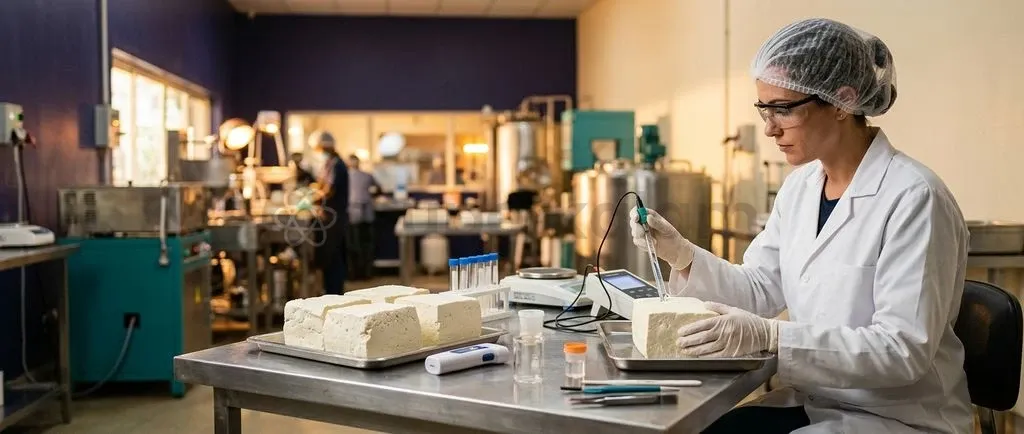
The Food Safety and Standards Authority of India has intensified its nationwide regulatory enforcement against analogue paneer to curb commercial food fraud, protect public health from industrial trans fats, and eliminate deceptive marketing across the hospitality sector. While plant-based alternatives remain lawful when accurately marketed under explicit disclosure norms, commercial establishments frequently substitute dairy fat with inexpensive vegetable oils and industrial starches without informing consumers. The statutory crackdown across multiple states highlights the institutional challenge of policing an unorganised food supply chain under the Food Safety and Standards Act, 2006.
Why Is Analogue Paneer in the News?
The Food Safety and Standards Authority of India initiated coordinated surveillance drives after widespread market substitution of dairy products was detected across commercial supply chains. On 29 April 2026, the FSSAI Western Region issued an enforcement notice declaring the sale of dairy analogues under the name 'paneer' a grave statutory violation, mandating 100% inspections of manufacturing units.
As of September 2026, state governments including Maharashtra, Karnataka, Gujarat, Chhattisgarh, and Haryana invoked statutory emergency powers under Section 30 of the Food Safety and Standards Act, 2006. These state authorities issued one-year prohibition orders on the manufacture, storage, and sale of non-standardised analogue paneer. According to the FSSAI Directorate as reported in September 2026, the central regulator is evaluating a nationwide consultation to establish standardised nomenclature and tighter manufacturing restrictions.
What Is Analogue Paneer and How Is It Made?
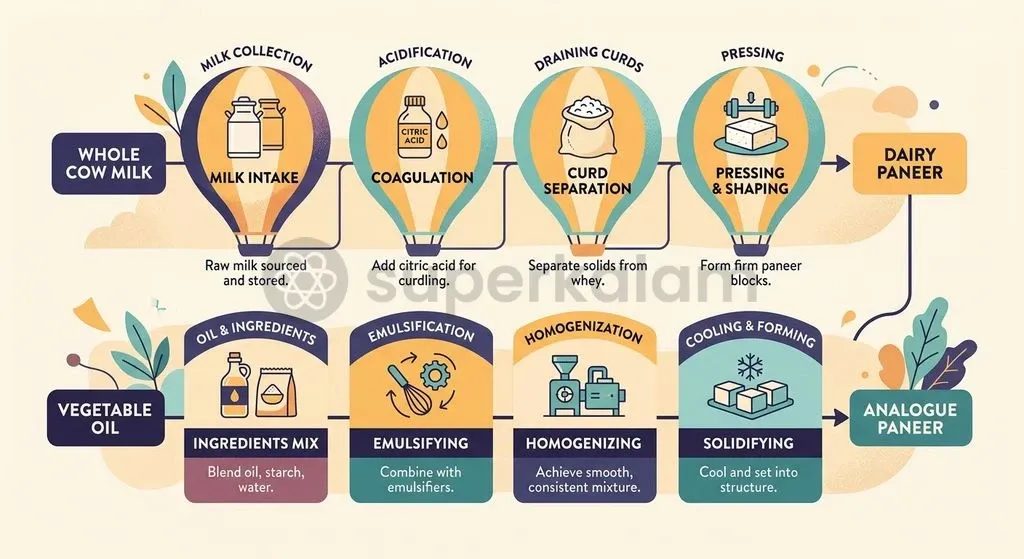
Analogue paneer is a non-dairy imitation product designed to replicate the texture, appearance, and culinary functionality of authentic milk paneer using non-dairy substitutes. According to the Food Safety and Standards (Food Products Standards and Food Additives) Regulations, 2011, authentic paneer must be prepared exclusively from cow or buffalo milk precipitated with permitted acidulants like citric acid or sour whey.
Manufacturers formulate analogue paneer by partially or wholly replacing native milk fat and milk proteins with refined vegetable oils, hydrogenated fats, starches, and vegetable proteins. Industrial processors blend palm oil or partially hydrogenated fats with isolated soy or milk-derived caseinate and emulsifying salts. This chemical mixture creates a stable emulsion that coagulates into solid blocks resembling genuine cottage cheese.
Real Paneer vs Analogue Paneer: A Side-by-Side Comparison
Authentic dairy paneer and analogue formulations differ fundamentally across regulatory definitions, nutritional chemistry, production economics, and shelf life parameters.
| Dimension | Genuine Dairy Paneer | Analogue Paneer |
|---|---|---|
| Primary Raw Materials | Whole cow milk, buffalo milk, or a combination precipitated with food-grade acidulants | Refined palm oil, hydrogenated vegetable fats, industrial starches, and vegetable proteins |
| Nutritional Profile | Rich in natural milk proteins (casein), bioavailable calcium, and dairy fat | High in non-dairy vegetable lipids, carbohydrates, and potential industrial trans fatty acids |
| Regulatory Fat Standards | Minimum 50% milk fat on a dry matter basis; maximum 70% moisture | Variable non-dairy lipid composition lacking standardised minimum dairy fat mandates |
| Refrigerated Shelf Life | Short shelf life of 2 to 3 days under standard cold storage | Extended shelf life of several weeks due to chemical stabilisers and vegetable fat stability |
| Production Cost | Estimated between ₹350 and ₹550 per kilogram depending on raw milk prices (per industry analysis as reported in September 2026) | Estimated between ₹150 and ₹250 per kilogram (per industry analysis as reported in September 2026) |
| Statutory Categorisation | Standardised Dairy Product under FSS Regulations, 2011 | Proprietary / Non-Standardised Food or Vegan Food under separate regimes |
Discuss with Superkalam
What are the statutory minimum milk fat (on dry matter) and maximum moisture percentages required for genuine dairy paneer under FSSAI regulations?
Ask NowWhy Are Regulators Concerned About Fake and Analogue Dairy Products?
Food safety regulators view the silent substitution of analogue paneer as a dual crisis of public health vulnerability and deliberate consumer fraud. The primary physiological hazard stems from the use of partially hydrogenated vegetable oils, which introduce industrial trans fatty acids and elevated saturated fats into daily diets. Clinical research confirms that sustained trans fat intake elevates low-density lipoprotein (LDL) cholesterol and escalates cardiovascular disease risks.
Undisclosed analogue paneer creates acute health risks for individuals with undiagnosed allergies to soy proteins, gluten binders, or chemical emulsifiers. Furthermore, unlabelled imitation products violate personal dietary preferences and religious choices when vegetarian consumers unknowingly consume synthetic stabilisers or misbranded fats. The substantial price difference creates commercial incentives for caterers, cloud kitchens, and restaurants to substitute real paneer with cheap analogues, generating unjust commercial margins through systematic consumer deception.
Discuss with Superkalam
How does the substitution of milk fat with partially hydrogenated vegetable oils in analogue paneer alter both its nutritional profile and its shelf life?
Ask Now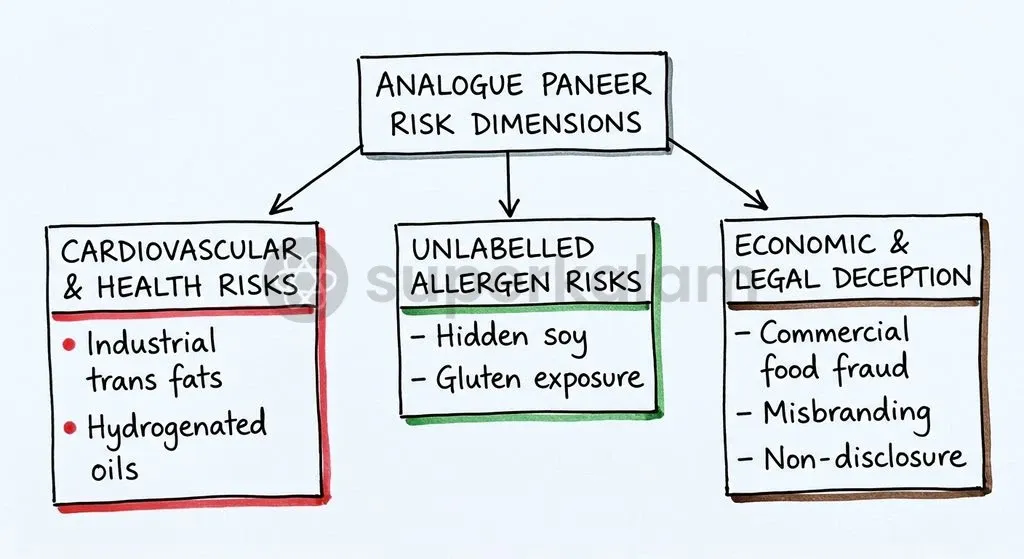
What Does the Food Safety and Standards Act, 2006 Say on Adulteration?
The Food Safety and Standards Act, 2006 establishes an integrated statutory regime to penalise food adulteration, substandard manufacturing, and deceptive commercial practices. Parliament enacted this unified framework to consolidate older food laws and establish clear enforcement powers through the Food Safety and Standards Authority of India.
The statutory framework provides graded penalties depending on the severity of the violation:
- Emergency Prohibition Powers (Section 30(2)(a)): The State Commissioner of Food Safety can prohibit the manufacture, storage, distribution, or sale of any food article across the state for up to one year in the interest of public health.
- Penalty for Non-Conforming Quality (Section 50): Any person selling food that fails to comply with the nature, substance, or quality demanded by the purchaser faces fines extending up to ₹5 lakh.
- Substandard Food Manufacturing (Section 51): Manufacturing, importing, storing, or selling food that fails prescribed quality standards attracts financial penalties of up to ₹5 lakh.
- Misbranding and False Claims (Section 52): Distributing or selling misbranded food articles that mislead the consumer regarding product identity carries penalties extending up to ₹3 lakh.
- Misleading Advertisements (Section 53): Publishing deceptive descriptions or misleading advertisements regarding the true composition of food products results in fines up to ₹10 lakh.
- Unsafe Food and Criminal Liability (Section 59): Selling food that is injurious to health attracts mandatory prison terms, ranging from six months imprisonment for non-grievous violations up to life imprisonment and minimum fines of ₹10 lakh if consumption results in death.
Discuss with Superkalam
Suppose a restaurant markets an analogue-based curry as 'Shahi Paneer' without disclosing vegetable oil ingredients. Analyze which specific sections and penalties of the Food Safety and Standards Act, 2006 are attracted.
Ask NowFSSAI's Regulatory Framework and Labeling Mandates
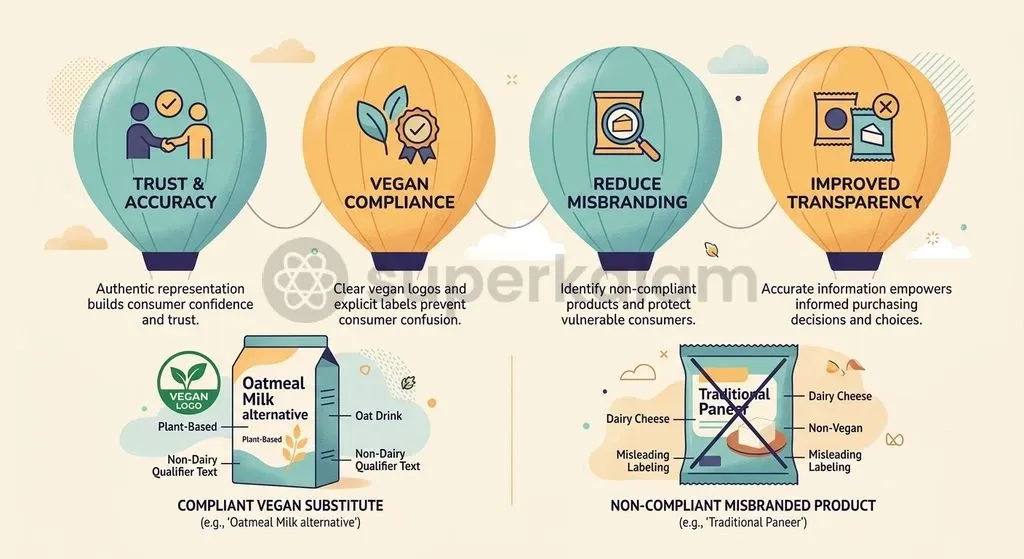
The Food Safety and Standards Authority of India maintains distinct legal boundaries between outright counterfeit adulteration and lawful plant-based alternatives. Under the Food Safety and Standards (Vegan Foods) Regulations, 2022, plant-based dairy substitutes are fully legal only when explicitly certified by the regulator and distinguished by the mandatory Vegan Logo.
Manufacturers of plant-based substitutes are prohibited from using standardised dairy terminology like 'paneer', 'butter', or 'cheese' without clear qualifying language. Under Schedule 4 of the Food Safety and Standards (Licensing and Registration of Food Businesses) Regulations, 2011, commercial kitchens and food processing units must test raw materials and maintain transparent procurement audit trails. When restaurants purchase analogue paneer, failing to disclose the non-dairy substitution on physical menus constitutes misbranding under consumer protection laws.
Key Challenges in Enforcing Food Standards Across India
Enforcement of food quality standards in India faces structural obstacles across the supply chain, from rural milk collection centres to urban commercial kitchens. The unorganised dairy sector handles over 60% of domestic milk and indigenous milk products, creating massive operational blind spots for municipal inspectors.
State food safety departments operate under significant capacity constraints, including a shortage of Food Safety Officers per district and inadequate testing facilities. Most municipal laboratories continue to depend on time-consuming wet chemistry methods rather than deploying Fourier-Transform Infrared (FTIR) spectroscopy field kits for rapid lipid profiling. The absence of mandatory digital batch-tracking enables counterfeiters to repackage bulk analogue blocks into generic containers without verifiable traceability.
Discuss with Superkalam
Evaluate whether blanket state prohibition bans under Section 30(2)(a) are more effective than stringent labeling and traceability mandates under the Vegan Foods Regulations in addressing food fraud.
Ask NowWay Forward: Balancing Food Safety, Consumer Rights, and Industry Compliance
Reforming India's food safety ecosystem requires modernising regulatory infrastructure, expanding testing accessibility, and enforcing strict supply chain accountability.
- Deploy Rapid Field Detection Technology: State food safety directorates must equip flying squads with portable Fourier-Transform Infrared (FTIR) spectrometers to detect non-dairy vegetable fats within minutes at retail points.
- Institutionalise Digital QR Traceability: The regulator should mandate end-to-end QR-code batch tracking for all bulk fats, analogue blocks, and processed dairy goods from the processing factory to commercial food operators.
- Establish Strict Menu Disclosure Norms: Municipal food inspectors must enforce front-of-pack and menu-level disclosures in restaurants, ensuring consumers are informed whenever vegetable-fat analogues replace traditional dairy.
- Strengthen State Enforcement Infrastructure: State governments must fill vacancies for Food Safety Officers and upgrade municipal testing facilities to National Accreditation Board for Testing and Calibration Laboratories (NABL) standards.
- Promote Consumer Awareness: Public health authorities should conduct routine awareness campaigns regarding simple kitchen-level detection techniques and statutory consumer complaint mechanisms under the Consumer Protection Act, 2019.
Key Takeaways
- Analogue paneer replaces natural milk fat and casein with refined vegetable oils, hydrogenated fats, and industrial starches to lower production costs.
- The Food Safety and Standards (Food Products Standards and Food Additives) Regulations, 2011 mandates that genuine paneer contain at least 50% milk fat on a dry matter basis.
- Sections 50, 51, 52, and 53 of the Food Safety and Standards Act, 2006 prescribe monetary penalties up to ₹10 lakh for misbranding, substandard quality, and misleading promotion.
- Section 30(2)(a) empowers State Food Safety Commissioners to impose temporary one-year bans on non-standardised food items in the interest of public health.
- Undisclosed analogue dairy products pose health hazards through industrial trans fats and violate consumer rights under food safety and labeling laws.
Mains Question
'The commercial proliferation of dairy analogues highlights the dual challenge of regulatory enforcement and consumer protection in India's unorganised food supply chain.' In light of the Food Safety and Standards Act, 2006, examine the statutory and public health dimensions of this issue. (10 Marks)
Evaluate NowMains Question
Food safety governance requires balancing legitimate technological innovation in plant-based food formulations with stringent safeguards against economic adulteration and misbranding. Discuss the efficacy of the current regulatory framework under the Food Safety and Standards Authority of India (FSSAI) in achieving this balance. (15 Marks)
Evaluate NowPractice MCQs
QUESTION 1
With reference to the regulatory standards for genuine dairy paneer under the Food Safety and Standards (Food Products Standards and Food Additives) Regulations, 2011, consider the following statements:
- Genuine dairy paneer must be prepared exclusively from cow or buffalo milk precipitated with permitted acidulants.
- Under statutory standards, genuine paneer must contain a minimum of 50% milk fat on a dry matter basis.
- The statutory limit allows a maximum moisture content of 70% in genuine paneer.
Which of the statements given above are correct?
QUESTION 2
Consider the following statements regarding the statutory provisions under the Food Safety and Standards Act, 2006:
- Section 30(2)(a) empowers the State Commissioner of Food Safety to prohibit the manufacture, storage, distribution, or sale of any food article for up to one year in the interest of public health.
- Penalties for manufacturing or selling substandard food under Section 51 extend up to ₹5 lakh.
- Selling food injurious to health that results in death attracts mandatory imprisonment up to life and a minimum fine of ₹10 lakh under Section 59.
Which of the statements given above is/are correct?
QUESTION 3
Regarding the regulation of plant-based substitutes and dairy analogues under the FSSAI framework, consider the following statements:
- Plant-based dairy substitutes are lawful if certified and labeled with the mandatory Vegan Logo under the Food Safety and Standards (Vegan Foods) Regulations, 2022.
- Manufacturers of plant-based dairy substitutes are permitted to use standardized dairy terms like 'paneer' and 'butter' without qualification if they carry the vegan logo.
- Commercial kitchens and food processing units are mandated to maintain transparent procurement audit trails under Schedule 4 of the Licensing and Registration Regulations, 2011.
Which of the statements given above is/are correct?
QUESTION 4
Consider the following statements comparing genuine dairy paneer and analogue paneer:
- Analogue paneer replaces native milk fat and proteins with refined vegetable oils, hydrogenated fats, and starches.
- Analogue paneer generally has a shorter refrigerated shelf life than genuine dairy paneer due to the absence of milk fat.
- Consumption of analogue paneer formulated with partially hydrogenated vegetable oils introduces industrial trans fatty acids that elevate LDL cholesterol.
Which of the statements given above is/are correct?
QUESTION 5
Under the Food Safety and Standards Act, 2006, what is the maximum financial penalty prescribed under Section 53 for publishing misleading advertisements regarding the composition of food articles?