GS 2: GovernanceGS 3: Science & TechnologyGS 1: Indian SocietyGS 2: Social JusticePrelims
AI’s next test — reaching India’s informal women worker, Pg8
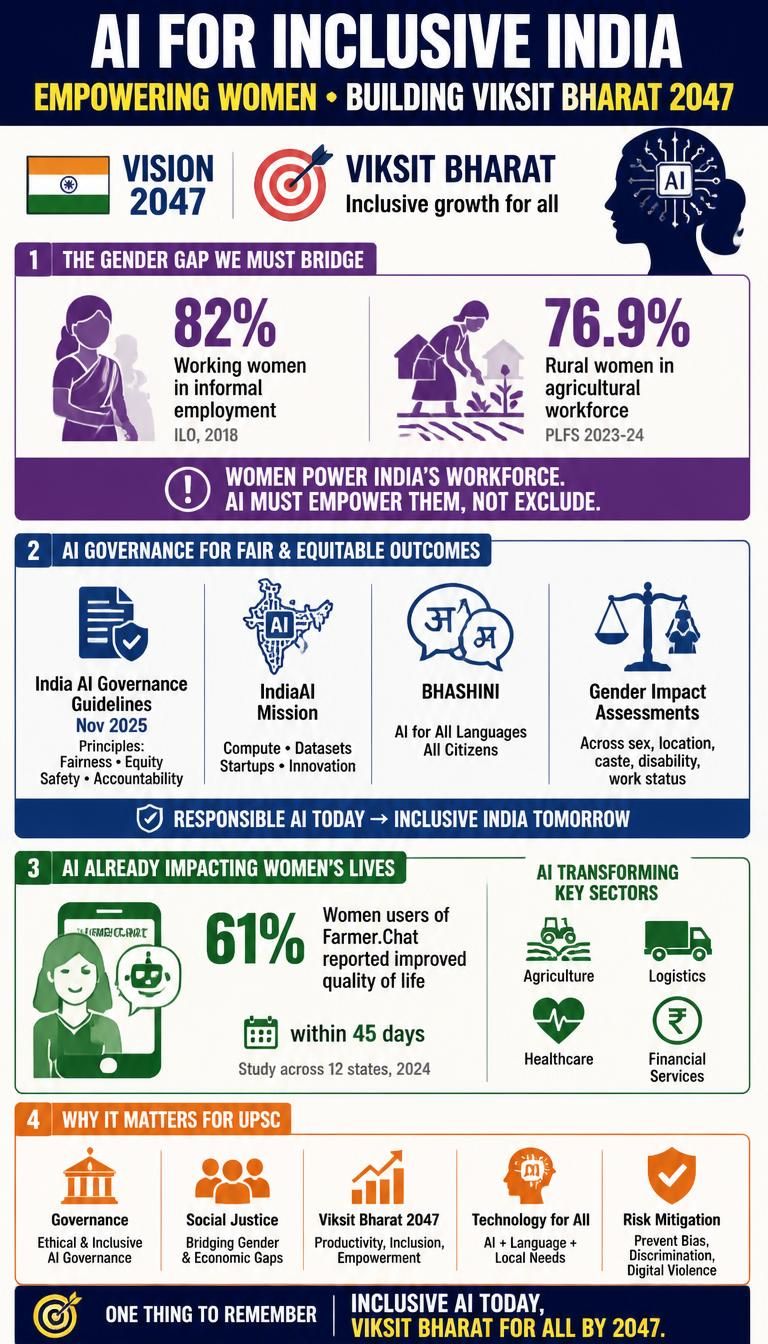
India's Viksit Bharat hinges on AI's inclusive design, literacy, and digital safety for 82% informal women workers, ensuring equitable economic empowerment.
Practice MCQs
789 Students attempted
Key Highlights:
- India's vision for Viksit Bharat by 2047 emphasizes inclusive growth, requiring AI's productivity gains to reach all sections of society.
- Approximately 82% of working women in India are engaged in informal employment, according to a 2018 ILO report.
- The India AI Governance Guidelines, released in November 2025, include principles of fairness and equity to ensure gender-responsive outcomes.
- A 2024 study of Farmer.Chat across 12 states showed 61% of women users reported improved quality of life within 45 days.
- India has established significant AI infrastructure, including the IndiaAI Mission, BHASHINI multilingual platform, and AI Governance Guidelines.
AI and Women.jpg
Detailed Insights:
- AI is transforming value chains in sectors like agriculture, logistics, healthcare, and financial services, necessitating careful design choices to avoid amplifying structural inequalities.
- UN Women has cautioned that without gender-responsive design, testing, and oversight, AI risks amplifying stereotypes, discrimination, and digital violence.
- Rural women constitute 76.9% of the agricultural workforce, as per the Periodic Labour Force Survey (PLFS) 2023-24, making them a key demographic for AI interventions.
- Gender Impact Assessments are crucial for AI systems affecting women's economic opportunities, welfare access, or safety, examining outcomes across sex, location, caste, disability, and work status.
- Gender Responsive Budgeting offers a practical framework for evaluating AI investments to ensure they benefit women and address specific barriers like access, language, safety, or capability.
- AI literacy should be integrated into existing government programs such as Deen Dayal Antyodaya Yojana – National Rural Livelihoods Mission (DAY-NRLM), Deen Dayal Upadhyaya Grameen Kaushalya Yojana (DDU-GKY), and Skill India.
- Digital safety is paramount for women's economic participation, with measures like the IT (Amendment) Rules, 2021, and proposed mandatory labeling of AI-generated synthetic content.
- The National Commission for Women has provided evidence-based recommendations for reviewing cyber laws to protect women's digital rights.
- The India AI Impact Summit 2026 showcased a growing ecosystem of practitioners and innovators committed to shaping AI for humanity and inclusive growth.
Key Concepts Involved:
- Viksit Bharat: India's vision to become a developed nation by 2047, coinciding with the centennial of its independence.
- Informal Employment: Work that is not regulated or protected by labor laws and social security, often lacking benefits and stability.
- Gender Impact Assessments: A systematic evaluation of how policies, programs, or systems affect different genders, aiming to identify and address inequalities.
- Gender Responsive Budgeting: An approach to fiscal policy that analyzes government budgets for their effects on genders and aims to ensure equitable resource distribution.
- AI Literacy: The ability to understand, use, and critically evaluate artificial intelligence tools and concepts.

SuperKalam is your personal mentor for UPSC preparation, guiding you at every step of the exam journey.
Download the App


STUDY RESOURCES
CONTACT US
ⓒ Snapstack Technologies Private Limited