GS 2: GovernanceGS 2: PolityGS 2: Social JusticePrelims
Govt. tables Bill in LS to toughen penalties on leaks, Pg1
Union government tables Bill in Lok Sabha, proposing tougher penalties for exam paper leaks amidst fierce opposition uproar over student protests.
Practice MCQs
789 Students attempted
Key Highlights:
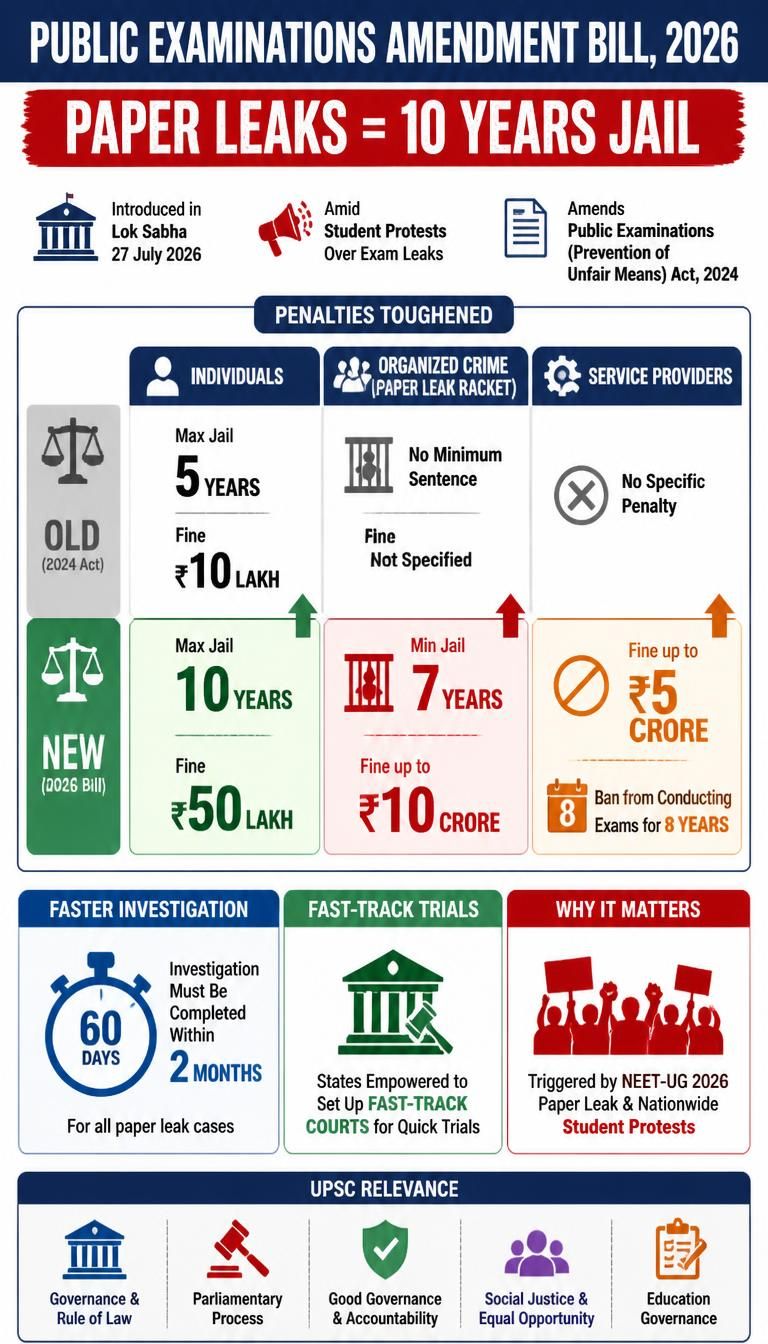
- The Union government introduced the Public Examinations (Prevention of Unfair Means) Amendment Bill, 2026 in the Lok Sabha on Monday, July 27, 2026.
- The Bill aims to significantly toughen penalties for exam paper leaks and organized cheating.
- It was introduced amidst widespread student protests and opposition demands for discussions on police action against protesting students.
- The proposed legislation seeks to amend the existing Public Examinations (Prevention of Unfair Means) Act, 2024.
Examination Bill.jpg
Detailed Insights:
- The Public Examinations (Prevention of Unfair Means) Amendment Bill, 2026 increases the maximum imprisonment for individuals involved in unfair means from five to ten years.
- Fines for individuals have been raised from Rs 10 lakh to Rs 50 lakh under the amended provisions.
- For organized crimes related to paper leaks, the Bill proposes a minimum sentence of seven years and a fine of up to Rs 10 crore.
- Service providers found involved in malpractice could face fines up to Rs 5 crore and be barred from conducting examinations for eight years.
- The Bill mandates a two-month deadline for investigations into paper leak cases and empowers states to establish fast-track courts for trials.
- This legislative move follows recent controversies, including the NEET-UG 2026 paper leak, which led to nationwide student protests.
- The objective is to restore transparency, fairness, and credibility in public examination systems across the country.
Key Concepts Involved:
- Bill: A draft legislative proposal presented to a legislature for enactment into law.
- Lok Sabha: The lower house of the Parliament of India, composed of representatives directly elected by the people.
- Public Examinations: Tests conducted by central government bodies for recruitment to public services or admission to educational institutions.
- Unfair Means: Any illegal or unethical practices used to gain an undue advantage in examinations, such as paper leaks or cheating.

SuperKalam is your personal mentor for UPSC preparation, guiding you at every step of the exam journey.
Download the App


STUDY RESOURCES
CONTACT US
ⓒ Snapstack Technologies Private Limited