GS 3: EconomyPrelimsGS 3: Buffer Stocks and Food SecurityGS 3: Major Crops, Cropping Patterns and Irrigation SystemsGS 3: Storage, Transport and Marketing of Agricultural Produce
Tackling Pulses Inflation and Supply Shortfalls in India
Surging tur and gram prices push wholesale pulses inflation to 12.7 percent, exposing production bottlenecks and speculative hoarding across India.
Source: Indian Express (Pg. 11)
Practice MCQs
804 Students attempted
Key Highlights:
- India's wholesale pulses inflation turned positive to reach 12.7 per cent by October, ending 15 consecutive months of deflation.
- Mandi prices tracked by Agmarknet showed gram trading at Rs 73/kg and tur at Rs 97/kg, rising 32 per cent and 51 per cent year-on-year respectively.
- Retail dal prices surged to Rs 96/kg for gram and Rs 137/kg for tur, posing challenges for the Mission for Aatmanirbharta in Pulses.
- Tur production for 2026-27 is projected to drop to 2.5–2.8 MMT from 3.59 MMT due to widespread drought in Karnataka and Maharashtra.
- Gram faced paradoxical price inflation despite official 2025-26 output reaching 12.51 MMT against domestic consumption of 9.5–10 MMT.
- Rabi gram acreage dropped nearly 22 per cent year-on-year to 31.1 lakh hectares amid erratic soil moisture and elevated temperature risks.
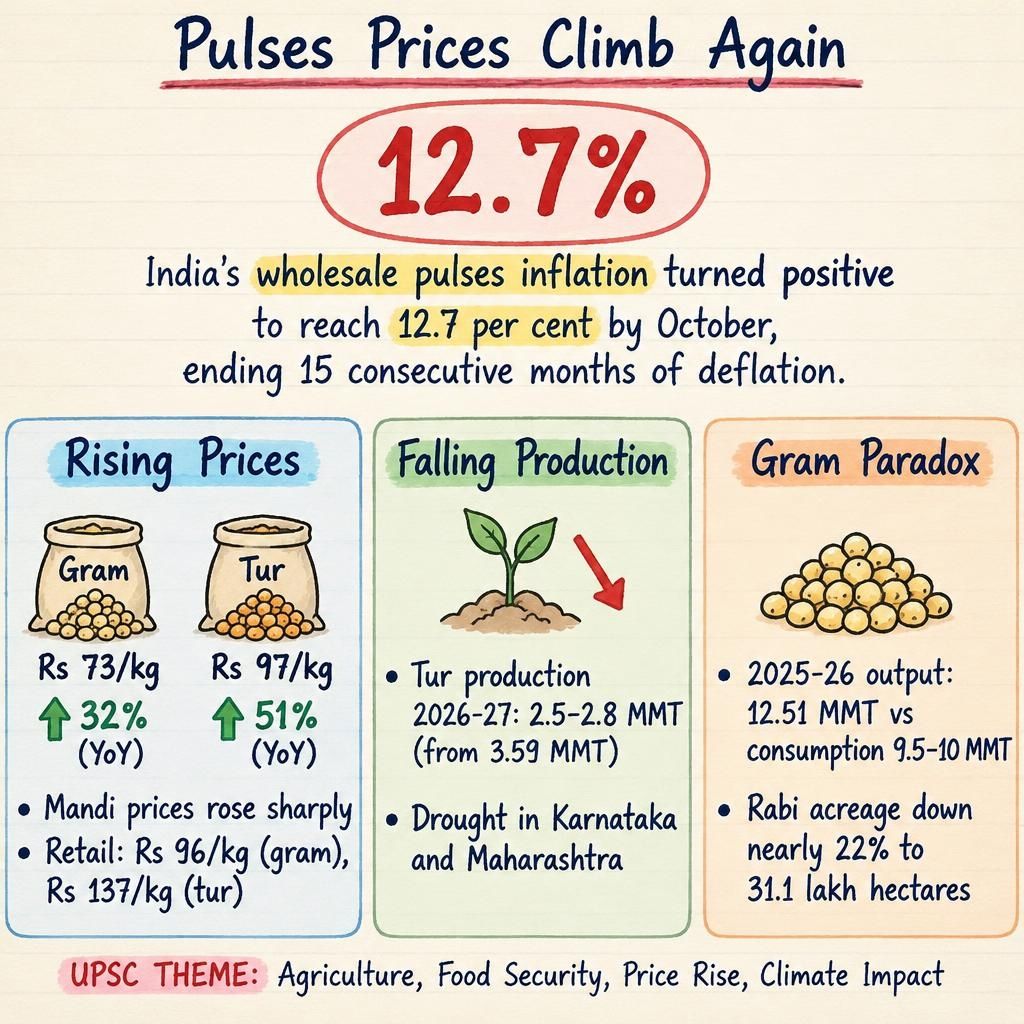
Pulses Prices.jpg
Detailed Insights:
- Tur supply faces severe deficits because Karnataka and Maharashtra produce nearly 54 per cent of national output and suffered extensive crop damage.
- Gram price pressure despite paper surpluses indicates speculative hoarding, diverted demand from expensive tur, or inaccurate initial production estimates.
- Market confidence in gram supplies weakened due to lower Australian chickpea harvests and delayed rabi acreage expansion.
- Disclosing verified public inventories held by NAFED and National Cooperative Consumers' Federation of India can reduce speculative holding by private traders.
- Retaining the 30 per cent tariff on yellow peas remains critical to prevent disincentivizing domestic farmers during rabi sowing.
- Long gestation cycles of tur disincentivize farmers, requiring the development of climate-resilient and early-maturing cultivars by agricultural research bodies.
- Instituting an institutional pulses monitoring cell pooling trade, weather, and inventory data would facilitate proactive rather than reactive market intervention.
Key Concepts Involved:
- National Agricultural Cooperative Marketing Federation of India: The apex central agency managing price support operations and strategic buffer stocks of agricultural commodities.
- Agmarknet: A centralized government portal linking agricultural mandis to provide real-time agricultural price and arrival trends.
- Crop Weather Watch Group: An inter-ministerial panel that tracks monsoon progression, agrometeorological conditions, and weekly nationwide sowing patterns.

SuperKalam is your personal mentor for UPSC preparation, guiding you at every step of the exam journey.
Download the App


STUDY RESOURCES
CONTACT US
ⓒ Snapstack Technologies Private Limited