GS 3: EconomyPrelimsGS 3: Indian Economy, Planning, Mobilization of Resources, Growth, Development and Employment
RBI Interventions and Record Foreign Inflows Drive Rupee Rebound Against Dollar
Reserve Bank of India interventions and record $15 billion equity inflows lift the rupee by nearly 3% amid global currency market shifts.
Source: Indian Express (Pg. 13)
Practice MCQs
804 Students attempted
Key Highlights:
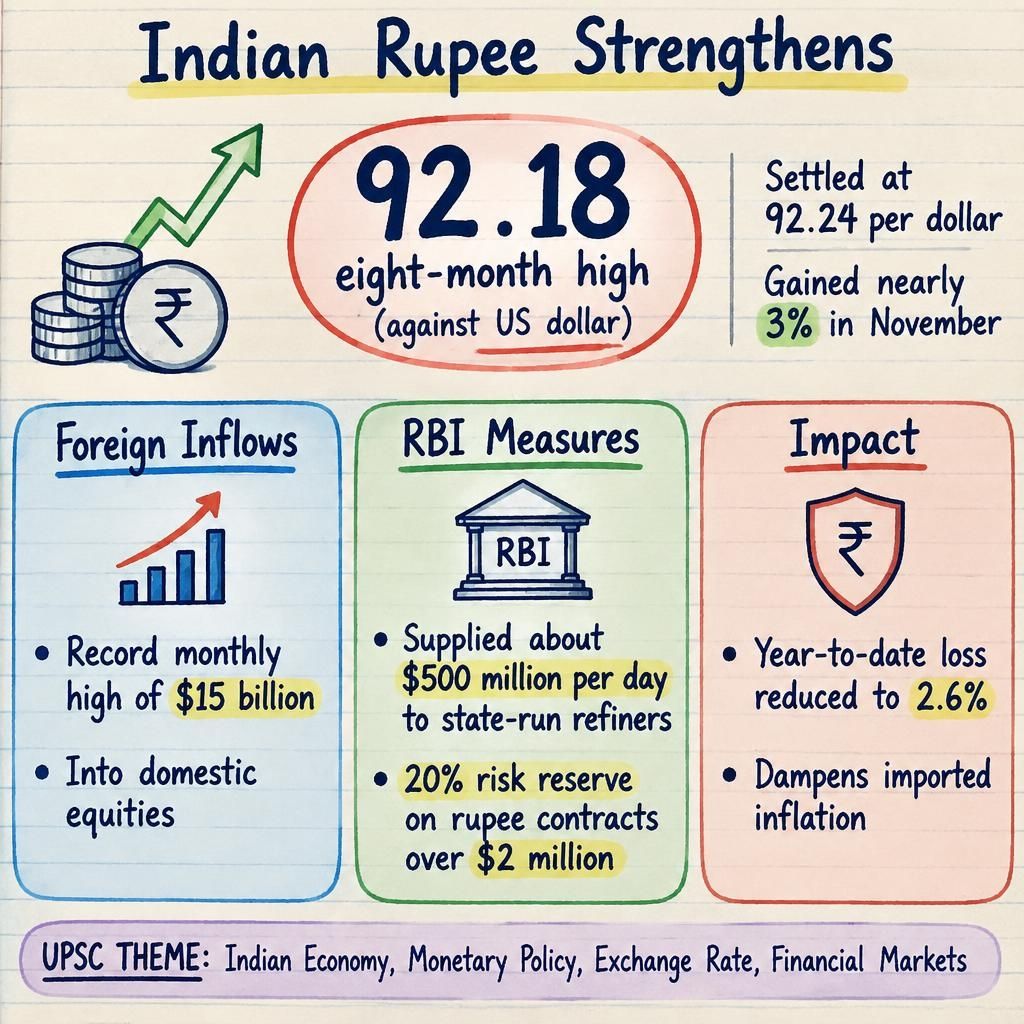
- The Indian rupee appreciated to an eight-month high of 92.18 against the US dollar intraday, settling at 92.24 per dollar.
- The domestic currency gained nearly 3% in November, shifting from Asia's worst-performing currency earlier in the year to its top performer.
- Foreign institutional inflows into domestic equities reached a record monthly high of $15 billion amid slowing global investment in artificial intelligence.
- Interventions led by the Reserve Bank of India reduced the currency's year-to-date loss to 2.6%, down from over 7% in early October.
- The central bank supplied approximately $500 million per day directly to state-run oil marketing companies to strip import demand from the spot market.
- A 20% foreign exchange risk reserve requirement was enforced on rupee contracts exceeding $2 million to penalize speculative short positions.
Indian Rupee Strengthens.jpg
Detailed Insights:
- Off-market dollar allocations to refiners shelter spot foreign exchange trading from high import bills during periods of commodity price volatility.
- Central bank operations in foreign exchange markets are legally guided under the Foreign Exchange Management Act, 1999 to maintain market stability.
- Direct foreign currency provisioning draws upon the foreign exchange reserves maintained by the Reserve Bank of India.
- Raising reserve requirements on over-the-counter currency derivatives curtails speculative short selling without completely shutting access for commercial hedgers.
- A strengthening exchange rate dampens imported inflation, supporting retail price targets overseen by the statutory Monetary Policy Committee.
Key Concepts Involved:
- Managed Float Regime: An exchange rate framework where market forces determine currency value while the central bank intervenes against excessive volatility.
- Currency Hedging: A risk management strategy using financial derivatives to offset potential losses from adverse foreign exchange rate fluctuations.
- Foreign Portfolio Investment: Cross-border capital deployed by foreign investors to purchase domestic liquid financial assets such as equities and bonds.

SuperKalam is your personal mentor for UPSC preparation, guiding you at every step of the exam journey.
Download the App


STUDY RESOURCES
CONTACT US
ⓒ Snapstack Technologies Private Limited