GS 3: EconomyPrelims
Why inflation is rising in India, Pg10
India's WPI inflation surges to 10%, fueled by soaring global oil prices and El Niño-induced monsoon failures, necessitating urgent policy interventions.
Practice MCQs
739 Students attempted
Key Highlights:
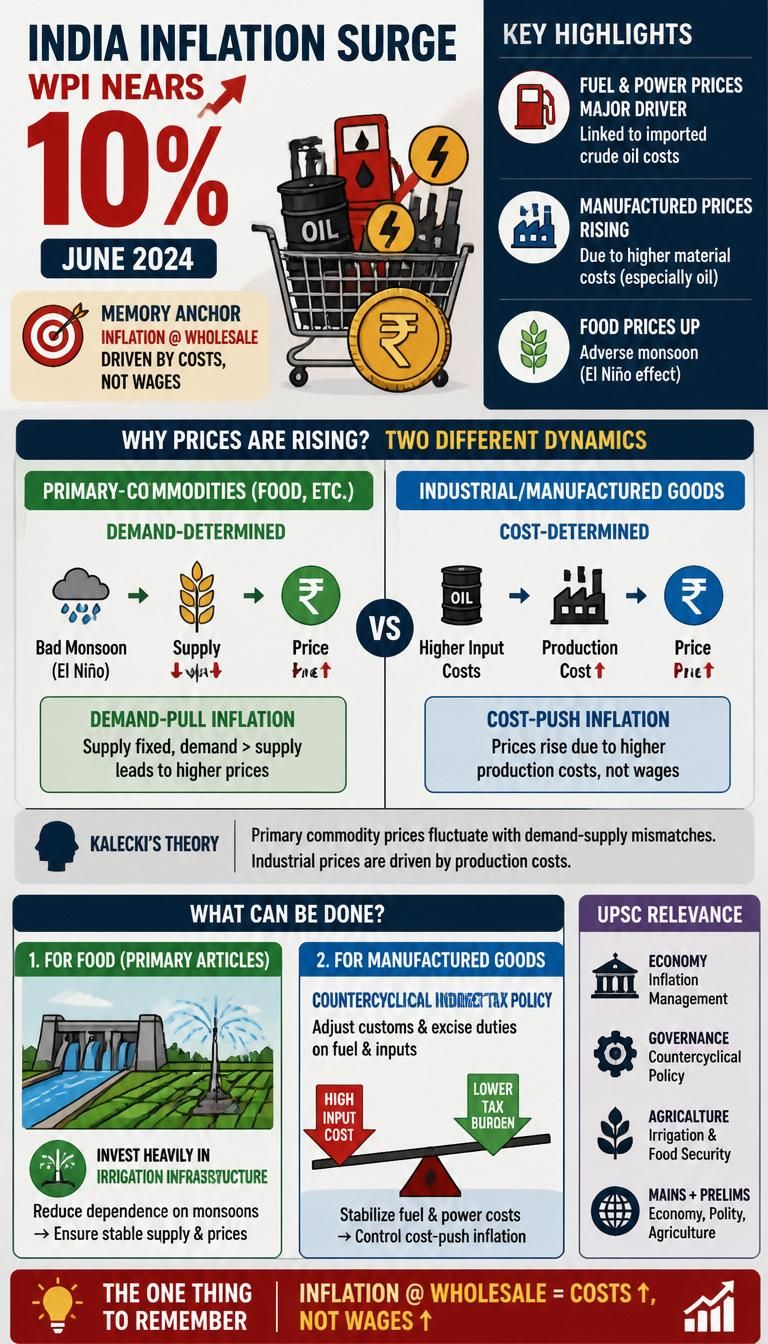
- India is experiencing a significant rise in inflation, with Wholesale Price Index (WPI) inflation nearing 10% in June.
- The increase in WPI inflation is primarily driven by rising fuel and power prices and manufactured product prices.
- Fuel and power prices are largely influenced by imported crude oil costs.
- Food prices have also increased, potentially due to adverse monsoon conditions linked to the El Niño effect.
- The article highlights a structural difference where primary commodity prices are demand-determined, while industrial prices are cost-determined.
Inflation.jpg
Detailed Insights:
- WPI measures the average change in prices of goods at the wholesale level, indicating inflationary pressures before they reach consumers.
- The article attributes the rise in manufactured product prices to increased material costs, particularly oil, rather than wage increases.
- According to Polish economist Michal Kalecki's theory, primary commodity prices fluctuate with demand-supply mismatches, while industrial prices are determined by production costs.
- For primary articles like food, supply is relatively fixed, so a decline (e.g., due to bad monsoon) leads to price increases, indicating demand-pull inflation.
- For manufactured goods, supply can adjust to demand, making prices primarily dependent on production costs, leading to cost-push inflation.
- Proposed solutions include investing heavily in irrigation infrastructure to reduce agriculture's dependence on monsoons.
- For manufactured goods, a countercyclical indirect tax policy is suggested to manage fuel and power costs by adjusting customs and excise duties.
Key Concepts Involved:
- Wholesale Price Index (WPI): An index that measures the average change in the prices of commodities at the wholesale level.
- Demand-pull inflation: Occurs when aggregate demand in an economy outpaces aggregate supply, leading to a general rise in prices.
- Cost-push inflation: Occurs when the overall prices increase due to increases in the cost of wages and raw materials.
- El Niño effect: A climate pattern describing the unusual warming of surface waters in the eastern tropical Pacific Ocean, often leading to altered weather patterns globally, including droughts in some regions.
- Countercyclical indirect tax policy: A fiscal policy where indirect taxes (like customs and excise duties) are adjusted to counteract economic cycles, for example, reducing them during inflationary periods to lower costs.

SuperKalam is your personal mentor for UPSC preparation, guiding you at every step of the exam journey.
Download the App


STUDY RESOURCES
CONTACT US
ⓒ Snapstack Technologies Private Limited