GS 1: World GeographyGS 1: Art & CultureGS 3: Environment & EcologyPrelims
Mount Olympus, home of ancient Greek gods, nominated for UNESCO World Heritage List, Pg14
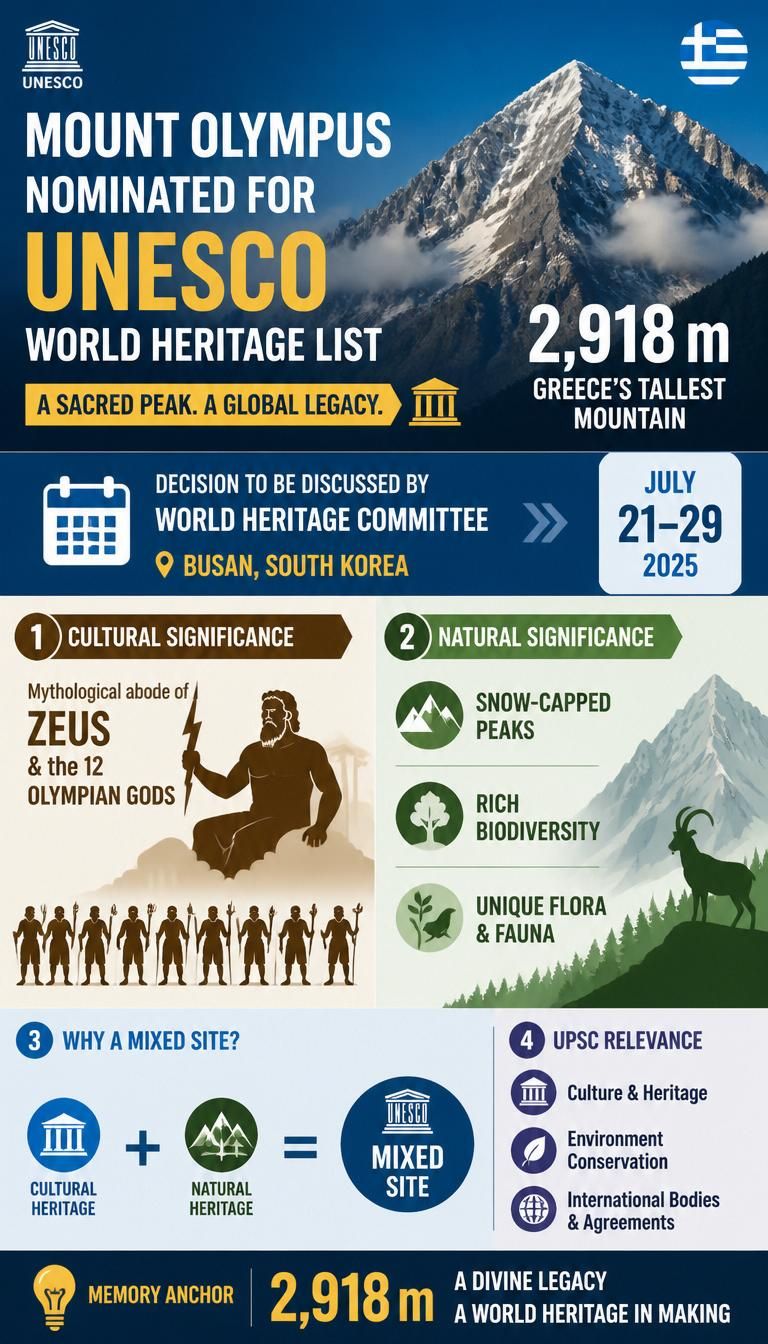
Greece nominates iconic Mount Olympus, mythological home of Zeus, for UNESCO World Heritage status as a mixed cultural and natural site.
Practice MCQs
724 Students attempted
Key Highlights:
- Mount Olympus, the mythological home of ancient Greek gods, has been nominated for inclusion in the UNESCO World Heritage List.
- The nomination seeks its recognition as a mixed cultural and natural site.
- The decision is to be discussed by the World Heritage Committee in Busan, South Korea, from July 21 to July 29.
- Standing at 2,918 meters, Mount Olympus is Greece's tallest mountain.
Olympus.jpg
Detailed Insights:
- The mountain holds immense cultural significance as the legendary abode of Zeus and the 12 Olympian gods in ancient Greek mythology.
- Its natural features include snow-capped peaks and rich biodiversity, contributing to its nomination as a mixed site.
- The UNESCO World Heritage List aims to identify, protect, and preserve sites of outstanding universal value to humanity.
- The World Heritage Committee is responsible for the implementation of the World Heritage Convention, including listing sites and monitoring their conservation.
- The nomination highlights the blend of natural beauty and profound historical and mythological importance of the region.
Key Concepts Involved:
- UNESCO World Heritage List: A list of places (sites, monuments, natural areas) deemed to have outstanding universal value, maintained by UNESCO.
- Mixed Cultural and Natural Site: A World Heritage site that possesses elements of both natural and cultural significance.
- World Heritage Committee: The body responsible for implementing the World Heritage Convention, including selecting sites for the World Heritage List.
- Greek Mythology: The body of myths and teachings belonging to the ancient Greeks, concerning their gods and heroes, and the nature of the world.

SuperKalam is your personal mentor for UPSC preparation, guiding you at every step of the exam journey.
Download the App


STUDY RESOURCES
CONTACT US
ⓒ Snapstack Technologies Private Limited