GS 2: Social JusticeGS 3: Environment & EcologyPrelimsGS 3: Conservation, Pollution and DegradationGS 2: Health Sector
Dementia risk that could be prevented or delayed, Pg8
WHO reveals 45% of dementia risk is preventable, citing tobacco and air pollution as key modifiable factors.
Practice MCQs
883 Students attempted
Key Highlights:
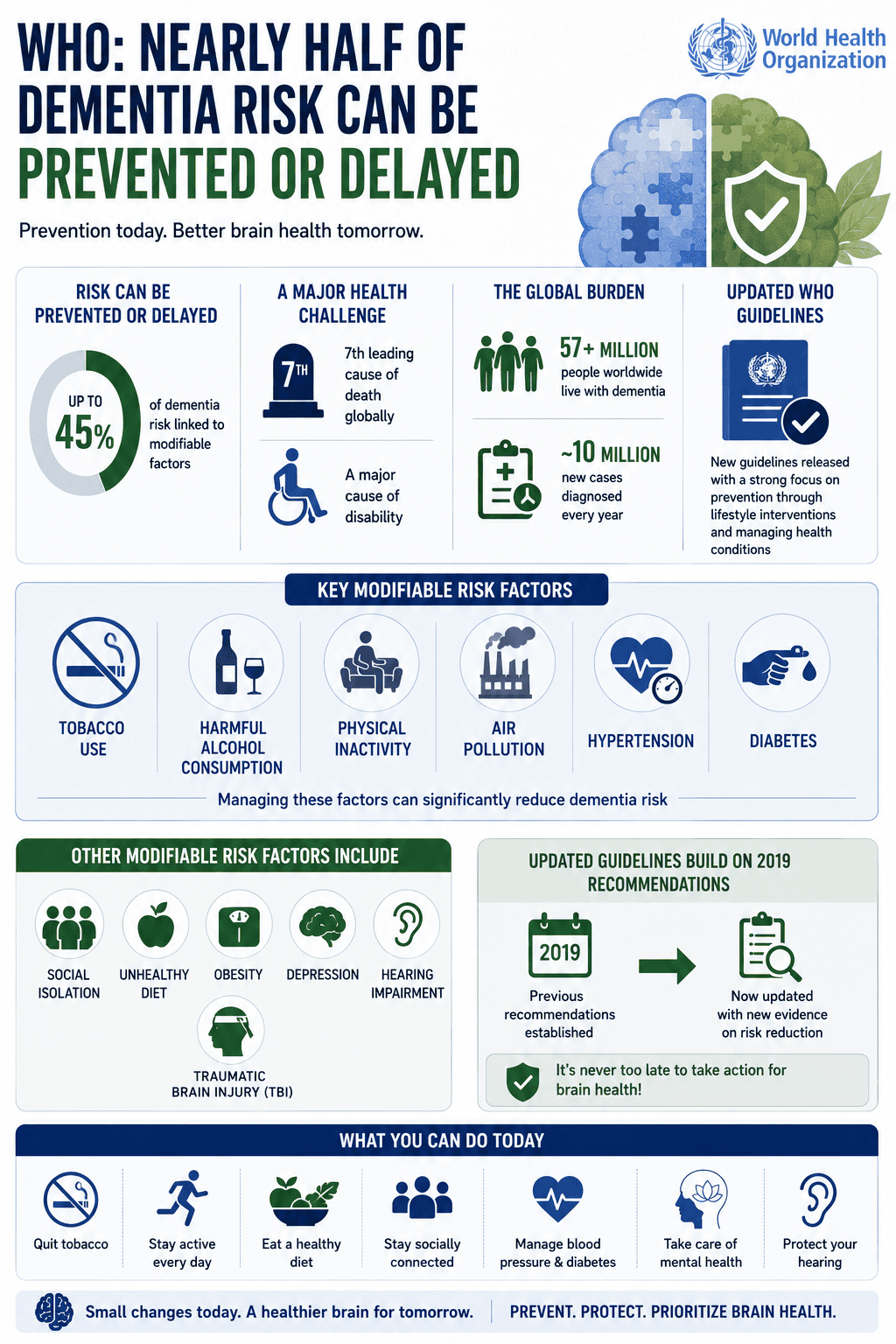
- The World Health Organization (WHO) stated that up to 45% of dementia risk could be prevented or delayed by addressing modifiable factors.
- Dementia is currently the seventh leading cause of death globally and a major cause of disability.
- Key modifiable risk factors include tobacco use, harmful alcohol consumption, physical inactivity, air pollution, and non-communicable diseases like hypertension and diabetes.
- Over 57 million people worldwide live with dementia, with nearly 10 million new cases diagnosed annually.
- The WHO recently released updated guidelines emphasizing prevention through lifestyle interventions and managing health conditions.
Dementia.png
Detailed Insights:
- The updated WHO guidelines build upon previous recommendations from 2019, incorporating new evidence on risk reduction.
- Modifiable risk factors also encompass social isolation, unhealthy diet, obesity, depression, hearing impairment, and traumatic brain injury.
- For the first time, the WHO guidelines specifically recommend reducing exposure to air pollution and considering hearing aids as part of dementia prevention strategies.
- Alzheimer's disease is the most prevalent form of dementia, accounting for an estimated 60-70% of all cases.
- The global economic burden of dementia was estimated at US$1.3 trillion in 2019, with projections to reach US$2.8 trillion by 2030.
- Women are disproportionately affected by dementia, both as patients and as primary informal caregivers.
- In India, "no education" has been identified as a significant modifiable risk factor, with potential to prevent up to 70% of dementia cases by addressing local risk factors.
- The guidelines advocate for multidomain interventions that integrate physical activity, nutrition, cognitive and social engagement, and cardiovascular health monitoring.
Key Concepts Involved:
- Dementia: A syndrome characterized by a decline in memory, thinking, behavior, and the ability to perform everyday activities.
- Modifiable Risk Factors: Lifestyle choices, environmental exposures, and health conditions that can be altered to reduce the likelihood of developing a disease.
- Non-Communicable Diseases (NCDs): Chronic diseases like heart disease, stroke, cancer, diabetes, and chronic respiratory diseases that are not passed from person to person.
- Cognitive Decline: A reduction in mental abilities such as memory, thinking, and learning, which can be a precursor to dementia.

SuperKalam is your personal mentor for UPSC preparation, guiding you at every step of the exam journey.
Download the App


STUDY RESOURCES
CONTACT US
ⓒ Snapstack Technologies Private Limited