GS 2: PolityGS 2: GovernanceGS 1: Post-Independence IndiaPrelimsGS2: Indian Constitutional Evolution, Features, Amendments, Basic Structure Doctrine
India at 80, a democracy in search of renewal, Pg10
As India enters its 80th year, an audit reveals grave challenges to its inclusive democracy, constitutional institutions, and federal polity, urging renewal.
Practice MCQs
883 Students attempted
Key Highlights:
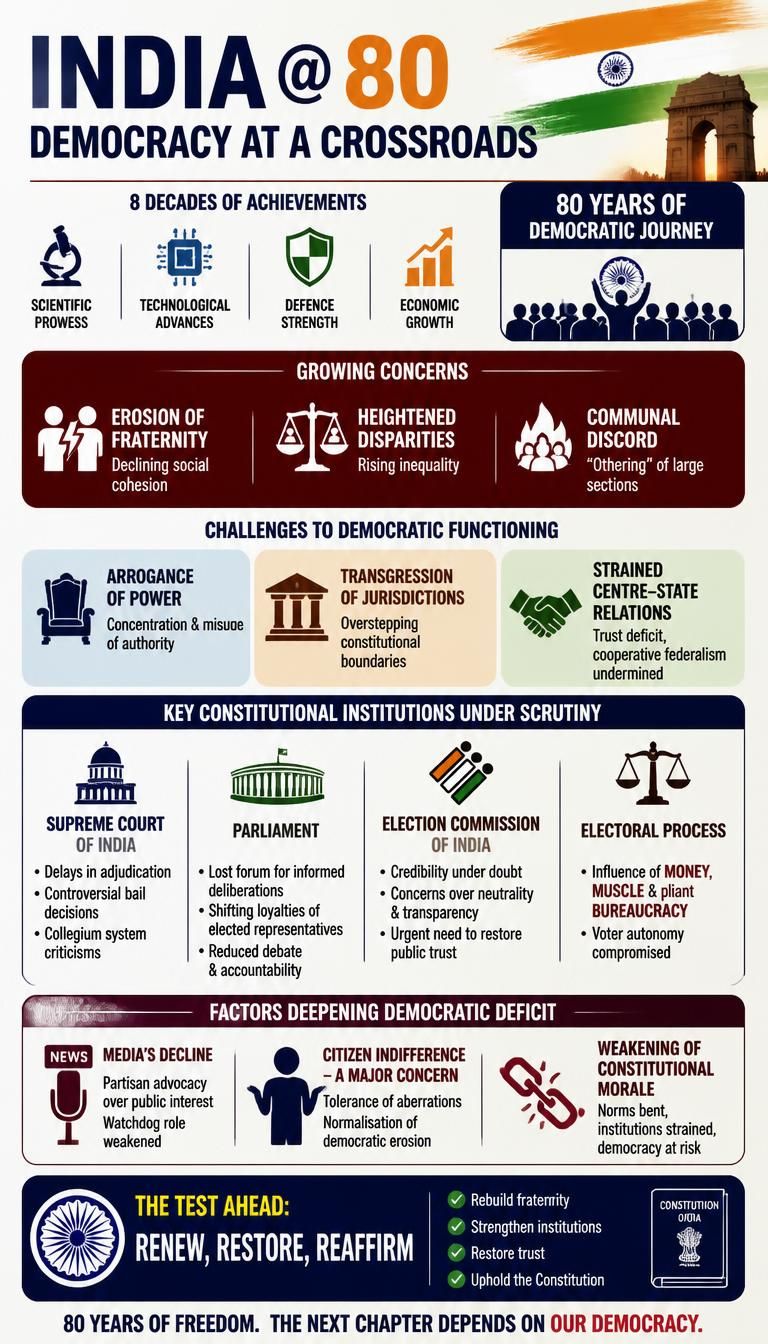
- India is entering its 80th year of Independence, prompting reflection on its democratic journey and achievements.
- The nation has made significant strides in scientific, technological, defence, and economic sectors.
- The article highlights concerns regarding the erosion of fraternity, heightened disparities, and communal discord among citizens.
- Challenges to democratic functioning include the arrogance of power, transgressions of constitutional jurisdictions, and strained Centre-State relations.
- The performance of key constitutional institutions such as the Supreme Court of India, Parliament, and Election Commission of India is under scrutiny.
- The indifference of a significant section of the citizenry to constitutional governance aberrations is identified as a contributing factor to democratic deficit.
India @80.jpg
Detailed Insights:
- The article notes a decline in social cohesion, leading to communal discord and the "othering" of large sections of the population.
- It criticizes the arrogance of power and the transgression of constitutionally demarcated jurisdictions by different branches of the state.
- Electoral processes are seen as compromised by the influence of money, muscle, and a pliant bureaucracy, undermining voter autonomy.
- The Supreme Court of India faces criticism for delays in adjudication, certain bail decisions, and the functioning of the collegium system.
- Parliament is perceived to have lost its role as a forum for informed deliberations due to shifting political loyalties of elected representatives.
- The Election Commission of India is urged to restore its credibility amidst widespread doubts about its functioning.
- The media's role as a guardian of public interest is questioned, with many acting as partisan advocates rather than objective reporters.
- The indifference of a vast section of the citizenry to constitutional governance failures is identified as a significant concern.
- The article calls for national renewal through introspection and a return to ethical fundamentals in political practice.
Key Concepts Involved:
- Fraternity: A sense of common brotherhood and sisterhood among all citizens, promoting social cohesion.
- Federal Polity: A system of governance where power is divided between a central authority and constituent political units.
- Substantive Democracy: A form of democracy where the will of the people is truly represented and protected, beyond mere procedural aspects.
- Collegium System: The system of appointment and transfer of judges in the Supreme Court and High Courts in India.

SuperKalam is your personal mentor for UPSC preparation, guiding you at every step of the exam journey.
Download the App


STUDY RESOURCES
CONTACT US
ⓒ Snapstack Technologies Private Limited