GS 2: GovernanceGS 2: International RelationsGS 3: EconomyPrelimsGS 2: Bilateral, Regional and Global Groupings and Agreements
At Abu Dhabi, New Diplomatic Push on Ukraine, Pg11
Renewed US-led peace talks on Ukraine in Abu Dhabi involve India, Russia, and Europe, aiming for a broader European security architecture.
Practice MCQs
876 Students attempted
Key Highlights:
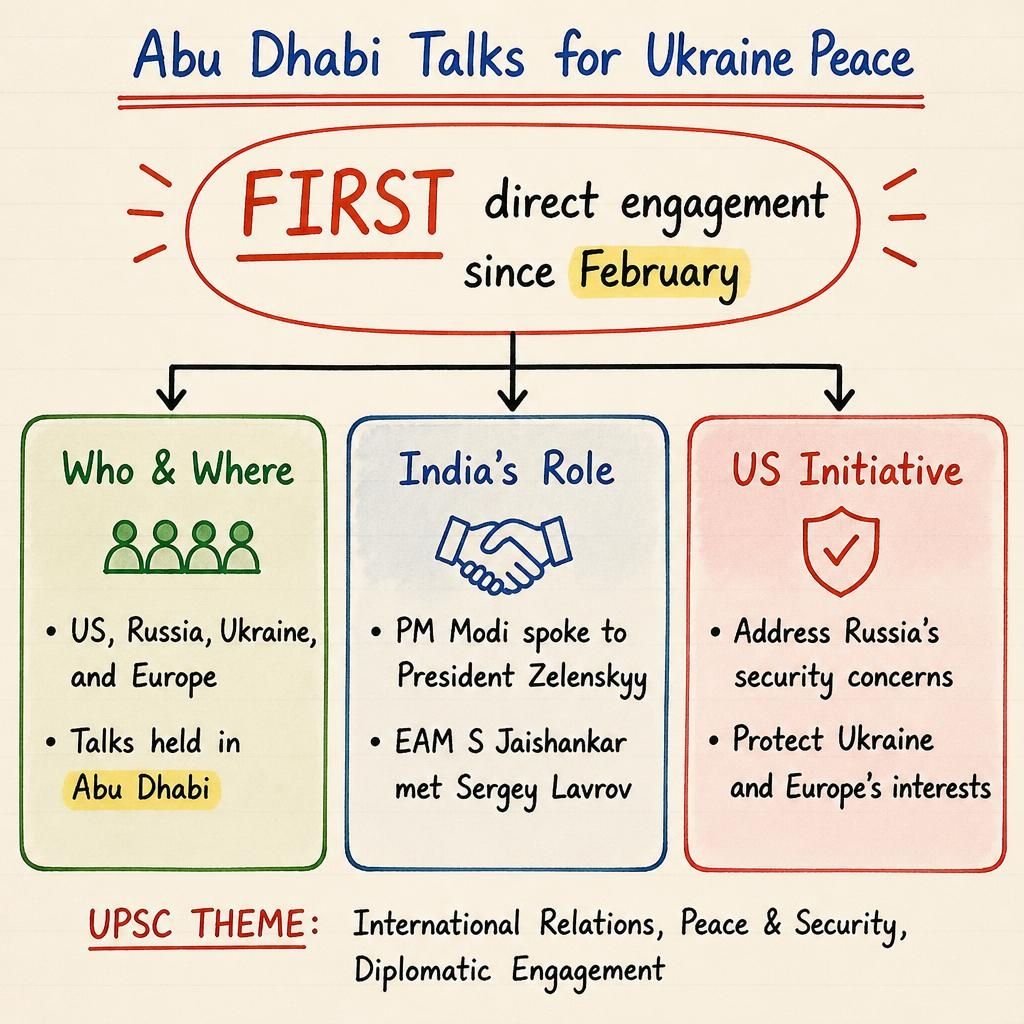
- Representatives from the US, Russia, Ukraine, and Europe gathered in Abu Dhabi for renewed peace talks on the Ukraine conflict.
- India reaffirmed its commitment to the peace process, with Prime Minister Narendra Modi speaking to President Volodymyr Zelenskyy and External Affairs Minister S Jaishankar engaging with Russian counterpart Sergey Lavrov.
- The US, under a renewed diplomatic push led by envoys Steve Witkoff and Jared Kushner, aimed to embed Ukraine peace within a broader European security architecture.
- The US initiative sought to address Russia's security concerns to facilitate a ceasefire and sustainable settlement, while also protecting Ukraine and Europe's interests.
Abu Dhabi Talks.jpg
Detailed Insights:
- The trilateral talks in Abu Dhabi marked the first direct engagement between the US, Ukraine, and Russia since February.
- India's engagement with the crisis is driven by its potential to ease current economic and geopolitical challenges.
- The US strategy involved widening the diplomatic framework to create room for compromise, rather than breaking the problem into smaller parts.
- Key objectives for a broader European security framework included permanent security consultations, reliable crisis communications, and greater military transparency.
- Other US objectives were reciprocal measures to reduce escalation risks, arrangements for long-term stability, and upholding countries' freedom to make security choices.
- European nations were reportedly grappling with the US-led initiative, which could lead to a settlement negotiated without their direct primary involvement.
Key Concepts Involved:
- European Security Architecture: The framework of treaties, organizations, and agreements governing security relations across Europe.
- Geopolitical Challenges: Complex problems arising from the interplay of geography, power, and politics on an international scale.
- Diplomatic Initiatives: Formal efforts by states to resolve conflicts, build consensus, or foster cooperation through negotiation and dialogue.

SuperKalam is your personal mentor for UPSC preparation, guiding you at every step of the exam journey.
Download the App


STUDY RESOURCES
CONTACT US
ⓒ Snapstack Technologies Private Limited