GS 2: GovernanceGS 3: EconomyPrelimsGS 3: Changes in Industrial Policy and Effects on Industrial GrowthGS 3: Inclusive Growth
Highs And Lows, Pg6
July GST collections reached ₹2.11 lakh crore, yet import-driven growth and rupee depreciation mask weak domestic production and uneven state-level tax buoyancy.
Practice MCQs
819 Students attempted
Key Highlights:
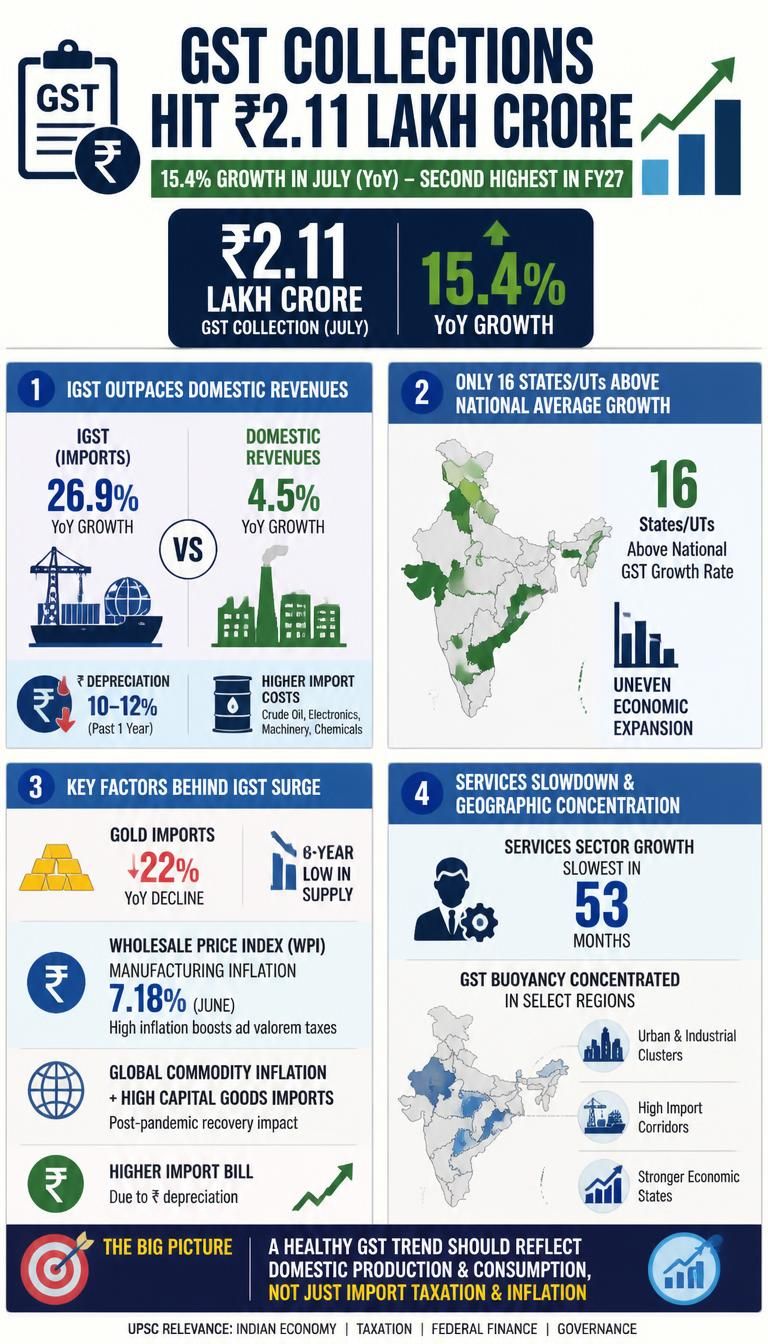
- India's Goods and Services Tax (GST) collection reached ₹2.11 lakh crore in July, marking a 15.4% year-on-year growth, the second-highest in FY27.
- Import Integrated Goods and Services Tax (IGST) grew by 26.9%, significantly outpacing the 4.5% rise in domestic revenues.
- This growth is partly attributed to the rupee's depreciation and higher import costs for crude oil, electronics, machinery, and chemicals.
- Only 16 States/Union Territories reported post-settlement GST growth exceeding the national average, indicating uneven economic expansion.
- The article suggests that a healthy GST trajectory should reflect domestic production and consumption, not just import taxation and inflation.
GST.jpg
Detailed Insights:
- The faster pickup in IGST since the post-pandemic recovery reflects global commodity inflation and increased capital goods imports.
- A 10-12% depreciation of the Indian rupee over the past year contributed to a higher import bill, impacting IGST collections.
- Despite higher IGST from gold imports, overall bullion imports fell by 22%, leading to a six-year low in supply.
- High Wholesale Price Index (WPI) inflation, particularly in manufacturing at 7.18% in June, influenced domestic revenue traction in the ad valorem tax system.
- The services sector experienced its slowest growth in 53 months, with GST buoyancy geographically concentrated in certain regions.
- Many states, especially those with larger unorganised sectors, struggle to generate tax buoyancy and rely on central transfers and Finance Commission devolution.
- The concept of GST 3.0 is proposed to ensure that economic expansion benefits are geographically broad-based and fiscally inclusive.
- Faster domestic refunds suggest improved GST compliance by formal businesses and a better government ecosystem, despite ongoing input tax credit disputes.
- The current GST growth pattern, heavily reliant on import taxation and local inflation, raises concerns about the true reflection of domestic production and consumption.
Key Concepts Involved:
- Goods and Services Tax (GST): A comprehensive indirect tax levied on the supply of goods and services across India.
- Integrated Goods and Services Tax (IGST): A component of GST levied on inter-state supply of goods and services, including imports.
- Wholesale Price Index (WPI): An index that measures the average change in prices of goods at the wholesale level.
- Input Tax Credit (ITC): A mechanism under GST allowing businesses to claim credit for taxes paid on inputs used for making taxable supplies.
- Finance Commission: A constitutional body that defines the financial relations between the central government and state governments.
- Make in India: A government initiative to encourage companies to manufacture their products in India.

SuperKalam is your personal mentor for UPSC preparation, guiding you at every step of the exam journey.
Download the App


STUDY RESOURCES
CONTACT US
ⓒ Snapstack Technologies Private Limited