GS 2: GovernanceGS 2: International RelationsGS 3: Disaster ManagementGS 3: Environment & EcologyPrelims
A Climate Resilience Pathway Between India And China, Pg6
Amidst increasing extreme weather events, India and China explore climate resilience cooperation, focusing on disaster mitigation, urban planning, and bridging the finance gap.
Practice MCQs
819 Students attempted
Key Highlights:
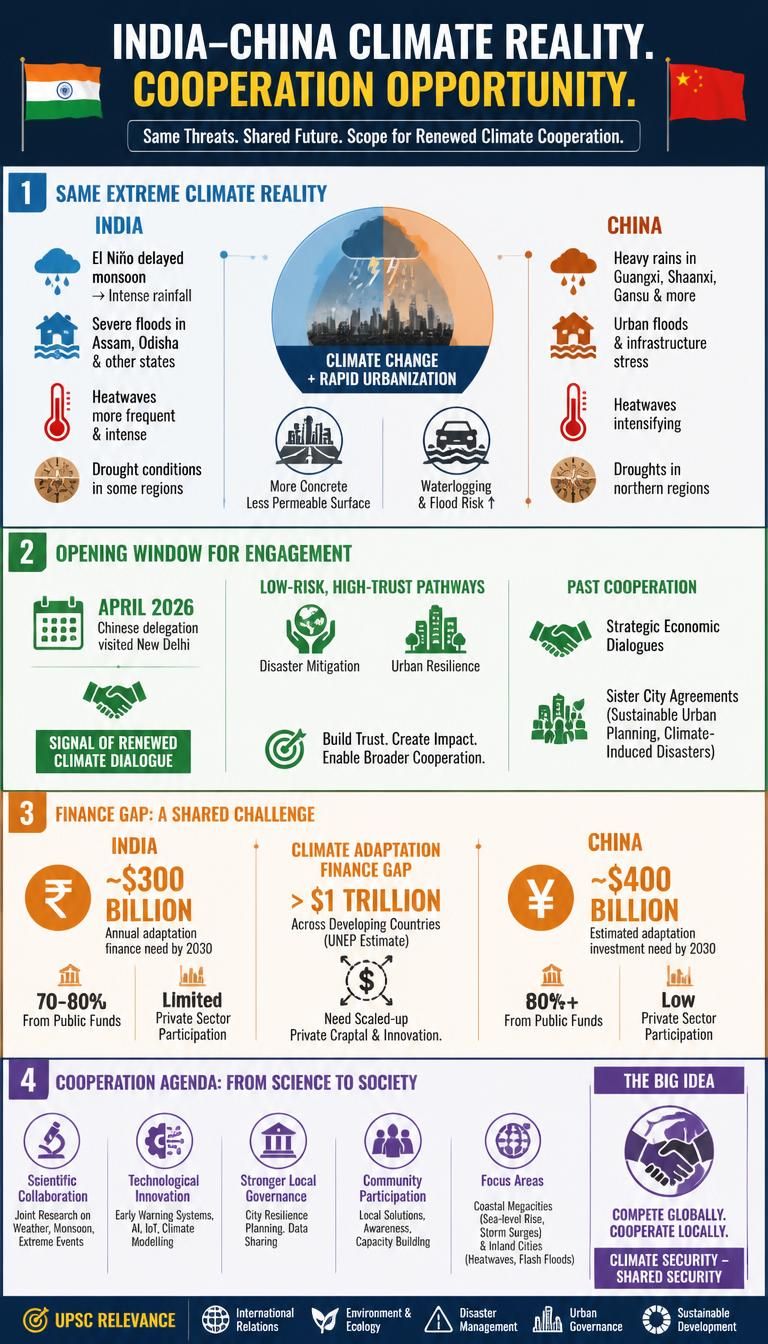
- India and China are experiencing similar extreme weather events, including intense monsoons, floods, heatwaves, and droughts, exacerbated by climate change and rapid urbanization.
- A Chinese delegation visited New Delhi in April 2026, indicating a potential for renewed climate cooperation between the two nations.
- Disaster mitigation and urban resilience are identified as low-risk pathways for rebuilding trust and fostering engagement.
- Past cooperation included Strategic Economic Dialogues and sister city agreements focused on sustainable urban planning and climate-induced disasters.
- Both countries face a significant finance gap for climate adaptation, relying heavily on public funds and needing greater private sector participation.
India-China.jpg
Detailed Insights:
- El Niño delayed India's monsoon, leading to intense rainfall and severe flooding in regions like Assam and Odisha.
- China's provinces, including Guangxi, Shaanxi, and Gansu, have also recently faced similar extreme weather conditions.
- Higher atmospheric temperatures and rapidly warming oceans due to climate change are causing these frequent and high-intensity weather events.
- Rapid urbanization has replaced natural permeable surfaces with concrete, worsening waterlogging and flood risks in both countries.
- Coastal megacities face combined risks of extreme precipitation, storm surges, and sea-level rise, while inland cities grapple with heatwaves and flash floods.
- Cooperation areas include scientific collaboration, technological innovation, stronger local governance, and community participation in climate adaptation.
- China emphasizes embedding resilience into urban and rural planning using data-driven approaches for transport, housing, and drainage systems.
- India's strength lies in adaptive governance, spearheading community-led strategies for targeted interventions in vulnerable populations.
- Potential areas for mutual learning include sponge cities, drainage modernization, waste management, and resilient agricultural practices.
- Addressing the challenges of melting glacial systems in the shared Himalayan ecosystem is a critical aspect for future collaboration.
- Bridging the finance gap requires greater private sector participation through tools such as blended finance, municipal bonds, and credit enhancement.
Key Concepts Involved:
- El Niño: A climate pattern describing unusual warming of surface waters in the eastern tropical Pacific Ocean, impacting global weather.
- Climate Resilience: The capacity of social, economic, and environmental systems to cope with a hazardous event or trend.
- Sponge Cities: An urban planning concept that uses permeable surfaces and green infrastructure to absorb and reuse rainwater.
- Blended Finance: The strategic use of development finance for the mobilization of additional finance from commercial sources.

SuperKalam is your personal mentor for UPSC preparation, guiding you at every step of the exam journey.
Download the App


STUDY RESOURCES
CONTACT US
ⓒ Snapstack Technologies Private Limited