Critically analyze India's evolving diplomatic, economic and strategic relations with the Central Asian Republics (CARs) highlighting their increasing significance in regional and global geopolitics.
Critically analyze India's evolving diplomatic, economic and strategic relations with the Central Asian Republics (CARs) highlighting their increasing significance in regional and global geopolitics.
Subject: International Relations
Central Asia anchors India’s "Extended Neighbourhood," evolving into deep strategic integration via the Connect Central Asia Policy.
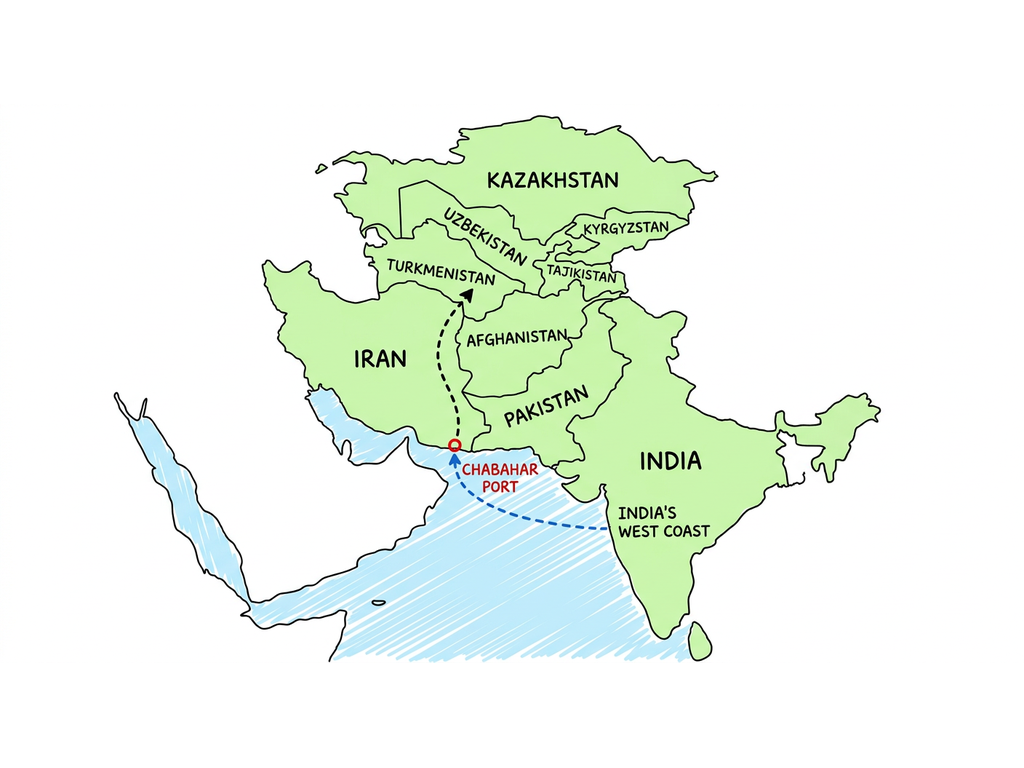
Chabahar Port Central Asia Connectivity
Evolving Relations and Geopolitical Significance
- Diplomatic Institutionalisation: The newly established India-Central Asia Secretariat anchors frameworks like the 2025 NSA Dialogue to address emerging cyber and AI threats.
- Strategic Connectivity: The historic 10-year Chabahar Port agreement (2024) physically bypasses Pakistan, plugging India into the INSTC and elevating its geopolitical leverage.
- Digital Diplomacy: India is exporting its Digital Public Infrastructure by offering UPI technology free of cost to build sovereign payment systems in CARs.
- Energy Security: Kazakhstan dominates trade via steady uranium exports, supplemented by the new Rare Earths Forum to secure critical minerals for clean energy.
- Defence Ties: Joint multi-domain exercises like DUSTLIK (2025) and India's footprint at Tajikistan's Farkhor Air Base cement New Delhi's role as a regional security provider.
Critical Analysis of the Relationship
- Trade Asymmetry: Bilateral trade of $2 billion (2024-25) remains massively eclipsed by China’s $100 billion regional footprint.
- Investment Deficit: Cumulative Indian Overseas Direct Investment (2000–2024) is merely $439 million, indicating structurally weak private sector engagement.
- Logistical Barriers: The 2025 Exim Bank Report explicitly flags the lack of direct land access as the primary choke point restricting traditional goods exchange.
- Geopolitical Rivalry: India must navigate a highly contested landscape where Russia acts as the historical security guarantor and China drives economic hegemony.
- Regional Instability: Spillover risks from Afghanistan, including terror financing and radicalisation, demand constant counter-terrorism vigilance via the Shanghai Cooperation Organisation (SCO).
To overcome physical barriers, India must pivot toward digital and pharmaceutical joint ventures. Leveraging the "DAKSHIN" capacity-building initiative will elevate New Delhi as a vital balancing pole in a multipolar Eurasia.
Answer Length
Model answers may exceed the word limit for better clarity and depth. Use them as a guide, but always frame your final answer within the exam’s prescribed limit.
Evaluate this PYQ now
Write your answer & evaluate in just 60 seconds




500+ students evaluated
Model Answers from
- 2024International Relations15 MarksView Answer
Discuss the geopolitical and geostrategic importance of Maldives for India with a focus on global trade and energy flows. Further also discuss how this relationship affects India's maritime security and regional stability amidst international competition?
- 2024International Relations15 MarksView Answer
Terrorism has become a significant threat to global peace and security. Evaluate the effectiveness of the United Nations Security Council's Counter Terrorism Committee (CTC) and its associated bodies in addressing and mitigating this threat at the international level.
- 2024International Relations10 MarksView Answer
"The West is fostering India as an alternative to reduce dependence on China's supply chain and as a strategic ally to counter China's political and economic dominance." Explain this statement with examples.
Model Answers by Subject


Crack UPSC with your
Personal AI Mentor
An AI-powered ecosystem to learn, practice, and evaluate with discipline



