GS 2: International Relations
Going downhill, Pg6
Trump's Iran policy unravels as conflict escalates, negotiations stall, and ground invasion looms amid rising crude prices.
Practice MCQs
782 Students attempted
Key Highlights:
- The U.S. and Israel attacked Iran on February 28, leading to ongoing conflict.
- President Trump issued a 48-hour ultimatum on March 21 for Iran to reopen the Strait of Hormuz, which was extended twice.
- Iran continues to attack U.S. bases in the Persian Gulf and Israel, including an attack on the Prince Sultan Air Base in Saudi Arabia.
- The U.S. and Iran have exchanged proposals to end the war, but disagreements persist over key demands.
Detailed Insights:
- The Strait of Hormuz remains under Iranian control, posing a challenge to U.S. objectives in the conflict.
- Ayatollah Ali Khamenei’s assassination has potentially voided his fatwa against nuclear weapons, and Iran is considering withdrawing from the Nuclear Non-Proliferation Treaty.
- Crude prices have risen from under $80 a barrel to around $114 a barrel due to the war, benefiting Iran through wartime sanctions relief.
- The U.S. is considering a ground attack, but lacks sufficient combat troops for a large-scale invasion, and faces risks to troops and the global economy.
- President Trump's threats to strike Iran's civilian infrastructure highlight his desperation and the need for a resolution to the conflict.
Key Concepts Involved:
- Strait of Hormuz: A narrow waterway between Oman and Iran connecting the Persian Gulf to the Gulf of Oman and the Arabian Sea, vital for global oil trade.
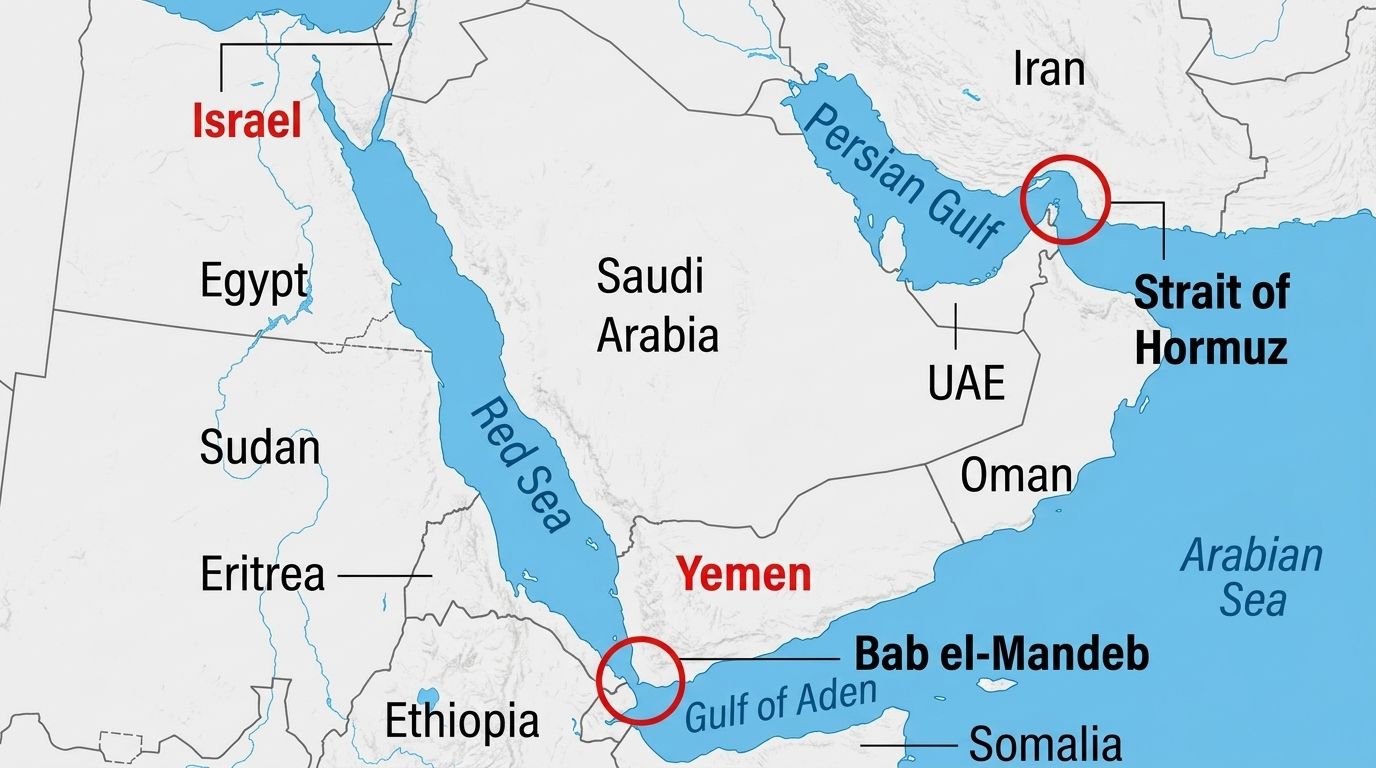
Straight of Hormuz
- Fatwa: A ruling on a point of Islamic law given by a recognized authority.
- Nuclear Non-Proliferation Treaty (NPT): An international treaty to prevent the spread of nuclear weapons and promote disarmament.

SuperKalam is your personal mentor for UPSC preparation, guiding you at every step of the exam journey.
Download the App


STUDY RESOURCES
CONTACT US
ⓒ Snapstack Technologies Private Limited