GS 2: GovernanceGS 3: EconomyGS 2: Social Justice
A flame the state cannot guarantee, Pg6
LPG crisis exposes PMUY's vulnerability: Supply chain disruptions disproportionately impact poor women, highlighting gaps in welfare architecture and sovereign guarantee.
Practice MCQs
782 Students attempted
Key Highlights:
- India's LPG crisis began in March 2026 due to disruptions from the West Asia war, highlighting import dependence and inadequate storage.
- The Pradhan Mantri Ujjwala Yojana (PMUY), which connected 32.83 crore households to clean cooking fuel, failed to protect households during the crisis.
- India imports about 60% of its LPG consumption, with 90% passing through the Strait of Hormuz, and its strategic reserves cover only 9.5 days of crude oil supply.
- Rising LPG prices have caused many PMUY beneficiaries to revert to biomass, with Scheduled Caste and tribal households facing disproportionately lower access.
Detailed Insights:
- The PMUY scheme provided 10.33 crore connections to women from below-poverty-line households since 2016, significantly increasing LPG coverage.
- Phasing out PDS kerosene shifted reliance to a globalized commodity market, exposing vulnerability when the Strait of Hormuz was disrupted.
- The welfare architecture focused on scaling uptake but lacked mechanisms to ensure continuity during supply chain disruptions.
- The branding of PMUY implied a sovereign guarantee, but the state lacked physical infrastructure to support supply when the market failed.
- Many PMUY beneficiaries struggled with refill costs even before the crisis, leading to a return to biomass due to rising prices and mandatory booking gaps.
- Scheduled Caste and tribal households face lower LPG access due to distributor networks replicating caste hierarchies in supply allocation.
- Women, as formal beneficiaries, bear the burden of reverting to biomass when LPG supply fails, highlighting a gendered dimension of the crisis.
- Solutions include a two-month strategic LPG buffer, diversified import routes, publicly available crisis protocols, and community biogas initiatives like GOBARdhan.
Key Concepts Involved:
- Pradhan Mantri Ujjwala Yojana (PMUY): A government scheme providing LPG connections to women from below-poverty-line households.
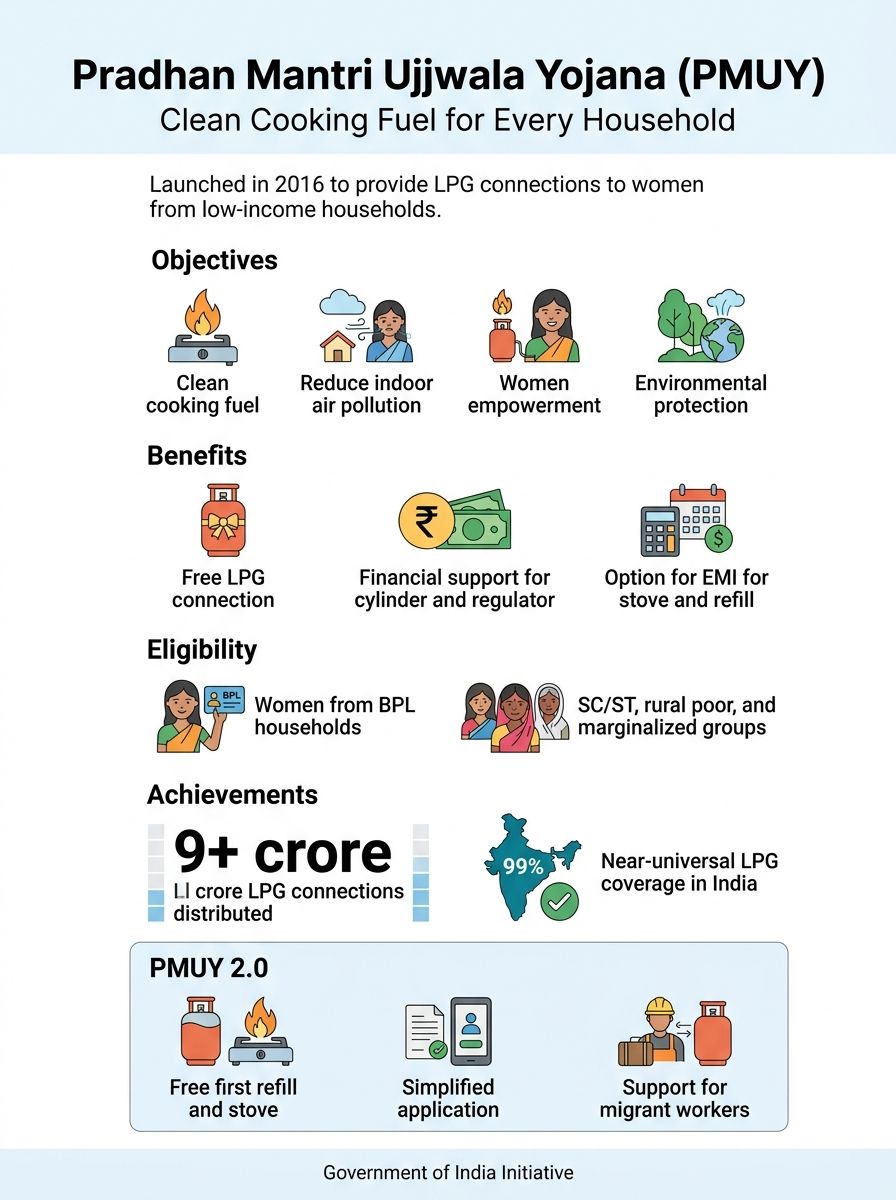
Pradhan Mantri Ujjwala Yojna
- Strategic Petroleum Reserves: Stockpiles of crude oil maintained by a country to mitigate supply disruptions.
- Direct Benefit Transfer (DBT): A mechanism for transferring subsidies directly into the bank accounts of beneficiaries.

SuperKalam is your personal mentor for UPSC preparation, guiding you at every step of the exam journey.
Download the App


STUDY RESOURCES
CONTACT US
ⓒ Snapstack Technologies Private Limited