GS 3: EconomyGS 3: Environment & EcologyGS 3: Science & TechnologyPrelims
Outlay of clean technology scheme for steel sector, Pg10
Centre plans ₹5,000 crore National Strategy for Sustainable Secondary Steel, promoting clean technologies within three months.
Practice MCQs
796 Students attempted
Key Highlights:
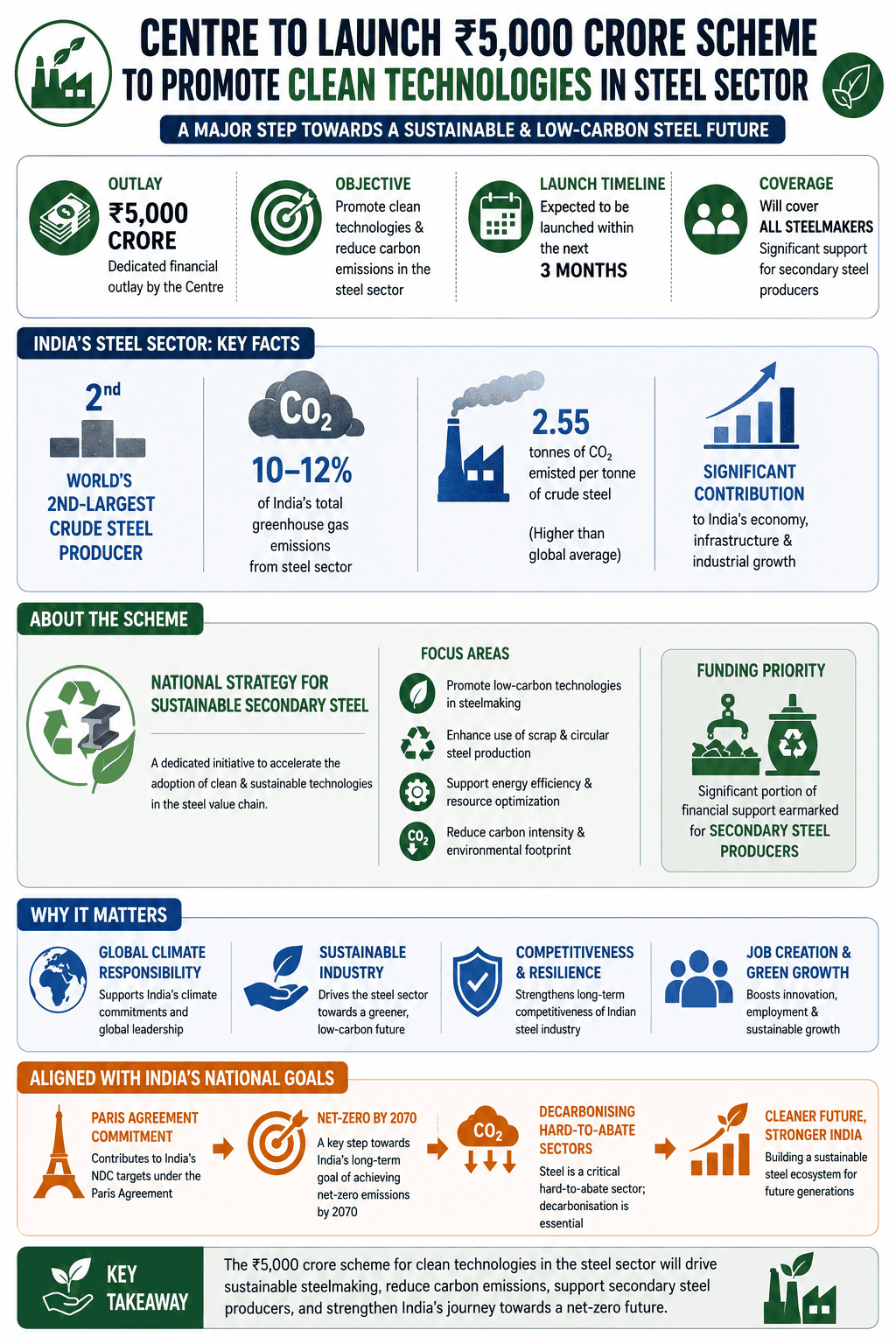
- The Centre is planning to introduce a new scheme with an outlay of ₹5,000 crore to promote clean technologies in the steel sector.
- Named the National Strategy for Sustainable Secondary Steel, the scheme aims to reduce carbon emissions from domestic steelmaking processes.
- It is expected to be launched within the next three months.
- The initiative will cover all steelmakers, with a significant portion of the financial support earmarked for secondary steel producers.
Clean Steel.png
Detailed Insights:
- India is the world's second-largest crude steel producer, and its steel sector contributes significantly to the nation's economy.
- The steel industry accounts for 10-12% of India's total greenhouse gas emissions, with an emission intensity of 2.55 tonnes of CO₂ per tonne of crude steel, which is higher than the global average.
- This scheme aligns with India's commitment under the Paris Agreement and its long-term goal of achieving net-zero emissions by 2070.
- Promoting clean technologies is crucial for the steel sector to transition towards more environmentally friendly production methods and maintain competitiveness in a global market increasingly focused on decarbonization.
- The secondary steel sector contributes over 40% of India's total steel capacity, making its sustainable transformation vital for overall decarbonization efforts.
- Existing government initiatives like the Production Linked Incentive (PLI) Scheme for Specialty Steel, National Green Hydrogen Mission, and Steel Scrap Recycling Policy also support the steel sector's green transition.
Key Concepts Involved:
- Clean Technologies in Steelmaking: Methods and processes designed to reduce carbon emissions and environmental impact during steel production.
- Secondary Steel: Steel produced primarily from recycled scrap metal or sponge iron, often by smaller-scale units.
- Green Steel: Steel manufactured with significantly reduced carbon emissions, typically by using renewable energy, green hydrogen, or carbon capture technologies.
- Net-Zero Emissions: A state where the amount of greenhouse gases released into the atmosphere is balanced by the amount removed.

SuperKalam is your personal mentor for UPSC preparation, guiding you at every step of the exam journey.
Download the App


STUDY RESOURCES
CONTACT US
ⓒ Snapstack Technologies Private Limited