GS 2: PolityGS 2: GovernanceGS 1: Indian GeographyGS 3: Environment & EcologyGS 3: Disaster ManagementPrelims
Sharing waters, Pg6
Southern CMs and Union Minister inaugurate Tungabhadra dam gates, pledging inter-state water cooperation despite Upper Bhadra project disputes and critical siltation issues.
Practice MCQs
789 Students attempted
Key Highlights:
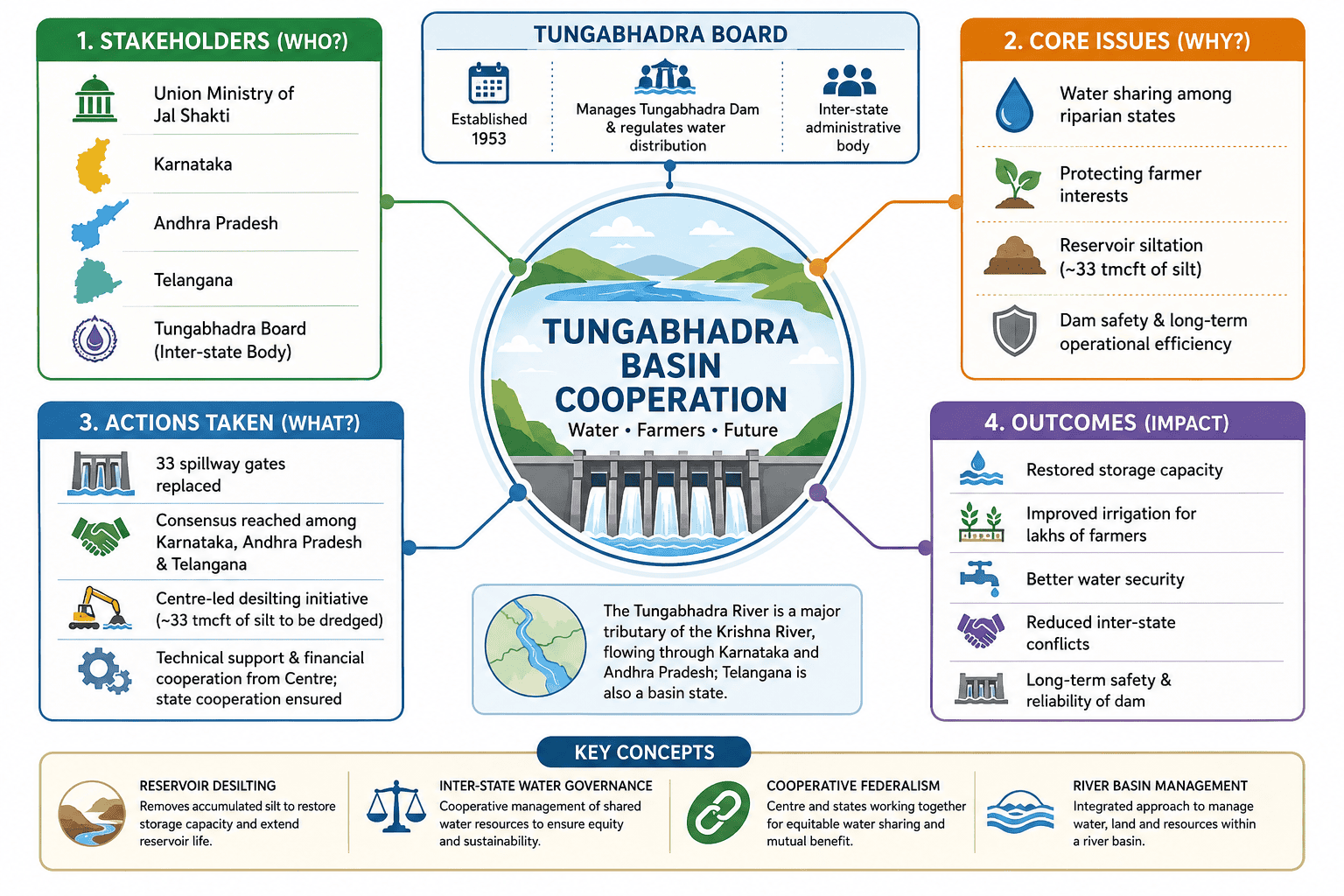
- The Chief Ministers of Karnataka, Telangana, and Andhra Pradesh, along with the Union Jal Shakti Minister, inaugurated 33 new spillway gates of the Tungabhadra Dam on June 25.
- The dam, located in Karnataka's Koppal district, is considered a lifeline for the three southern states, irrigating approximately 16.4 lakh acres.
- The new high-grade steel gates, costing ₹51 crore, are expected to last 60 years, replacing a temporary gate installed after a crest gate was washed away in August 2024.
- The event saw pledges for greater inter-state cooperation, despite existing differences over projects like the Upper Bhadra project.
TungaBhadra.png
Detailed Insights:
- The Tungabhadra Dam has historically been managed with an established water-sharing formula and regulation by the Tungabhadra Board.
- The dam's storage capacity has been reduced from an original 133 thousand million cubic feet (tmc ft) to about 106 tmc ft due to excessive siltation.
- The Upper Bhadra project, a lift irrigation scheme in central Karnataka, is a point of contention for Andhra Pradesh and Telangana.
- The Union government had initially provisioned ₹5,300 crore for the Upper Bhadra project in the 2023-24 budget, but it is now being implemented by a Karnataka government undertaking.
- The Union Jal Shakti Minister has assured plans to remove silt from water reservoirs nationwide, including the Tungabhadra Dam.
- The Centre is also expected to monitor and expedite Dam Rehabilitation and Improvement Projects across 19 states to ensure dam safety.
Key Concepts Involved:
- Tungabhadra Board: A statutory body established to regulate the water releases and management of the Tungabhadra Dam.
- Upper Bhadra Project: A major lift irrigation scheme in Karnataka aimed at providing water to drought-prone regions.
- Inter-State Water Disputes: Conflicts between states over the sharing and management of river waters, often resolved through tribunals or boards.
- Dam Rehabilitation and Improvement Project (DRIP): A World Bank-assisted project by the Government of India to improve the safety and operational performance of selected dams.

SuperKalam is your personal mentor for UPSC preparation, guiding you at every step of the exam journey.
Download the App


STUDY RESOURCES
CONTACT US
ⓒ Snapstack Technologies Private Limited