GS 2: Social JusticeGS 2: GovernancePrelims
How schools can tackle adolescent malnutrition, Pg7
NFHS-6 exposes India's adolescent malnutrition crisis, a double burden of stunting and rising obesity; schools emerge as critical battlegrounds for prevention and policy intervention.
Practice MCQs
789 Students attempted
Key Highlights:
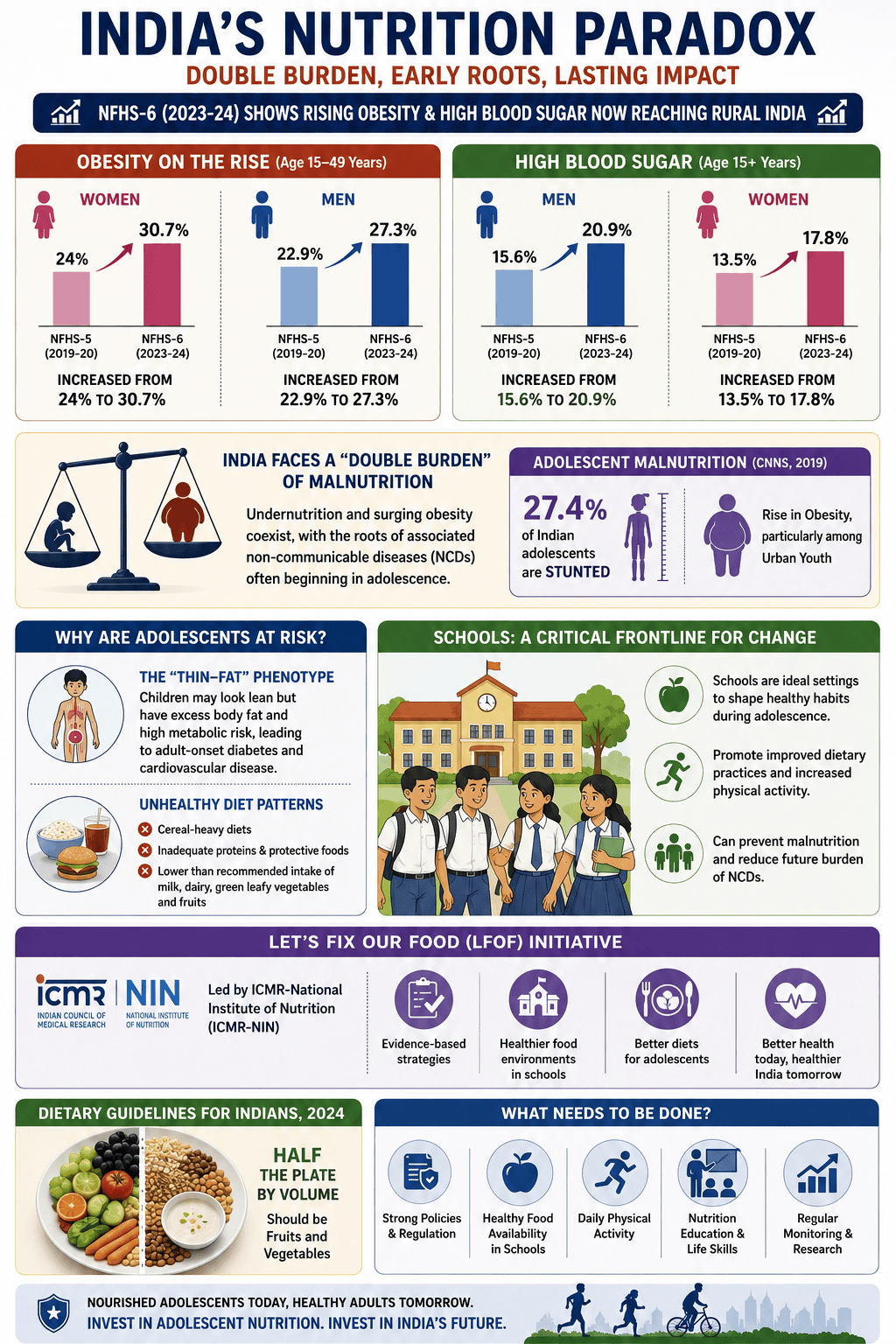
- NFHS-6 (2023-24) data indicates a significant rise in obesity and high blood sugar among adults, with these trends now affecting rural populations.
- India faces a "double burden" of undernutrition and surging obesity, where the roots of associated non-communicable diseases often begin in adolescence.
- The Comprehensive National Nutrition Survey (CNNS, 2019) reported that 27.4% of Indian adolescents are stunted, alongside a rise in obesity, particularly among urban youth.
- Schools are identified as critical settings for preventing adolescent malnutrition through improved dietary practices and increased physical activity.
- The Let’s Fix Our Food (LFOF) initiative, led by the Indian Council of Medical Research-National Institute of Nutrition (ICMR-NIN), aims to create healthier food environments for adolescents.
Nutrition.png
Detailed Insights:
- Obesity among women aged 15-49 years increased from 24% to 30.7%, and among men from 22.9% to 27.3% as per NFHS-6 findings.
- High blood sugar among men aged 15 and above rose from 15.6% to 20.9%, and among women from 13.5% to 17.8% according to NFHS-6.
- The "thin-fat" phenotype describes children who appear lean but possess a dangerous metabolic risk, contributing to adult-onset diabetes and cardiovascular disease.
- Adolescents often consume cereal-heavy diets with inadequate proteins and protective foods, and lower than recommended intake of milk, dairy, green leafy vegetables, and fruits.
- The Dietary Guidelines for Indians 2024 recommend that half the plate by volume should consist of fruits and vegetables to promote balanced eating.
- Consumption of Ultra-Processed Foods (UPFs) in India is surging at over 13.7% year-after-year, as highlighted by a World Health Organization study.
- Schools can implement measures such as healthier canteens, food demonstrations, school gardens, and fruit breaks to normalize better eating habits.
- Structured physical activity and sports should be integrated as core educational components to combat widespread physical inactivity among adolescents.
- The LFOF consortium advocates for regulating High Fat Sugar and Salt (HFSS) food advertising, taxation on unhealthy beverages, and a model school nutrition curriculum.
- A 2025 Lancet study projected that 21.8 crore men and 23.1 crore women in India will be overweight by 2050, with the steepest rise expected among adolescents.
- Schools should adopt skill-based nutrition education, teaching students to read food labels, understand portion sizes, and recognize marketing tactics.
Key Concepts Involved:
- Double Burden of Malnutrition: The coexistence of undernutrition (e.g., stunting) and overnutrition (e.g., obesity) within the same population or individual.
- Non-Communicable Diseases (NCDs): Chronic diseases like diabetes, heart disease, and hypertension that are not transmitted from person to person.
- Ultra-Processed Foods (UPFs): Industrial formulations made from ingredients derived from foods, often containing additives, high in sugar, salt, and unhealthy fats.
- Thin-Fat Phenotype: Individuals who appear lean but have a high percentage of body fat, leading to increased metabolic risk for chronic diseases.

SuperKalam is your personal mentor for UPSC preparation, guiding you at every step of the exam journey.
Download the App


STUDY RESOURCES
CONTACT US
ⓒ Snapstack Technologies Private Limited