GS 3: EconomyGS 2: International RelationsGS 3: Science & TechnologyPrelims
'Debt, AI boom and fragilities raise global risks', Pg13
BIS Annual Report flags escalating global risks from soaring public debt, financial instability, and AI boom, demanding urgent policy discipline.
Practice MCQs
789 Students attempted
Key Highlights:
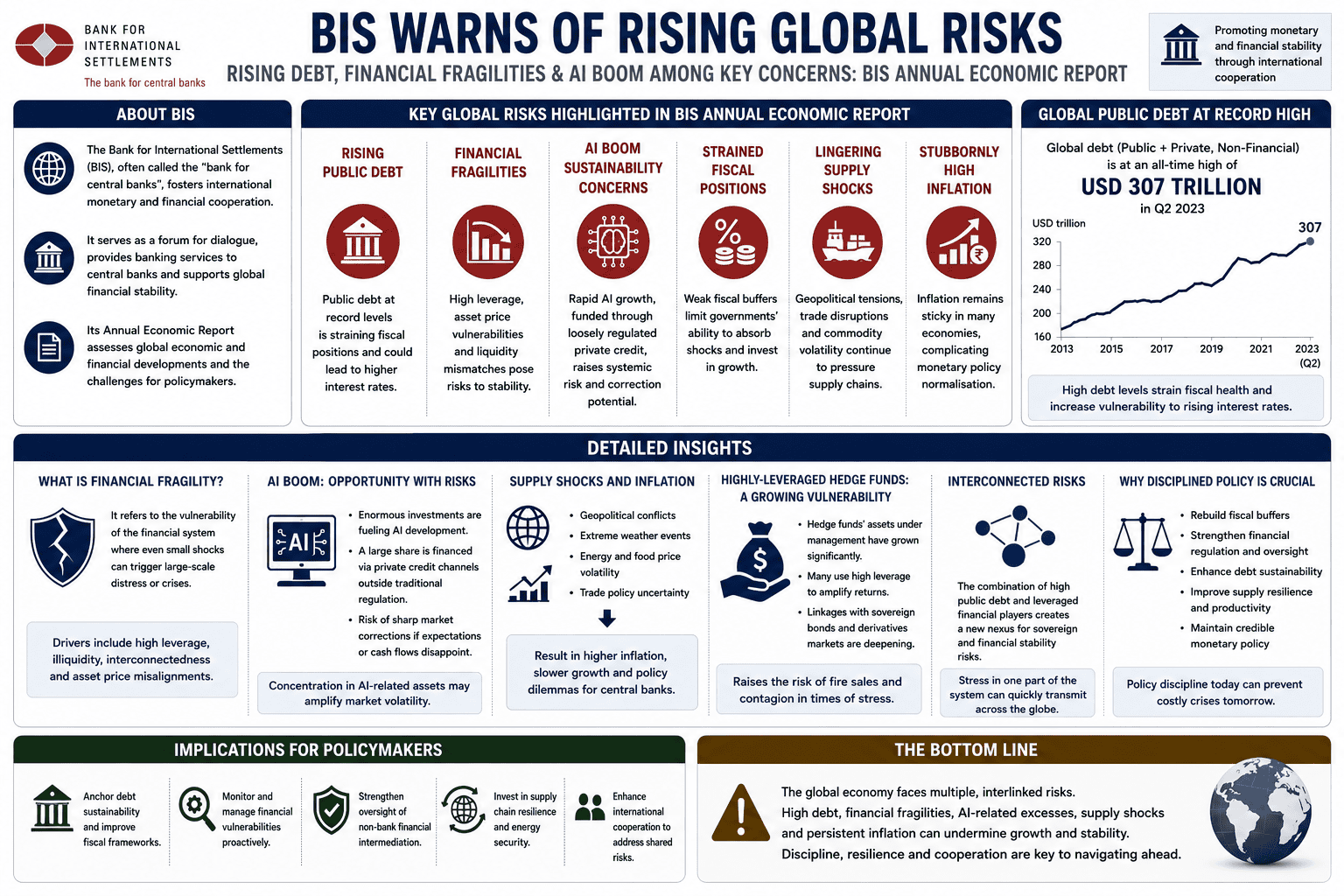
- The Bank for International Settlements (BIS) has warned of increasing global risks stemming from various economic pressures.
- These pressures include rising public debt, financial fragilities, and concerns regarding the sustainability of the Artificial Intelligence (AI) boom.
- The warning was issued in the BIS Annual Economic Report, emphasizing the need for disciplined policymaking.
- Other vulnerabilities highlighted are strained fiscal positions, lingering supply shocks, and the potential for stubbornly high inflation.
BIS Warnings.png
Detailed Insights:
- The Bank for International Settlements (BIS), often referred to as the "bank for central banks," plays a crucial role in fostering international monetary and financial cooperation.
- Its Annual Economic Report serves as a key document providing insights into global economic and financial developments and challenges faced by policymakers.
- Global public debt has reached record levels, with the Institute of International Finance (IIF) reporting an all-time high of USD 307 trillion in Q2 2023, straining fiscal health and potentially leading to higher interest rates.
- Financial fragility describes the vulnerability of a financial system to crises, where even minor shocks can trigger widespread instability.
- The rapid growth of the AI sector, funded significantly through loosely regulated private credit channels, introduces systemic risks and the potential for sharp market corrections.
- Supply shocks, defined as sudden and unexpected changes in the availability of goods or services, can lead to increased inflation and reduced economic output.
- The report specifically notes the interplay between high public debt and the increasing role of highly-leveraged hedge funds, creating a new nexus for sovereign and financial stability risks.
Key Concepts Involved:
- Bank for International Settlements (BIS): An international financial institution owned by member central banks, promoting global monetary and financial stability.
- Public Debt: The total financial obligations owed by a government to its creditors, encompassing domestic and foreign loans and bonds.
- Financial Fragility: The inherent susceptibility of a financial system to instability and crises, often triggered by small economic disturbances.
- Supply Shock: An unforeseen event that causes an abrupt change in the supply of a commodity or service, impacting its price and overall economic output.

SuperKalam is your personal mentor for UPSC preparation, guiding you at every step of the exam journey.
Download the App


STUDY RESOURCES
CONTACT US
ⓒ Snapstack Technologies Private Limited